
交运

Search documents
景顺长城中证国新港股通央企红利ETF投资价值分析
Xin Lang Cai Jing· 2025-09-25 08:17
Group 1 - The core viewpoint highlights the increasing attractiveness of Hong Kong dividend assets, particularly in the context of heightened market volatility, showcasing strong performance and long-term allocation value [1] - From a configuration perspective, Hong Kong dividend assets demonstrate remarkable resilience during market fluctuations, with the Hang Seng High Dividend Yield Index achieving a cumulative increase of 27.1% from the beginning of the year to September 18, despite a maximum drawdown of only 12.6%, significantly lower than that of the Hang Seng Index and Hang Seng Tech [1] - Policy measures are enhancing the appeal of dividend assets, with increased dividend payouts from A-share listed companies and supportive government policies, such as the "New National Nine Articles," which emphasize constraints on companies with weak dividend intentions [1] Group 2 - The continuous release of medium to long-term capital allocation demand, particularly from insurance funds, is expected to bring stable inflows into dividend assets, with insurance capital accelerating its layout in the Hong Kong market, having made 20 stake acquisitions in 2024 [2] - The dividend yield of Hong Kong dividend assets is significantly higher than that of A-shares, with the Hang Seng High Dividend Index yielding 6.14% compared to the CSI Dividend Index's 4.86%, indicating superior actual returns even after considering dividend taxes [2] - The Guoxin Hong Kong Stock Connect Central State-Owned Enterprise Dividend ETF tracks the CSI Guoxin Hong Kong Stock Connect Central State-Owned Enterprise Dividend Index, which selects stable dividend-paying central state-owned enterprises, reflecting the overall performance of high dividend yield central enterprises within the Hong Kong Stock Connect [2] Group 3 - Since 2020, the cumulative return of the Guoxin Hong Kong Stock Connect Central State-Owned Enterprise Dividend ETF has reached 37.2%, outperforming core broad-based indices of A/H shares and similar products [3] - The ETF's constituent stocks are concentrated in resource-based industries, such as oil and petrochemicals, telecommunications, and transportation, with a lower proportion in financial and real estate sectors, highlighting its differentiated allocation value [3] - Overall, the Guoxin Hong Kong Stock Connect Central State-Owned Enterprise Dividend ETF presents higher return potential and relatively low-risk characteristics, with a circulation scale reaching 4.92 billion yuan in recent months, indicating market recognition and interest [3]
“重估牛”系列之出清线索:六问六答:“反内卷”行情交易到哪儿了?
Changjiang Securities· 2025-09-22 10:44
Core Insights - The "anti-involution" policy has shown a differentiated catalytic effect on the market, with significant excess returns in most industries like batteries relative to the CSI 300 index, while the coal industry has not outperformed the index [2][5][15] - The implementation of the "anti-involution" policy has led to a recovery in factory prices from the supply side, but this has not yet translated to consumer prices at the residential level [2][22] - Since July, prices of polysilicon and thermal coal have stabilized and rebounded significantly, indicating the impact of the "anti-involution" policy on price recovery [2][34] Market Performance - From July 1 to September 19, 2025, the battery sector saw a 41.13% increase, while the coal sector only increased by 7.36%, compared to a 14.38% rise in the CSI 300 index [15][16] - The coal production in August was 390 million tons, a year-on-year decrease of 3.2%, while coal prices have stabilized, contributing to the coal sector's recent performance [5][14] Policy Developments - Since June, new "anti-involution" policies have been introduced, emphasizing self-discipline and legal norms to promote capacity optimization, with more noticeable effects in quantifiable areas [6][16] - The effectiveness of these policies may vary, with some sectors lacking quantitative policy support, leading to temporary inefficiencies in supply contraction [6][16] Inflation Data - The Producer Price Index (PPI) has shown signs of recovery, with an August year-on-year decline of 2.9%, a narrowing of 0.7 percentage points from the previous month [22][27] - The Consumer Price Index (CPI) has seen an expanded year-on-year decline, primarily due to a drop in consumer goods prices, with food and beverage prices down by 2.5% [27][31] Industry Price Recovery - Since July, polysilicon prices have shown a significant upward trend, reaching an average price of 50 yuan per kilogram by September 19, 2025 [34][38] - Other materials have experienced short-term price increases followed by a return to a downward trend, indicating a mixed recovery across sectors [34][36] Future Outlook - The market is expected to continue on a "slow bull" trend, driven by a revaluation of Chinese assets, with a focus on sectors benefiting from supply-side improvements and policy expectations [7][45] - Key sectors to watch include metals, transportation, chemicals, lithium batteries, photovoltaic, and pig farming, which are anticipated to benefit from the "anti-involution" policies [7][41][45]
A股策略周思考:牛市波动加大之后,如何演绎?
Tianfeng Securities· 2025-09-07 11:12
Market Insights - The rapid increase in turnover rate often indicates rising short-term adjustment pressure in the market, with historical experience showing that high turnover rates during mid-bull market phases can lead to temporary pullbacks, which do not alter the long-term trend but instead accumulate momentum for subsequent rises [1][11] - Since the end of June, the TMT sector's congestion level rose to over 40% by the end of August, nearing the early-year peak, indicating that the trading volume in the computing power sector of the ChiNext board is also approaching its early-year peak [1][15] - The liquidity supply-demand pattern remains favorable compared to the 2019-2021 period, with significant IPO fundraising in July exceeding 230 billion, although it dropped to around 30 billion in August, reflecting a lower financing scale compared to the previous bull market [1][19][21] Industry Rotation - Historical bull markets have shown that various sectors experience rotation, with the TMT sector being a clear leader from 2013 to 2015, followed by sectors like "Belt and Road" and financials taking over at different times [2][24] - The 2019-2021 bull market also witnessed multiple sectors taking turns in leading the market, with consumer stocks, electronics, and new energy sectors showing significant performance at different times [2][26] - From the current point until the end of the year, a rotation in leading styles is expected, particularly as Q4 approaches, which has historically seen an acceleration of incremental capital entering the market [2][32] Domestic Manufacturing Insights - The manufacturing PMI for August showed a marginal increase to 49.4%, indicating a slight recovery in production activities, although it remains in the contraction zone [3][33] - The non-manufacturing PMI also rose to 50.3%, with the service sector showing improvement while the construction sector experienced a decline [3][35] - Upstream price indices are recovering, with the main raw material purchase price index rising to 53.3%, indicating a positive trend in the supply side [3][35][38] International Employment Trends - The U.S. non-farm payrolls for August fell significantly short of expectations, with only 22,000 new jobs added compared to the anticipated 75,000, reinforcing expectations for a potential interest rate cut in September [4][14] - The unemployment rate in the U.S. rose to 4.3%, indicating a cooling labor market, which may influence global economic conditions [4][20] Industry Configuration Recommendations - Investment themes are suggested to focus on three directions: breakthroughs in technology AI, economic recovery with a focus on strong sectors, and the continued rise of undervalued stocks [5][32] - The report emphasizes the importance of the Hang Seng Internet sector, suggesting that as the bull market progresses, funds may increasingly concentrate on fewer high-growth sectors while also considering the potential for cyclical stocks to perform well as fundamentals improve [5][32]
A股慢牛暴赚,这些基金经理为何亏到“道歉”?自曝内幕!
Hua Xia Shi Bao· 2025-09-04 13:59
Core Insights - Many fund managers issued "apology letters" in their 2025 semi-annual reports, reflecting underperformance and the challenges faced in a rapidly changing A-share market [2][3] - The apologies highlight individual judgment errors and the broader issues of valuation system reconstruction and investment paradigm shifts [2][3] Group 1: Fund Performance and Apologies - Fund manager Fu Hongzhe of Taikang Medical Health Fund acknowledged underperformance, attributing it to overly conservative operations and missed opportunities in innovative drug assets [3][4] - Xu Jun from Guolianan Fund also apologized for the underperformance of his fund, citing a strategy that failed to adapt to the "stronger get stronger" market dynamics [5][6] - Even funds that achieved positive returns, like Huaxia Fund's Xu Xiaohui, expressed regret for not meeting expectations due to underestimating market valuation fluctuations [5][6] Group 2: Investment Strategy Reflections - Fund managers' apologies have sparked discussions on the need for deeper reflections on investment strategies and market adaptability [6][7] - Key areas of misjudgment included excessive concern over geopolitical risks, premature sector switching, and insensitivity to changes in valuation systems [6][7] - The industry is witnessing a shift towards greater transparency and accountability among fund managers, which may foster trust and promote healthy industry development [7] Group 3: Market Outlook and Challenges - The market is expected to face uncertainties in the second half of the year, including macroeconomic recovery, policy implementation, and international relations [7] - Fund managers will be tested on their ability to navigate complex environments while maintaining strategy stability and flexibility [7]


股指月报:国内外宏观变量再袭,杠杆资金催生泡沫行情-20250901
Zheng Xin Qi Huo· 2025-09-01 08:40
Group 1: Core Views - Short - term macro factors will increase market disturbances, but long - term policy guidance is bullish. In September, overseas focus on the Fed's interest - rate decision and the progress of the Russia - Ukraine issue, while domestic attention is on the 14th Five - Year Plan and Q4 economic policy guidance [4]. - The real estate market is in a weak state with both new and second - hand housing sales at low levels, but there is potential for improvement during the "Golden September and Silver October". The service industry is structurally differentiated and resilient at high levels, and the manufacturing industry is rebalancing after tariff policy disturbances [4]. - Domestic and overseas liquidity is tending to be loose. The domestic stock market has attracted leveraged funds and household deposits, but the pressure of share unlocks is increasing, and market divergence has emerged [4]. - After a sharp short - term rise, the valuation of each index has reached a relatively high historical level, and the stock - bond premium rate at home and abroad is low, so the attractiveness of allocation funds is average [4]. - It is recommended to adopt a high - selling and low - buying strategy for stock index futures in September. Consider going long on IF and IH during sharp drops or a short - term arbitrage opportunity of going long on IF and short on IM [4]. Group 2: Market Review Global Stock Market Performance - In the past month, A - shares led the rise, and German stocks led the decline. The performance order is:科创50 index > ChiNext Index > Shanghai Composite Index > Nikkei 225 > Hang Seng Tech Index > NASDAQ > S&P 500 > FTSE Emerging Markets > FTSE Europe > German DAX [8]. Industry Performance - In the past month, the communication industry led the rise, and the banking industry led the decline. The order is: communication > electronics > non - ferrous metals > computer > new energy… > transportation > steel > construction > coal > bank [12]. Futures Performance - In the past month, the basis rates of the four major stock index futures (IH, IF, IC, and IM) changed by 0.07%, 0.34%, - 0.04%, and - 0.23% respectively. The discounts of IF and IH narrowed. The inter - period spread rates (current month and next month) changed by - 0.09%, 0.21%, 0.33%, and 0.29% respectively, and the inter - period discounts of IF, IC, and IM significantly converged. The inter - period spread rates (next quarter and current month) changed by - 0.04%, 0.7%, 1.14%, and 1.36% respectively, and the long - term discounts of IF, IC, and IM converged significantly [21]. Group 3: Fund Flows Margin Trading and Stabilizing Funds - In August, margin trading funds flowed in 259.09 billion yuan, and the margin balance accounted for 2.39% of the circulating market value of the Shanghai and Shenzhen stock markets, an increase of 0.06%. The scale of passive stock ETF funds increased by 321.65 billion yuan to 3.49364 trillion yuan, with a share redemption of 14.8 billion shares last month and a subscription of 215.2 billion shares in the latest week [24]. Industrial Capital - In July - August, equity financing was 20.78 billion yuan, with 3 companies. IPO financing was 2.56 billion yuan, private placement was 18.21 billion yuan, and convertible bond financing was 3.22 billion yuan. In August, the market value of share unlocks was 539.34 billion yuan, an increase of 250.95 billion yuan from the previous month [27]. Group 4: Liquidity Monetary Supply - In August, the central bank's OMO reverse repurchase matured at 7.235 trillion yuan, and the reverse repurchase was 7.8518 trillion yuan, with a net monetary injection of 61.68 billion yuan. MLF had a net injection of 3 billion yuan, with a continuous net injection for six months and an increasing margin [29]. Monetary Demand - In August, the net monetary demand for national debt was 828.88 billion yuan, local debt was 804.34 billion yuan, and other bonds was 544.59 billion yuan. The total net monetary demand for the bond market was 2177.81 billion yuan [32]. Fund Price - In August, DR007, R001, and SHIBOR overnight rates changed by - 3.8bp, - 14.5bp, and - 6bp respectively. The inter - bank certificate of deposit issuance rate decreased by 0.8bp, and the CD rate of joint - stock banks rebounded by 4bp. The fund price rebounded slightly at a low level [35]. Term Structure - In August, the yield curve steepened significantly. The long - end yields of national debt and policy - bank bonds rebounded, and the long - end credit spread between national debt and policy - bank bonds widened [39]. Sino - US Interest Rate Spread - In August, the US 10 - year Treasury yield decreased by 11.0bp, the inflation expectation decreased by 2.0bp, and the real interest rate decreased by 9.0bp. The Sino - US interest rate spread inversion narrowed by 20.04bp, and the offshore RMB appreciated by 1.22% [42]. Group 5: Macroeconomic Fundamentals Real Estate Demand - As of August 28, the weekly transaction area of commercial housing in 30 large and medium - sized cities seasonally rebounded but was at a low level compared to the same period in 2019. Second - hand housing sales decreased seasonally. The real estate market is in a weak state, but rigid demand supports the lower limit [45]. Service Industry Activity - As of August 29, the subway passenger volume in 28 large cities remained high, with a year - on - year increase of 4.5% compared to last year and 51% compared to 2021. The traffic congestion delay index in 100 cities rebounded, and the service industry's economic activity is trending towards a natural and stable growth level [48]. Manufacturing Tracking - In August, the capacity utilization rates of the manufacturing industry declined under the anti - involution policy. The average operating rate of the chemical industry chain related to external demand increased by 0.58% [52]. Freight Flow - Freight and passenger flows remained at relatively high levels. The postal express and civil aviation sectors grew strongly, while highway transportation was relatively weak, and railway transportation rebounded significantly [57]. Import and Export - China's exports continued to grow strongly. After three rounds of Sino - US negotiations, a 90 - day exemption was extended, and Q3 exports were stronger than the season, which may continue [60]. Overseas Situation - In July, US PCE inflation continued to rebound, and the market's optimistic expectation of the Fed's interest rate cut this year has weakened. The market expects 2 interest rate cuts in 2025, with a total cut of about 50bp [62][66]. Group 6: Other Analyses Valuation - In the past month, the stock - bond risk premium was 2.64%, a significant decrease of 0.43% from the previous month. The foreign capital risk premium index was 3.63%, a decrease of 0.42% from the previous month. The valuations of the SSE 50, CSI 300, CSI 500, and CSI 1000 indices were at relatively high levels in the past 5 years [69][74]. Quantitative Diagnosis - According to seasonal patterns, the stock market is likely to be in a state of seasonal shock and decline in September, with a growth style that first outperforms and then corrects. It is recommended to pay attention to the arbitrage opportunity of shorting IC and IM and going long on IF and IH [77].
又见基金经理道歉,“有些难熬”
Zhong Guo Ji Jin Bao· 2025-08-30 14:49
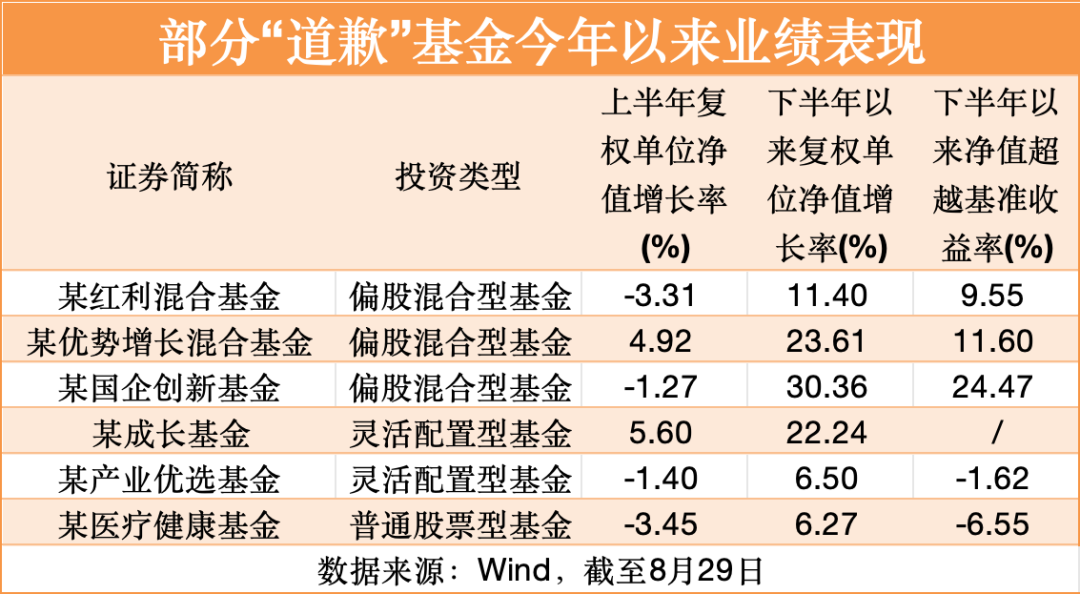
Core Viewpoint - The A-share market has shown signs of recovery this year, leading to improved performance for many actively managed equity funds, although some funds have lagged due to structural market conditions, prompting fund managers to express apologies in their semi-annual reports [1][2]. Fund Performance and Apologies - Fund types expressing apologies include underperforming pharmaceutical funds, dividend funds, and growth funds, indicating a need for fund managers to reassess their investment frameworks and for investors to discern between short-term market style mismatches and long-term managerial capabilities [2][5]. - A pharmaceutical fund manager acknowledged underperformance relative to industry indices and expressed regret for not achieving absolute returns, attributing the poor performance to premature shifts in investment strategy and missed opportunities in the "new drug + new consumption" sector [4][5]. - A dividend fund manager reported negative returns in the first half of 2025, citing both objective market conditions and subjective misjudgments as reasons for underperformance, particularly in avoiding high-recognition sectors while focusing on low-recognition ones [7][8]. Market Trends and Future Outlook - The pharmaceutical sector has seen significant activity, particularly in innovative drug companies, with some funds achieving substantial gains, while others have struggled due to conservative positioning [4][5]. - Fund managers are optimistic about future performance, highlighting potential in low-positioned sectors within the pharmaceutical industry, such as AI healthcare and medical devices, and committing to a more proactive investment approach [5][10]. - Some fund managers reflected on missed opportunities due to early profit-taking and emphasized the importance of maintaining a long-term investment perspective despite short-term challenges [10][11]. Performance Data - Data from Wind indicates that several funds that apologized for their performance have rebounded in the second half of the year, with some achieving net value growth rates of 20% to 30%, significantly outperforming their benchmarks [14][15]. - Specific fund performance metrics show that a dividend mixed fund had a net value growth rate of -3.31% in the first half but rebounded to 11.40% in the second half, while other funds also demonstrated similar recovery trends [14].
A股开盘速递 | 沪指跌0.02% 保险、贵金属等板块领涨
智通财经网· 2025-08-29 01:40
Group 1 - The A-share market shows mixed performance with the Shanghai Composite Index down 0.02% and the ChiNext Index up 0.03% [1] - Key sectors with notable gains include insurance, precious metals, real estate, brain-computer interfaces, and liquor [1] - Long-term bullish outlook for the Chinese stock market is supported by expected monetary and fiscal policies, with historical precedents indicating potential for a bull market [1] Group 2 - Strong market sentiment and high risk appetite are driving significant trading activity, particularly in growth technology stocks with attractive valuations [2] - The focus is on sectors with high elasticity for growth, supported by performance metrics and potential catalysts [2] - Short-term potential for stock indices to rise is acknowledged, but with limited upside, leading to a "high-low rotation" investment strategy [3]
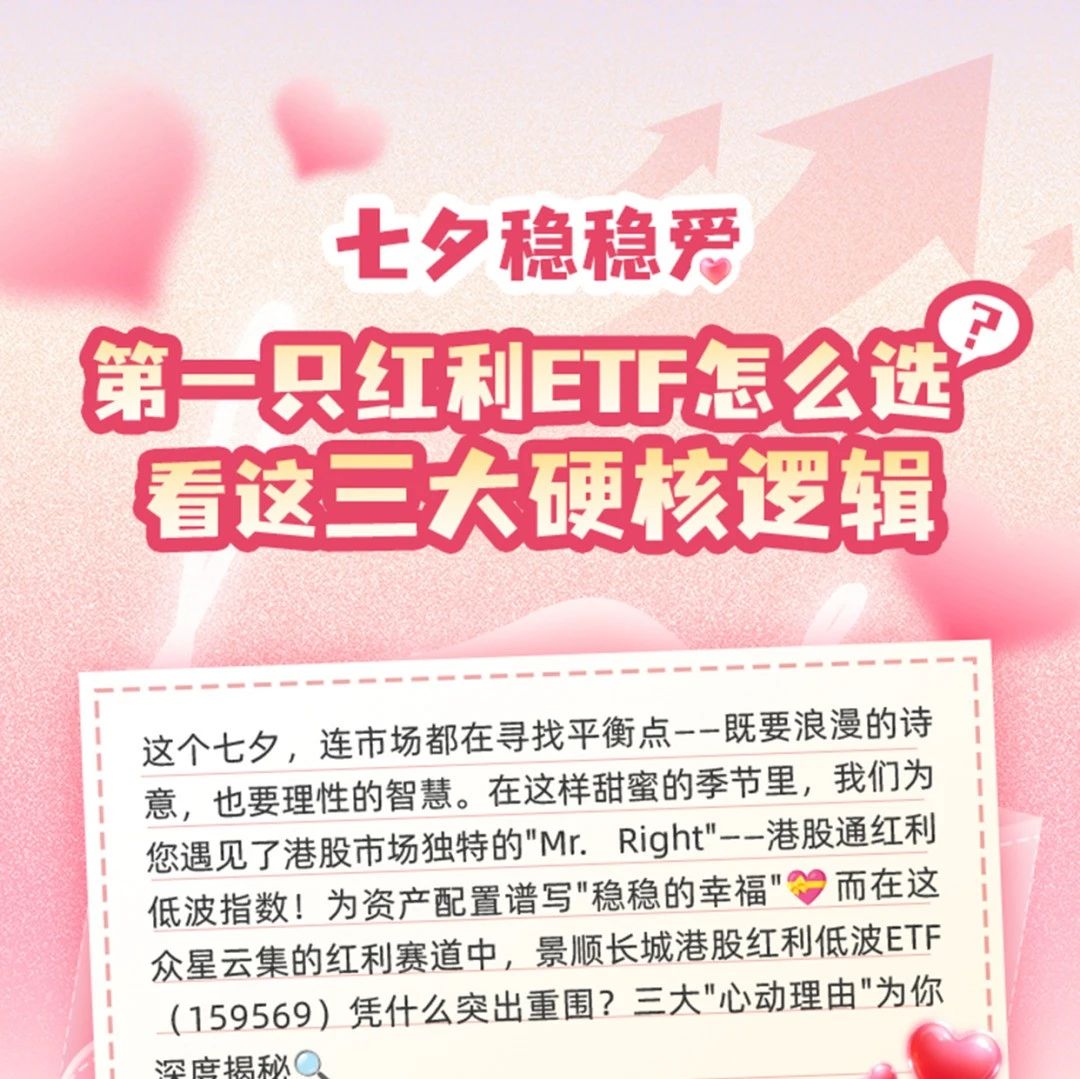
七夕稳稳爱丨第一只红利ETF怎么选?看这三大硬核逻辑
申万宏源证券上海北京西路营业部· 2025-08-28 02:52
Core Viewpoint - The article emphasizes the attractiveness of the Hong Kong Stock Connect Dividend Low Volatility Index, highlighting its high dividend yield, low volatility, and favorable valuation as a stable investment option in the current market environment [2][13]. Group 1: Dividend Yield and Selection Mechanism - The Hong Kong Stock Connect Dividend Low Volatility Index utilizes a three-year average dividend yield as a core selection criterion, targeting large-cap stocks with a minimum yield of 6%, resulting in a weighted average dividend yield of 6.07% as of July 2025, which is the highest among dividend indices [3][4]. - The index ranks above the Hang Seng High Dividend Index (4.8%) and the A-share Dividend Index (5.2%) in terms of dividend yield [3]. Group 2: Low Volatility and Defensive Strategy - The index features a low annualized volatility of 2.97%, which is 31% lower than the Hang Seng Dividend Index (4.3%), providing a defensive shield against market fluctuations [6]. - During significant market downturns, the ETF associated with this index experienced an average drawdown of only 2.1%, compared to a 5.8% drawdown for the CSI 300 Index [6]. Group 3: Valuation and Sector Allocation - As of Q2 2025, the index's price-to-book (PB) ratio stands at 0.63, indicating a valuation in the lowest 10% historically and nearly 50% lower than similar A-share dividend products [8]. - The index has a high concentration in three sectors: banking (32%), coal (18%), and transportation (14%), which are known for their high dividends and strong defensive characteristics [9]. Group 4: Performance and Policy Support - The index has demonstrated strong performance, with a 10.96% excess return over the Hang Seng Total Return Index in the past three months and a two-year annualized return of 30%, ranking it among the top three in the Hong Kong dividend product category [10]. - Approximately 75% of the index's holdings are in state-owned enterprises, benefiting from recent policy incentives aimed at improving market valuations for high-dividend assets, with 12 companies initiating buyback plans totaling over HKD 20 billion [13].
星石投资郭希淳:牛市走到什么阶段了?
Sou Hu Cai Jing· 2025-08-25 01:39
Market Stage Analysis - The current market has been in a bullish phase for nearly a year, driven by proactive monetary and fiscal policies, despite weak economic fundamentals reflected in declining PPI and nominal GDP [1][2] - The downtrend in PPI is nearing its end, indicating a potential turning point for economic recovery and corporate earnings growth in the coming year [2] Sector Focus: Technology Stocks - Market liquidity is strong, with funds gravitating towards sectors with solid fundamentals, particularly technology stocks, leading to significant sectoral divergence [3] - As PPI stabilizes and nominal GDP accelerates, broader market participation across various sectors is expected [3] Anti-Overwork Policy Opportunities - The anti-overwork policy is gaining traction, similar to past supply-side reforms, indicating a shift towards a more balanced economic model focusing on both production and consumption [4][5] - Industries with high entry barriers or oligopolistic structures are likely to benefit more from this policy, enhancing profit margins and performance [5] Market Capitalization Insights - Small-cap stocks have outperformed due to increased quantitative fund inflows, but traditional funds may shift focus towards mid and large-cap stocks as market conditions stabilize [6] Innovation Drug Sector - The innovation drug sector is experiencing robust growth, with record-high licensing agreements, indicating a strong fundamental trend [7] - However, some companies in this sector may face high valuations based on optimistic expectations, necessitating careful selection of fundamentally strong candidates [7] Military Industry Outlook - The military sector is showing signs of recovery, with companies returning to normal growth trajectories, presenting opportunities for investment in reasonably valued firms [8] Non-Ferrous Metals Sector - Certain areas within non-ferrous metals, particularly smelting, are benefiting from the anti-overwork policy, while resource segments are influenced by global liquidity and economic demand [9] Economic Data and Market Comparison - Current market conditions share similarities with 2015, characterized by liquidity-driven rallies and weak economic fundamentals, but lessons learned from past experiences may lead to a more stable market trajectory [10][11] Consumer Sector Analysis - The consumer sector faces challenges due to macroeconomic pressures, but supply-side adjustments and potential demand recovery could enhance performance in certain areas [12][13] Wealth Diversification and Stock Market - The trend of diversifying asset allocation among residents is expected to increase stock market participation, positioning it as a key vehicle for wealth accumulation [15] U.S. Monetary Policy and Dollar Outlook - Uncertainties remain regarding the Federal Reserve's interest rate decisions, with potential for a downward trend in the dollar due to expansive fiscal and monetary policies [15] U.S. Market Dynamics - The U.S. stock market is primarily driven by top-tier companies, with a need to monitor employment trends and recession signals for future performance [16]
转债投资机构行为分析手册
Tianfeng Securities· 2025-08-22 00:42
1. Report Industry Investment Rating No relevant content provided. 2. Core Viewpoints of the Report The report conducts a detailed analysis of the convertible bond investment strategies and preferences of different types of investment institutions, aiming to form a handbook for analyzing the behavior of convertible bond investment institutions. It focuses on an overview and the public fund section, considering the significant differences in investment strategies and information disclosure mechanisms between public funds and non - public funds [1][9]. 3. Summary According to Relevant Catalogs 3.1 Convertible Bond Investment Institutions and Analysis Method Overview - **Investor Structure and Proportion**: As of the end of July 2025, public funds and enterprise annuities are the "main forces" in direct convertible bond investment. Public funds hold a significant proportion, with 35.56% of the face value of Shanghai - listed convertible bonds and 33.31% of the market value of Shenzhen - listed convertible bonds. Enterprise annuities are the second - largest investment institutions, holding 18.41% of Shanghai - listed convertible bonds and 13.23% of Shenzhen - listed convertible bonds. Insurance institutions, securities self - operation also occupy important positions. Other professional institutional investors hold a relatively small proportion [10]. - **Changes in Investor Structure**: Compared with the end of 2021, the "influence" of public funds and insurance institutions has increased, while the proportion of enterprise annuities has decreased. The investment proportions of securities self - operation, private funds, and trust institutions have increased, and the proportion of general institutional investors represented by listed company shareholders has significantly decreased [13]. - **Differences in Investment Strategies**: Different types of professional institutional investors have differences in convertible bond investment restrictions, preferences, and investment strategies. Public funds generally have fewer restrictions on convertible bond ratings and focus on relative returns. Pension funds, insurance institutions, and social security funds have clear rating restrictions and focus on absolute returns [19]. - **Analysis Data Sources**: For public funds, quarterly reports can be used to analyze their convertible bond investment preferences. For other investment institutions, the top ten holders of convertible bonds disclosed in the semi - annual and annual reports of convertible bond issuers provide detailed analysis materials [20]. 3.2 What are the Characteristics of Public Funds' Convertible Bond Investment? 3.2.1 Overview of Public Funds' Convertible Bond Holdings - **Scale and Proportion Changes**: Since Q4 2023, the market value and proportion of convertible bonds held by public funds have been slightly decreasing. The number of public funds investing in convertible bonds has decreased overall, but their participation in the convertible bond market has increased [24]. - **Industry Distribution Preference**: As of Q2 2025, public funds significantly over - allocate convertible bonds in industries such as metals, chemicals, transportation, automobiles, agriculture, forestry, animal husbandry, and banking, and under - allocate those in industries such as petrochemicals, steel, construction decoration, public utilities, environmental protection, and power equipment [29]. - **Price, Valuation, and Rating Preferences**: As of the end of Q2 2025, public funds over - allocate convertible bonds in the 120 - 130 yuan range and above 150 yuan, and AA and AA - rated convertible bonds; they under - allocate other convertible bonds [29]. - **Differences in Sub - investor Structure**: Public funds account for about 30% in the overall convertible bond investor structure, but their influence varies in different industries, price ranges, and rating segments [35]. 3.2.2 Differences in Convertible Bond Holdings among Various Funds - **Differences in Convertible Bond Holdings by Fund Type**: Secondary bond funds, the main force in convertible bond allocation, have significantly reduced their convertible bond holdings since Q3 2023. Convertible bond funds and primary bond funds are important holders. The convertible bond positions of convertible bond funds have reached a historical high, while those of secondary bond funds, primary bond funds, and partial - debt hybrid funds have decreased [44][46]. - **Characteristics of Convertible Bond Funds' Holdings**: In Q2 2025, convertible bond funds increased their holdings in industries such as petrochemicals, public utilities, and communications, and decreased their holdings in upstream energy materials and mid - stream manufacturing industries. They stably over - allocate convertible bonds in the 120 - 130 yuan range and under - allocate those in the 100 - 120 yuan range [48][57]. 3.2.3 Characteristics of Convertible Bond Holdings of High - performing Funds - **Scale and Quantity of Convertible Bond Holdings**: Different high - performing funds have different scales and quantities of convertible bond holdings. For example, Fuguo Jiuli Stable Allocation has a relatively concentrated holding, while Huashang Fengli Enhancement has a large number of holdings but a small average holding per bond [73]. - **Industry, Rating, and Price Preferences**: Different high - performing funds have different preferences in terms of industry, rating, and price. For example, Fuguo Jiuli Stable Allocation prefers convertible bonds in the power equipment, banking, and pharmaceutical industries, while Huashang Fengli Enhancement prefers high - priced and manufacturing - related convertible bonds [74]. 3.3 How to Analyze Non - public Fund Convertible Bond Investments? 3.3.1 Starting from the "Top Ten Holders" of Individual Bonds - **Investor Classification**: Convertible bond investors are divided into 11 major categories and 24 sub - categories based on the names of bondholders. The top ten holders' data accounts for about 40% of the convertible bond market, and public funds, pension products, etc. frequently appear in the list [86][87]. - **Data Representativeness**: The data of the top ten holders is representative for analyzing the convertible bond investment preferences and characteristics of various investors. After excluding the "repurchase pledge special account" and "company - related institutions", the data (referred to as "top ten holders 2") can more objectively present the data conclusions [88][89]. 3.3.2 Preliminary Exploration of Non - public Fund Institutions' Convertible Bond Investments - **Industry Distribution of Convertible Bond Holdings**: As of the end of 2024, "private asset management" institutions hold more convertible bonds in the power equipment industry but less in pro - cyclical industries. "Securities self - operation" has a relatively high proportion of holdings in the steel, non - ferrous metals, and power equipment industries. "Insurance" has a relatively dispersed convertible bond portfolio [97]. - **Rating and Price Distribution of Convertible Bond Holdings**: "Private asset management" and "QFII" have a higher tolerance for low - rated convertible bonds. "Insurance" and "securities self - operation" have a relatively high proportion of AAA - rated convertible bonds. In terms of price, "private asset management" has a high proportion of convertible bonds below 100 yuan, while "insurance", "social security funds", and "QFII" mainly hold convertible bonds in the 110 - 120 yuan range [97][98].