汽车

Search documents
小米集团-W:行业环境波动,持续高端化探索-20260304
GOLDEN SUN SECURITIES· 2026-03-04 00:24
Investment Rating - The report maintains a "Buy" rating for Xiaomi Group [3][5] Core Views - The report highlights that Xiaomi's smartphone shipments in Q4 2025 were approximately 37.8 million units, a year-on-year decline of 11.4%, with a market share of 11.2%, placing it among the top three globally [1] - Xiaomi's high-end product strategy is expected to mitigate the pressure from rising storage costs, with the Xiaomi 17 series achieving strong sales [1] - The automotive segment is projected to deliver over 410,000 units in 2025, with a target of 550,000 units for 2026, indicating a positive growth trajectory [2] - The report anticipates Xiaomi's revenue for 2025-2027 to be 457.8 billion, 541.8 billion, and 644.4 billion CNY respectively, with non-GAAP net profits of approximately 38.6 billion, 37 billion, and 45 billion CNY [3][4] Financial Summary - Revenue for 2023 is projected at 270.97 billion CNY, with a year-on-year growth rate of -3%, followed by 365.91 billion CNY in 2024, representing a 35% increase [4][12] - Non-GAAP net profit is expected to rise from 19.27 billion CNY in 2023 to 38.58 billion CNY in 2025, reflecting a growth rate of 42% [4][12] - The gross margin is forecasted to be 21.2% in 2023, slightly decreasing to 20.5% by 2027 [12][11] - The report projects a decline in smartphone gross margin to over 8% in Q4 2025 due to increased storage costs [1] Market Position - Xiaomi's market share in the Chinese smartphone market is 13.2%, ranking it among the top five [1] - The company is focusing on high-end market penetration, with the Xiaomi 17 Pro Max achieving significant sales within the premium segment [1] - The automotive and AI innovation sectors are expected to contribute positively to Xiaomi's profitability as delivery volumes increase [2]

特朗普称伊朗军事能力遭重创,否认被以色列“拖入战争”
Dong Zheng Qi Huo· 2026-03-04 00:14
1. Report Industry Investment Ratings No relevant content provided. 2. Core Views of the Report - The market's focus remains on the US - Iran war. Rising energy prices have led to inflation concerns, causing liquidity tightening and a significant decline in market risk appetite [1][17]. - Due to the escalating Iran war situation and inflation concerns, risk assets have been sold off, and the trading logic in the market is chaotic. It is recommended to focus on risk - aversion and appropriately reduce positions [2][20]. - With the potential rise in stagflation pressure, the bond market is unlikely to have a one - way trend. There is a possibility of reversal at extreme points, and it is advisable to focus on band - trading opportunities [3][25]. - Steel prices continue to be in a weak and volatile pattern, mainly due to fundamental constraints. It is difficult for steel prices to have a significant upward drive in the short term [4][27]. - The methanol futures are expected to be in a high - level shock in the short term, and it is advisable to wait and see [5][61]. - Under the influence of capital sentiment, the European - line container freight futures still have the potential to rise. However, without strong fundamental support, the high prices on the disk may not be sustainable. It is recommended to pay attention to short - selling opportunities at high levels after confirming the inflection point of sentiment [6][65]. 3. Summary by Directory 3.1 Financial News and Comments 3.1.1 Macro Strategy (Gold) - Kashkari is now uncertain about the expected one - time interest rate cut in 2026 due to the war cloud [11]. - Kevin Warsh, the nominee for the Fed Chair, will slowly advance the Fed's balance - sheet reduction, aiming to restore the Fed's balance - sheet size to the pre - 2008 crisis level [12]. - The White House will provide naval escort and political risk insurance for oil tankers passing through the Strait of Hormuz. Gold prices have dropped by about 4%, and silver has fallen by more than 10%. The strong US dollar has continued to suppress the market. The short - term inflation pressure in the US has increased, and the market's expectation of the Fed's interest rate cut has decreased. The precious metals' downward trend has been intensified. Gold has not yet stabilized [13]. - Investment advice: The short - term market volatility has increased, the precious metals' prices are oscillating, and silver still needs to pay attention to the risk of decline [14]. 3.1.2 Macro Strategy (Foreign Exchange Futures - US Dollar Index) - Trump claims that Iran's military capabilities have been severely damaged and denies being "dragged into the war" by Israel. The US will provide insurance and naval escort for ships passing through the Persian Gulf. Trump has ordered to cut off trade with Spain [15][16]. - The market's focus is on the US - Iran war. Rising energy prices have led to inflation concerns, causing liquidity tightening and a significant decline in market risk appetite. The US dollar is expected to remain strong in the short term [17]. - Investment advice: The US dollar index is expected to be strong in the short term [18]. 3.1.3 Macro Strategy (Stock Index Futures) - In February 2026, the number of new A - share accounts decreased month - on - month and year - on - year due to the Spring Festival holiday, but the enthusiasm of margin traders remained high. The number of new margin trading accounts increased year - on - year [19]. - The A - share market opened higher and closed lower. The Iran war situation has gradually spread, and the market is worried about the war getting out of control. Risk assets have been sold off. Due to inflation concerns, interest - rate hike trading has emerged. The market's trading logic is chaotic. It is recommended to focus on risk - aversion and appropriately reduce positions [20]. - Investment advice: Appropriately reduce the long - position strategy of stock index futures and wait for the situation to become clear for right - side trading [21]. 3.1.4 Macro Strategy (Treasury Bond Futures) - The central bank had a net injection of 50 billion yuan in the open - market Treasury bond trading in February. On March 3, the central bank conducted a 34.3 - billion - yuan 7 - day reverse repurchase operation, with a net withdrawal of 491.7 billion yuan on that day [22][23]. - The market has revised up the duration of the conflict, and inflation expectations have risen, leading to a decrease in the Fed's interest - rate cut expectation, a stronger US dollar, and an increase in US Treasury bond yields. The long - term Treasury bonds are in a relatively tangled state, and the yield curve has steepened. If the stagflation pressure rises, the bond market is unlikely to have a one - way trend. It is advisable to focus on band - trading opportunities [23][25]. - Investment advice: The bond market will be in a shock before the meeting, and attention should be paid to the impact of supply shocks after the meeting [26]. 3.2 Commodity News and Comments 3.2.1 Black Metal (Rebar/Hot - Rolled Coil) - The 4th Session of the 14th National Committee of the Chinese People's Political Consultative Conference opened on the afternoon of March 4, with a duration of 7 days. Steel prices are still in a volatile pattern. Geopolitical factors and rising energy prices have not brought substantial benefits to steel prices due to fundamental constraints. Before the terminal demand improves substantially, steel prices are expected to remain in a volatile pattern, and the downside space is relatively limited [27]. - Investment advice: In the short term, it is advisable to adopt a volatile trading strategy and pay attention to potential undervalued opportunities [28]. 3.2.2 Black Metal (Coking Coal/Coke) - The coking coal prices in the central - China market are running steadily with a weak trend. The supply has stabilized in the short term, but the intermediate links are mostly waiting and watching, and the inventory has accumulated at the mine end. The terminal demand is slowly released, and steel mills' profits are under pressure, so their enthusiasm for purchasing coking coal is not high. During the major meetings, steel mills have the expectation of reducing production, and the demand for coke is limited. The coking coal prices in the central - China market are expected to remain stable in the short term [29]. - Investment advice: In the short term, the supply is recovering rapidly after the festival, but the terminal demand has not been significantly activated, and the spot prices are still weak. The market will remain in a volatile pattern. Attention should be paid to policy changes around the two sessions and the resumption rhythm of downstream industries [31]. 3.2.3 Black Metal (Steam Coal) - On March 3, the steam coal prices in the northern port market remained stable. The willingness of spot traders to sell has increased, but the supply of high - quality spot goods is tight, and traders' asking prices are firm. The demand has not improved significantly, and the成交 situation is not good. The steam coal prices are expected to continue to rise due to the Indonesian export restrictions and the high oil prices caused by the Middle - East conflict [32]. - Investment advice: The short - term steam coal prices are expected to be strong [32]. 3.2.4 Black Metal (Iron Ore) - In early March 2026, the 11.6 - million - ton - per - year iron ore processing and expansion project of Leting Xintian Industry Co., Ltd. reached a key promotion node. The external uncertainties have increased, and the supply - demand situation of the industrial chain is uncertain. The iron ore prices are expected to be weak and volatile. During the two sessions, Hebei is expected to limit production by 30%. Affected by production restrictions and weather, the overall molten iron output is expected to rebound in mid - to - late March [33]. - Investment advice: During the two sessions, Hebei is expected to limit production by 30%. Affected by production restrictions and weather, the overall molten iron output is expected to rebound in mid - to - late March. The external uncertainties have increased, and the supply - demand situation of the industrial chain is uncertain. The iron ore prices are expected to be weak and volatile [34]. 3.2.5 Agricultural Products (Soybean Meal) - The US soybean crushing volume in January 2026 was 6.84 million short tons, higher than analysts' average forecast. The rise in crude oil prices due to the Middle - East conflict and the previous US bio - fuel policy have indirectly benefited the US soybean crushing demand and CBOT soybean prices. The domestic soybean meal futures prices are strongly oscillating, but the spot prices are slow to follow, and the basis has been continuously narrowing [36]. - Investment advice: The soybean meal futures prices may be strongly oscillating under cost support. Future attention should be paid to China's soybean purchases from the US, reserve sales, the progress of Brazil's soybean harvest and exports, and China's import soybean customs - clearance policies [36]. 3.2.6 Agricultural Products (Soybean Oil/Rapeseed Oil/Palm Oil) - India's palm oil imports in February increased by 10.1% month - on - month, reaching a six - month high. The increase in India's palm oil and soybean oil imports may reduce the inventories in Indonesia and Malaysia and boost the palm oil and soybean oil futures. The international diesel price increase has supported the palm oil price, and the Indian trade is expected to increase palm oil imports in March, which is conducive to the inventory reduction of Malaysian palm oil in March [37][38]. - Investment advice: The international geopolitical conflict has led to a sharp rise in crude oil and diesel prices, which is beneficial to the bio - diesel industry and will support the prices of the oil market. The oil market is expected to remain strong before the international situation eases [38]. 3.2.7 Agricultural Products (Corn) - The US corn export inspection volume in the week ending February 26, 2026, decreased by 8% week - on - week but increased by 37% year - on - year. The corn futures and spot prices are oscillating strongly. The supply from the grass - roots level is expected to gradually recover. The downstream demand has support, and the centralized procurement by the China National Grain Reserves Corporation has boosted the market sentiment [39][40]. - Investment advice: The low inventories at the north - south ports, the slow release of the grass - roots selling pressure, and the tight supply of high - quality corn in the Northeast provide support for the price. However, there is still a risk of concentrated selling of the ground - stored corn in the Northeast as the temperature rises. The weak demand in the downstream breeding and deep - processing industries and the potential impact of wheat auctions may suppress the price. In the short term, the market is affected by multiple factors, and the current futures price is relatively high. It is advisable to trade according to the trend and not to chase the high price. In the medium - to - long term, the price is expected to stabilize and rebound, but the upward range is limited by demand recovery and policy regulation. Attention should be paid to the weather, corn reserve purchase policies, and wheat auction dynamics [40]. 3.2.8 Agricultural Products (Cotton) - In the northern Xinjiang region, cotton enterprises' basis quotes are stable, and textile enterprises are adopting the "locked - basis" procurement strategy. Australia's cotton production in 2025/26 is expected to decrease by 20% due to water supply shortages and low cotton prices. The import yarn prices have increased slightly, and the port inventory has continued to increase. The Zhengzhou cotton futures have entered a shock - adjustment state after a sharp rise. The downstream gauze market recovery is slow, and the import yarn inventory has a negative impact on domestic cotton consumption. The new Xinjiang cotton target - price subsidy policy is about to be introduced, which will have a significant impact on the cotton planting area [41][42][44]. - Investment advice: The textile enterprises' cotton yarn inventory is not high, and the "Golden March and Silver April" peak season is approaching. The short - term factors such as the reduction of US tariffs on Chinese goods support the cotton price. The commercial cotton inventory in China and Xinjiang has decreased year - on - year, and the spot basis is strong. The market sentiment is expected to be positive. The Zhengzhou cotton futures are not expected to decline significantly in the short term. However, the peak - season performance is uncertain, and the high domestic - foreign cotton price difference will suppress the cotton price increase. The futures price is expected to be in a shock in the short term. Attention should be paid to the macro - level dynamics, the resumption of downstream enterprises, and the order situation [45]. 3.2.9 Agricultural Products (Hogs) - Huatong Co., Ltd. has provided a maximum - amount joint and several liability guarantee for the downstream pig - farmers' "Huatong Piglet Loan" business. The pig market has over - capacity and inventory pressure, and the overall spot sentiment is not optimistic. The futures price has a relatively high premium compared to the spot price, so the short - term long - position safety margin is not high. In the medium term, it is more suitable to adopt the strategy of short - selling on significant rebounds. Attention should be paid to the situation of piglets and sows to determine whether the cycle will reverse [46]. - Investment advice: Continuously pay attention to the short - selling opportunities brought by the postponed supply pressure [47]. 3.2.10 Non - ferrous Metals (Lead) - On March 2, the LME 0 - 3 lead was at a discount of $47.76 per ton. The Shanghai lead futures rose and then fell. The US - Iran geopolitical conflict has not eased, and the decline in interest - rate cut expectations, recession trading, and liquidity withdrawal have affected the precious metals and non - ferrous metals markets. The LME lead inventory remained unchanged, and the 0 - 3 cash spread decreased. The domestic social lead inventory decreased marginally. The lead price rebounded from a low level due to cost support and supply - demand mismatch, but it is also affected by the macro - level situation. Attention should be paid to the resumption of production of downstream large enterprises [48][49]. - Investment advice: In terms of the unilateral strategy, it is advisable to pay attention to medium - term long - position opportunities; in terms of the arbitrage strategy, it is advisable to wait and see [49]. 3.2.11 Non - ferrous Metals (Zinc) - In January, the total global sales of eight major Japanese automakers increased by 0.7% year - on - year, while the total production decreased by 1.6%. On March 2, the LME 0 - 3 zinc was at a discount of $20.6 per ton. The domestic and international zinc prices oscillated downward. The US - Iran geopolitical conflict has not eased, and the increase in energy prices and the decline in interest - rate cut expectations have affected the non - ferrous metals market. The LME zinc inventory decreased, and the 0 - 3 cash spread oscillated. The domestic social zinc inventory increased significantly, and the domestic fundamentals are under short - term pressure. The zinc price may enter a stage of shock adjustment, and it is advisable to manage positions well in the high - volatility market [50][51]. - Investment advice: In terms of the unilateral strategy, it is advisable to wait and see, and it is recommended to close the previous long positions; in terms of the arbitrage strategy, it is advisable to wait and see for the month - spread arbitrage, and it is recommended to adopt the medium - term positive cross - market arbitrage strategy [52]. 3.2.12 Non - ferrous Metals (Lithium Carbonate) - Canadian mining company First Phosphate has obtained conditional approval for a CAD 16.7 - million (about USD 12.2 - million) grant to support its lithium - iron - phosphate battery - grade phosphoric acid processing plan. The lithium carbonate futures limit - downed, and the weighted contract open interest decreased. The market rumor that the Middle - East situation affects energy - storage demand has limited impact. In March, the domestic lithium carbonate inventory is expected to decrease by about 2,000 tons. After the sharp decline in the futures price, the downstream buying demand has increased. In April, the lithium carbonate demand is expected to continue to increase, and the inventory will continue to decrease. Attention should be paid to the Zimbabwe export policy, the power - terminal situation, and the demand fulfillment [53][54]. - Investment advice: Referring to the night - session non - ferrous metals' volatility, the lithium carbonate futures may open lower today. The risk - return ratio around 150,000 yuan is average, but if the price continues to fall, it may be advisable to gradually try long positions [55]. 3.2.13 Non - ferrous Metals (Tin) - Indonesia's tin production quota in 2026 is 65,860 tons. The domestic SHFE tin futures warehouse receipts decreased, and the LME tin inventory increased. The short - term supply shortage situation has eased with the resumption of production in Myanmar and the expected increase in Indonesia's production in 2026. In the long - term, the supply is concentrated and vulnerable, and the supply may be restricted by anti - globalization and resource nationalism. The domestic smelting processing fees have remained unchanged, and the smelting profit margin has decreased slightly. The smelting enterprises' production decreased during the Spring Festival, and the downstream enterprises' holiday was extended. With the resumption of production of some downstream enterprises, the traders' willingness to sell has increased. Attention should be paid to the downstream inventory replenishment [56][57]. - Investment advice: Under the background of the US - Israel - Iran conflict, the risk - aversion sentiment and the rising US dollar index have suppressed the tin price. The visible inventory is relatively high, and the supply expectation has increased. The tin price is expected to be in a shock - consolidation state in the short term. Attention should be paid to the downstream receiving situation, open interest changes, and the macro - level and capital sentiment [58]. 3.2.14 Energy Chemical (Carbon Emissions
默茨访华,黄金互补期终结后的试探
虎嗅APP· 2026-03-04 00:10
Core Viewpoint - The article discusses the complex relationship between Germany and China, highlighting Germany's economic crisis and the need for strategic partnerships while acknowledging the competitive dynamics that have emerged as China evolves from a manufacturing giant to a manufacturing powerhouse [2][12]. Economic Crisis in Germany - Germany's GDP showed a slight decline of 0.1% last year, but this masks a deeper economic crisis, with cumulative losses since 2022 nearing €1 trillion, surpassing previous economic stagnation periods [4][5]. - The number of bankruptcies in Germany reached a 20-year high in 2025, with over 17,600 companies failing, indicating a widespread crisis affecting various industries [5]. - Employment in the industrial sector decreased by 124,000 jobs in 2025, with the automotive industry alone losing 50,000 jobs, reflecting a significant decline in industrial employment since the COVID-19 pandemic [6]. Structural Issues - The crisis is driven by multiple factors, including high energy costs, reduced external demand, and long-standing internal issues such as low digital penetration and bureaucratic inefficiencies [6][7]. - The German Industrial Association's president described the situation as a "structural recession," emphasizing that this is not merely a cyclical downturn [7]. Industrial 4.0 and AI Challenges - Germany's Industrial 4.0 initiative, which aimed to revolutionize manufacturing through digitalization, has not achieved its intended outcomes, with many companies struggling to implement data-driven optimizations [8][9]. - The rise of AI has further highlighted Germany's shortcomings in data utilization and software innovation, areas where it lags behind competitors like the U.S. and China [9][10]. Shifts in Sino-German Economic Relations - The historical economic cooperation between Germany and China is shifting from a complementary relationship to one characterized by competition, particularly in the automotive sector, where German car exports to China plummeted by 66% in 2025 [12][13]. - Germany's need for a fair competitive environment in China, diversification of supply chains, and further market openness from China are critical for future cooperation [14][15]. Future Cooperation Opportunities - Potential areas for collaboration include climate and green technology, third-party market cooperation in developing regions, and dialogue on AI governance and digital standards [17][18]. - Germany's strategic importance in the EU and its cultural and technological strengths remain significant, despite current economic challenges [19][20]. Conclusion - The visit by German Chancellor Merz to China symbolizes a pragmatic attempt to navigate the complexities of competition and cooperation, acknowledging that the previous era of mutual benefit is no longer sustainable [23].


美股半导体全线下挫,英特尔大跌5%,原油飙涨5%,特朗普称伊朗将承受更大打击
21世纪经济报道· 2026-03-03 23:25
Market Overview - The Middle East situation has led to a decline in European and US stock markets, with the German DAX and French CAC40 indices dropping over 3%, and the UK FTSE 100 index falling more than 2% [1] - Major US tech stocks mostly fell, with Tesla down over 2% and Nvidia down more than 1%, while Microsoft rose over 1% [3] Semiconductor Sector - The semiconductor industry faced significant declines, with the Philadelphia Semiconductor Index dropping over 4.5%. Notable declines included SanDisk down nearly 9%, Micron Technology down nearly 8%, and Intel down over 5% [4] - The Semiconductor ETF fell by 3.77%, indicating a broader weakness in the sector [4] Commodity Market - International precious metals experienced sharp declines, with spot gold dropping $233 (over 4%) to nearly $5000 per ounce, and silver plunging over 8% [4] - Conversely, international oil prices surged, with WTI crude oil rising 5% to nearly $75 per barrel [4] Economic Outlook - Goldman Sachs indicated that the market is in a phase of "initial volatility followed by attempts to break through" key levels, with oil price impacts being a critical factor for future market direction [5] - The uncertainty surrounding the Iran conflict has complicated the US economic outlook, leading to expectations that the Federal Reserve may delay interest rate cuts until at least September [6]





最穷的发达国家,一分钟下线一辆车
汽车商业评论· 2026-03-03 23:04
Core Viewpoint - Slovakia has emerged as the world's leading car manufacturer in terms of per capita production, with a projected output of approximately 993,000 vehicles in 2024 and a rebound to about 1.07 million in 2025, despite its overall production being lower than other countries [4][5]. Group 1: Production Capacity and Workforce - Kia's factory in Zilina has an annual production capacity of 350,000 vehicles and employs around 3,700 people, with a cumulative investment of approximately €2.5 billion from 2004 to 2024 [7]. - The average monthly salary at the Kia factory is €2,400, significantly higher than Slovakia's overall average monthly salary of about €1,400 in 2023 [9][10]. - Slovakia's automotive industry directly employs about 170,000 people, contributing approximately 10.4% to the GDP and accounting for about 46.5% of industrial production revenue in 2023 [17]. Group 2: Competitive Advantages - Slovakia's labor costs are about 60% of those in Western Europe, maintaining competitiveness despite rising wages [9]. - The country benefits from a strong local supply chain with over 365 local suppliers and a favorable geographic location that connects it to a market of approximately 740 million consumers within a 2,000 km radius [13]. - Slovakia's low-carbon electricity share is around 85%, with nuclear power accounting for about 63% and hydropower for about 14%, making it easier for locally produced electric vehicles to meet subsidy conditions in various markets [14]. Group 3: Industry Development and Challenges - The automotive industry in Slovakia has seen significant foreign investment since the Velvet Revolution in 1989, with major manufacturers like Volkswagen, Stellantis, Jaguar Land Rover, and Kia establishing operations [17]. - The planned establishment of a new electric vehicle factory by Volvo in Kosice, with a projected annual capacity of 250,000 vehicles, highlights the potential impact of new projects on production and employment dynamics in the country [18]. - As the industry faces pressures from rising costs and the transition to electric vehicles, the ability to retain competitive advantages will be crucial for Slovakia's automotive sector [17].


【光大研究每日速递】20260304
光大证券研究· 2026-03-03 23:03
Group 1: Basic Chemicals - The escalation of the US-Iran conflict has created investment opportunities in the chemical sector, with significant military actions impacting regional stability [5] - The situation has shifted from high tension to open warfare, affecting market dynamics and potential supply chains [5] Group 2: Energy Sector - European natural gas prices surged by 39%, which is expected to drive demand for household storage solutions [5] - The geopolitical tensions have led to rising international oil and gas prices, with a focus on green hydrogen and ammonia as key areas for investment [7] Group 3: Automotive Industry - The Chinese New Year holiday disrupted February sales of new energy vehicles, but several major car manufacturers are set to launch new models in March and April [5] - Tesla is expected to release its third-generation Optimus humanoid robot in Q1 2026, which may create investment opportunities in related components [5] Group 4: Company Performance - Aolide (688378.SH) reported a slight decline in net profit for 2025, despite an 8.27% increase in revenue to 577 million yuan [8] - Dayun Technology (688531.SH) saw a significant increase in new orders and revenue, benefiting from synergies post-acquisition, particularly in high-demand sectors like semiconductors and new energy batteries [8]


能源早新闻丨东方电气领导层调整
中国能源报· 2026-03-03 22:34
Industry News - The Ministry of Industry and Information Technology and five other departments have issued guidelines to enhance the green production level of photovoltaic (PV) modules by 2027, aiming for improved recycling material usage and better evaluation standards for module disposal [2] - China's total primary energy production has surpassed 5 billion tons of standard coal for the first time, reaching 5.13 billion tons by 2025, marking a significant achievement in energy supply during the 14th Five-Year Plan [3] - The Zhejiang Provincial Development and Reform Commission announced the first mechanism electricity price bidding for new energy projects in 2026, with a total scale of 5.68 million megawatt-hours, including 5.61 million megawatt-hours from solar energy [4] International News - International oil prices surged significantly on March 2 due to escalating geopolitical tensions in the Middle East, with West Texas Intermediate crude oil rising by $4.21 to $71.23 per barrel, a 6.28% increase [5] - Canada and Greenland signed a joint declaration to enhance cooperation in critical minerals and energy, reflecting growing bilateral relations following the establishment of a Canadian consulate in Greenland [6] Corporate News - The Vice President of Dongfang Electric has retired, marking a change in the company's leadership structure [7]
国内高频 | 人流出行延续高位(申万宏观·赵伟团队)
申万宏源宏观· 2026-03-03 16:04
Group 1: Industrial Production Tracking - The industrial production shows a mixed performance, with a slight recovery in construction activity. The blast furnace operating rate increased by 0.1% week-on-week and rose by 0.1 percentage points year-on-year to 2.3% after the holiday [2] - Steel apparent consumption decreased by 3.5 percentage points year-on-year to -6.4% compared to the week before the Spring Festival, while steel social inventory increased significantly by 9.6% [2] - In the petrochemical sector, the operating rate of soda ash decreased by 0.3% week-on-week and fell by 0.6 percentage points year-on-year to -3.0%, while the PTA operating rate increased by 0.2% week-on-week and rose by 0.4 percentage points year-on-year to -5% [14] - The construction industry saw a marginal recovery in cement production and demand, with the national grinding operating rate decreasing by 3.8% week-on-week but increasing by 3.6 percentage points year-on-year to 3.4% [26] Group 2: Demand Tracking - The transaction volume in the real estate market showed improvement, particularly in second-tier cities, with the average daily transaction area in 30 major cities increasing year-on-year to 106.8% [50] - The average transaction area in first-tier cities rose by 47.9% year-on-year, while second and third-tier cities saw even larger increases of 137.8% and 97.4% respectively [50] - Freight volume and port cargo throughput related to domestic demand both increased year-on-year, with railway freight volume rising by 2.1 percentage points to 3.1% and highway truck traffic increasing by 20.2 percentage points to 26% [62] - The nationwide migration scale index increased by 36.8 percentage points year-on-year to 52.7%, indicating a rise in travel intensity [74] Group 3: Price Tracking - Agricultural product prices generally declined, with egg and vegetable prices both decreasing by 3.4% week-on-week, while fruit prices remained stable [104] - The industrial product price index decreased by 0.5% week-on-week, with the energy and chemical price index falling by 1.1% and the metal price index rising by 0.4% [116]
月度报告(2026/3):3月行业配置推荐顺周期行业——行业配置策略-20260303
Huafu Securities· 2026-03-03 14:26
Core Insights - The report emphasizes a dynamic balance strategy that has achieved an annualized absolute return of 19.15% and a relative return of 12.37% from January 2015 to February 27, 2026, with a maximum drawdown of 10.18% [3][55] - Recommended industries for March 2026 include non-ferrous metals, electric equipment and new energy, basic chemicals, steel, telecommunications, and machinery [3][55] - The macro-driven strategy has generated an annualized excess return of 4.75% since January 2016, with a maximum drawdown of 9.51% [4][45] - The multi-strategy approach has yielded an annualized relative return of 6.23% since May 2011, with a maximum drawdown of 13.44% [5][67] - The extreme style high Beta strategy has achieved an annualized relative return of 10.05% since July 2013, with a maximum drawdown of 13.44% [5][79] Market Review - In February, the overall A-share market rose, with the small and mid-cap indices outperforming large-cap indices. The CSI 300 index had a return of 0.09%, while the CSI 500 and CSI 1000 indices returned 3.44% and 3.71%, respectively [16][17] - The top five performing sectors in February were steel, building materials, machinery, coal, and defense industry, while the bottom five were media, non-bank financials, consumer services, retail, and telecommunications [16][17] Industry Configuration Dynamic Balance Strategy - The dynamic balance strategy achieved an absolute return of 3.89% in February, outperforming the benchmark with an excess return of 1.98% [3][55] - The strategy's performance since the beginning of 2026 has resulted in an absolute return of 13.83%, with an excess return of 5.39% relative to the mixed equity fund index [3][55] Macro-Driven Strategy - The macro-driven strategy recommended industries for March 2026 include oil and petrochemicals, pharmaceuticals, food and beverages, telecommunications, defense industry, and banking [4][45] - The strategy achieved an absolute return of 2.43% in February, with an excess return of 0.16% [4][45] Multi-Strategy Configuration - The multi-strategy approach recommended industries for March 2026 include telecommunications, real estate, construction, banking, textiles and apparel, pharmaceuticals, basic chemicals, and non-ferrous metals [5][57] - The strategy's absolute return in February was 1.48%, with an excess return of -0.83% [5][65] Extreme Style High Beta Strategy - The extreme style high Beta strategy recommended industries for March 2026 include banking, electric utilities, coal, transportation, basic chemicals, and automobiles [5][79] - The strategy achieved an absolute return of 4.27% in February, outperforming the benchmark with an excess return of 2.06% [5][79] Industry Crowding Indicators - In February, crowding indicators showed fewer triggers across industries, with coal, electric utilities, steel, basic chemicals, building materials, and electric equipment and new energy showing signs of crowding [6][83]
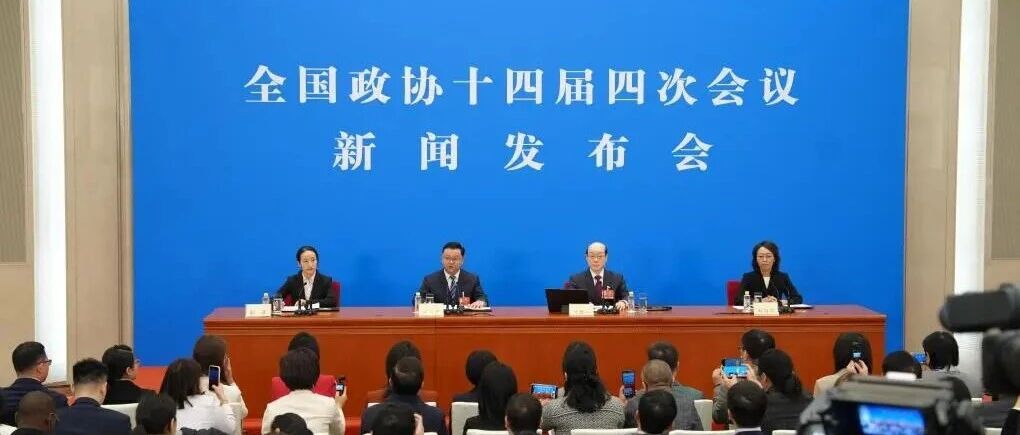
透视2026全国两会热点:读懂这五个词,读懂开局之年
21世纪经济报道· 2026-03-03 14:23
Group 1: Macroeconomic Governance - The Chinese economy is expected to reach a total output of 140 trillion yuan by 2025, maintaining a leading growth rate among major economies globally [4] - The central economic work conference emphasizes increasing counter-cyclical and cross-cyclical adjustment efforts to enhance macroeconomic governance effectiveness [4] - Predictions suggest that the GDP growth target for 2026 may be adjusted to between 4.5% and 5.0%, reflecting a more pragmatic approach [4][5] Group 2: Intelligent Economy - The integration of technology and industry is expected to lead to significant economic growth, with a focus on the development of intelligent economies [6][7] - By 2027, the goal is to achieve widespread integration of artificial intelligence across six key sectors, with a rapid growth in the core industries of the intelligent economy [8] - The development of intelligent economies will require reforms in market mechanisms, particularly in adapting listing standards for new business models [9] Group 3: Investment in Human Resources - The government report for 2025 introduces the concept of "investment in people," aiming to enhance the quality of human capital through systematic investments in knowledge, skills, and health [10][11] - Recommendations include improving education and healthcare systems, particularly in underdeveloped regions, to better utilize human resources [11] - By 2025, the elderly population in China is projected to reach 320 million, necessitating policies to support "silver technology" initiatives [11] Group 4: Expanding Consumption - The recent Spring Festival saw a total consumer spending of over 803.4 billion yuan, indicating a robust domestic market [12][13] - The central economic work conference calls for actions to boost consumption, including the implementation of a plan to increase residents' income and expand the supply of quality goods and services [13] - Focus areas for enhancing consumption include education, healthcare, and cultural services, aiming for a shift towards high-quality and diverse offerings [13] Group 5: Reform and Opening Up - Current economic challenges include unreasonable consumption restrictions and "involution" competition, highlighting the need for deeper reforms and steady progress in institutional opening [14][15] - The Hainan Free Trade Port has shown significant growth in duty-free shopping and international visitor numbers, reflecting improved trade facilitation [15][16] - The commitment to expanding rules and standards for institutional opening demonstrates China's determination to continue its reform and opening-up policies [16]