Qi Huo Ri Bao

Search documents
期债 关注逢低做多机会
Qi Huo Ri Bao· 2025-10-20 03:04
Economic Overview - In September, the 30-year Treasury futures contract fell by 2.28%, while the 10-year and 5-year contracts rose by 0.02% and 0.11% respectively. The 2-year contract decreased by 0.05% [1] - The yield on the 30-year active bond increased by 11.2 basis points to 2.13%, while the 10-year yield rose by 0.3 basis points to 1.783%. The 5-year yield decreased by 0.75 basis points to 1.59%, with the spread between the 30-year and 10-year bonds widening by nearly 11 basis points [1] - Economic data showed improvement in September, with foreign trade growth remaining resilient despite a slight decline in CPI by 0.3% and PPI by 2.3% [1] Policy Environment - The third quarter entered a fiscal and monetary vacuum, with no anticipated rate cuts or reserve requirement ratio reductions, instead relying on monthly reverse repos to support liquidity [2] - The supply of special bonds has nearly reached its limit for the year, shifting market focus to the upcoming Central Economic Work Conference in the fourth quarter [2] - The bond market is expected to be in a favorable environment in the fourth quarter, with trading sentiment primarily driven by liquidity shifts between assets [2] Market Strategy - The bond market's response to fundamental data has become muted, with trading sentiment dominating the current market rhythm [2] - Recommended strategies include buying the 30-year Treasury futures on dips, focusing on the main contract of the 10-year Treasury, and engaging in cross-product arbitrage between the 5-year and 30-year contracts [2]
生猪期现价格跌至年内低位,产能过剩下生猪行业路在何方?
Qi Huo Ri Bao· 2025-10-20 01:40
Core Viewpoint - The recent decline in live pig prices indicates an oversupply in the market, driven by increased production capacity and insufficient reduction of breeding sows, making it difficult for prices to recover even with seasonal demand increases [2][3]. Price Trends - Since October, live pig prices have dropped significantly, with the average price falling to 12.90 yuan/kg, a decrease of 2.8% week-on-week and 29.5% year-on-year [1]. - Futures prices have also declined, with near-month contracts approaching 11,000 yuan/ton and a drop of over 9% since October [1]. Supply and Demand Dynamics - Analysts indicate that the supply of live pigs remains high, with significant outflow volumes leading to losses for enterprises, which is typical in cyclical industries [2]. - The market is currently experiencing a dual loss situation for both piglets and fattening pigs, with an increase in the sentiment to cull breeding sows, although the pace of capacity reduction is still below expectations [3][4]. Industry Response and Capacity Adjustment - The government has initiated measures to reduce breeding sow numbers, aiming for a decrease of 1 million by the end of the year, but the actual reduction has been limited, with many enterprises only making minor adjustments [4]. - Major companies like Muyuan Foods have responded positively to capacity reduction calls, but smaller firms have not shown significant reductions, leading to an overall slower pace of capacity adjustment in the industry [4]. Future Outlook - If the reduction in breeding sow capacity accelerates, it could lead to a decrease in fattening pig supply by August 2026, but the market may face oversupply until then [5]. - The price of live pigs is expected to fluctuate based on the rhythm of market supply and demand, with potential price points unlikely to exceed 14 yuan/kg or drop below 10 yuan/kg without panic selling [5].


“双焦”期价走强 本周需重点关注哪些因素?
Qi Huo Ri Bao· 2025-10-20 00:21
Core Viewpoint - The strong performance of coking coal and coke futures prices is primarily driven by policy expectations and supply-demand dynamics in the market [1] Group 1: Policy Expectations - The upcoming Fourth Plenary Session of the 20th Central Committee and the Central Political Bureau meeting are expected to influence demand-side policies for coal, which is a key focus for the market [1] - The market is closely monitoring potential demand-side policies that may emerge from these macroeconomic meetings [4] Group 2: Supply Concerns - Recent coal mine accidents in Inner Mongolia and increased safety inspections in Shaanxi province have raised concerns about the stability of coking coal supply in the fourth quarter [1] - The overall daily production of coking coal has increased to 77.9 million tons, but the supply remains under pressure due to safety regulations and inspections [3] Group 3: Supply and Demand Dynamics - As of October 17, the average daily production of coke from coking plants and steel mills was 1.1123 million tons, showing a decrease of 1.27 million tons week-on-week [2] - Coking coal inventories at independent coking plants decreased by 6.55 million tons, while steel mills' coke inventories fell by 11.38 million tons, indicating a reduction in overall inventory levels [2] - The demand for coking coal remains strong due to high iron output from downstream steel mills, which is expected to continue until the end of October [1][2] Group 4: Market Outlook - The current market conditions suggest a strong but potentially limited upward price movement for coking coal and coke, influenced by macroeconomic policies and seasonal demand changes [4] - The potential for further price increases exists if demand-side policies exceed expectations and if supply remains tight due to regulatory pressures [4]
铁矿石下有支撑上有压力 后市静待政策与需求信号
Qi Huo Ri Bao· 2025-10-19 23:52
Core Viewpoint - After the National Day holiday, the iron ore futures and spot market experienced a trend of rising first and then falling, influenced by supply disruptions and concerns over increased transportation costs due to proposed fees on U.S. vessels, followed by a rapid price correction due to renewed U.S.-China trade tensions and weak domestic steel demand [1][2]. Group 1: Market Dynamics - The iron ore price initially surged due to supply disruptions from a safety incident in Guinea and concerns over transportation costs, but later corrected sharply as trade tensions escalated and domestic steel demand remained weak [1]. - The global iron ore shipment volume saw a significant year-on-year increase of over 14 million tons by October 10, with a slight recovery in shipments from major mining companies, while non-mainstream mines contributed significantly to the increase due to high prices [3]. - As of October 17, iron ore port inventories rose by 2.54 million tons to 142.78 million tons, while steel mills' imported ore inventories decreased to 89.83 million tons, the lowest for the same period since 2020 [5]. Group 2: Steel Industry Performance - Steel mills are facing squeezed profit margins due to sluggish sales and declining prices, with the average profit for rebar production dropping from nearly 300 CNY/ton to just 20 CNY/ton, nearing breakeven [4]. - The operating rate of blast furnaces among 247 steel mills remained stable at 84.27%, but the average daily pig iron output decreased slightly, indicating potential production cuts if prices continue to fall [4]. - The market is currently focused on the low profit levels of steel mills, which may lead to further production cuts if raw material prices remain high and finished product prices continue to decline [4]. Group 3: Macro Policy and Future Outlook - The upcoming APEC summit in November is seen as a critical point for potential easing of U.S.-China trade tensions, which could impact macroeconomic expectations positively [2]. - Global liquidity is marginally easing due to dovish signals from the Federal Reserve and the European Central Bank, providing external space for domestic policy easing [2]. - The overall market sentiment is expected to improve in the short term, potentially supporting commodity prices, while the iron ore market is anticipated to remain in a state of oversupply with low demand and increasing port inventories [5][6].
PVC短期弱势格局难改 进一步下行空间或有限
Qi Huo Ri Bao· 2025-10-19 23:26
Core Viewpoint - The decline in PVC futures prices is primarily driven by fundamental factors such as increased supply, unmet demand expectations, and export restrictions, rather than just the impact of rising trade friction expectations [1] Supply Pressure - Following supply-side reforms, the entry barriers in the PVC market have significantly increased, leading to a controlled capacity growth of around 5% in recent years. However, in 2025, the expansion pressure is expected to surge with over 2 million tons of new capacity planned, marking the highest expansion pressure in a decade [4] - New production facilities have been launched, including 200,000 tons/year from Qingdao Bay and 250,000 tons/year from Xinpu Chemical in the first half of the year. Additional facilities are set to come online in the second half, including 300,000 tons/year from Gansu Yaowang and 600,000 tons/year from Fujian Wanhua [4] - The operating rate of PVC production has significantly increased post-maintenance season, reaching over 80% in early October, with weekly production surpassing 500,000 tons for the first time [4] Weak Demand - The traditional peak demand season for PVC, known as "Golden September and Silver October," has shown a marked decline in recent years. Approximately 80% of PVC demand is linked to the real estate and infrastructure sectors, which have been underperforming [5] - From January to September, China's real estate development investment was 78,680 billion yuan, down 10.1% year-on-year, with various construction metrics also showing significant declines [5] - The overall operating rate for PVC downstream is currently at 40%, which, despite a 17 percentage point increase post-National Day, remains significantly lower than historical levels [5] Export Challenges - The domestic PVC market has faced a significant supply-demand imbalance, with prices dropping to a global low, closing the import window while opening the export window. However, exports are now facing severe challenges due to macroeconomic policies [6] - Since the outbreak of global trade friction in April, PVC export volumes have declined. India has raised anti-dumping duties on Chinese products, complicating export efforts [6] - India accounts for about 45% of China's PVC exports, and the implementation of BIS certification by the end of the year could drastically reduce export volumes, exacerbating domestic supply-demand issues [6] Cost Support - The PVC industry has been in a prolonged downturn, with companies facing losses. The latest losses for externally sourced acetylene-based PVC are nearing 800 yuan/ton [7] - Most PVC producers utilize integrated chlor-alkali facilities, where profits from caustic soda have historically offset PVC production losses. However, recent declines in caustic soda prices have compressed profits, leading to a combined loss of 45 yuan/ton for PVC and caustic soda [7] - If losses persist, production rates may decrease, potentially enhancing cost support for PVC [7] Overall Market Outlook - The current global trade friction and fundamental market conditions are creating a bearish outlook for PVC prices, which have reached a 10-year low. However, the combination of PVC and caustic soda losses may strengthen cost support, and potential policy interventions in the chemical industry could limit further price declines [9] - If "anti-involution" policies are effectively implemented, there may be medium to long-term valuation recovery potential for PVC prices [9]
突发!美军摧毁一艘大型潜艇!10年,伊核协议限制条款已到期!“黑色星期五”后,明天A股怎么“开”?
Qi Huo Ri Bao· 2025-10-18 23:56
Group 1: Iran Nuclear Agreement - Iran's Foreign Ministry announced that the restrictions of the Joint Comprehensive Plan of Action (JCPOA) have expired as of October 18, 2023, marking the end of the 10-year limit set by UN Security Council Resolution 2231 [3] - The Iranian government emphasized that the mechanisms established under the resolution should naturally cease to exist, and Iran's nuclear issue should be removed from the Security Council's agenda [3] - Iran stated that its nuclear program will now be treated equally to that of any non-nuclear weapon state under the Non-Proliferation Treaty, subject to regular oversight by the International Atomic Energy Agency without additional restrictions [3] Group 2: Global Market Trends - Global stock markets faced significant declines, referred to as "Black Friday," with major indices experiencing sharp drops, including a nearly 500-point fall in the Dow Jones and a 4% drop in the Chinese concept stock index [13] - Concerns over regional bank failures in the U.S. and the potential escalation of U.S.-China trade tensions contributed to investor anxiety, leading to widespread sell-offs [14] - The A-share market also reflected volatility, with the Shanghai Composite Index dropping by 1.95% and the ChiNext Index falling by 3.36% [13][14] Group 3: Japanese Political Developments - The ruling Liberal Democratic Party (LDP) and the Japan Innovation Party have reached a basic consensus on a coalition government, expected to sign an agreement on October 20, 2023 [9] - The coalition will involve a 10% reduction in the number of seats in the National Diet, with the Japan Innovation Party participating as an external partner without joining the new cabinet [9] - This alliance is anticipated to secure the election of LDP's new president, Sanae Takaichi, in the upcoming prime ministerial election [10][11]
猪价,继续下跌还是触底反弹?
Qi Huo Ri Bao· 2025-10-18 23:38
Core Viewpoint - The pig market is experiencing significant price declines, with both spot and futures prices hitting new lows due to oversupply and insufficient capacity reduction in the industry [1][2][4]. Price Trends - As of the first week of October, the average price of live pigs in China was 12.90 yuan/kg, down 2.8% week-on-week and 29.5% year-on-year [1]. - Futures prices for near-month contracts have approached 11,000 yuan/ton, with a decline of over 9% since October [1][2]. Supply and Demand Dynamics - The supply of live pigs has exceeded market expectations, leading to a fundamental shift from profitability to losses in the industry since September [2][3]. - Analysts indicate that the current market conditions suggest a prolonged period of oversupply, with limited potential for price recovery even with seasonal demand increases [1][3]. Capacity Adjustment - The industry is facing a dual loss situation for both piglets and fattening pigs, with an increase in the sentiment to cull sows, but the pace of capacity reduction remains slower than expected [3][4]. - Some leading companies have responded to calls for capacity adjustment, but many smaller firms are either making minor adjustments or maintaining a wait-and-see approach [4]. Future Outlook - If the reduction in sow capacity begins to materialize in October, it could lead to a decrease in fattening pig capacity by August 2026, but the market may still face oversupply until then [4]. - The price of live pigs is expected to fluctuate, with a potential high point unlikely to exceed 14 yuan/kg and a low point unlikely to drop below 10 yuan/kg without panic selling [4][5]. Market Sentiment and Policy Impact - The government has been actively involved in regulating the industry, with multiple meetings held to discuss capacity control, indicating a commitment to stabilizing prices [3][4]. - Analysts suggest that while the current price levels are under pressure, government policies aimed at guiding reasonable price recovery may shorten the duration of the current pressure period [5].

金银铂钯 大跳水!俄乌局势 大消息!25% 特朗普签令开征!
Qi Huo Ri Bao· 2025-10-18 00:53
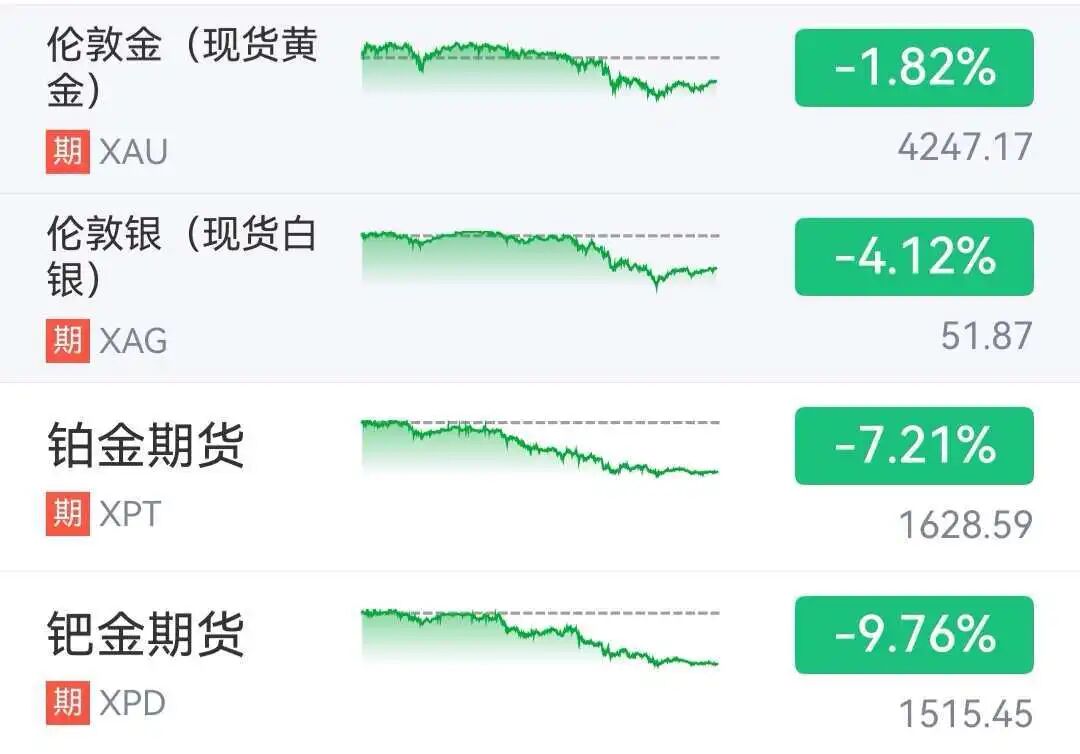
Group 1: Precious Metals Market - Precious metals experienced a collective decline after reaching historical highs, with gold down 1.82% to $4247.17 per ounce and silver down 4.12% to $51.87 per ounce as of October 17 [1] - The Shanghai Futures Exchange announced adjustments to trading limits and margin requirements for gold and silver futures contracts due to increased volatility, effective from October 21, 2025 [7] - HSBC's report indicates strong investor sentiment and diversification by official institutions supporting gold prices, with expectations for a continued upward trend until 2026, despite potential resistance if the Federal Reserve's rate cuts are fewer than anticipated [7] Group 2: Geopolitical Developments - Geopolitical risks have eased, with discussions of a potential meeting between Russian President Putin and U.S. President Trump in Budapest within two weeks [3] - Ukrainian President Zelensky expressed willingness for bilateral or trilateral talks to achieve peace, emphasizing the importance of U.S. security guarantees for Ukraine [4] - Trump stated it is time for Russia and Ukraine to reach an agreement to stop the conflict and avoid further casualties and unsustainable financial expenditures [6] Group 3: Oil Market Dynamics - International oil prices continued to decline, with Brent crude falling below $61 per barrel and WTI around $57 per barrel, attributed to a combination of supply surplus and weak demand [11][12] - The oil market is facing a supply-demand imbalance, with OPEC+ expected to increase production, exacerbating the situation [12] - Global macroeconomic uncertainties and trade tensions are contributing to a risk-averse market environment, impacting oil prices negatively [13]
连续去库 “锂”面有变 价格拐点已至?
Qi Huo Ri Bao· 2025-10-18 00:04
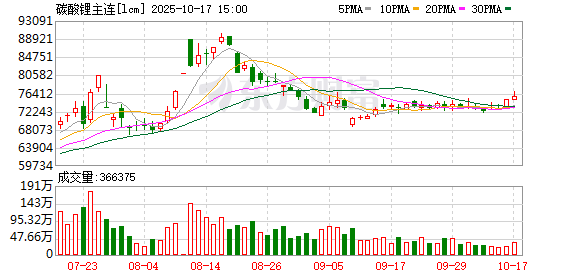
Core Viewpoint - Lithium carbonate futures have broken out of a prolonged consolidation phase, with the main contract reaching 76,840 yuan/ton, indicating a recovery from the decline observed in early September. The rise is attributed to marginal improvements in supply and demand fundamentals [2]. Supply Side - The supply side has shown signs of improvement, with increased production from certain mines alleviating concerns over supply uncertainty. Weekly lithium carbonate production reached approximately 21,100 tons as of October 17, marking a 431-ton increase from the previous week and setting a new historical high. Notably, production from salt lake sources grew by 7.2% [3]. - The resumption of operations at Zangge Mining on October 11 and ongoing resource verification in Jiangxi are expected to sustain high domestic lithium carbonate production, potentially exceeding 90,000 tons in October [3]. Demand Side - Demand for lithium carbonate remains robust, with significant growth in battery production and sales. In September, the combined production of power batteries and other batteries reached 151.2 GWh, reflecting an 8.3% month-on-month increase and a 35.4% year-on-year increase. Sales figures also showed strong performance, with a 9% month-on-month increase and a 42.2% year-on-year increase [3]. Market Dynamics - The current market is characterized by strong supply and demand dynamics. While supply is recovering, the demand side is performing even better, suggesting that lithium carbonate will continue to experience a depletion trend [3]. - There are uncertainties regarding key lithium mine supplies, particularly with the Ningde Times' Xianxiawo mining area, which has seen reduced inventory and lower operating rates at related smelting plants. This situation has led downstream companies to rely more on the futures market for securing raw materials, supporting the price increase of lithium carbonate [4]. Future Outlook - In the short term, the lithium carbonate market is expected to maintain a depletion trend and price increases due to the uncertain resumption timeline of the Ningde Times' mining area and stronger-than-expected seasonal demand. However, in the long term, significant price increases may attract more supply, and the overall supply-demand relationship is improving but not reversing [4][5]. - The expectation of reduced supply constraints has lessened, but the global lithium resource capacity is still in a release phase, which may exert pressure on the lithium carbonate fundamentals in the medium term [5].
金银铂钯,大跳水!俄乌局势,大消息!25%,特朗普签令开征!
Qi Huo Ri Bao· 2025-10-17 23:57
Group 1: Precious Metals Market - Precious metals experienced a collective decline after reaching historical highs, with gold down 1.82% to $4247.17 per ounce and silver down 4.12% to $51.87 per ounce as of October 17 [1] - Platinum and palladium futures saw more significant drops, with declines of 7.21% and 9.76% respectively [1] - The recent surge in gold and silver prices has led to increased volatility, prompting regulatory bodies to adjust trading limits and margin requirements for futures contracts [10] Group 2: Geopolitical Developments - Geopolitical risks have eased, with discussions of a potential meeting between Russian President Putin and U.S. President Trump occurring within two weeks [3] - The dialogue between Trump and Putin included topics such as U.S.-Russia relations and the ongoing Ukraine conflict, with Trump emphasizing the need to end hostilities for economic cooperation [4][8] - Ukrainian President Zelensky expressed a willingness to engage in bilateral or trilateral talks to achieve peace, highlighting the importance of U.S. security guarantees for Ukraine [7] Group 3: Oil Market Dynamics - International oil prices continued to decline, with Brent crude falling below $61 per barrel and WTI crude around $57 per barrel, attributed to oversupply and weak demand [12][13] - The oil market is facing a supply-demand imbalance, with OPEC+ expected to increase production, exacerbating the situation [13] - Geopolitical factors, including the recent ceasefire agreement in the Middle East and discussions between Trump and Putin, are expected to further weaken support for oil prices [14]