
Qi Huo Ri Bao

Search documents
债市 中长期布局正当时
Qi Huo Ri Bao· 2025-10-17 22:11
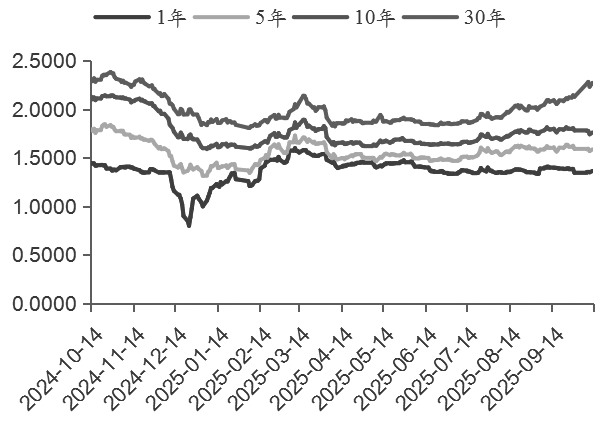
Group 1 - The bond market has experienced multiple shifts in logic this year, with tightening liquidity in Q1 leading to adjustments in short-term bonds, followed by pressure release in long-term bonds as liquidity turned loose in Q2 [1] - The 10-year government bond yield has risen to around 1.75%, with support expected near 1.8% after a 10 basis point rate cut this year [1] - The upward movement in bond yields since Q3 has been primarily driven by non-fundamental factors, indicating significant pressure on the bond market despite the central bank's efforts to maintain liquidity [2] Group 2 - The macroeconomic narrative has improved, but the bond market is still facing substantial pressure, with a bear-steep yield curve indicating stability in short-term bonds while long-term bonds have seen larger adjustments [2] - Recent inflation data shows a narrowing decline in PPI to 2.3% year-on-year, while core CPI has increased by 1%, suggesting a potential bottoming out of inflation, although demand remains a critical factor for further increases [4] - The bond market's attractiveness has diminished this year, leading to a higher likelihood of new funds entering the stock market rather than the bond market, resulting in reduced incremental funds and declining stock scale [4] Group 3 - The central bank's potential reinitiation of government bond trading is anticipated, especially if the bond market enters an overshoot state, with expectations for such actions remaining high for the year [5][6] - The central bank's objectives for restarting bond trading include liquidity management, influencing interest rates, and supporting government bond issuance [6] - Observations from September indicate a reversal in the decline of household deposits, suggesting a shift in market dynamics that could impact M1 growth, which needs further monitoring [7]

专家提醒:“量增利更增”或孕育新一轮猪价下跌的风险,多位受访者对四季度猪价走势发表看法
Qi Huo Ri Bao· 2025-10-17 10:35
Core Insights - The pig farming industry is experiencing a "volume increase and profit increase" trend in the first half of 2025, driven by cost reduction and improved farming techniques, with leading companies like Muyuan Foods seeing net profits surge over 1000% year-on-year [1][4] - Despite the growth in sales volume, the overall revenue of listed pig companies is declining due to falling pig prices in the third quarter [1] Revenue Disparity - Muyuan Foods leads the industry with over 75 billion yuan in revenue, followed by Wens Foodstuffs at approximately 32.7 billion yuan, and New Hope and Haida Group at 14.4 billion yuan and 9.7 billion yuan respectively [2] - The profitability of companies heavily relies on cost control, with several firms achieving net profit growth exceeding 150% through refined management and strategic adjustments [2] - The total sales volume of 24 listed pig companies reached 109 million heads, a year-on-year increase of 31.95%, indicating the effectiveness of the "volume compensates for price" strategy [2] Profitability Drivers - The profitability in the first half of 2025 was also influenced by a temporary mismatch in supply and demand, with early market supply pressure alleviated by farmers' pessimistic expectations [3] - The average breeding cost decreased from 14 yuan/kg in 2024 to 12 yuan/kg in 2025, with some companies reporting costs below 12 yuan/kg, mitigating the impact of falling pig prices [2] Financial Health and Debt Levels - Among 22 listed pig companies, 18 reported profits totaling 20.04 billion yuan, with 16 achieving positive net profit growth [4] - The average debt-to-asset ratio for 26 listed pig companies is 57.30%, a decrease of 5.68 percentage points from the previous year, although high debt levels remain a concern for some companies [4] - Companies like Tianyu Biological, Xinwufeng, and others have debt ratios exceeding 70%, indicating ongoing financial risks [4] Industry Development Trends - The pig farming industry is transitioning to a high-quality development phase, emphasizing the need for improved production efficiency and cash flow security [5] - Companies are advised to maintain a rational approach during profitable periods to avoid overexpansion, which could lead to future price declines [6] Market Outlook - Expectations for the fourth quarter suggest a weak and fluctuating pig price due to increased supply, although seasonal demand may provide some support [7] - The relationship between piglet supply and demand, futures and spot market linkage, and improved policy precision are emerging trends to watch in the industry [8]


近期菜粕供需形势分析
Qi Huo Ri Bao· 2025-10-17 03:41
Core Viewpoint - The reduction in imported canola seed from Canada due to anti-dumping investigations has significantly impacted China's canola seed imports, leading to low domestic crushing volumes and a potential shift in supply dynamics for canola meal and oil [1][4]. Group 1: Impact of Anti-Dumping Investigation - China's imports of canola seed have sharply decreased, with no imports expected in October and November, and only one shipment of 65,000 tons anticipated in December [1]. - The anti-dumping investigation has led to a theoretical profit margin exceeding 1,000 yuan for importing Canadian canola seeds, but the overall international canola prices are under pressure due to increased supply from new harvests [1][5]. - The relationship between China and Canada shows signs of improvement, which could lead to a potential cancellation of the anti-dumping investigation if trade conditions change [2]. Group 2: Supply and Demand Dynamics - From January to August, China imported 2.33 million tons of canola seed, a decrease from 3.42 million tons in the same period last year, with a significant drop in imports from Canada [3]. - The import of canola meal has not declined despite the reduction in canola seed imports, with a notable increase in imports from Dubai and India [4]. - The domestic demand for canola meal is expected to remain stable, with the supply being sufficient to meet the needs despite the seasonal decline in consumption during the fourth quarter [4]. Group 3: International Market Trends - The USDA forecasts a global canola seed production of 89.54 million tons for the 2025/2026 season, which is a slight decrease from previous estimates but still represents a historical high [5]. - International canola prices are under pressure, particularly for Canadian canola, which is experiencing a more significant price drop compared to other major producing regions [5].
翱兰农业油脂油料期货市场(上海)交流会成功举办
Qi Huo Ri Bao· 2025-10-17 03:28
Core Insights - The event "DCE Industry Tour - Production and Finance Base Training Activity" hosted by Aolan Agriculture successfully gathered over a hundred representatives from various sectors of the oilseed and oil market, highlighting the industry's strong interest in futures and derivatives knowledge exchange and risk management practices [1][16] - Aolan Agriculture's President for China and ASEAN, He Manxiu, emphasized the company's role in managing market risks through participation in futures trading, enhancing market liquidity and price transparency [1][3] - The rapid development of China's futures and derivatives market has significantly improved its ability to serve the real economy, with more enterprises utilizing futures tools to hedge against price volatility, particularly in the foreign exchange and commodity sectors [3][4] Industry Developments - The establishment of production and finance bases by futures exchanges is crucial for connecting financial tools with industry needs, helping enterprises, especially small and medium-sized ones, to effectively utilize futures and derivatives for risk management [4][5] - The global economic order is undergoing profound restructuring, with market participants needing to be cautious of the divergence between "emotional recovery" and "actual tariff increases" [7] - The soybean market is showing signs of bottoming out despite being in a bear market, with key factors such as La Niña's impact on South American production and China's purchasing decisions influencing market direction [9] Market Trends and Risk Management - The interlinkage between futures and options markets plays a vital role in responding to policy shocks, as demonstrated by the impact of tariff changes on market prices [11][16] - The roundtable discussions focused on trends in the oilseed market, with insights on U.S. soybean exports, domestic demand for soybean meal, and the implications of South American production on imports [13][14] - The outlook for domestic soybean oil consumption remains stable, with key factors including the recovery of the catering industry and export conditions being closely monitored [14][16]

企业收购不积极 国产大豆价格低开低走
Qi Huo Ri Bao· 2025-10-17 00:33
Core Viewpoint - The new season of early-maturing soybeans in Heilongjiang has begun harvesting, with a focus on production yield, quality, and market sentiment among farmers and downstream enterprises [1] Planting Area Growth - The soybean planting area in Heilongjiang has increased significantly due to factors such as planting profitability, policy subsidies, and crop rotation requirements, with an overall growth rate of approximately 8% [2] - The eastern region's planting area increased by 10%, while the western region saw a 7% increase compared to last year [2] - The average yield is expected to remain stable compared to last year, with some regions reporting yields between 300 to 560 jin per mu [2] Cost Reduction - Soybean planting costs have generally decreased, primarily due to a drop in land rental prices, which are now around 11,000 yuan per hectare, down by about 10% from last year [4] - The average planting cost in Heilongjiang is estimated to be around 14,500 yuan per hectare after subsidies, with the lowest cost being approximately 5,500 yuan per hectare [4] Price Trends - The opening price for the new season soybeans in Heilongjiang has shown a downward trend, with current purchase prices ranging from 1.8 to 2.0 yuan per jin [5] - There is a notable sentiment among farmers to hold onto their soybeans due to low initial prices, despite expectations of increased production [5] Demand Stability - The demand for domestic non-GMO soybeans remains relatively stable, with oil processing enterprises primarily using domestic soybeans for production [7] - Soybean food processing enterprises have stable procurement and production, focusing on quality and maintaining consistent supply [8] Trade and Market Dynamics - Domestic soybean prices are influenced by the procurement of South American soybeans, with Brazil's soybean import prices being competitive but not significantly advantageous over domestic soybeans [6] - The trading environment has become more challenging, with traders adapting to market fluctuations and utilizing futures and options for risk management [9]
刚刚 突破4350美元/盎司 金价再创新高!特朗普:将与普京在布达佩斯举行会晤
Qi Huo Ri Bao· 2025-10-17 00:14
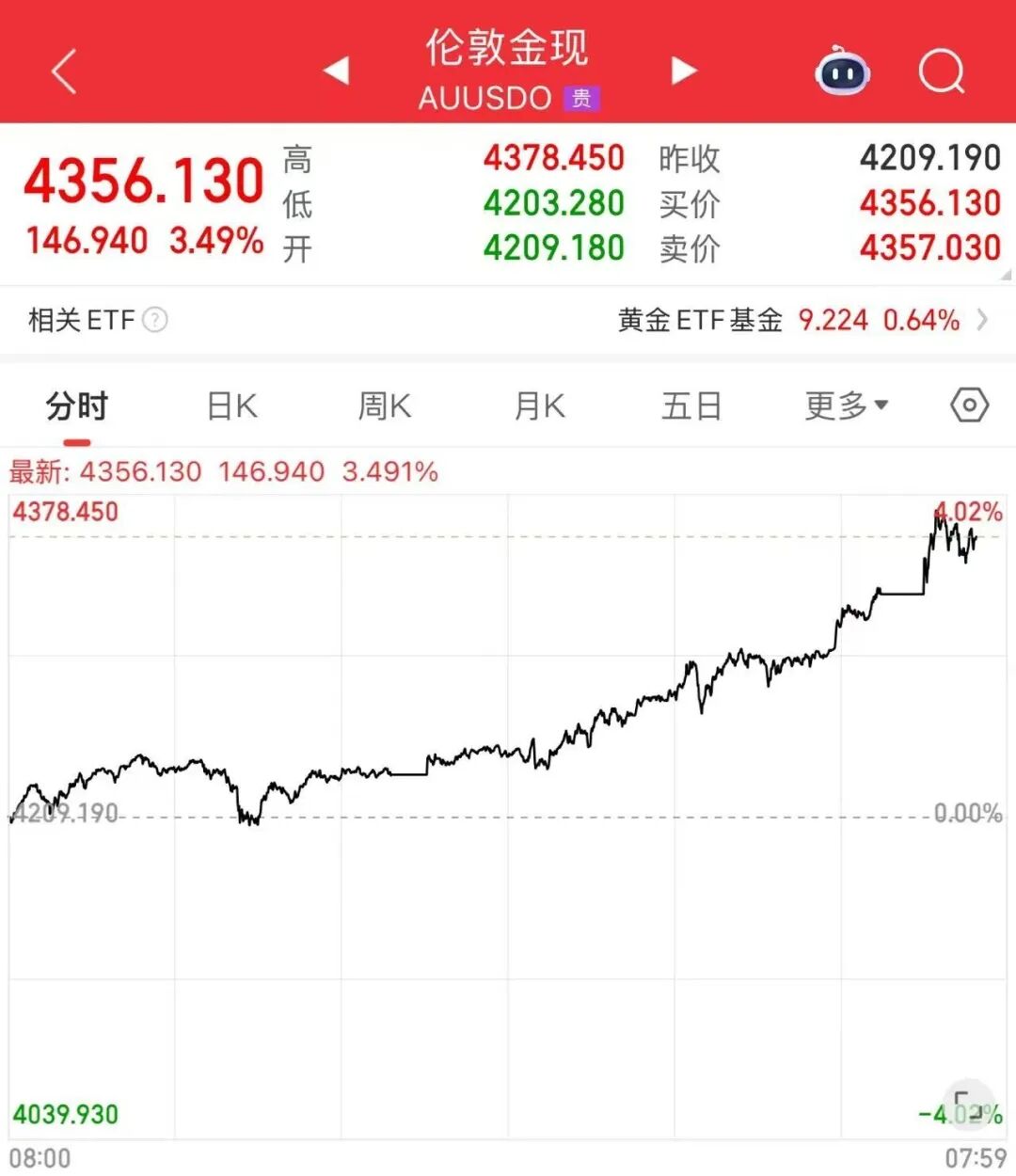
Group 1: US-Russia Relations - US President Trump announced a productive phone call with Russian President Putin, discussing the end of the Russia-Ukraine conflict and subsequent US-Russia trade issues [2] - A high-level US-Russia meeting is scheduled for next week, led by Secretary of State Rubio, with a location to be determined [2] - Trump and Putin plan to meet in Budapest to further discuss the resolution of the Russia-Ukraine conflict, with confirmation from Russian presidential aide Ushakov [2][3] Group 2: Gold Market - Spot gold prices surged, reaching a historical high of $4,378 per ounce before settling at $4,356.13 per ounce [5] - The Shanghai Gold Exchange and other institutions issued warnings about market volatility and advised investors to manage risks and invest rationally [7] - The World Gold Council noted that investor concerns about gold being overbought and potential rebounds in low interest rates and the dollar could pressure gold prices, while overall gold holdings remain low compared to historical highs [8] Group 3: Federal Reserve Policy - Federal Reserve Governor Milan advocated for a 50 basis point rate cut, although a 25 basis point cut is more likely, emphasizing the need for a gradual approach [10] - Another Fed Governor, Waller, suggested starting with a 25 basis point cut to assess market reactions before determining the policy path [11] - Milan expressed concerns about a potential weakening of the US GDP by the end of the year, indicating a cautious outlook on economic growth [12]



弱现实压制 锰硅价格持续低位震荡
Qi Huo Ri Bao· 2025-10-17 00:06
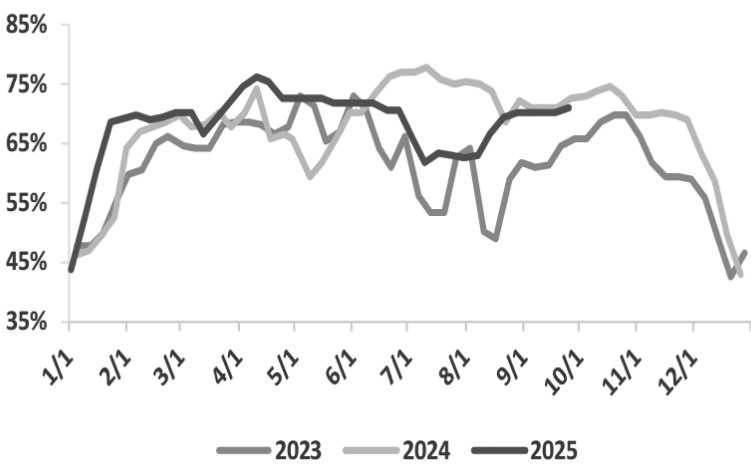
Core Viewpoint - After the National Day holiday, manganese silicon prices have shown a low-level fluctuation trend, with both futures and spot prices weakening [1] Supply Dynamics - The manganese silicon market is gradually returning to its fundamental industrial logic, with a September average daily production of 29,946.8 tons, an increase of 18.82% year-on-year [2] - Despite high supply pressure leading to a downward price trend, production remains relatively high, with an operating rate of 43.19% and an average daily output of 29,175 tons as of October 10 [2] - Production in major regions remains robust, particularly in Inner Mongolia with an average daily output of 14,280 tons, only slightly down from previous highs [2] - The Ningxia region shows the most significant reduction in production, with a recent average daily output of 6,015 tons, down 1,175 tons from its peak [2] Demand Conditions - Steel mills maintain stable production levels, with a high furnace operating rate of 84.27% and capacity utilization rate of 90.55%, both showing year-on-year increases [3] - Steel production remains relatively unchanged, with a weekly output of 8.6331 million tons, reflecting a slight decrease of 3.76 thousand tons [3] - The profitability of steel mills is deteriorating, with only 56.28% of sampled mills reporting profits, a decline over nine consecutive weeks [3] Cost Support - Manganese silicon production costs in northern and southern regions are reported at 5,836 yuan/ton and 6,276 yuan/ton, respectively, showing only minor declines from previous highs [4] - The main factors influencing manganese silicon costs, such as electricity and manganese ore prices, are trending weaker, but the stability of electricity prices and recent declines in manganese ore prices provide some cost support [4] - Overall, while supply contraction is limited and demand remains weak, there is some cost support, leading to expectations of continued low-level fluctuations in manganese silicon prices [4]
甲醇耐心等待做多机会
Qi Huo Ri Bao· 2025-10-17 00:02
秋季检修前置效应显著 甲醇秋检通常集中在8—10月,与春检形成互补。近年来,春检规模持续缩减导致检修需求后移,部分装 置因未能及时维护而出现计划外停车,企业不得不在秋季加大检修力度,形成"秋检前置"现象。2024年就 曾出现因春检推迟而导致秋检规模扩大的情况,2025年这一趋势仍在延续,从甲醇月度检修损失量中可见 一斑,特别是在2025年新增产能有限、实际可流通量不足的背景下,秋检对供应的收缩效应更为显著。 三季度,甲醇期货主力合约基本在2400元/吨附近维持区间震荡。从市场影响因素看,一方面,高库存压 力持续压制现货市场,对价格形成明显拖累;另一方面,内地价格保持坚挺,以及四季度下游新增装置投 产,给市场带来一定支撑。 MTO需求方面,山东联泓正在洽谈供应长约,预计10月开始备货。其烯烃新装置计划四季度投产,甲醇需 完全外采,届时将对甲醇需求形成拉动。此外,内地MTO装置的不定期外采也为需求提供一定支撑。 传统需求方面,受益于旺盛的出口,2025年四季度是醋酸和MTBE新装置的密集投放期。这些装置不仅以 外购甲醇为主要原料,且投产规模大、运行稳定,形成的需求增量将对甲醇市场构成显著支撑。此外,临 近冬季,甲 ...
“四川钢铁行业面临严峻挑战”!一封告知函引发市场关注
Qi Huo Ri Bao· 2025-10-16 23:45
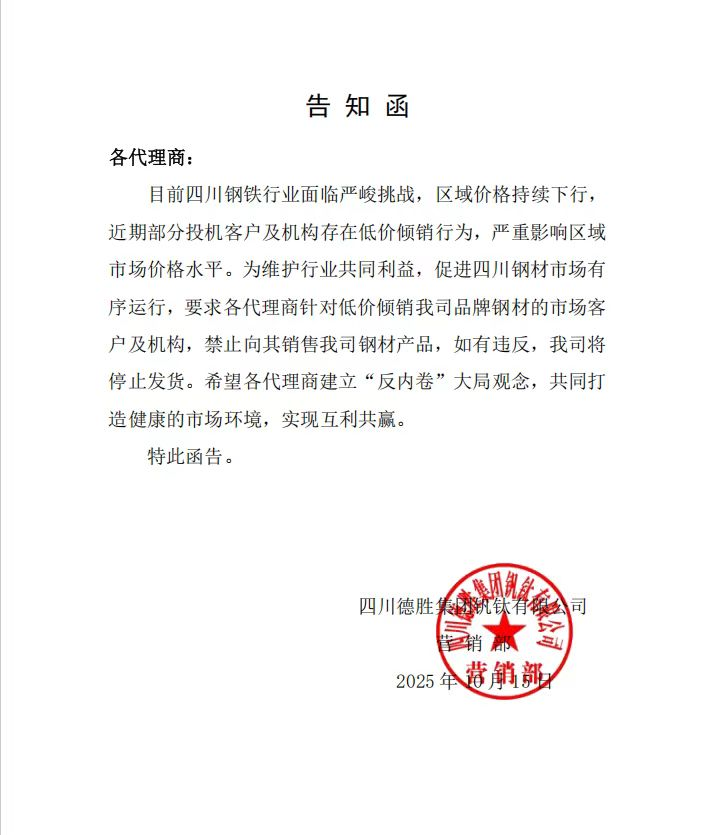
本周三,一封告知函成为钢铁市场的焦点。 东海期货黑色金属首席研究员刘慧峰告诉期货日报记者,近期川渝地区部分钢厂给代理商发出了稳价通 知函,这背后与8月份以来钢材价格持续下跌和钢厂利润持续下滑不无关系。四川作为内陆地区,其物 流成本相对偏高,这在一定程度上保护了本地钢铁企业的市场份额,但也使钢材价格容易受到外部因素 影响。 (文章来源:期货日报) 中信建投期货钢材研究员张少达表示,8月以来全国建材价格普跌,累计跌幅超200元/吨,钢厂生产利 润大幅收缩,经营压力显著增加。在行业"反内卷"背景下,钢厂维持市场良性运转的意愿强烈。近两年 四川地区供需格局出现了显著变化,周围省份钢厂增产较多,大量资源流入四川,且呈现逐年增加的态 势,对当地价格带来较大的冲击。 当前钢铁市场总体供需情况如何?刘慧峰告诉记者,一方面,当前钢材市场整体呈现供需失衡的格局, 旺季需求明显不及预期,国庆假期期间五大品种钢材库存累积127万吨。另一方面,供应持续处于高 位,铁水日产量一直维持在240万吨以上,且短期来看钢厂主动减产的意愿偏低。在供需失衡的格局 下,钢厂利润持续下滑,长流程螺纹钢利润已经降至70元/吨,热卷则已经出现亏损。 "随着 ...
期现结合赋能铝产业链韧性与安全水平提升!“2025期现融合助力铝产业高质量发展论坛”在郑举行
Qi Huo Ri Bao· 2025-10-16 23:44
Core Viewpoint - The aluminum industry is exploring high-quality development through the integration of futures and spot markets, addressing challenges such as market price fluctuations and rising costs while seizing strategic opportunities for transformation and upgrading [1][2][3]. Industry Overview - The global aluminum industry is facing structural adjustments in the supply chain, with challenges including price volatility and increased costs due to geopolitical tensions and a shift towards "safety and controllability" in economic development [2]. - The integration of futures tools with spot production is seen as a key driver for the industry, helping companies manage costs and inventory effectively, thereby stabilizing profits [3][4]. Risk Management - The complexity of risks faced by upstream and downstream enterprises in the aluminum industry is increasing, necessitating a focus on external uncertainties and shocks [2][4]. - There is a need for enhanced collaboration between futures companies and the aluminum industry to improve risk management capabilities, including the establishment of training alliances and digital service platforms [4][9]. Market Dynamics - The domestic electrolytic aluminum industry is currently in a high prosperity cycle, with profits leading among non-ferrous metals, supported by structural reforms and resilient demand from new economies [5][6]. - The supply side is nearing capacity limits, while demand from traditional sectors and emerging industries is expected to maintain a growth rate of around 2% annually [6][8]. Futures Market Development - The establishment of a complete risk hedging system in the domestic futures market, covering alumina, electrolytic aluminum, and casting aluminum alloys, is crucial for the high-quality development of the aluminum industry [8]. - The participation of enterprises in futures trading in Henan province has seen a growth rate of 23% over the past three years, with significant risk mitigation achieved through futures tools [8][9]. Strategic Recommendations - Companies are encouraged to adopt a proactive risk management approach, utilizing futures for hedging and opportunity capture rather than relying solely on directional bets [7][9]. - The development of a tiered risk control system is recommended, focusing on traditional futures integration, expanding the use of options, and fostering collaboration with futures companies for data sharing and operational efficiency [9].