
Qi Huo Ri Bao

Search documents
期价刷新3个月低点,聚酯产业如何摆脱“淡季涨价、旺季促销”的怪圈?
Qi Huo Ri Bao· 2025-09-21 00:16
Core Viewpoint - The polyester industry is experiencing an unusual pricing cycle characterized by "off-season price increases and peak-season promotions," deviating from the traditional pattern of "off-season promotions and peak-season price increases" [1][3][7] Group 1: Market Dynamics - On September 19, PTA and PX futures prices dropped significantly, with PTA prices falling below the critical support level of 4600 yuan/ton, despite being in the traditional peak season [1] - The average sales rate of polyester factories' polyester filament surged to 186.4% on September 10, with some factories reaching as high as 400%, but prices were unexpectedly lowered just five days later [3][4] - The polyester industry is facing a mismatch in supply and demand, with overproduction during peak seasons and underproduction during off-seasons, leading to price volatility [5][9] Group 2: Factors Behind the Pricing Cycle - External factors such as geopolitical tensions and rising oil prices have driven up raw material costs, prompting polyester companies to raise prices during off-seasons [8] - The structural mismatch in production capacity has been exacerbated by aggressive expansion by some companies, leading to oversupply during peak seasons and tight supply during off-seasons [9][10] - The current market structure has changed, with downstream weaving enterprises becoming more cautious in their purchasing behavior, affecting overall demand [10][11] Group 3: Impacts on the Industry - The pricing anomaly has created significant challenges for downstream weaving enterprises, which are now more hesitant to stock up on raw materials due to the risk of high costs [11][12] - Upstream producers benefit from price increases during off-seasons, while polyester manufacturers struggle with low margins and high inventory levels during peak seasons [14] - The imbalance in profit distribution across the supply chain has led to increased pressure on smaller enterprises, which lack the financial resilience to withstand price fluctuations [14][15] Group 4: Solutions and Future Outlook - Industry experts suggest that rebuilding trust between upstream and downstream players is essential to break the current cycle, emphasizing the need for collaboration and communication [16][17] - Addressing structural overcapacity and focusing on value competition rather than price competition are critical for the industry's recovery [17][18] - Expanding into new markets and fostering domestic demand for innovative applications are necessary steps to stabilize the polyester industry and restore healthy pricing cycles [18][19]
中美大消息!特朗普:双方在许多非常重要问题上取得进展,计划在明年早些时候访问中国
Qi Huo Ri Bao· 2025-09-20 02:13
Group 1: US-China Relations - The phone call between President Xi Jinping and President Trump on September 19 was described as pragmatic, positive, and constructive, focusing on stabilizing and developing US-China relations [1][2] - Xi emphasized the importance of mutual respect, peaceful coexistence, and win-win cooperation, urging both sides to avoid unilateral trade restrictions and to create a fair business environment for Chinese companies in the US [2][3] - Trump acknowledged the significance of US-China relations and expressed a desire for long-term cooperation, highlighting the potential for both countries to contribute positively to global peace and stability [2][3] Group 2: TikTok and Trade Negotiations - The discussions included the ongoing issue of TikTok, with China expressing its willingness to respect market rules and facilitate negotiations that align with Chinese laws [2][4] - The call was seen as a critical moment in the context of a 90-day "tariff truce" that is set to last until early November, indicating a potential easing of trade tensions [3] - Analysts noted that the communication between the two leaders sends a positive signal for future economic negotiations and may help alleviate trade-related tensions [3] Group 3: Oil Market Dynamics - Domestic crude oil prices fell nearly 2%, driven by concerns over weak demand, geopolitical factors, and increased production from OPEC+ [6][7] - Analysts pointed out that the US's poor demand outlook is overshadowing potential benefits from Federal Reserve rate cuts, leading to investor concerns about oil demand [6] - OPEC+ is set to increase production by 137,000 barrels per day in October, contributing to a supply surplus that is expected to keep oil prices under pressure [6][7] Group 4: Geopolitical Risks and Market Sentiment - Geopolitical tensions, particularly related to the Iran situation and the ongoing Russia-Ukraine conflict, are contributing to market volatility and influencing oil prices [8][9] - The seasonal decline in demand due to the end of summer electricity peaks in the Middle East and ongoing maintenance at US refineries is expected to further pressure oil prices [8][9] - The overall sentiment in the oil market remains cautious, with expectations of weak price performance unless geopolitical situations worsen significantly [9]


美联储降息“靴子落地” 货币政策预期博弈游戏刚刚开始?
Qi Huo Ri Bao· 2025-09-20 01:18
Group 1 - The Federal Reserve has restarted interest rate cuts, lowering the federal funds rate target range by 25 basis points to 4.00%-4.25%, marking the first rate cut of the year [1] - The decision to cut rates is based on weak economic data, easing inflation pressures, and a weakening labor market, which reinforced market expectations for a rate cut [1][4] - Financial markets exhibited a "buy the rumor, sell the news" phenomenon, with major U.S. stock indices initially rising but then retreating after the announcement, indicating a typical "buy the fact" reaction [1] Group 2 - The Fed's future rate cut pace will depend on three interconnected issues: the severity of the labor market's downturn, the speed at which policymakers adjust rates to neutral levels, and how to anchor the "neutral rate" in the current economic environment [1] - The Fed has expressed increased concern over "downside risks" in the labor market, adjusting its previous assessment of a "strong labor market" to a view of "slowing job growth and rising unemployment" [4] - Despite the Fed's rate cut, it is acting more slowly than the European Central Bank, and inflation remains a core constraint on further rate cuts, alongside risks in the housing market [4][5] Group 3 - The Fed views stabilizing long-term inflation expectations as a core monetary policy goal, with internal structural pressures on inflation still present despite manageable overall inflation [5] - The housing market shows signs of cooling, with weak demand and low existing home sales, which directly impacts monetary policy decisions [5] - Political uncertainties may influence the pace of rate cuts, but the Fed's independence is expected to maintain a gradual adjustment policy [7][8]
-20.13%!集运指数持续大跌 仍未触底?
Qi Huo Ri Bao· 2025-09-20 01:17
Core Viewpoint - The shipping index (European route) has been experiencing a significant decline, with the main contract dropping 6% to 1050.5 points, marking a 20.13% decrease over the last 10 trading days [1] Group 1: Market Trends - The Shanghai export container freight index saw a 14.3% month-on-month decline, reaching 1198.21 points, indicating weak demand in the European shipping market [1] - The shipping market has officially entered the off-season, with cargo volumes typically at their lowest from September to October, averaging an 8% month-on-month decline during September from 2013 to present [3][4] - The supply of shipping capacity has been increasing, with a 15% year-on-year rise in capacity from East China to Europe, leading to intensified price competition [3][4] Group 2: Pricing Dynamics - The average price for large containers in the 41st week is reported at $1450/FEU, the lowest level in 2023, down over $1900/FEU from the peak of $3370/FEU at the end of July [3] - Major shipping companies have reduced their quotes for small containers to below $1000/TEU and large containers to around $1400/FEU, with ongoing adjustments to European route quotes [3][4] Group 3: Future Outlook - Analysts suggest that the main contract still has room for further decline, with current prices approaching the breakeven point for some shipping companies [4][7] - The upcoming National Day holiday may impact the shipping index, with potential price adjustments expected as shipping companies announce their holiday schedules [6][7] - The market is divided on the potential for demand recovery in the peak season, with concerns over cargo volume shrinkage and high supply pressure influencing future contract pricing [7]
供强需弱 原油价格中枢或继续下移
Qi Huo Ri Bao· 2025-09-20 01:16
Group 1 - The core viewpoint of the articles indicates that the collective decline in domestic crude oil-related products is primarily driven by concerns over demand outlook, geopolitical factors, and OPEC+ production increases [1][2][3] Group 2 - Demand outlook is pessimistic, particularly in the U.S., which is the largest consumer of crude oil, overshadowing the potential positive effects of the Federal Reserve's interest rate cuts [1][2] - Geopolitical tensions, such as the reinstatement of UN sanctions on Iran and comments from U.S. President Trump, are contributing to market fears regarding oil supply stability [1][2] - OPEC+ has been increasing production since April, with a planned increase of 137,000 barrels per day in October, leading to a persistent oversupply in the market [1][2] Group 3 - The macroeconomic environment is shifting from tight to loose, with the Federal Reserve's monetary policy changes and developments in U.S.-China trade negotiations influencing commodity markets [2] - OPEC+ production in August reached 42.4 million barrels per day, an increase of 509,000 barrels per day from the previous month, contributing to the oversupply situation [2] - Geopolitical risk premiums are rising due to escalating tensions in the Russia-Ukraine conflict, which may further impact oil prices [2] Group 4 - Future OPEC+ production policies remain uncertain; increased production could exacerbate supply pressures, while reduced production might alleviate oversupply [3] - Seasonal demand changes are expected as the summer peak electricity demand in Middle Eastern countries ends, leading to decreased crude oil power generation needs [3] - The impact of the Federal Reserve's interest rate cuts on global economic recovery and subsequent oil demand will be crucial to monitor [3]
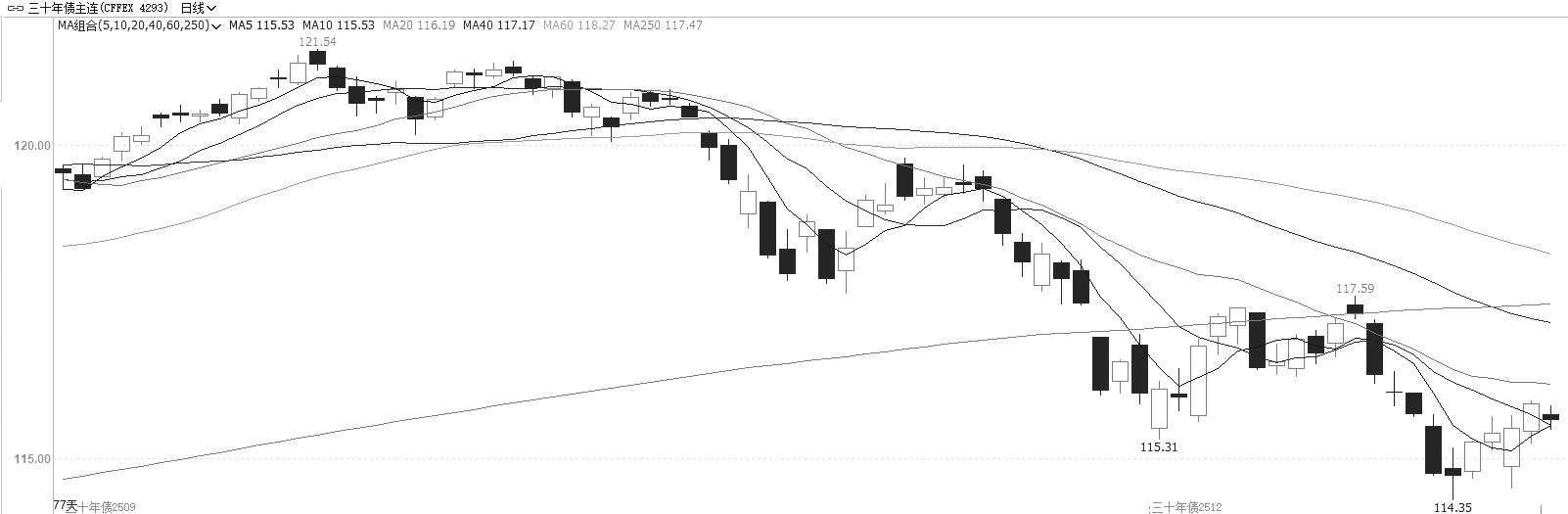
债市仍面临较大调整压力
Qi Huo Ri Bao· 2025-09-19 22:22
Group 1 - The market's pricing expectations for "anti-involution" have strengthened since mid-September, leading to some recovery in the bond market, but significant adjustment pressure remains due to macro factors and limited buying power [1] - The current bond market adjustment since July differs from the one in the first quarter, as the central bank's liquidity tightening in Q1 forced financial institutions to reduce leverage, causing significant pressure on large banks' liabilities [3] - The yield curve of government bonds has shown a pronounced bear steepening characteristic in the current adjustment, with long bonds, especially ultra-long bonds, experiencing larger adjustments compared to the relatively stable performance of medium and short-term bonds [3] Group 2 - Since the third quarter, there has been a marginal improvement in the domestic economy, with easing U.S.-China trade tensions and a reduction in market risk aversion, but the "anti-involution" policy has created three negative effects on the bond market: supply contraction, rising prices, and increased risk appetite [5] - Recent trading pressures from funds have been significant, with a focus on selling ultra-long government bonds while buying short-term bonds, leading to a rapid decline in the duration of bond funds [5] - The performance of major institutions indicates a potential return of institutional buying power around the 10-year and 30-year government bond yields, but the sustainability of this trend remains to be observed [8]
期货日报数据产品在郑州数据交易中心挂牌登记
Qi Huo Ri Bao· 2025-09-19 10:01
Core Insights - The "Futures Daily" data product named "Market Overview" was registered at the Zhengzhou Data Exchange Center on September 16, aiming to better unlock the value of data assets [1] Group 1: Product Overview - "Market Overview" is an online newspaper retrieval system that processes newspaper information from its inception in 1994 to the present, creating a standardized database that covers 30 years of market fluctuations, policy changes, and industry cycles [1] - The database is primarily structured in SQL format, making it easy to search and compute quickly, supporting one-click queries for various keywords [1] Group 2: Technical Specifications - The product features a complete subscription and reading logic, utilizing the vue2 universal framework for the front end and Java as the development language for the back end [1] - The business logic is built using the Springboot framework, with data access implemented through Mybatis, and it also supports API output access [1]
双胶纸 短期低位运行
Qi Huo Ri Bao· 2025-09-19 00:33
Core Viewpoint - The double-sided coated paper industry is facing challenges due to declining demand, high inventory levels, and low production margins, despite an increase in production capacity and some recovery in supply from major producers [3][4][10]. Industry Overview - Double-sided coated paper, also known as "Dawlin paper," is a major type of cultural printing paper, primarily used in book printing [1]. - The upstream products for double-sided coated paper are pulp, with production costs heavily reliant on various types of pulp, which account for 60%-70% of the total cost [2]. - The domestic production capacity of double-sided coated paper has grown significantly from 7.89 million tons in 2010 to an expected 18 million tons by the end of 2025 [2]. Supply and Demand Dynamics - The main downstream application for double-sided coated paper is book printing, which accounts for 88% of its usage [3]. - In 2024, the domestic production of double-sided coated paper is projected to be 10.49 million tons, reflecting a slight increase from the previous year [4]. - However, the production capacity utilization rate is low, averaging 62% in 2024, with a significant drop in production observed in early 2025 due to weak market demand [7][8]. Export and Import Trends - In 2024, the import volume of double-sided coated paper is expected to be 200,000 tons, while exports are projected at 968,000 tons, resulting in a net export of 770,000 tons [3][9]. - The net export volume has decreased in 2025 compared to the previous year, indicating a slowdown in overseas demand [9]. Inventory Levels - As of September 12, 2024, the total inventory of double-sided coated paper reached a record high of 1.744 million tons, with manufacturers and traders actively reducing stock levels [10]. Profitability and Pricing - As of September 12, 2024, domestic producers are facing losses of 135 yuan per ton, with historical price fluctuations showing a maximum profit of 1,562 yuan and a minimum loss of 874 yuan per ton [11][15]. - The price of high-quality double-sided coated paper is currently between 4,500 and 4,800 yuan per ton, with expectations of continued low prices due to high supply and inventory levels [15].
出口量同比大幅增长 尿素基本面维持宽松格局
Qi Huo Ri Bao· 2025-09-19 00:18
Core Viewpoint - Urea futures prices have shown a downward trend in early September, with a weak spot market and a bearish sentiment prevailing due to a lack of significant bullish drivers. It is expected that futures prices will maintain a weak oscillation trend in the short term [1]. Supply Summary - Despite some maintenance leading to a temporary drop in daily production to 190,000 tons, overall domestic urea supply remains relatively high. The production capacity utilization rate is at 79.34%, up 1.24 percentage points month-on-month. With fewer planned maintenance shutdowns, both production capacity utilization and daily output are expected to increase further [2]. - New production capacity is set to be released in Q4 2023, with daily production potentially exceeding 210,000 tons by 2026, which will exacerbate domestic supply pressure. Current inventories at urea enterprises are at a five-year high, totaling 1.1327 million tons, a 50% year-on-year increase [2]. - Production profits for urea have significantly declined year-on-year, with new gas flow bed production profits around 300 CNY/ton, traditional fixed bed production profits at about 50 CNY/ton, and natural gas process production profits at approximately 150 CNY/ton [2]. Demand Summary - Urea apparent demand from January to July 2023 was 41 million tons, an increase of 2.5 million tons or 8% year-on-year. However, agricultural demand is currently in a seasonal lull, and compound fertilizer companies are facing high finished product inventories and low operating rates, primarily purchasing urea as needed [3]. - Industrial demand, particularly from the real estate sector, remains weak, with a notable decline in plywood demand, leading to low operating rates in plywood factories [3]. - Although daily production of urea slightly decreased in early September, it is expected to rebound to over 190,000 tons by mid to late September due to the resumption of previously shut-down facilities and new capacity coming online. However, agricultural demand is unlikely to see significant improvement, and industrial demand is recovering slowly, providing insufficient support for prices [3].
橡胶板块集体下跌 市场风向变了?
Qi Huo Ri Bao· 2025-09-19 00:15
Core Viewpoint - The rubber sector experienced a collective decline in prices, primarily influenced by macroeconomic sentiments and supply conditions [1][2][3] Group 1: Price Movements - As of the midday close, the Shanghai rubber futures 2601 contract fell by 2.08% to 15,570 yuan/ton, the 20 rubber futures 2511 contract dropped by 2.34% to 12,300 yuan/ton, and the BR rubber futures 2511 contract decreased by 1.76% to 11,415 yuan/ton [1] - The decline in rubber prices is attributed to reduced bullish sentiment as the market adjusts to a slower pace of expected interest rate cuts by the Federal Reserve [1][3] Group 2: Supply and Demand Dynamics - The Southeast Asian production regions have entered a production peak season, leading to increased supply expectations for the fourth quarter [2] - Despite the rainy season affecting tapping operations, production is steadily recovering in major domestic and international regions [1][2] - Domestic natural rubber social inventory was reported at 1.235 million tons, a decrease of 22,000 tons or 1.8% from the previous period [2] - The actual demand during the traditional consumption peak season ("Golden September, Silver October") has not met expectations, with downstream enterprises purchasing based on need [2][3] Group 3: Market Outlook - Analysts predict that the rubber market faces dual pressures from high production levels and insufficient inventory reduction [3] - The overall demand remains limited, with uncertainties in the demand outlook for tires and automobiles due to global economic slowdown and trade risks [3] - Short-term forecasts suggest that natural rubber prices may continue to operate weakly until October, with attention needed on cost support and policy signals [3]