Qi Huo Ri Bao

Search documents
“豫”见未来 共期卓越:2026年投资机会与交易智慧全景透视
Qi Huo Ri Bao· 2026-01-11 23:35
1月9日,由期货日报与产业服务联盟联合主办的"2026年期货日报读者嘉年华暨期权精英荣誉盛典"在郑 州隆重举行。来自全国的期货及期权从业者、投资者教育专家、金融机构代表等齐聚一堂,围绕衍生品 市场创新发展、风险管理工具应用实践等议题展开深入交流,共同展望2026年市场新图景。 赋能行业生态:搭建服务实体经济的综合桥梁 作为年度首场行业盛会,本次活动以"'豫'见未来 共期卓越"为核心主题,汇聚行业智慧共探发展新局。 期货日报总经理兼总编辑陈邦华在开幕致辞中,深情回顾了期货日报三十余载的发展历程与时代使命。 陈邦华表示,期货日报的成长是一部与行业共生共荣的奋斗史。"我们的发展离不开产业服务联盟的协 同支持、实盘大赛合作商的全程护航、专家讲师的智慧分享,以及每一位普通交易者的真诚参与。正是 这些力量的汇聚,共同完善了我们的服务生态,也让期货市场服务实体经济、惠及广大投资者的路径愈 发清晰。"陈邦华说。 商品期权:聚焦高波动率品种与结构性行情 永安期货(600927)期权分析师郑捷飞就"2026商品+系列期权投资趋势"发表专题演讲。他认为,新一 年的商品期权投资应重点关注隐含波动率处于高位的品种以及由供需驱动的结构性 ...
透过“豆油期货”上市20周年,看中国油脂产业崛起
Qi Huo Ri Bao· 2026-01-11 23:29
Core Viewpoint - The 20th anniversary of Dalian Commodity Exchange's soybean oil futures marks its evolution into a cornerstone of China's oilseed market, reflecting the country's economic growth and the maturation of its futures market, while also enhancing risk management and price discovery functions [1] Group 1: Development and Achievements - Since its launch in 2006, soybean oil futures have grown significantly, with average daily trading volume increasing from 43,100 contracts to 445,000 contracts by 2025, and average open interest rising from 24,200 contracts to 844,400 contracts [4] - By the end of 2025, there are 33 delivery warehouses for soybean oil futures across seven provinces, ensuring ample delivery capacity and supporting industry participation in the futures market [4] - Over 90% of large and medium-sized soybean crushing enterprises in China utilize soybean oil futures for hedging, with the futures price becoming a key pricing benchmark for domestic soybean oil trade [4] Group 2: Market Adaptation and Risk Management - The Dalian Commodity Exchange has implemented various measures to ensure soybean oil futures remain closely aligned with the physical market, including expanding delivery regions and optimizing delivery standards based on raw material quality changes [2][3] - The introduction of dynamic premium and discount systems and the establishment of delivery warehouses in key production areas have enhanced the flexibility and efficiency of the delivery process [2][3] - Companies like Jianghai Grain and Oil Group have effectively utilized futures for risk management, demonstrating the integration of futures into their operational strategies to stabilize profits and manage price volatility [8][9] Group 3: Industry Transformation and Global Impact - The soybean oil industry has transitioned from reliance on foreign oil to a competitive landscape dominated by state-owned, private, and foreign enterprises, driven by the need for price risk management [5][6] - By 2025, China is projected to produce approximately 18.71 million tons of soybean oil, accounting for about 30% of global production and consumption, establishing itself as the largest producer and consumer [6] - The opening of the soybean oil futures market to foreign investors and the introduction of related contracts in international markets have enhanced China's pricing influence in global oilseed trade [14][15] Group 4: Future Directions and Strategic Importance - The development of soybean oil futures serves as a model for the broader Chinese futures market, emphasizing the importance of being rooted in the physical industry and driven by genuine risk management needs [16][17] - The collaborative efforts of regulatory bodies, exchanges, and industry participants have been crucial in nurturing a mature market that effectively serves the entire supply chain [17] - As the market evolves, companies are encouraged to enhance their risk management capabilities and leverage futures and options to navigate increasing market complexities and competition [18]

“出口退税取消”对PVC市场有多重要?
Qi Huo Ri Bao· 2026-01-11 23:29
1月9日,财政部、税务总局联合发布《关于调整光伏等产品出口退税政策的公告》,产品清单明确将 PVC粉、未塑化PVC、已塑化PVC纳入调整范围,核心影响条款关乎PVC出口:自2026年4月1日起,取 消PVC粉增值税出口退税。 目前,该品类的出口退税率为13%。该政策对PVC市场的深远影响,正引发产业界与资本市场的广泛关 注。 卓创资讯(301299)分析师李敏表示,这一政策将直接抬升出口成本。以当前国内PVC粉价格4500元/ 吨计算,退税取消后出口成本将增加约75美元/吨。 从出口基本面看,近年来中国PVC粉出口已成为弥补国内需求不足的重要支撑。数据显示,2024年出口 总量达261.7万吨,2025年预计突破380万吨,出口量持续攀升的背后,是全球需求增加与国内供大于求 格局的双重推动。 "即便抢出口带动价格短期反弹,大概率也是昙花一现。"阙云云坦言。 市场曾出现猜测,美国PVC货源或借机替代中国产品,填补海外需求缺口。但这一逻辑被基本面数据否 定。 阙云云介绍,美国PVC出口存在明确的区域锁定性:墨西哥和加拿大进口依存度超60%,且其中90%的 进口量来自美国,这意味着美国货源的核心市场是北美地区。"若 ...


中国证监会原副主席屠光绍:健全投融资协调功能对资本市场服务高质量发展具有关键作用
Qi Huo Ri Bao· 2026-01-11 23:04
Group 1 - The core task of coordinating investment and financing in China's capital market has become a strategic focus for the central government, emphasizing its importance for high-quality development and the construction of a strong financial system [1][2] - The term "comprehensive reform" in the context of deepening capital market reforms highlights the systemic and multidimensional nature of the work, aiming to create a complete ecosystem conducive to investment and financing coordination [1] - The coordination of investment and financing must be integrated into the overall planning of national economic and financial development, requiring a comprehensive approach that considers various levels and structures [1] Group 2 - In recent years, significant progress has been made in the coordination of investment and financing, with regulatory bodies implementing a series of institutional reforms and regulations [2] - Feedback from the market indicates that policy effects are gradually becoming evident, such as increased support for high-tech enterprises and a rise in long-term and patient capital entering the market [2] - As the functions of investment and financing coordination in the capital market improve, the market's role in supporting high-quality development and the construction of a strong financial nation will continue to enhance [2]
中东突发!美军大规模空袭,特朗普威胁!伊朗军方发声!有色金属市场运行亮眼
Qi Huo Ri Bao· 2026-01-11 01:52
Group 1 - The U.S. military confirmed a large-scale airstrike against ISIS targets in Syria as part of "Operation Eagle Eye," which was initiated in response to the deaths of two U.S. soldiers and a civilian translator in a prior attack [2] - The airstrikes occurred on December 10, 2025, targeting multiple locations associated with the extremist group [2] Group 2 - President Trump threatened intervention in Iran, stating that the U.S. is prepared to provide "help" amid ongoing protests and unrest due to rising prices and currency devaluation [3] - The Iranian military declared its commitment to defend national interests and urged citizens to unite against perceived foreign conspiracies, particularly from Israel and terrorist organizations [5] - The Israeli military is closely monitoring the situation in Iran but currently has no offensive intentions, focusing instead on defensive preparations [5] Group 3 - President Trump signed an executive order to protect Venezuelan oil revenues stored in U.S. Treasury accounts from being seized or entangled in legal proceedings, declaring a national emergency [7][8] - The executive order aims to ensure that these funds remain available to support U.S. foreign policy objectives regarding Venezuela's economic and political stability [7] Group 4 - The non-ferrous metals market has experienced significant price increases, driven by macroeconomic policies and strong demand in sectors like electric grid infrastructure [10] - Analysts noted that copper has shown particularly strong performance due to solid fundamentals, while aluminum faces potential demand risks despite current price strength [10][11] - The overall market sentiment is influenced by expectations of U.S. Federal Reserve interest rate cuts, which have bolstered prices across various metals [11][12]
【大宗周刊】港口期现聚新力!2025年大宗商品现货市场大事记
Qi Huo Ri Bao· 2026-01-11 00:43
Core Viewpoint - The construction of a national unified market is a strategic initiative aimed at facilitating domestic circulation, breaking regional barriers, optimizing resource allocation, and enhancing the resilience of industrial and supply chains, with the futures and spot markets playing a crucial role in this process [2]. Group 1: Market Integration and Innovation - Shandong Port Group's investment holding company has aligned with national strategic deployments, focusing on futures-spot integration innovation to enhance market functions and strengthen collaborative empowerment [2]. - The company has achieved a comprehensive futures-spot market system, becoming the first in the nation to implement a full license layout, integrating clearing houses, futures companies, risk management subsidiaries, delivery centers, and spot trading centers [2]. Group 2: Supply Chain Solutions - To address liquidity pressures faced by LPG clients, the company has developed a sales-based procurement model utilizing port inventory and electronic warehouse receipts, successfully activating 21,400 tons of LPG inventory [3]. - The company has explored a comprehensive service model for the rubber industry, helping partners save over 10% in production costs annually by eliminating intermediary trade markups and using futures tools to mitigate price volatility risks [3]. Group 3: Risk Management and Cost Reduction - The company has created an integrated supply chain service plan to manage risks associated with iron ore price fluctuations and variable import costs, effectively lowering overall costs for enterprises [4]. - A collaboration with Xinhua News Agency has led to the establishment of a commodity index system that provides authoritative price benchmarks, enhancing market monitoring and risk prevention capabilities [4]. Group 4: Technological Advancements - The company has launched the "Port Cloud Warehouse" electronic warehouse receipt service platform, leveraging advanced technologies like blockchain and big data, facilitating over 21 billion yuan in financing for clients [5]. - Regular cross-border RMB settlement for crude oil transactions has been established, promoting international market connectivity and resource allocation efficiency [5]. Group 5: Future Development and Strategic Goals - The company aims to continue enhancing its service capabilities and deepen futures-spot integration to support the construction of a national unified market and contribute to high-quality economic development [6].
光伏、电池出口退税新政出台,对市场有何影响?
Qi Huo Ri Bao· 2026-01-11 00:14
Core Viewpoint - The recent announcement by the Ministry of Finance and the State Taxation Administration regarding the adjustment of export tax rebate policies for photovoltaic and other products reflects the optimization and transformation of the country's support for the new energy industry, which will further promote high-quality development in the photovoltaic and lithium battery sectors [1] Photovoltaic Industry - The announcement states that from April 1, 2026, the value-added tax export rebate for photovoltaic products will be completely canceled, marking the first comprehensive cancellation since the industry was included in the export rebate policy in October 2013 [2] - The export rebate policy for the photovoltaic industry began in October 2013, allowing companies to enjoy a rebate rate of up to 50%. However, due to increasing competition, the rebate policy has been gradually optimized, with a previous reduction from 13% to 9% announced on November 15, 2024 [2] - The China Photovoltaic Industry Association noted that since 2024, the industry has faced fierce competition in overseas markets, leading to a "volume increase and price decrease" trend, where some companies engaged in low-price competition, effectively turning the export rebate into a subsidy for foreign buyers [2] - The cancellation of the export rebate is seen as a policy to promote high-quality development in the industry, with the adjustment expected to help stabilize export prices and reduce the risk of trade frictions [3] - The industry has begun to show signs of improvement, with upstream prices recovering to reasonable levels and downstream prices trending upward [3] Lithium Battery Industry - The announcement also includes a phased reduction in the export rebate for battery products, decreasing from 9% to 6% from April 1, 2026, and completely canceling it by January 1, 2027 [5] - The adjustment aims to guide the battery industry away from pure scale expansion and alleviate the pressure of homogenized competition, encouraging companies to enhance product technology and value [5] - Major battery exporters include companies like CATL and Guoxuan High-Tech, with CATL reporting a gross margin of 23% for domestic business and 29% for overseas business in the first quarter of 2025 [5] Short-term Market Dynamics - There is an expectation of a "rush to export" phenomenon in the short term as companies accelerate production and order fulfillment before the policy takes effect, potentially leading to a spike in export data [6] - The demand for lithium carbonate may see a short-term boost due to increased battery orders before the rebate cancellation, although the long-term impact may suppress demand due to increased costs [6] - Current inventory levels for lithium carbonate are rising, with a reported weekly inventory of approximately 110,000 tons as of January 8, indicating a shift towards marginal accumulation [6]


最高100万元!证监会大幅提高证券期货“吹哨人”奖励
Qi Huo Ri Bao· 2026-01-10 00:06
Core Viewpoint - The new regulations aim to enhance the whistleblower incentive system in China's capital markets, encouraging individuals to report significant violations in securities and futures, thereby improving market ecology and regulatory effectiveness [1][4]. Summary by Sections Whistleblower Definition and Purpose - Whistleblowers are defined as individuals or entities that possess knowledge of securities and futures violations and are willing to provide evidence to protect investors' rights [1]. - The implementation of these regulations marks a significant upgrade in the whistleblower incentive system in China's capital markets, impacting market ecology, regulatory efficiency, and investor confidence [1]. Reward Conditions and Amounts - The reward conditions have been improved, with the minimum penalty amount for rewards increased from 100,000 yuan to 1 million yuan [1]. - The reward percentage for cases has been raised from 1% to 3%, with specific caps: up to 500,000 yuan for significant leads and up to 1 million yuan for cases with national impact or involving insider whistleblowers [2]. Reward Process and Management - The China Securities Regulatory Commission (CSRC) will implement the whistleblower reward program based on the number of cases and budget considerations, with a structured process for announcing rewards and managing applications [2]. - The reward process will be initiated once the penalty amount collected can cover the reward, ensuring that each case is rewarded only once [2]. Protection Mechanisms for Whistleblowers - The regulations include measures to protect whistleblower identities, requiring anonymity and strict protocols for handling personal information [3]. - Any retaliation against whistleblowers, such as violence or job termination, will be met with severe penalties, including potential criminal charges [3]. Expected Impact on Market Behavior - The regulations are expected to significantly enhance regulatory effectiveness, encouraging internal personnel to report major violations like financial fraud and insider trading [4]. - The increased rewards and strict penalties for retaliation are anticipated to reduce the hidden nature of market violations and improve the detection rates of financial fraud [4].
一只“无形之手”推动银价上涨? | 破译金属新主线
Qi Huo Ri Bao· 2026-01-10 00:01
Core Insights - The current silver market surge is fundamentally different from the silver bubble of the 1980s, driven by a complex "invisible hand" rather than a single entity manipulating the market [1][2] Group 1: Historical Context - The 1980s silver bubble was characterized by the Hunt brothers controlling over half of the deliverable silver, leading to a price increase of 492% within six months before a market crash due to regulatory measures [1] - The current market conditions show similarities, such as high speculative interest, increased risk aversion, global monetary easing, and tight physical inventory [2] Group 2: Current Market Dynamics - The current silver price surge is driven by a "triple resonance": long-term structural supply-demand imbalance, declining global silver production, and increasing demand [2] - The global monetary easing cycle and a weakening dollar enhance the attractiveness of precious metals, while fluctuating U.S. tariff policies exacerbate physical inventory shortages [2] Group 3: Market Structure Changes - Unlike the past, the current silver market has a highly dispersed holding structure, making it difficult for a single entity to dominate [2] - The industrial demand for silver has increased significantly, rising from 40% to 65% of total demand, alongside evolving regulatory frameworks in trading exchanges [2] Group 4: Future Outlook - Short-term volatility is expected due to the year-end delivery peak and low global inventories, with potential passive selling pressure of around $4 billion in early 2026 from major commodity index rebalancing [2] - In the medium to long term, silver prices are expected to remain anchored to gold, supported by macroeconomic fundamentals, and will benefit from its ties to energy transition and technological advancements, highlighting its growth and inflation-hedging characteristics [2]
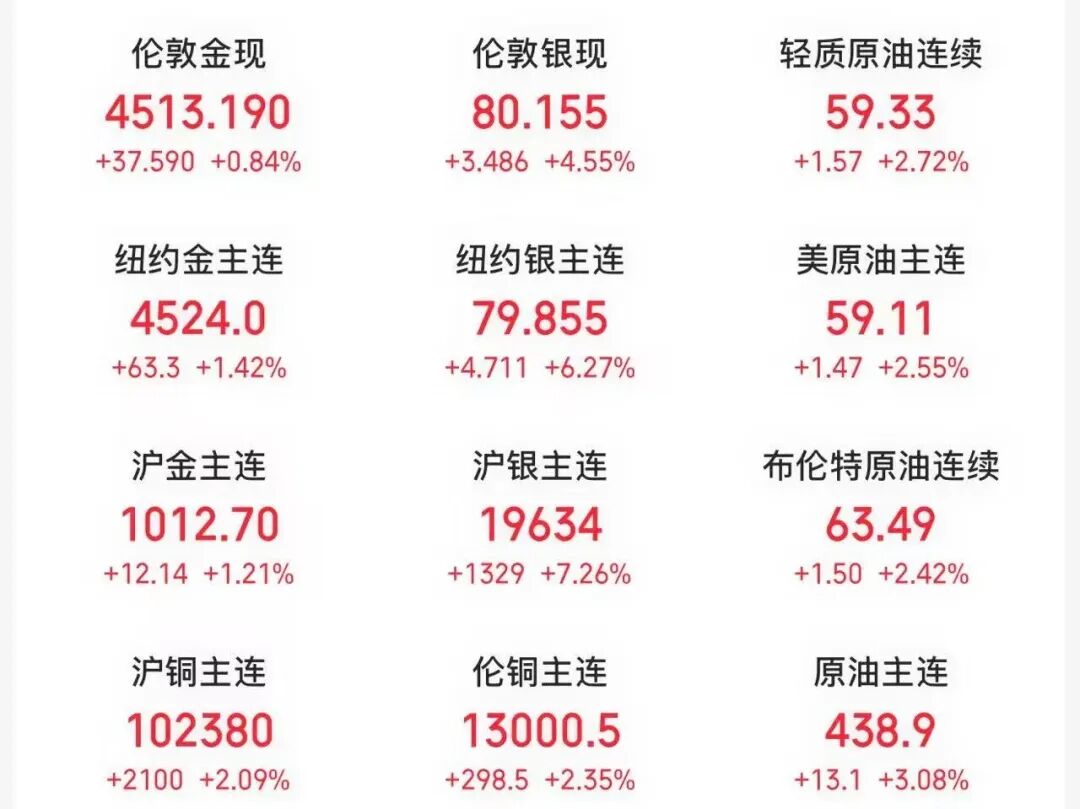
刚刚,特朗普称“无论难易”都要得到格陵兰岛!万斯警告欧洲:不配合将 “采取行动”!银价暴涨,油价大涨
Qi Huo Ri Bao· 2026-01-09 23:56
Economic Data - The U.S. non-farm payrolls increased by 50,000 in December 2025, below the expected increase of 70,000 and the previous value of 64,000 [1] - The unemployment rate in the U.S. for December 2025 was reported at 4.4%, better than the expected 4.5% and the previous 4.6% [1] Federal Reserve Outlook - The release of the employment data had minimal impact on the upcoming Federal Reserve meeting, with no expectations for a rate cut in January [1] - The probability of a rate cut in March dropped to 30%, and in April, it fell below 50% [1] - Morgan Stanley predicts rate cuts of 25 basis points in June and September, while Citigroup expects cuts in March, July, and September [1] Commodity Market Reaction - Following the employment data, silver prices surged significantly, with spot silver in London rising by 4.11% and New York silver futures increasing by 6.18% [2] - WTI crude oil futures for February rose by 2.35% to $59.12 per barrel, with a weekly increase of 3.14% [3] - Brent crude oil futures for March increased by 2.18% to $63.34 per barrel, with a weekly rise of 4.26% [3] Geopolitical Factors - U.S. President Trump announced a collaboration with the Venezuelan government regarding an oil tanker, indicating potential changes in U.S. policy to allow oil companies to operate in Venezuela [3] - Trump mentioned that major oil companies would invest at least $100 billion to rebuild Venezuela's oil infrastructure [3] Market Analysis - Analysts suggest that the recent rise in oil prices is primarily a rebound from previous declines, influenced by geopolitical tensions and expectations regarding Venezuelan oil supply [5] - The CBOE Oil Volatility Index (OVX) increased from 28.4% to 35.8%, indicating heightened market volatility [5] - Despite the current price increases, long-term forecasts suggest that oil prices may remain in a downward trend, with Brent crude expected to trade between $59 and $63 per barrel [6] Supply and Demand Dynamics - The global oil market is anticipated to face oversupply issues, with a projected surplus of 3.8 million barrels per day by 2026 [6][7] - The U.S. commercial crude oil inventory decreased by 3.832 million barrels, providing some short-term support for oil prices [5] - The potential return of Russian oil to the market following the resolution of the Ukraine conflict could exert downward pressure on oil prices [7]