CATL(300750)

Search documents
比亚迪李云飞谈换电闪充之争:都挺好的,是殊途同归;特斯拉半挂官宣阿拉斯加冬测!马斯克:今年将大规模量产丨汽车交通日报
创业邦· 2026-03-08 10:34
Group 1 - Tesla's VP Tao Lin announced that the company has built over 2500 supercharging stations and 12000 supercharging piles in mainland China, with many stations now open to other brands [2] - According to SNEResearch, global electric vehicle battery installation is expected to reach approximately 71.9 GWh in January 2026, a year-on-year increase of 10.7%, with CATL and BYD maintaining the top two positions [2] - Tesla's electric truck, Semi, is undergoing winter testing in Alaska, with plans for large-scale production this year [2] Group 2 - BYD's brand and public relations manager Li Yunfei commented on the competition between battery swapping and fast charging technologies, stating that both approaches are valid and aim to address user concerns about slow charging [2]





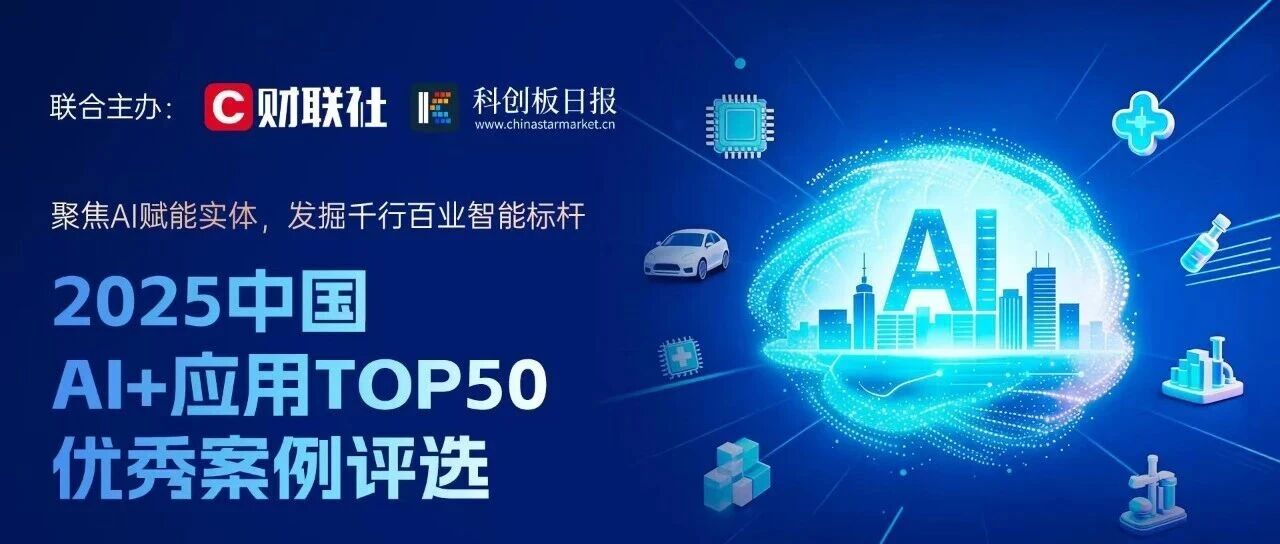
重磅揭晓!“2025 中国 AI + 应用 Top50” 优秀案例来了
财联社· 2026-03-08 07:28
Core Insights - The article announces the selection of the "Top 50 AI+ Applications in China for 2025," showcasing exemplary AI applications across various industries, highlighting the transition from technology exploration to large-scale implementation in the economy [1][20]. Group 1: AI Applications and Companies - The selected AI applications emerged from over 300 submissions, demonstrating significant advancements in sectors such as industrial manufacturing, financial services, education, and healthcare [20]. - Notable companies included in the Top 50 are Huawei, Ant Group, JD Group, and Ningde Times, each presenting innovative AI solutions like Huawei's CloudMatrix AI infrastructure and Ant Group's AI assistant [4][39][40]. - The applications are recognized for their high scene adaptability and effectiveness, with some improving industrial quality inspection efficiency and others enhancing financial risk response times [20]. Group 2: Future Initiatives - Following the selection, a new initiative called "AI Empowering Thousands of Industries Case Collection" will be launched to further explore and document AI applications, aiming to provide in-depth insights into real-world implementations and outcomes [21]. - The initiative seeks to engage a broader audience, encouraging participation from enterprises and teams involved in AI applications to enrich the practical landscape of AI [21]. Group 3: Recognition and Impact - The article emphasizes that the non-selected projects also hold significant value, showcasing unique innovations and potential for future growth within the AI ecosystem [20]. - The recognition of these AI applications reflects the industry's acknowledgment of AI's transformative potential in enhancing productivity and optimizing user experiences across various sectors [20].






储能行业数据点评:储能招投标和装机数据亮眼,集采涨价
GUOTAI HAITONG SECURITIES· 2026-03-08 06:46
Investment Rating - The report assigns an "Overweight" rating to the energy storage sector [2][3]. Core Insights - The energy storage sector has shown impressive installation data for January and February, with a capacity growth of +472%. The bidding capacity in February increased by +73.3%, and there has been a price increase in centralized procurement [2][3]. - The report anticipates strong demand for energy storage in 2026, suggesting a potential supply shortage. It recommends increasing holdings in the energy storage sector [2][3]. Summary by Sections Installation Data - In January and February 2026, the newly installed capacity for energy storage in China reached 9.51 GW/24.18 GWh, representing a year-over-year increase of +182.07% (power) and +472.06% (capacity). January's installation was 5.01 GW/14.61 GWh, while February's was 4.5 GW/9.57 GWh. Seven provinces exceeded 1 GWh in new installations, with Xinjiang leading at 1.48 GW/5.56 GWh [2][3]. Bidding Data - In February 2026, the newly added bidding capacity for energy storage reached 15.5 GW/53.9 GWh, with a year-over-year increase of +94.1% (power) and +73.3% (capacity). The actual bidding scale for new energy storage in February was 7.46 GW/46.6 GWh, showing a year-over-year increase of +103.6% (power) and +265% (capacity) [2][3]. Price Trends - The prices for centralized procurement of energy storage systems and cells have increased, reflecting ongoing raw material price hikes. In February, the average price for several procurement projects exceeded 0.5 CNY/Wh, with increases of 10-18% compared to December [2][3]. Recommended Stocks - The report recommends stocks such as Haibo Shichuang, Ningde Times, Yiwei Lithium Energy, Zhongchuang Innovation, and Aters for benefiting from the strong demand in energy storage systems and batteries. It also highlights Hunan Yuno as a key stock in the lithium material sector [2][3].



一周重磅日程:中美CPI;伊朗局势进展;甲骨文、寒武纪、宁德时代财报
华尔街见闻· 2026-03-08 05:50
Core Viewpoint - The article emphasizes the importance of monitoring macroeconomic data from the US and China, geopolitical developments in the Middle East, and upcoming earnings reports from key companies to gauge market sentiment and investment opportunities. Economic Data - The US is set to release its February CPI on March 11, with expectations of a month-on-month increase slowing from 0.3% to 0.2%, while the year-on-year figure is expected to remain at 2.5% [8]. - The "Fed's favorite inflation indicator," the January core PCE, will be published on March 13, with a projected month-on-month increase of 0.4% and a year-on-year rise to 3.1% [8]. - In China, February CPI and PPI data are anticipated, with projections of a CPI increase to around 0.9% and a narrowing PPI decline to -1.2% [10]. - The customs authority will release January-February import and export data, with expected export growth of 7% and import growth of 9% [11]. Geopolitical Developments - The article highlights the ongoing geopolitical tensions in the Middle East, particularly the election of a new Iranian leader, which could impact global market sentiment and oil prices [15]. - The US and South Korea are conducting joint military exercises from March 9 to 19, which may also influence market dynamics [17]. Technology and Industry Events - The US Department of Commerce is hosting a roundtable on American robotics manufacturing on March 10, aimed at promoting domestic industry development [18]. - The Global Artificial Intelligence Conference in Hangzhou will take place from March 12 to 14, featuring major AI companies like NVIDIA and Huawei [20]. Earnings Reports - A number of significant companies, including Oracle, NIO, and Saudi Aramco, are expected to release their earnings reports, which will provide insights into the performance of the tech and energy sectors amid current market conditions [27][28].


紧扣中期主线,隔膜、铜箔、负极或接力演绎
Changjiang Securities· 2026-03-08 01:26
Investment Rating - The investment rating for the industry is "Positive" and is maintained [11]. Core Insights - The lithium battery sector is experiencing internal rotation, with mid-term demand expected to continue rising. However, short-term price increases and negative feedback on demand may create volatility. If upstream supply issues ease, such as the resumption of lithium mica production by CATL, market confidence in demand may strengthen. Additionally, if industry production exceeds expectations or enters a peak season, price elasticity may increase, particularly for lithium carbonate, 6F, and iron lithium [3][30]. - In the mid-term, segments with stronger certainty and greater potential, such as separators, copper foil, and anodes, are expected to lead the market [3][30]. Separator Segment - The separator industry is entering a period of oversupply, with prices declining significantly, leading to reduced profitability for companies. The capacity utilization rate for wet-process separators is expected to recover positively due to sustained lithium battery demand [6][32]. - The penetration rate of wet-process separators is projected to increase, with expectations of a significant demand boost from the transition to 5μm products. This may lead to a tightening supply-demand balance and potential price surges in the future [6][42][50]. Copper Foil Segment - The copper foil industry is facing challenges due to supply-demand mismatches and technological iterations. However, the industry is at a cost support stage, with production expansion stagnating and profitability expected to recover as demand strengthens [8][58]. - The market for high-value low-profile (HVLP) copper foil is anticipated to grow rapidly, driven by high-frequency and high-speed requirements in AI servers, leading to a potential upgrade cycle [8][58]. Anode Segment - The anode segment is currently experiencing low profitability, with weak expansion intentions across the industry. Capacity utilization rates are expected to improve gradually, with potential catalysts needed for price increases, such as rising upstream petroleum coke prices or stricter energy consumption policies [9][30].



锂电产业链双周报(2026年3月第1期):比亚迪发布第二代刀片电池,欧盟发布工业加速法案提案
Guoxin Securities· 2026-03-08 00:45
Investment Rating - The investment rating for the lithium battery industry is "Outperform the Market" (maintained) [1] Core Insights - The lithium salt price has increased, with lithium carbonate priced at 155,000 CNY/ton, up by 12,000 CNY/ton compared to two weeks ago. The prices for electrolyte and lithium hexafluorophosphate have decreased, while the prices for phosphoric iron lithium and ternary cathode materials have increased [2] - The European Commission has proposed the Industrial Acceleration Act (IAA), aiming to increase the manufacturing GDP share from 14.3% in 2024 to 20% by 2035, with specific requirements for foreign direct investment [4][11] - BYD has launched its second-generation blade battery, which can charge from 10% to 70% in just five minutes, and has introduced a new flash charging technology with a power output of 1500 kW [4][14] Industry Dynamics - The demand for lithium batteries is expected to improve, with a focus on leading companies with low valuations such as CATL, EVE Energy, and others [3] - The solid-state battery industry is accelerating, with several companies making significant advancements in production and technology [9] - The domestic new energy vehicle sales in January 2026 reached 945,000 units, with a penetration rate of 40.3%, showing a slight year-on-year increase [4] Price Trends - The price of lithium carbonate has risen by 29.9% since the beginning of 2026, reflecting a year-on-year increase of 107.4% [18] - The price of phosphoric iron lithium has increased by 20.2% since the beginning of 2026 [18] Company Performance - CATL's stock price increased by 3.7% during the week from March 2 to March 7, while other companies like Zhuhai Guanyu and Rongbai Technology saw declines of 11.2% and 7.8%, respectively [7] - EVE Energy has signed a strategic cooperation agreement with XCMG Power, marking a significant upgrade in their partnership [10]

下一个五年,中国汽车该往哪走?
汽车商业评论· 2026-03-07 23:06
Core Viewpoint - The article emphasizes the significant advancements and future directions of China's automotive industry, particularly in the context of the government's strategic initiatives and the integration of new technologies such as artificial intelligence and smart driving [3][6][17]. Group 1: Government Report Highlights - The government report highlights that China's annual production of new energy vehicles has surpassed 16 million units, and the number of electric vehicle charging facilities has exceeded 20 million [3]. - The automotive industry has achieved a production and sales volume exceeding 34 million units, with exports ranking first globally for three consecutive years [3][6]. - The report outlines 20 key indicators, many of which are related to the automotive industry, emphasizing the importance of new production capabilities and the integration of emerging industries [3][6]. Group 2: Smart Driving and Regulations - Smart driving has emerged as a primary topic during the national two sessions, with a consensus on the need to improve legal frameworks and standards for high-level autonomous driving [10][15]. - The industry is transitioning from technology validation to large-scale commercial application, with L2-level driving assistance penetration expected to exceed 60% by 2025 [10][11]. - Suggestions include establishing a unified standard for autonomous vehicles and enhancing public understanding of the technology to facilitate its adoption [13][15]. Group 3: Artificial Intelligence Integration - The term "Artificial Intelligence+" is highlighted as a key focus, with the government aiming to integrate AI into various sectors, including manufacturing and smart driving [18][22]. - The core industry scale of AI is projected to exceed 1.2 trillion yuan, with over 6,200 companies involved [18][22]. - The emphasis is on optimizing product supply and deepening industry applications to unlock traditional and emerging market potentials [22][23]. Group 4: Energy System Diversification - The article discusses the need for a diversified energy supply system to support the growing demand for new energy vehicles, emphasizing the importance of establishing a standardized battery swapping system and promoting hydrogen energy [28][30]. - The development of hydrogen energy and methanol vehicles is highlighted as crucial for achieving energy security and reducing emissions [31][35]. - The establishment of a unified hydrogen refueling standard and infrastructure is recommended to enhance the efficiency and adoption of hydrogen fuel cell vehicles [31][34]. Group 5: Global Expansion and Quality Improvement - China's automotive exports reached 7.098 million units in 2025, marking a 21.1% increase year-on-year, with a focus on transitioning from quantity to quality in exports [52][55]. - The need for standardization and compliance in international markets is emphasized, with suggestions for building a common database for overseas market regulations to assist companies in navigating complex environments [56][57]. - The article advocates for collaborative efforts among automotive brands to enhance competitiveness in global markets [58]. Group 6: Talent Development and Supply Chain Security - The article stresses the importance of securing the supply chain and cultivating high-quality talent to support the automotive industry's transition to high-quality development [60][64]. - Recommendations include establishing innovation alliances among state-owned enterprises and educational institutions to address the challenges of talent shortages and technological independence [61][63]. - The need for a new educational framework to develop interdisciplinary talent in the automotive sector is highlighted, with suggestions for integrating practical training with academic education [65]. Group 7: Social Responsibility and Accessibility - The automotive industry is urged to focus on social responsibilities, particularly in enhancing accessibility for the elderly and rural consumers [67][69]. - Suggestions include improving charging infrastructure in rural areas and developing a "silver-friendly" travel ecosystem to accommodate the aging population [68][69]. - The article also discusses the need for a comprehensive approach to enhance the availability of accessible transportation services, including the establishment of standards for barrier-free taxis [73].




今日新闻丨新款小鹏G6超级增程版上市,售价18.68万元!极狐与宁德时代巧克力换电正式合作!新款仰望U7/仰望U8/仰望U8L上市!
电动车公社· 2026-03-07 15:53
Group 1 - The new Xiaopeng G6 Super Extended Range version has been launched with a price of 186,800 yuan [1][2] - The design of the new Xiaopeng G6 largely follows the current model, featuring a seamless LED headlight and a slightly adjusted front and rear design [4] - The interior maintains a simple and stylish design with features like dual-layer soundproof glass and an 800V+5C supercharging platform [6] Group 2 - The Xiaopeng G6 is equipped with a 110kW 1.5T range extender and a 218kW motor, with a CLTC pure electric range of 430 km and a WLTC fuel consumption of 5.9L/100km [8] - Xiaopeng's super range extension technology is being integrated across its product line, offering a comprehensive range of over 1,700 km [10] Group 3 - Extreme Fox has announced a deep cooperation with CATL for "Chocolate Battery Swap," aiming to enhance user charging experiences with a 99-second full charge [11] - More models are joining the "battery swap family," indicating a growing trend in the industry towards efficient charging solutions [14] Group 4 - New models of Yangwang U7, U8, and U8L have been launched, with prices ranging from 658,000 to 1,300,000 yuan [15][17] - The Yangwang U7 features the second-generation blade battery and offers a range of 860 km to 1,006 km, while the U8 has a comprehensive range of 1,205 km [19] - The Yangwang U8L has upgraded safety and privacy features, enhancing data protection for users [21]

宁德时代先后落地苏州与泉州!
起点锂电· 2026-03-07 10:52
Core Insights - The article highlights the significant expansion efforts of CATL (Contemporary Amperex Technology Co., Limited) in response to the growing demand for energy storage and AI technologies [5] Group 1: Company Developments - CATL has established a new subsidiary, Quanzhou Times New Energy Technology Co., Ltd., in Quanzhou, Fujian, with a registered capital of 2 billion yuan, focusing on new material technology promotion and battery manufacturing [3] - Another subsidiary, Suzhou Times New Energy Technology Co., Ltd., was also set up in Suzhou, Jiangsu, with the same registered capital of 2 billion yuan, indicating a strategic push in battery R&D and production [3] - The company signed a strategic cooperation agreement with the Ningde Municipal Government to promote a "zero-carbon technology" initiative, showcasing its commitment to sustainable development [4] Group 2: Industry Events - The second "Starting Point Lithium Battery Cylindrical Battery Technology Forum" will be held on April 10, 2026, in Shenzhen, focusing on advancements in all-tab technology and the cylindrical battery market [3] - The event will feature key sponsors and speakers from leading companies in the lithium battery sector, indicating a collaborative effort to drive innovation in the industry [3]

锂电2月洞察:春季淡季不淡,价格预先回暖
SINOLINK SECURITIES· 2026-03-07 07:45
Investment Rating - The report maintains a "Buy" rating for the electric power equipment and new energy industry [1] Core Insights - The lithium battery sector is experiencing a price recovery, with lithium carbonate prices rising by 10% to 175,000 CNY/ton and lithium hydroxide prices increasing by 5% to 164,500 CNY/ton [1] - In January, domestic wholesale sales of new energy passenger vehicles reached 790,000 units, reflecting a month-on-month decline of 4% and a year-on-year decline of 45% [1] - The report highlights a significant recovery in lithium battery production in March, with a month-on-month increase of 11% to 22% and a year-on-year increase of 37% to 56% [5] Summary by Sections Industry Insights - The global new energy vehicle market showed mixed results in January 2026, with Europe experiencing a strong growth of 25%, while China and the US saw declines of 4% and 25% respectively [4][31] - The demand for energy storage systems remains high, with a year-on-year increase of 65% in domestic installations in January, despite a month-on-month decline of 78% due to high base effects from December [5][39] Price and Production Trends - The lithium battery production chain is expected to see a price inflation cycle, with upstream resource costs impacting prices across the industry [3][14] - In February, the lithium battery supply chain experienced price fluctuations, with upstream prices rising while downstream prices faced pressure [6][47] New Technologies - The report emphasizes the critical phase for solid-state battery technology, with significant advancements expected in 2026, including the establishment of pilot production lines [6][15] - Sodium batteries are anticipated to see substantial market penetration in 2026, with expected production volumes reaching 20-30 GWh [15][18] Investment Recommendations - The report recommends focusing on companies involved in lithium carbonate, separators, and solid-state technology, including Ningde Times, Yiwei Lithium Energy, and Keda Li [7][26]