Luckin Coffee(LKNCY)

Search documents
一周上新!BON APPÉTIT、辛一铜锣烧、石头先生的烤炉...海内外新品资讯抢先看 | 全球职人情报站
东京烘焙职业人· 2025-10-12 08:32
Group 1 - The article highlights new product launches in the baking industry, showcasing various innovative items from different brands [2][4][5][6][7][10][11][12][15][18][21][23][26][29][32][35][37][40][42][45][47][49][52][55][57][60][62][64][67][70][72][75][79][80][82][85][86][89][92][96][100][105][107][111][113][115][118][121][123][125][130][132][134][136][139][141][144][145][147][149][150][152][155][159][161][162][163][164][165][166][167][168][169][171][172][173][175][177][179][182] Group 2 - The article discusses the rise of supermarket baking and the competition among chain bakeries, indicating a shift in consumer preferences and market dynamics [182] - It mentions the importance of fresh ingredients and innovative techniques in the baking sector, emphasizing the need for differentiation in a competitive landscape [182] - The article also touches on the challenges faced by bakeries, including closures and the need for operational efficiency to remain profitable [182]





9块9成过去时,咖啡价格战卷到2块9
3 6 Ke· 2025-10-12 00:11
Core Viewpoint - The coffee price war continues, with brands like Luckin and Kudi initiating aggressive pricing strategies, leading to a significant drop in coffee prices across the industry, now entering the 4 yuan+ era [1][2][10]. Group 1: Price War Dynamics - The coffee industry has seen a shift from a 9.9 yuan pricing model to a new low of 4.9 yuan initiated by new tea drink brands like Guming [2][3]. - Guming's promotional campaign offers coffee starting at 4.9 yuan, significantly undercutting previous prices and positioning itself as a "price butcher" in the market [2][3]. - The competition has intensified with established brands like Starbucks and Kudi also reducing prices, with Starbucks implementing its first price cuts in 26 years in the Chinese market [1][2]. Group 2: Market Impact and Consumer Behavior - The aggressive pricing strategies have led to a blurring of lines between coffee and tea beverages, with increased order volumes reported by various brands [5][10]. - The introduction of low-priced coffee options has altered consumer expectations, with many now perceiving 4 yuan as a reasonable price for coffee [2][10]. - The rise of brands like Lucky Coffee, offering prices as low as 2.9 yuan, has further intensified the competition, leading to a significant increase in order volumes at certain locations [7][9]. Group 3: Industry Challenges - The ongoing price war has resulted in over 50,000 coffee shops closing in the past year, indicating a challenging environment for many players in the market [10]. - High-end brands are not only participating in the price war but are also facing operational challenges, including layoffs and acquisitions, as seen with Starbucks and Piye Coffee [10]. - The industry is becoming increasingly segmented, with various price points catering to different consumer groups, highlighting the need for long-term strategies in supply chain and investment [10].
假期经济谨慎乐观
Zhao Yin Guo Ji· 2025-10-10 10:57
Macro Overview - The report indicates a cautious optimism regarding China's holiday economy, with moderate growth in consumption during the National Day holiday. Key trends include strong performance in green, smart, and experiential consumption [2][4] - Despite recent relaxations in real estate policies in first-tier cities, the real estate market remains weak, with a significant year-on-year decline in new and second-hand housing sales [3][6] - The report anticipates that core CPI and PPI growth will rebound, alleviating deflationary pressures, with liquidity conditions expected to remain loose for at least the next two quarters [2][7][8] Internet Sector - The online travel agency (OTA) sector shows resilience, with keywords "quality" and "long-distance travel" indicating strong demand. Long-distance travel bookings on Ctrip increased by 3 percentage points year-on-year [28][30] - During the holiday, Alibaba's Fliggy reported a 14.6% year-on-year increase in average transaction value, while Tongcheng Travel noted nearly 100% growth in outbound group travel bookings [28][31] - The report maintains a "buy" rating for Ctrip (TCOM US) and Tongcheng Travel (780 HK) based on these positive trends [28] Consumer Discretionary - The report expresses a cautious outlook for retail sales growth during the 2025 National Day holiday, attributing potential risks to high base effects from 2024, lack of government subsidies, and ongoing macroeconomic pressures [32][35] - The report highlights a preference for consumer downgrade themes and high-dividend stocks, with concerns over profit margin pressures due to increased competition and discounting [32][35] Automotive Sector - The report notes a significant divergence in sales during the National Day holiday, with new energy vehicles (NEVs) outperforming traditional fuel vehicles. The introduction of popular NEV models is expected to drive order growth [6][32] - The forecast for national passenger vehicle retail and wholesale sales in 2025 has been slightly raised, reflecting better-than-expected sales in Q3 and potential pre-purchase demand for NEVs [6][32] Real Estate Sector - The report indicates that the effectiveness of real estate policies is diminishing, with a notable decline in sales volume for new and second-hand homes during the holiday period [3][6] - The report anticipates that further easing measures may be necessary to stimulate housing demand, as sales data remains weak despite policy support [3][6] Selected Stocks - The report identifies several preferred stocks, including Luckin Coffee (LKNCY US), Guoquan (2517 HK), Green Tea Group (6831 HK), Jiumaojiu (9922 HK), Li Ning (2331 HK), Bosideng (3998 HK), and JS Global Life (1691 HK) [33][41]


瑞幸多个产品获“首创认证”,中国咖啡创新实力彰显
Zhong Guo Xin Wen Wang· 2025-10-09 06:24
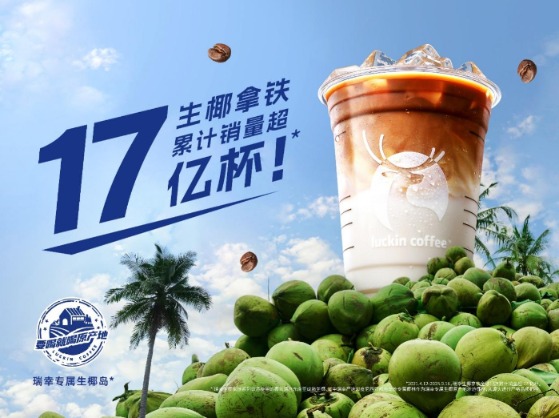
Core Insights - Luckin Coffee's three flagship products, including the Coconut Latte, Ice Coconut Latte, and Orange C Americano, have received the "Luckin Original" certification from an independent research institution, highlighting the company's innovative capabilities in the coffee industry [1][3] - The Coconut Latte has been recognized as the best-selling coconut latte globally, with over 1.7 billion cups sold as of September 2023, showcasing Luckin's significant impact on the coffee market and its role in upgrading China's coffee industry [2][3] Company Innovation - Luckin Coffee has established a digital product development system that continuously optimizes and upgrades product formulas, resulting in high-quality coffee beverages that appeal to health-conscious consumers [3][4] - The Coconut Latte combines plant-based coconut milk with coffee, creating a unique flavor profile that has led to its status as a phenomenon in the ready-to-drink beverage market [3][4] - The Orange C Americano has also gained popularity, with cumulative sales exceeding 350 million cups by the second quarter of 2023, reflecting consumer preference for healthier coffee options [3][4] Industry Impact - Analysts note that Luckin Coffee's ability to create multiple blockbuster products demonstrates its successful establishment of a scalable product innovation mechanism, positioning it as a significant innovator in China's ready-to-drink beverage industry [4] - The company has invested heavily in quality control, assembling a professional coffee research and development team and employing world champion baristas to design and develop coffee recipes, leading to multiple awards from the International Institute of Coffee Tasting [4][5] - Luckin Coffee has built smart roasting bases in Fujian and Jiangsu, with plans for additional facilities, creating a supply network with an annual capacity of 155,000 tons, ensuring efficient production and quality management [5] Future Prospects - The recent certifications from third-party institutions affirm Luckin's originality and systematic innovation capabilities, which are crucial in a competitive market characterized by homogenization [5] - As Luckin continues to expand internationally, it is expected to influence global coffee consumption patterns and enhance the impact of Chinese coffee culture [5]
国庆中秋假期陕西消费市场活力满满
Shan Xi Ri Bao· 2025-10-09 00:18
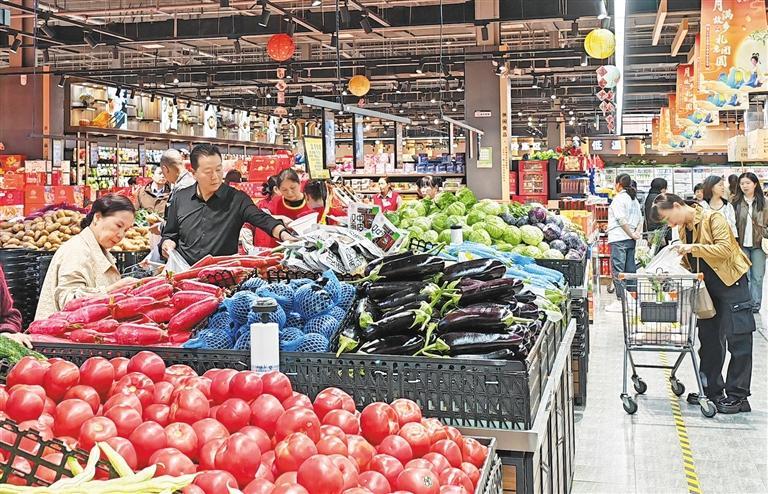
Group 1 - The core viewpoint of the article highlights the stable operation of the consumer market during the National Day and Mid-Autumn Festival holiday, with sufficient supply of daily necessities and a variety of promotional activities stimulating market vitality [6][7]. Group 2 - During the holiday period from October 1 to 8, the total retail sales in the province reached 1.483 billion, representing a year-on-year increase of 10.48%. Notable sales growth was observed in major retailers such as Hema, with a 53.9% increase, and Huazhong SKP, with a 19.41% increase [6]. - The province's catering sales amounted to 137 million, showing a year-on-year growth of 22.77%, with dine-in and takeout services increasing by 22% and 38.01% respectively [6]. - Various promotional activities were organized across the province, with 158 events aimed at enhancing consumer engagement, including the 2025 Shaanxi Service Consumption Season and the 20th Xi'an International Auto Show [7]. - The average daily trading volume of eight categories of daily necessities reached 27,682 tons from October 1 to 8, with stable prices observed in the market [8]. - The average wholesale prices of daily necessities showed mixed trends, with slight increases in vegetable and aquatic products by 0.2% and 0.1%, while prices for eggs, grains, meat, cooking oil, and poultry decreased by 0.7%, 0.4%, 0.3%, 0.1%, and 0.1% respectively [8].
Asian Food Chains Moving Stateside
Yahoo Finance· 2025-10-06 10:59
Core Insights - The article discusses the expansion of Asian food chains in the United States, focusing on Jollibee, Luckin Coffee, Kura Sushi, and Haidi Lao Hot Pot, and their potential as investment opportunities [1][22]. Jollibee - Jollibee is a Philippine-based fast food chain known for its fried chicken and unique spaghetti, with over 1,300 locations in the Philippines and nearly 500 internationally, including over 100 in North America [1][19]. - The company aims to expand its North American presence from about 100 to 250 locations through franchising, with average unit volumes of $4.2 million per year for company-owned locations [1][19]. - Jollibee's brand is as popular in the Philippines as McDonald's and Coca-Cola, and 60% of its U.S. customers are non-Filipinos, indicating a growing appeal beyond its traditional customer base [1][19]. - The company currently spends less than 2.5% of its total costs on marketing in the U.S., which may hinder brand recognition and average unit volumes as it expands [4][19]. - The management's focus appears to be on acquiring smaller beverage chains rather than solely promoting the Jollibee brand, raising concerns about the company's strategic focus [4][19]. Luckin Coffee - Luckin Coffee, a Chinese coffee chain, has made a significant comeback after a fraud scandal, now boasting over 26,000 locations globally and a revenue growth of 47% last quarter [7][10]. - The company operates on a low-cost, quick-service model, appealing to consumers seeking speed and efficiency rather than a premium experience [9][10]. - Despite its past issues, Luckin Coffee's current growth strategy and profitability metrics are seen as promising, with a lower price-to-sales multiple compared to Starbucks [7][10]. - The company has been expanding aggressively, opening around 2,000 new locations quarterly, and has seen double-digit growth in same-store sales [7][10]. Kura Sushi - Kura Sushi is a conveyor belt sushi restaurant expanding in the U.S. through company-owned locations rather than franchising, which may provide more lucrative returns for investors [11][12]. - The chain has about 75-80 U.S. locations, reporting restaurant-level operating margins of 17-18% and average unit volumes of $4.2 million [12][13]. - Despite its fun dining experience, Kura Sushi is not yet profitable due to high expenses associated with aggressive unit growth [13][16]. - The concept may face challenges in becoming a regular dining choice for consumers, as it is perceived more as a special occasion experience [13][16]. Haidi Lao Hot Pot - Haidi Lao Hot Pot is a high-end hot pot chain with over 1,400 locations globally and more than a dozen in the U.S., known for its unique dining experience [17][19]. - The company operates with low margins, reporting only 3% operating margins in the first half of the year, highlighting the importance of disciplined growth and operational efficiency [17][19]. - The niche market appeal of hot pot dining may limit its mass market success, requiring careful market selection for expansion [17][19].

名创分拆的潮玩品牌 TOP TOY 交表;麦当劳拟4年内新增1万家店;贝恩资本或竞购 Costa丨品牌周报
36氪未来消费· 2025-10-05 14:12
Group 1: Costa Coffee Sale - Coca-Cola is evaluating the sale of Costa Coffee, with Bain Capital emerging as a potential buyer, following initial discussions with private equity firms [3][4] - Costa Coffee was acquired by Coca-Cola for £3.9 billion (approximately 34.7 billion yuan) seven years ago, but is now being sold for £2 billion (approximately 19.4 billion yuan), indicating a significant decline in value [3][4] - The performance of Costa has deteriorated since its acquisition, with revenue dropping from £1.3 billion in 2018 to a slower growth rate, and only 400 new stores added globally in seven years [3][4] Group 2: Competitive Landscape - The coffee market is facing intense competition from established brands like Starbucks and emerging players such as Luckin Coffee and McCafé, which are impacting Costa's market share [4][5] - Costa's growth in China has been particularly challenging, failing to meet its target of 1,000 stores, with only around 500 currently operational [4][5] Group 3: McDonald's Expansion Plans - McDonald's plans to open nearly 10,000 new stores globally within four years, aiming to surpass its competitor, Mixue Ice City, which currently has 46,479 stores [6][8] - The strategy includes expanding in both urban and rural areas, focusing on increasing brand visibility and reducing operational costs through efficient supply chain management [6][8] Group 4: Goyard's Performance - Goyard's revenue surged by 64% to €810 million in the 2024 fiscal year, with a significant portion of sales coming from international markets [9][10] - The brand has maintained a high resale value, surpassing Hermès with a 104% retention rate, indicating strong consumer demand despite the overall luxury market downturn [9][10] Group 5: Mijia Ice City Acquisition - Mijia Ice City has acquired a 53% stake in Fresh Beer Fulu Family for approximately 297 million yuan, expanding its product offerings into the fresh beer market [11][12] - Fresh Beer Fulu Family, established in 2021, focuses on affordable fresh beer products, with prices ranging from 5.9 yuan to 9.9 yuan per 500mL [11][12] Group 6: TOP TOY's Market Position - TOP TOY, a brand spun off from Miniso, reported revenues of 6.79 billion yuan in 2022, with projections of 19.09 billion yuan by 2024, but struggles to differentiate itself from competitors like Pop Mart [14][15] - The brand primarily relies on collaborations with international IPs, which limits its brand recognition and profitability compared to Pop Mart's unique IP creations [15][16]




品牌主动营造场景、区域限定创造稀缺、IP内容强化情感:新茶饮成……
Xin Lang Cai Jing· 2025-10-04 05:34
Core Insights - The new tea beverage sector, including milk tea and fruit tea, has significantly contributed to the consumption boom during the dual holidays of National Day and Mid-Autumn Festival, enhancing the "brand + cultural tourism" synergy [2][6][7] Group 1: Consumer Behavior - New tea drinks have become a staple in consumers' leisure lives, with brands launching new products and limited editions to attract customers during the holiday season [2][5] - Emotional connections and brand loyalty play a crucial role in consumer choices, with many customers returning for specific flavors and brand collaborations [3][5] - The habit of consuming tea drinks has become ingrained in daily life, with consumers often ordering beverages during social outings or work breaks [5][6] Group 2: Brand Strategies - Local tea brands are leveraging "brand founder stores + limited economy + IP collaboration" to reshape consumer attraction and engagement [2][3] - The introduction of region-specific products, such as the "Guangdong limited" series by Ba Wang Cha Ji, exemplifies how brands are creating unique experiences to draw in tourists [6][7] - The combination of creating engaging environments, offering exclusive products, and enhancing emotional connections through IP content has effectively transformed tea drinking into a cultural experience [6][7] Group 3: Market Trends - The dual holiday effect has amplified consumer habits, leading to increased frequency of purchases, with some consumers shifting from occasional to daily consumption during holidays [5][7] - New tea drinks are evolving into cultural mediators, connecting local lifestyles with tourist experiences, thus becoming essential stops in travel itineraries [6][7] - The trend of "self-indulgence economy" and habitual consumption is reshaping holiday lifestyles, with tea drinks serving as both a beverage and a cultural symbol of the city [7]
2025福建民营企业100强:安踏第七,前六名营收均超过1000亿元
Sou Hu Cai Jing· 2025-10-03 09:25
Core Insights - The annual "Top 100 Private Enterprises in Fujian Province" reflects the development of the private economy in the province, with an entry threshold of 5.621 billion yuan, remaining stable compared to the previous year. The total revenue reached 241.973 billion yuan, a year-on-year increase of 3.0%, while total profits amounted to 17.2 billion yuan, also showing growth [1]. Financial Performance - The top 100 private enterprises contributed a total tax revenue of 63.6 billion yuan, increasing by 17.1%. They created employment for 973,000 people, up by 3.3%. Research and development investments by these enterprises reached 42.62 billion yuan, a year-on-year increase of 7.5%, with 71,000 R&D personnel, growing by 0.6% [1]. - There are 55 enterprises with revenues exceeding 10 billion yuan, an increase of 2 from the previous year. Notable companies include Fuyao Glass, Luckin Coffee, and Dali Foods [5]. Industry Distribution - The second industry comprises 66 enterprises with total revenue of 185.26 billion yuan and profits of 15.83 billion yuan, employing over 670,000 people. The third industry includes 34 enterprises with total revenue of 56.71 billion yuan, employing over 290,000 people. Manufacturing dominates, with the top ten companies holding nine positions [3]. - The electronic information industry saw a revenue growth of 33.38%, while the metallurgy and building materials sector experienced a profit increase of 46.4% [3]. Regional Distribution - Fuzhou leads with 36 enterprises on the list, generating total revenue of 967.01 billion yuan, accounting for 40% of the total revenue of the top 100. Xiamen follows with 27 enterprises, Quanzhou with 19, and other cities contributing fewer [3]. Notable Companies - Six companies have entered the "billion-dollar club," with notable revenue growth: Zhongjing Petrochemical (1.0963 billion yuan, +36.6%), Hengshen Group (1.0687 billion yuan, +22.5%), and Yongrong Group (1.0273 billion yuan, +24.2%) [7]. - Ningde Times continues to lead in multiple categories, achieving a revenue of 362.01 billion yuan, despite a year-on-year decrease of 9.7%. The company has served over 20.43 million vehicles and maintains the top position in global power battery installation for eight consecutive years [10]. Rankings - The top three companies remain unchanged: Ningde Times, Qingtuo Group, and Fujian Dadonghai Group, with revenues of 362.01 billion yuan, 143.7 billion yuan, and 122.05 billion yuan respectively [11].




别再“卷”价格了,中餐出海真正的护城河是合规
Hu Xiu· 2025-09-27 12:16
Core Viewpoint - The article discusses the current state and future potential of Chinese cuisine brands going global, emphasizing the importance of legal compliance and strategic planning in the process of international expansion [1][2]. Group 1: Legal Compliance - Legal compliance has become a critical factor for Chinese restaurants expanding overseas, with various legal challenges identified, including intellectual property, overseas investment, taxation, supply chain, labor, store qualifications, data security, and marketing [3][4]. - The first step for Chinese restaurants going abroad is to secure their intellectual property rights, as many brands face issues due to lack of prior planning and registration [5][6]. - Each country has its own trademark registration process, which can take from a few months to several years, necessitating early planning for trademark protection [6][7]. Group 2: Franchise Model - Currently, 80% of Chinese restaurant brands expanding internationally are using the franchise model, which is recommended due to its low cost, high efficiency, and minimal political risk [16][17]. - The franchise model serves as a cultural export vehicle, allowing for the dissemination of Chinese culinary culture without the complexities associated with technology or national security [18][19]. - Legal barriers for franchising are relatively low, as many countries have harmonized their commercial laws, making it easier for brands to operate internationally [20][21]. Group 3: Compliance Risks - Common compliance risks for Chinese brands in international franchising include non-compliance with franchise qualifications and contracts, often due to inadequate legal preparation [27][28]. - Non-compliance can lead to severe consequences, including civil liabilities, administrative penalties, and potential criminal charges in some jurisdictions [34][35]. - Countries like Malaysia and the U.S. have specific legal requirements for franchising that must be adhered to, including trademark registration and disclosure obligations [36][37]. Group 4: Strategic Recommendations - Companies are advised to conduct thorough legal risk assessments and compliance research before entering foreign markets, focusing on intellectual property, franchising, and overseas investment [47]. - The article emphasizes the need for a proactive approach to compliance, suggesting that brands should not rely on last-minute preparations [48][52]. - It is crucial for brands to maintain a cooperative spirit in international markets, avoiding competitive sabotage that could harm the overall image of Chinese cuisine abroad [54][56].