吉利

Search documents
五年后惊呆自己?数据揭示巨变真相,结果让所有人意外!
Sou Hu Cai Jing· 2026-01-05 09:46
Group 1: Internet Industry Transformation - The internet landscape has been reshaped significantly over the past five years, with companies like Pinduoduo and ByteDance altering market boundaries and user engagement [3][5] - Pinduoduo has steadily closed the gap with Taobao by focusing on retail, while ByteDance has expanded into various fields with high success rates [3][5] - The competition in the internet sector remains fierce, with major platforms continuing to grow and integrate deeply into daily life, impacting the flow of information and goods [5] Group 2: AI Development in China - AI gained traction in China around 2025, marked by significant events such as the first major AI application acquisition for $2 billion by Meta [5][7] - Chinese AI companies face different challenges compared to their Silicon Valley counterparts, particularly in terms of computing power and user payment willingness [7] - The development strategies of Chinese AI firms are pragmatic, focusing on mature product offerings to meet local market demands [7] Group 3: New Energy Vehicle (NEV) Industry - The NEV sector in China has evolved rapidly, with the share of pure fuel vehicles expected to drop to 50% by 2025, showcasing a complete cycle from explosion to intense competition [9][11] - Major players like Geely and BYD are adjusting strategies to enhance competitiveness, while newer entrants like Xiaomi are avoiding early pitfalls [11] - The NEV industry's growth has positioned China as a global leader, demonstrating resilience and adaptability in a challenging market environment [11][13] Group 4: Market Trends and Future Outlook - The period from 2021 to 2025 has highlighted the transformative power of time, with significant advancements in internet, AI, and NEV sectors [13][14] - The investment landscape has seen indices in A-shares and Hong Kong stocks return to and exceed 2021 peaks, indicating a robust recovery [13] - The next five years are expected to bring further unexpected changes, with a focus on maintaining a proactive and innovative approach to ensure quality development in China's industries [14]


2025汽车智能化复盘:从狂热到理性的转折之年
3 6 Ke· 2026-01-05 08:43
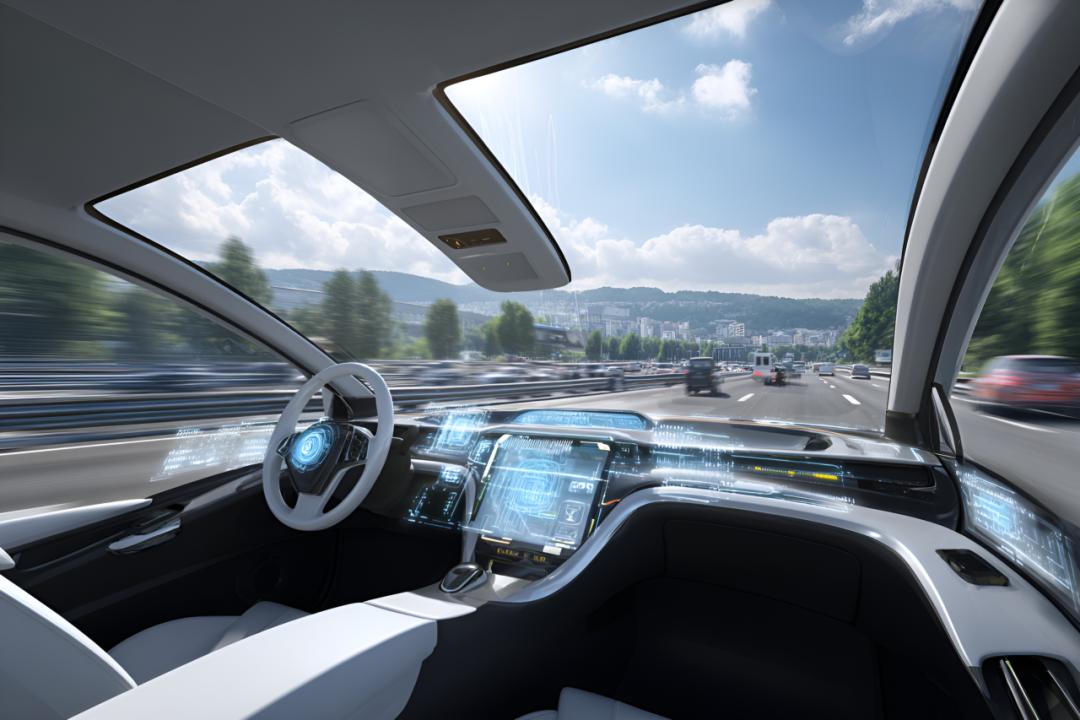
Core Insights - The year 2025 is seen as a watershed moment for automotive intelligence, with significant advancements in smart driving technology and regulatory frameworks [1][3] - The concept of "smart driving equity" is introduced, allowing vehicles priced at 70,000 yuan to feature advanced driving assistance systems, thus redefining market standards [5][20] - The industry is experiencing a shift from high-end exclusive features to more accessible smart driving technologies across various vehicle price segments [3][5] Group 1: Technological Advancements - BYD's "smart driving equity" initiative includes the launch of the "Tianshen Eye" system across its entire range, from 69,800 yuan to luxury models, challenging the notion that smart driving is only for high-end vehicles [5] - Major AI models like DeepSeek and Huawei's Pangu are being integrated into vehicles, enhancing user interaction through semantic understanding and proactive service capabilities [7] - The introduction of the Huawei ADS 4.0 system marks a significant regulatory compliance breakthrough, enabling conditional Level 3 autonomous driving on highways [10] Group 2: Regulatory Developments - The tragic accident involving a Xiaomi SU7 led to the establishment of the strictest Level 2+ smart driving regulations, mandating clear labeling of system capabilities and prohibiting misleading advertising [8] - The release of the "Automotive Industry Stabilization Growth Work Plan (2025-2026)" officially opens the door for Level 3 autonomous driving under specific conditions, establishing a framework for responsibility and insurance [14] Group 3: Market Dynamics - China's new energy vehicle penetration rate exceeded 50% in 2025, with exports reaching 4.95 million units, significantly outpacing Japan's 3.06 million units [20] - The integration of high-level smart driving and intelligent cockpit features in exported vehicles is becoming a key factor for international consumers [20] - The automotive industry is transitioning from a focus on technological showcases to scalable implementations, with smart driving technologies extending beyond urban environments to industrial applications [22]
12月新能源车销量跟踪:目标兑现度分化,战略选择成关键变量
Haitong Securities International· 2026-01-05 08:42
Investment Rating - The report does not explicitly state an investment rating for the automotive industry but indicates a challenging outlook for the market moving into 2026 due to increasing volatility and structural changes [7]. Core Insights - Major automakers reported December and full-year sales results, with a notable decline in the typical year-end "pull-forward" effect, leading to double-digit month-on-month declines for most OEMs [7][8]. - The fading demand driven by subsidies is expected to put sustained pressure on the automotive market in China, with a forecast of increased volatility and market restructuring [7][8]. - The divergence in target fulfillment among automakers reflects the alignment of corporate strategies with actual market demand, with some companies exceeding targets through effective segmentation and cost efficiency [16]. Summary by Relevant Sections December Sales Performance - BYD sold 420,000 units in December, an 18% year-on-year increase but a 13% month-on-month decline, achieving a full-year target of 4.602 million units [8][9]. - Geely's December sales reached 240,000 units, a 13% year-on-year increase but a 24% month-on-month decline, with a full-year target of 3.025 million units achieved [9]. - Leapmotor delivered 60,000 units in December, a 42% year-on-year increase, surpassing its annual target of 500,000 units ahead of schedule [10]. Strategic Positioning and Market Demand - Companies that effectively matched their strategic positioning with market demand were able to meet or exceed their sales targets, while others that relied heavily on specific products or technologies underperformed [16]. - NIO achieved a record 48,000 units in December, with a full-year delivery total of 326,000 units, reflecting a 74% target achievement rate [15]. - Xiaomi Auto exceeded 50,000 units in December for the first time, achieving over 400,000 units for the full year, aligning with its revised guidance [12]. Future Outlook - The report anticipates intensified competition in the electric vehicle segment, particularly for companies like Li Auto, which aims to maintain its leading position while facing uncertainties in its battery electric vehicle strategy [13]. - The overall market dynamics suggest that companies will need to adapt to changing consumer preferences and competitive pressures as they move into 2026 [16].

申万宏源研究晨会报告-20260105
Shenwan Hongyuan Securities· 2026-01-05 01:24
Group 1: Nanshan Aluminum (南山铝业) - Nanshan Aluminum is positioned as a rare growth target in the electrolytic aluminum sector, with a focus on dividends and share buybacks, reflecting confidence in its growth potential [4][12] - The company is expected to achieve net profits of CNY 5.0 billion, CNY 5.46 billion, and CNY 5.84 billion for the years 2025, 2026, and 2027, respectively, corresponding to P/E ratios of 12x, 11x, and 10x [4][12] - The report anticipates a 15% upside potential based on a target P/E of 13x for 2026, indicating a favorable valuation compared to peer companies [4][12] - Key assumptions include increased alumina production from Indonesia, with projected sales volumes of 2.76 million tons in 2025, 4.36 million tons in 2026, and 4.56 million tons in 2027 [12] - The report highlights that domestic electrolytic aluminum capacity is nearing its peak, while global supply growth is slowing, suggesting a favorable supply-demand balance for the industry [12] Group 2: Hanhigh Group (悍高集团) - Hanhigh Group is expected to achieve revenues of CNY 3.595 billion, CNY 4.525 billion, and CNY 5.653 billion for 2025, 2026, and 2027, respectively, with net profits of CNY 706 million, CNY 942 million, and CNY 1.237 billion [4][15] - The company is rated as "Buy" based on its current valuation being below the average of comparable companies for 2026 [4][15] - Hanhigh Group's growth is driven by cost reduction and brand strength, with a CAGR of 29% in revenue and 59% in net profit from 2019 to 2024 [12][13] - The company focuses on product innovation and cost efficiency, leveraging its own production capacity to enhance profitability [12][13] Group 3: Market Overview and Investment Strategy - The report identifies a favorable market environment for the spring season, with expectations of continued upward momentum in the stock market due to improved economic indicators and liquidity [22] - The "Top Ten Gold Stocks" for January 2026 include companies like Hualu Hengsheng, Lingyi Zhi Zao, and Alibaba, indicating a diversified investment strategy across sectors [14][22] - The automotive industry is highlighted for its recovery potential, particularly with the introduction of new subsidies and the expected improvement in demand for mid-range vehicles [24]
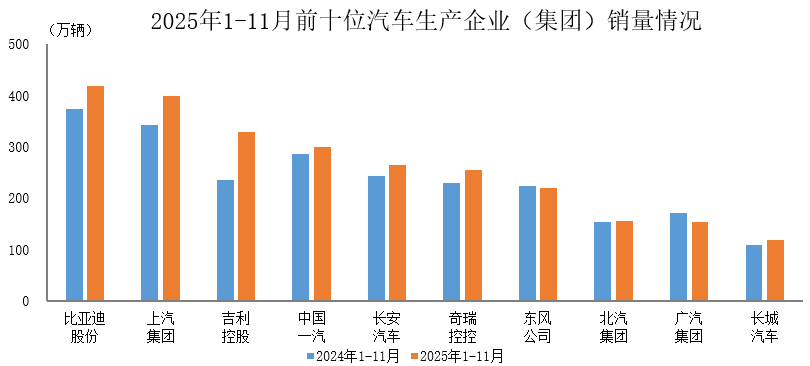
观车 · 论势 || 疾风知劲草,新局自此开
Zhong Guo Qi Che Bao Wang· 2026-01-05 01:24
Core Viewpoint - The Chinese automotive industry in 2025 is characterized by a "reversal," with a shift from irrational competition and price wars to a more regulated and innovative landscape [1][5]. Group 1: Industry Regulation and Order - The internal forces seeking order have awakened, leading to a collective consensus against "involution" in the industry, with various government departments implementing measures to regulate competition [1][2]. - The Ministry of Industry and Information Technology and other agencies have introduced comprehensive governance measures to address irrational competition, resulting in a significant reduction in promotional pricing and discounts in the passenger car market [1][2]. Group 2: Corporate Integration and Efficiency - Major automotive companies are undergoing integration to enhance efficiency and reduce costs, as seen with Geely's integration of Zeekr and NIO's consolidation of brands [2]. - The trend of corporate integration reflects a consensus among automakers to pool resources and strengthen their competitive positions in the market [2]. Group 3: Innovation and Technology - Innovation is driving the industry forward, with advancements in technology making features like assisted driving more accessible, as evidenced by a 64% penetration rate of combined assisted driving vehicles in the new car market [3]. - The automotive industry's boundaries are blurring as companies expand into areas like robotics and smart devices, indicating a long-term evolution of technology and business models [3]. Group 4: Market Expansion and Globalization - Incentive policies such as trade-in programs are effectively stimulating the existing market, while the expansion of charging networks and sales channels is awakening the potential of county-level markets [4]. - China's automotive exports reached 6.343 million units in the first 11 months of the year, marking an 18.7% year-on-year increase, with a shift towards new export models like technology and localized production [4]. Group 5: Future Outlook - The automotive industry is expected to continue addressing "involution" in 2026, with new guidelines being introduced to ensure compliance in pricing behavior [5]. - The industry aims to achieve stable growth while navigating uncertainties such as policy changes and international market conditions, striving for a more competitive and resilient automotive landscape [6].
宇树科技回应“上市绿色通道被叫停”;苹果回应国行版AI上线;段永平再晒部分苹果持仓,累计收益率超16倍;巴菲特退休后最新发声丨邦早报
创业邦· 2026-01-05 00:10
Group 1 - Yushu Technology clarifies that it has not applied for the "green channel" for IPO and that its listing work is progressing normally [2][3] - Apple has initiated a gray test for its "Apple Intelligence and Siri" feature on some domestic devices, with feedback suggesting the AI responses are based on existing Baidu answers [2][3] - Warren Buffett, after retiring, expressed confidence in the new CEO Greg Abel, stating that the company is likely to continue operating for another 100 years [3] Group 2 - Investor Duan Yongping revealed a cumulative return of 1623.48% on his Apple stock investments, amounting to approximately $34.26 million [3] - Meituan has had 3.25 million shares frozen due to a court order, with the freeze lasting for three years [4] - The control struggle at Double Star Celebrity Group has intensified, with founder Wang Hai publicly severing ties with his son and daughter-in-law [5] Group 3 - XPeng's Vice President Chen Yonghai has left the company, with President Wang Fengying temporarily taking over his responsibilities [7] - Romaishi has initiated a restructuring plan called "Rebirth Plan," aiming to complete funding and restructuring by Q1 2026 [8] - GAC Honda has completed the acquisition of Dongfeng Honda Engine Company, changing its name to GAC Honda Engine Company [8] Group 4 - Filorga, a well-known beauty brand, announced the closure of its official flagship store due to strategic adjustments, with the store set to cease operations on January 31, 2026 [8] - Tesla's restaurant has seen a significant drop in customer traffic and the departure of its celebrity chef within six months of opening [8] - The domestic tourism market during the New Year's holiday saw 142 million trips, with total spending reaching 84.79 billion yuan [23] Group 5 - China's automobile exports to Venezuela increased by 130% in 2025, with a total of 17,099 vehicles exported [24] - In November 2025, China's automobile exports reached 818,000 units, a year-on-year increase of 49.2% [24]

“人们常常低估了五年能有的改变”丨晚点小数据 2025
晚点LatePost· 2026-01-03 15:02
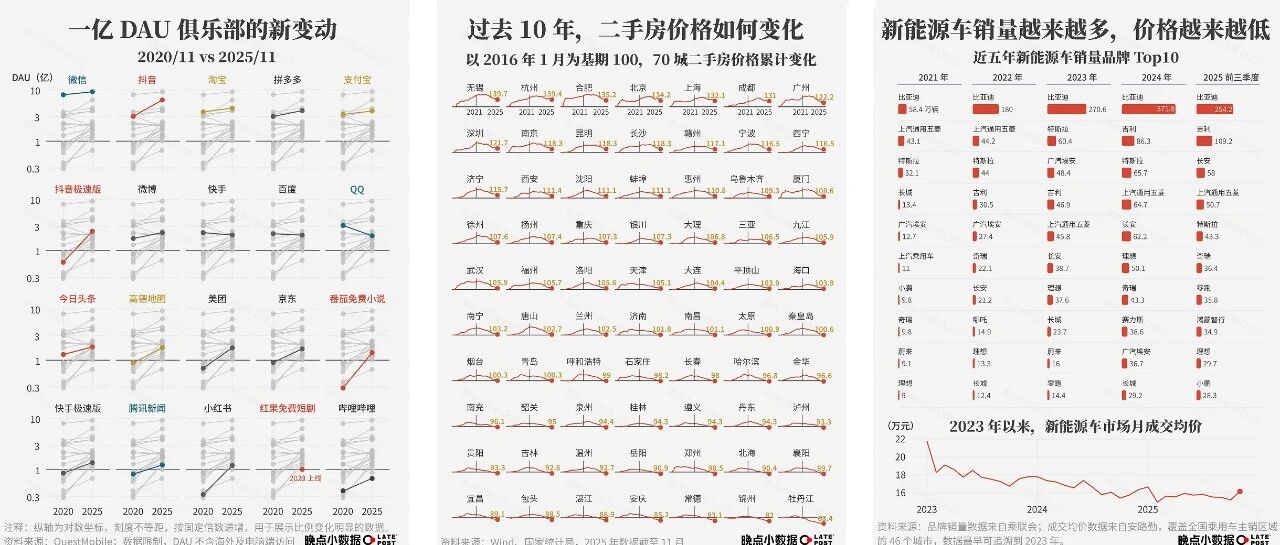
Core Viewpoint - The article emphasizes the long-term changes in consumer behavior and industry dynamics over the past five years, highlighting how events from 2021 continue to shape the current landscape [4][5]. Group 1: Industry Changes - In 2021, several industries were just beginning to emerge, such as AI and new energy vehicles, with companies like Li Auto and NIO selling cars priced at 300,000 to 500,000 yuan, while BYD set mainstream models above 200,000 yuan [5]. - The penetration of internet platforms into daily life was less pronounced five years ago, with platforms like Pinduoduo just starting to become profitable and not yet dominating the market [5]. - By 2025, ByteDance has become a significant player in various sectors, including e-commerce, with its GMV ranking third in the industry, while maintaining high growth rates [12]. Group 2: Company Performance - Alibaba's CFO stated that maintaining profits would be foolish given the competitive landscape, indicating a shift towards aggressive investment strategies among major players [9]. - Pinduoduo has significantly closed the gap with Taobao in terms of user base and shopping habits, focusing solely on retail without diversifying into AI or food delivery [11]. - ByteDance's revenue and profit levels are projected to reach those of Meta by 2025, with a strong focus on AI driving its growth [14]. Group 3: AI Development - The AI sector in China saw significant investment, with ByteDance spending 150 billion yuan in one year, while Alibaba announced a three-year investment plan of 380 billion yuan [33]. - Chinese AI companies are facing different challenges compared to their Silicon Valley counterparts, particularly in user monetization and computational resources [33]. - The user base for AI applications in China is limited, with only about 100 million daily active users across various platforms, indicating a need for more engaging and entertaining products to attract users [43]. Group 4: Consumer Behavior and Market Trends - Over the past five years, consumer spending has increased, but inflation has stagnated, leading to a trend of low-margin sales across industries [50]. - The average price of new energy vehicles in China has dropped to 169,000 yuan, reflecting intense competition and a return to traditional automotive industry dynamics [64]. - The automotive market is characterized by a price war, with companies like Geely and BYD adjusting their strategies to maintain competitiveness [75].


新年第一问:“舞动”2025之后,机器人行业如何挺进2026?
Tai Mei Ti A P P· 2026-01-03 10:04
Core Insights - The Chinese robot industry is experiencing significant growth and transformation, with advancements in hardware manufacturing and increased investment driving the sector forward [2][3][4] Group 1: Industry Trends - The robot industry in China is set to gain visibility and momentum, particularly with the anticipated presence of robots at the 2026 Spring Festival Gala, reflecting broader industry trends [1] - The domestic supply chain for humanoid robots is prepared for a "head start," with key components seeing a surge in localization, which is expected to lower costs and enhance industry security [2][3] - The overall financing in the embodied intelligence sector exceeded 30 billion yuan in the first seven months of 2025, indicating a robust investment climate [3] Group 2: Investment Landscape - Major players like Yushu and Zhiyuan have seen their valuations surpass 12 billion yuan and 20 billion yuan respectively, highlighting the financial backing for leading companies in the sector [3] - The investment landscape is diversifying, with both internet platforms and automotive companies entering the market, providing not just capital but also real-world application scenarios for robots [3][5] - National and local government policies have increasingly supported the robot industry, with initiatives aimed at fostering development and standardization [4][5] Group 3: Market Dynamics - The year 2025 is characterized as the "year of mass production" for embodied intelligence, with companies transitioning from pilot production to large-scale manufacturing [6] - Companies are focusing on cost control and efficiency, with a trend towards collaboration with large enterprises to secure substantial orders [6] - A price war is emerging in the robot market, as companies compete to capture different customer segments, although this could impact product quality and brand reputation [7] Group 4: Future Outlook - The robot industry is expected to undergo a significant reshaping in 2026, driven by cyclical capital investment patterns and the need for companies to demonstrate production capabilities [8][9] - The evolution of technology, particularly in the "brain" of robots, remains a critical area for development, with ongoing debates about the best approaches to data collection and processing [9][10] - The potential for innovation in the robot sector continues to be strong, with expectations for new breakthroughs and advancements in the coming years [10]

每10辆就有1辆中国造,中国车企在欧洲卖爆了
Feng Huang Wang Cai Jing· 2026-01-01 12:51
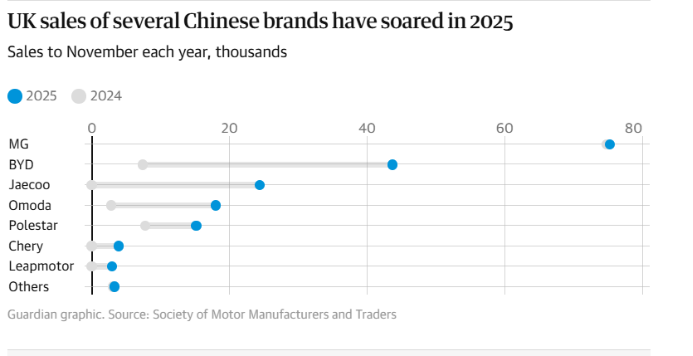
Core Insights - Chinese electric vehicles (EVs) have significantly increased their market presence in Europe, with total sales nearly doubling despite high tariffs, indicating a successful penetration into a historically challenging market [1][2]. Group 1: Market Performance - In 2025, Chinese brands are projected to capture 12.8% of the European electric vehicle market and over 13% in the hybrid vehicle sector, marking a historic high [2]. - In the UK, sales of Chinese automotive brands reached 187,800 units in the first 11 months of the year, doubling from the previous year, with expectations to exceed 200,000 units in 2025 [2][5]. - Spain and Norway also show strong performance, with one in ten new cars sold being from Chinese brands, and the average market share in Western Europe reaching 6% [6]. Group 2: Competitive Advantages - Chinese automakers benefit from a mature supply chain for electric vehicles, allowing for stable supply and cost advantages compared to European manufacturers facing high production costs and battery shortages [8][9]. - The strategy of localizing production, such as building battery factories in Hungary and utilizing local assembly plants, helps Chinese companies avoid tariffs and connect better with European consumers [10]. - Innovations in battery technology, such as BYD's blade battery and CATL's high-energy-density batteries, meet European demands for longer range and safety in electric vehicles [10]. Group 3: Technological Edge - Chinese brands like XPeng and Leap Motor are investing heavily in R&D, enhancing their vehicles with advanced smart features and autonomous driving capabilities, appealing to tech-savvy European consumers [11]. Group 4: Challenges Ahead - Despite the successes, Chinese automakers face challenges including trade barriers, a 45% anti-subsidy tax, and stringent future regulations on battery certification and compliance, which will require significant investment [12][13].




车市告别顺风时代
2 1 Shi Ji Jing Ji Bao Dao· 2025-12-31 13:58
Core Insights - The Chinese automotive market is at a historic crossroads, with increasing penetration of new energy vehicles (NEVs) and a shift in market dominance, marking the end of the era of broad market growth and the beginning of a multi-dimensional competition focused on technology, ecology, and globalization [1] Market Performance - In November 2025, retail sales of passenger vehicles in China reached 2.225 million units, a year-on-year decline of 8.1% and a month-on-month decline of 1.1% [2] - The retail sales of fuel vehicles fell by 22% year-on-year, while pure electric models saw a 9.2% increase, pushing the NEV retail penetration rate to 59.3%, which further rose to 62.3% by mid-December [3] Competitive Landscape - The competition in the NEV sector has shifted from growth to a focus on existing market share, with companies now competing on technology iteration, ecosystem building, and organizational efficiency [5] - BYD's domestic sales in November 2025 were 348,300 units, down 26.81% year-on-year, indicating increased competitive pressure and a need for technological advancement [5] - Chery's wholesale sales in November 2025 reached the top three among NEV manufacturers, with a year-on-year growth of 54% and a market share of 6.5% [6] Export Dynamics - Chinese automotive exports surpassed 700,000 units in November 2025, marking a transition to a more localized production and ecosystem output model in the global market [4][10] - From January to November 2025, China exported 6.343 million vehicles, a year-on-year increase of 18.7%, with NEV exports doubling and becoming a key driver of overseas growth [9] Strategic Shifts - Companies are adopting diverse strategies for international expansion, with BYD focusing on localized production and ecosystem integration, while Chery emphasizes high-value market penetration through technology [10][11] - New entrants like NIO and Li Auto are facing challenges in their unique business models, while Leap Motor is validating its differentiated survival path through vertical integration and cost control [9] Policy Implications - The adjustment of the new energy vehicle purchase tax policy in 2026 is expected to compel companies to enhance cost control and supply chain optimization [14] - The automotive industry is anticipated to shift from a "policy-driven" growth model to a "value-driven" one, emphasizing high-quality transitions [15] Future Outlook - The market is expected to see a modest growth of around 3% in 2026, with NEV penetration continuing to rise but at a slower pace [15][16] - Companies are preparing for intensified competition by focusing on product iteration, technological implementation, and cost optimization in both domestic and international markets [17][18]