
库存周期

Search documents
终于有人说出实话:明后年,把存款换成这4样东西,未来会更值钱
Sou Hu Cai Jing· 2026-01-24 20:46
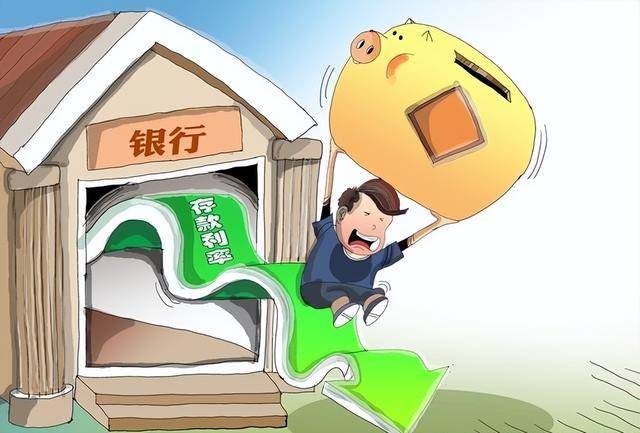
Group 1 - The core viewpoint is that low interest rates and inflation are prompting individuals to seek alternative investment options beyond traditional savings accounts to preserve their purchasing power [2][4][5] - In 2025, the consumer price index is expected to rise only 0.8% year-on-year, with food prices increasing by 1.1%, indicating persistent inflationary pressures [4] - Bank deposit yields continue to decline, with one-year products often below 1% and five-year products ranging from 1.3% to 1.8% [4] Group 2 - Global reserve institutions have increased their gold purchases, acquiring 634 tons in the first three quarters of 2025, with an annual forecast of 755 tons, leading to a significant rise in gold prices from $2,313 to $4,318, an increase of over 86% [7] - Individuals are advised to invest in gold gradually, using funds or paper gold to average costs and avoid market peaks [9] - High-return equities are gaining popularity, with the ChiNext Index rising by 49.57% and the STAR 50 Index by 35.92% in 2025, while the total scale of the CSI 300 fund exceeded 200 billion, reaching 11,855 billion [9][11] Group 3 - In 2025, core city real estate prices are expected to remain stable, with new home prices in Beijing rising by 11% and in Shanghai by 5.8%, indicating a healthy rental market [11][13] - The rental yield in major cities is favorable, ranging from 2% to 5%, which is higher than five-year government bonds, suggesting a shift towards long-term property investment [11] - The investment strategy should focus on quality locations and long-term holding, avoiding speculative investments in lower-tier cities [11][13] Group 4 - Savings insurance and long-term government bonds are recommended for locking in returns, with expected yields of 1.89% for 2026, potentially holding at 2% [14] - The insurance sector is projected to perform strongly in 2025, with dividend insurance exceeding 70 billion, indicating a robust market for long-term financial products [14] - Investment strategies should diversify across four categories: emergency funds, equity investments for returns, and long-term allocations in gold, real estate, and government bonds [14][16] Group 5 - High-net-worth individuals are shifting their investment strategies, increasing allocations in stocks and gold while reducing exposure to residential and commercial properties [16] - The total amount of household savings has increased, with an average of approximately 118,000 per person, indicating a significant potential for stock market investments [16] - The gold ETF market is expected to grow from 730 billion in 2025 to 2,361 billion, reflecting a 223% increase, driven by geopolitical risks and monetary policy changes [16]

石油ETF(561360)近20日资金净流入超3.5亿元,资金积极布局,行业长期成长逻辑稳固
Mei Ri Jing Ji Xin Wen· 2026-01-23 03:35
Group 1 - The oil ETF (561360) has seen a net inflow of over 350 million yuan in the past 20 days, indicating active capital allocation and a solid long-term growth logic in the industry [1] - The oil industry is currently at the bottom of the previous price cycle and entering a new cycle, with the inventory cycle transitioning from passive destocking to active restocking [1] - Since the second half of 2025, the industrial product PPI and chemical raw material PPI have been continuously rebounding, suggesting that the price decline and destocking period is nearing its end, with an upward trend in the economic cycle gradually beginning [1] Group 2 - The long-term growth logic of the industry remains solid, with continuous optimization of capacity structure during the "14th Five-Year Plan" period, focusing on high-end and differentiated ethylene expansion while phasing out outdated capacity [2] - There is significant growth potential in demand, with traditional chemical product demand recovering steadily and emerging fields such as new energy, electronics, and high-end manufacturing driving an explosion in new material demand, providing long-term growth momentum for the industry [2] - The oil ETF (561360) tracks the oil and gas industry index (H30198), which covers exploration, extraction, refining, and sales in the oil and gas sector, selecting high market capitalization and liquidity listed companies to reflect the overall performance of the oil and gas industry [2]
国泰海通|轻工:出口链行业专题一:库存周期复盘与景气度线索
国泰海通证券研究· 2026-01-21 13:50
Core Viewpoint - The article discusses the inventory cycles in the U.S. furniture market, highlighting the dynamics between retailers and wholesalers, and the implications for demand and supply in the furniture industry [1][2]. Group 1: Inventory Cycle Analysis - Retailers are in a passive destocking phase from April 2025 to July 2025, as sales growth outpaces inventory growth, leading to an increase in actual inventory levels [1]. - Wholesalers are in an active restocking phase from October 2024 to August 2025, with inventory growth exceeding revenue growth, indicating a significant increase in actual inventory levels [1]. - By September 2025, wholesalers will transition to a passive destocking phase as revenue growth surpasses inventory growth, despite an increase in actual inventory amounts [1]. Group 2: Brand and Channel Inventory Performance - Furniture brands are experiencing historically low inventory-to-sales ratios, aligning with the trend of retailers reducing inventory since May 2023 [2]. - Home Depot's inventory-to-sales ratio has returned to historical norms, indicating a potential for further restocking, although demand remains constrained [2]. - The overall inventory levels of furniture and building material channel merchants are higher than those of brand merchants, reflecting the trend of wholesalers restocking more than destocking since September 2024 [2]. Group 3: Demand Improvement Pathways - The recovery in the real estate sector, potentially aided by continued interest rate cuts, is expected to enhance retail sales and initiate restocking among retailers [2]. - A low inventory-to-sales ratio suggests that there is room for replenishment, which could lead to an increase in furniture import values and a rebound in midstream manufacturing orders [2].

大类资产配置专题:穿越AI叙事的全天候组合
Guoxin Securities· 2026-01-21 02:50
Asset Allocation Insights - Prioritize equity assets in asset allocation, with commodities showing long-term value and bonds requiring strict control of long-end risks[2] - A-shares are entering a "slow bull" phase supported by policy and debt-equity ratio advantages, while US stocks benefit from AI-driven efficiency gains[2] - Commodity prices are supported by AI-driven resource pricing, physical hoarding demand, and geopolitical "safety premiums"[2] Investment Strategies - Risk-seeking strategies should focus on "strong rate cuts + strong AI" combinations, emphasizing small and large-cap growth stocks and gold for high elastic returns[2] - Defensive strategies can adopt "strong rate cuts + weak AI" with long bonds, gold, and large-cap value stocks to secure stable returns and control drawdowns[2] - Low-volatility strategies may consider "weak rate cuts + weak AI" with cash and large-cap value stocks to lock in certain returns and avoid market volatility[2] Performance Metrics - Quadrant III (strong rate cuts + weak AI) shows the most stable performance with an annualized return of 16.67% and a Sharpe ratio of 2.48, with a maximum drawdown of -3.90%[11] - Quadrant I (strong rate cuts + strong AI) has a peak annual return of 40.15% in 2025, despite a -15% drawdown in 2023[11] - Quadrant II (weak rate cuts + strong AI) experienced a significant drawdown of -32.42% in 2023 but rebounded with a 29.35% return in 2025[11] Risk Considerations - Key risks include uncertainties in overseas monetary policy, geopolitical and trade disruptions, unexpected liquidity tightening, and potential tech valuation bubbles[54]
轻工出口链行业专题:出口链行业专题一:库存周期复盘与景气度线索
GUOTAI HAITONG SECURITIES· 2026-01-21 00:41
Investment Rating - The report assigns an "Overweight" rating to the durable consumer goods export chain industry [1]. Core Insights - The wholesale and retail inventory cycles are misaligned, and interest rate cuts are expected to drive demand resonance [1]. - The report highlights that the excess profits of leading companies in the export chain often stem from precise positioning in niche markets, cost control know-how, and differentiated product and channel operational capabilities [2]. - The improvement in home furnishing demand is anticipated to be driven by real estate recovery, accelerated retail sales, and inventory replenishment [16]. Summary by Sections Inventory Cycle Analysis - The inventory cycle is defined by the relationship between inventory/sales growth rates and the absolute value of inventory year-on-year [4]. - Retailers are in a passive destocking phase from April 2025 to July 2025, while wholesalers are in an active restocking phase from October 2024 to August 2025 [9][10]. Investment Recommendations - Recommended stocks include Jiangxin Home, Gongchuang Lawn, Zhongxin Co., Gujia Home, Yingke Medical, Songlin Technology, Jianlin Home, Zhejiang Natural, and Yiyi Co. [2][26]. - The report provides earnings forecasts and valuations for these companies, indicating a consistent "Overweight" rating across the board [27]. Market Trends - The report notes that the inventory turnover ratios for furniture brands are at historically low levels, aligning with the trend of retailers reducing inventory since May 2023 [12][14]. - Home Depot's inventory turnover ratio has returned to historical norms, but further replenishment intentions are constrained by demand pressures [15].
钢铁12月数据跟踪:需求前高后低,材钢比持续扩大
GOLDEN SUN SECURITIES· 2026-01-19 12:24
Investment Rating - The report maintains a "Buy" rating for key steel companies, indicating a positive outlook for their stock performance in the coming months [10]. Core Insights - The steel industry has experienced a fluctuating demand pattern, with a peak in early 2025 followed by a decline, leading to an increase in the material-to-steel ratio, which reached 1.69 in December [2]. - China's apparent steel consumption grew by 2.9% year-on-year in 2025, although December saw a 5.0% decline compared to the previous year [2]. - The net export of steel in 2025 reached 11.296 million tons, a year-on-year increase of 8.7%, driven by strong exports in the automotive and home appliance sectors [3]. - The report highlights a shift in economic drivers from investment to consumption, with fixed asset investment declining by 3.8% year-on-year, while retail sales increased by 3.7% [2]. Summary by Sections Steel Production and Consumption - In December 2025, crude steel production was 68.18 million tons, a 10.3% year-on-year decrease, with an annual total of 960.81 million tons, down 4.4% [6]. - Steel production in December was 115.31 million tons, a 3.8% year-on-year decrease, while the annual total was 1,446.12 million tons, up 3.1% [6]. Export and Import Dynamics - December steel exports were 11.30 million tons, up 16.2% year-on-year, with total exports for the year at 11.902 million tons, a 7.5% increase [6]. - Steel imports in December were 520,000 tons, down 16.3% year-on-year, with total imports for the year at 6.06 million tons, down 11.1% [6]. Economic Context and Policy Implications - The report notes that the Chinese economy is transitioning to a more stable phase, with GDP growth projected at 5% for 2025, reflecting a pattern of high demand followed by a decline [2]. - Recent structural interest rate cuts by the central bank are expected to support credit flow to specific industries, indicating a potential for economic stabilization [8]. - The valuation of the steel sector has improved, moving from absolute undervaluation to a moderately low position, suggesting room for further gains [8]. Recommended Stocks - The report recommends several stocks, including: - Hualing Steel (华菱钢铁) [10] - Nanjing Steel (南钢股份) [10] - Baosteel (宝钢股份) [10] - New Steel (新钢股份) [10] - Jiuli Special Materials (久立特材) [10] - Yongjin Co., Ltd. (甬金股份) [10] - Changbao Steel (常宝股份) [10]


大宗化学品正处于双周期拐点
HTSC· 2026-01-19 03:10
Investment Rating - The report maintains an "Overweight" rating for the petrochemical and basic chemical sectors [5] Core Insights - The bulk chemical industry is at a dual cycle inflection point, with profitability expected to recover as domestic and international demand improves in 2026 [1][3] - After a prolonged period of low profitability, the industry is entering a phase of reduced capacity expansion and inventory adjustments, with limited new capacity expected in 2026-2027 [2][3] - The dividend payout ratio for Chinese bulk chemical companies is anticipated to trend upwards due to decreased capital expenditure intensity compared to the 2015-2025 period [4] Summary by Sections Industry Overview - The bulk chemical industry has experienced a significant downturn in profitability since 2023, with a notable oversupply leading to continued low earnings through the second half of 2025 [2] - The industry is expected to enter a recovery phase in 2026 as demand begins to rebound [1][3] Capacity and Inventory Cycles - The current inventory cycle is at a turning point, with passive inventory replenishment observed since the second quarter of 2025, influenced by external demand factors [3] - The report indicates that the capacity expansion in the bulk chemical sector will be orderly during the "14th Five-Year Plan" period, with limited new capacity additions expected [2] Dividend and Capital Expenditure Trends - The report highlights that the capital expenditure intensity for the bulk chemical sector is likely to decrease significantly, leading to an increase in dividend payout ratios for companies in this space [4] - Recommended companies include Xinhengcheng, Wanhua Chemical, Hengli Petrochemical, and Sinopec A/H, which are expected to benefit from these trends [4][8]




2026年有色金属的思考总结与展望
雪球· 2026-01-14 07:41
Core Viewpoint - The article discusses the significant changes in the pricing logic of non-ferrous metals, emphasizing the rise of strategic resource populism as a key factor influencing market pricing, particularly after the implementation of equal tariffs in the second half of 2025 [2][3]. Non-Ferrous Metals Market Analysis - The traditional pricing framework for non-ferrous metals has been driven by global macro liquidity, economic expectations, and the US dollar index, but recent years have shown a divergence between metal prices and global economic indicators [4][6]. - The current economic environment is characterized by low global PMI levels, yet non-ferrous metal prices have outperformed expectations, indicating a shift in market dynamics influenced by monetary attributes and strategic reserve demands [4][7]. Trading Framework and Historical Performance - The core trading framework focuses on the economic cycle, particularly inventory cycles, with liquidity as an important extension. However, this framework has faced challenges in the non-ferrous metals sector due to unique supply and demand dynamics [6][7]. - Historical trading experiences highlight the importance of adhering to a core framework while recognizing the evolving market conditions, leading to successful investments in precious metals and strategic small metals [9][10]. Sector-Specific Insights - Precious Metals (Gold, Silver): The article notes a strong performance in gold and silver due to anticipated changes in US monetary policy and geopolitical tensions, with significant gains observed over the past three years [9][10]. - Strategic Small Metals (Antimony, Tungsten, Rare Earths): The author emphasizes early positioning in strategic small metals, benefiting from export controls and geopolitical shifts, resulting in substantial price increases [11][12]. - Industrial Metals (Copper, Aluminum): Despite a generally positive long-term outlook, concerns remain regarding the sustainability of demand due to ongoing issues in the real estate sector and uncertainties in US economic growth [13][14]. 2026 Outlook for Non-Ferrous Metals - The market for non-ferrous metals is expected to remain active, but the author advocates for a cautious approach, focusing on identifying clear entry points rather than participating in the current market excitement [16][17]. - Industrial metals are viewed with caution due to unresolved concerns about the real estate market and the sustainability of AI-driven capital expenditures, with a recommendation to monitor these sectors closely [17][18]. - For strategic small metals, the long-term outlook remains positive, but current high prices necessitate waiting for favorable entry points [20][21]. - Precious metals continue to show long-term benefits, but short-term caution is advised due to market volatility and the need for clear buying signals [21][22]. Conclusion - The article concludes that while the non-ferrous metals market is currently vibrant, the focus should remain on waiting for definitive buying opportunities rather than engaging in all market trends, emphasizing the importance of patience and strategic decision-making in investment [22][24].

地缘政治与贸易局势再起波澜 棉价内强外弱趋势强化
Xin Lang Cai Jing· 2026-01-12 15:19
Price Review - Domestic cotton prices continued to rise, with the Zheng cotton futures main contract reaching 15,035 yuan/ton on January 7, a 1.5-year high, before slightly retreating. The average settlement price for the Zhengzhou cotton futures main contract was 14,806 yuan/ton, up 291 yuan/ton from the previous week, a 2.0% increase. The national cotton price B index averaged 15,712 yuan/ton, up 242 yuan/ton, a 1.6% increase compared to the previous week [2] - International cotton prices experienced a brief rise due to strong domestic Zheng cotton prices and expectations of reduced U.S. cotton planting area, but faced downward pressure from weak U.S. cotton export data. The average settlement price for the New York cotton futures main contract was 64.69 cents/pound, up 0.45 cents/pound, a 0.7% increase from the previous week. The average international cotton index (M) price was 72.6 cents/pound, equivalent to an import cost of 12,435 yuan/ton (calculated with a 1% tariff, excluding port and handling fees), down 87 yuan/ton, a 0.7% decrease from the previous week. The price difference between domestic and international cotton expanded to 3,277 yuan/ton, an increase of 329 yuan/ton from the previous week [2] Market Outlook - The global supply of cotton is tightening, while terminal consumption shows signs of recovery. Brazil's cotton exports reached 453,000 tons in December 2025, with a total annual export of 3.03 million tons, a 9% year-on-year increase, effectively supplementing global supply. The Indian Cotton Association raised its production estimate for the current year to 5.262 million tons, a slight year-on-year decrease of 0.77%, alleviating concerns about reduced production [5] - U.S. cotton exports remain weak, with a net contract volume of only 32,000 tons as of January 1, a further decline from the previous week, indicating weak spot demand. A recent survey indicated that U.S. cotton planting intentions for the 2026 season are expected to drop to 9.505 million acres, a decrease of 270,000 acres year-on-year, reflecting declining farmer enthusiasm and suggesting potential tightening of future supply [5] - The global apparel consumption demand is expected to recover, with inventory levels in major markets like the U.S. and South Korea dropping to near three-year lows. The consumer confidence index in the U.S. rose to 54 in January, the highest in four months, reinforcing expectations for improved terminal demand [5] - Domestic new cotton sales continue to increase, with a national cotton sales rate of 55.6% as of January 8, up 24.1 percentage points year-on-year, and 27.6 percentage points higher than the average of the past four years. The volume of cotton inspected has reached nearly 6.7 million tons, a year-on-year increase of 14.1% [5] - The downstream cotton yarn market shows mixed performance, with high and medium count yarns selling well, while low count yarns face sluggish sales. The operating rate of spinning enterprises remains stable but slightly decreased, with limited new order quantities [5][6] Market Dynamics - The domestic cotton market is influenced by a mix of bullish and bearish factors, with tightening supply expectations clashing with sluggish downstream transmission and increased imported cotton supply. Additionally, geopolitical and trade policy uncertainties are causing short-term fluctuations in Zheng cotton prices, which are likely to remain in a volatile pattern [6]
俯则未察,仰以殊观:2026年大宗商品年度展望
Guo Tou Qi Huo· 2026-01-12 11:04
1. Report Industry Investment Rating - Not provided in the given content 2. Core Viewpoints of the Report - In 2026, the global liquidity environment will maintain a loose tone, with marginal adjustments in the pace and amplitude. China's macro - policies will remain positive, with fiscal support for "two major" construction and "new - quality productivity" and moderately loose monetary policies [17]. - The industrial capacity cycle has bottomed out, and there are signs of a turning point. In 2026, the capacity utilization rate is expected to stabilize in the first half and rise marginally in the second half [23]. - The inventory cycle is approaching its end, with domestic and overseas "de - stocking" showing signs of bottoming out [29]. - In 2026, the commodity market is expected to stabilize at the bottom and gradually shift to a "slow - bull" market. The Minsky Clock is likely to transition from "weak recovery" to "early re - inflation," benefiting stocks and commodities [30]. 3. Summary by Relevant Catalogs 3.1 Macro Outlook - The global liquidity environment in 2026 will maintain a loose tone, and China's macro - policies will continue to be positive, with fiscal support for key areas and moderately loose monetary policies [17]. 3.2 Capacity Cycle - The industrial capacity utilization rate bottomed out in Q2 2025, and the PPI has been narrowing its year - on - year decline since June 2025. In 2026, it may form the initial stage of a positive cycle [23]. 3.3 Inventory Cycle - The year - on - year growth rate of finished - product inventory has shown signs of bottoming out, indicating the end of the current inventory cycle. The US wholesalers' inventory has been decreasing since Q2, and the inventory - to - sales ratio has become less sensitive [29]. 3.4 Commodity Market Outlook - In 2026, the commodity market will operate in a pattern of "liquidity support, cycle resonance and stabilization, and structural differentiation." It may show wide - range fluctuations in the first half and a mild recovery in the second half if policies are effective [30]. 3.5 Sector and Variety Allocation Outlook 3.5.1 Precious Metals - Precious metals are expected to continue their bull market but with increased volatility. The gold - silver ratio may decline periodically [35]. 3.5.2 From AI to New and Old Energy Transition - AI's computing power demand drives the entire new - energy industry chain, causing high resonance between the stock market and commodities. New - energy materials such as lithium carbonate and polysilicon may enter a new demand cycle, and there are investment opportunities in going long on copper and short on oil [42][57]. 3.5.3 Real Estate and Related Sectors - The real - estate industry is still in a downward cycle, putting pressure on the prices of black and building - material sectors. The divergence between copper and rebar reflects the economic transformation [62]. 3.5.4 Black and Energy - Chemical Sectors - In the black sector, shorting iron ore may be cost - effective. In the energy - chemical sector, most chemicals except crude oil face supply pressure and are suitable for short - allocation [68]. 3.5.5 Agricultural Products - Livestock Sector - If the "anti - involution" policy promotes the reduction of livestock production capacity in the first half, pork and eggs may be worth long - allocation in the second half, while the fundamentals of beans may weaken [74]. 3.6 Allocation Strategy - Industrial product hedging can focus on the theme of "AI and computing power driving the acceleration of new - and old - energy transformation." Agricultural products will continue to show differentiation, with grains and oils relatively resistant to decline and livestock products potentially having a low - then - high trend [80][81]. - New - energy varieties (e.g., lithium carbonate) have demand support and profit - repair potential. Non - ferrous metals (e.g., copper) have valuation - increasing potential. Energy - chemical products are under pressure, and black products are affected by real - estate demand [82].