
债券市场

Search documents
每日债市速递 | 7月全国发行新增债券7032亿元
Wind万得· 2025-08-28 23:45
Group 1: Open Market Operations - The central bank announced a reverse repurchase operation of 416.1 billion yuan for 7-day terms at a fixed rate of 1.40% on August 28, with a net injection of 163.1 billion yuan after accounting for maturing reverse repos [1]. Group 2: Funding Conditions - The central bank shifted to net injection in the open market, leading to a slight easing in the interbank funding conditions. Overnight repo rates hovered around 1.31%, with a notable improvement in supply [3]. Group 3: Interbank Certificates of Deposit - The latest transaction for one-year interbank certificates of deposit was around 1.67%, remaining stable compared to the previous day [7]. Group 4: Bond Market Overview - Major interest rate bonds in the interbank market saw collective yield increases, with government bond futures closing lower across various maturities [9][13]. Group 5: Key News and Developments - Mexico plans to increase tariffs on certain Chinese products in its upcoming 2026 budget proposal to protect local businesses, while China opposes such measures [14]. - In July, the national issuance of new bonds totaled 703.2 billion yuan, with a significant portion being special bonds [14]. - The Bank of Korea maintained its benchmark interest rate at 2.5%, with revised GDP growth and inflation forecasts for 2025 and 2026 [16]. Group 6: Bond Issuance and Corporate Developments - Alibaba is reportedly seeking to refinance with a loan of 6.5 billion USD, while the issuance of technology innovation bonds by banks has reached 227.3 billion yuan [18]. - Longguang Group reported a revenue of 3.4 billion yuan in the first half of the year and is continuing its debt restructuring efforts [18].


7月份流动性合理充裕
Jin Rong Shi Bao· 2025-08-27 01:44
Group 1 - The overall liquidity in the financial market is balanced and slightly loose, with an increase in trading volume and a decrease in balances, leading to a downward trend in most repo rates [1][2] - In July, the interbank market was active with a total transaction volume of 231.7 trillion yuan, representing a month-on-month increase of 12.7% and a year-on-year increase of 15.7% [1][2] - The People's Bank of China (PBOC) emphasized a moderately loose monetary policy to match the growth of social financing and money supply with economic growth and price expectations [1][2] Group 2 - In July, the PBOC conducted significant open market operations, with a net injection of 468 billion yuan, including 14 trillion yuan in reverse repos and 4 trillion yuan in MLF [2][3] - Major repo rates showed a downward trend, with the overnight repo rate (DR001) at 1.39% and the 7-day repo rate (DR007) at 1.53%, reflecting a decrease of 1 and 7 basis points respectively [2][3] Group 3 - The bond market saw a total issuance of 5.29 trillion yuan in July, a decrease of 0.6% month-on-month but an increase of 27.6% year-on-year, with net financing at 2.31 trillion yuan, up 7.9% month-on-month and 86.6% year-on-year [4] - The yield on government bonds increased, with the 10-year government bond yield fluctuating between 1.64% and 1.75%, and the yield curve steepening [4] Group 4 - The interest rate swap curve ended its inversion, with short-term rates decreasing and long-term rates increasing, indicating a shift in market sentiment [6][7] - The average daily trading volume of RMB interest rate swaps increased by 44.8% in July, with a nominal principal amount of 4.6 trillion yuan [7]
AUS Global:债市rally取决经济数据
Sou Hu Cai Jing· 2025-08-25 11:51
Group 1 - The recent movements in the global bond market are focused on the Federal Reserve's policy direction, with Powell hinting at a potential interest rate cut as early as next month [1] - The U.S. Treasury prices have risen significantly, leading to the steepest yield curve steepening in nearly four years, which has improved market sentiment [1] - Market skepticism remains regarding the extent and sustainability of potential rate cuts, with futures pricing indicating an approximately 80% probability of a 25 basis point cut at the September 17 meeting [4] Group 2 - Investors are awaiting key employment and inflation data to confirm the monetary policy direction, indicating that future market movements will depend on upcoming macroeconomic indicators [4] - The two-year U.S. Treasury yield dropped significantly to 3.7%, close to the low point earlier this month, following a jobs report that showed a notable slowdown in employment growth [4] - The interest rate swap market is beginning to price in the possibility of two rate cuts within the year, with some investors even betting on three cuts [4] Group 3 - Despite a positive reaction in the bond market to Powell's statements, the magnitude of this response remains limited due to conflicting economic signals [6] - The labor market shows signs of weakening, while inflation remains at a high level, forcing the Federal Reserve to weigh risks when considering policy easing [6] - The upcoming personal consumption expenditures price index will be crucial; if inflation pressures remain strong, market confidence in further easing may be challenged [4][6] Group 4 - Attention is also required for the upcoming U.S. Treasury auctions covering two-year, five-year, and seven-year bonds, as investor subscription rates will reflect long-term interest rate outlooks and gauge risk appetite [6] - The uncertainty persists, as even with the Fed's easing measures last year, economic resilience led to a pause in actions at the beginning of this year [6] - The bond market's current positive response to Powell's remarks is contingent on future data performance, with employment and inflation being key determinants of the Fed's policy path [6]

大类资产与基金周报:权益市场爆发,权益基金上涨3.84%-20250824
Tai Ping Yang Zheng Quan· 2025-08-24 13:44
The provided content does not contain any information about quantitative models or factors. The documents primarily discuss market performance, asset classes, fund performance, and other financial data, but there is no mention of quantitative models, factor construction, or related testing results.
【立方债市通】河南AAA主体拟发40亿小公募/郑州公交集团10亿中票发行/日债收益率续刷1999年来新高
Sou Hu Cai Jing· 2025-08-22 13:08
Group 1 - Recent rumors suggest that small institutions may face restrictions on bond quoting, but multiple sources indicate no new notifications have been received [1] - The top three credit rating agencies captured nearly 70% of the market share in Q2 2025, highlighting a significant concentration in the credit rating industry [1] - The green bond market in China saw the issuance of 477 green bonds in 2024, showing a slight increase in quantity but a decrease in issuance amount compared to the previous year [3] Group 2 - The People's Bank of China announced a 600 billion MLF operation to maintain liquidity in the banking system, marking a net injection of 300 billion for August [5] - A reverse repurchase operation of 361.2 billion was conducted, resulting in a net injection of 123.2 billion for the day [7] - Japan's long-term government bond yields surged to their highest levels since 1999, driven by concerns over fiscal conditions and inflation [8] Group 3 - Jiangxi Province plans to issue 6.7 billion special new bonds for government investment projects [10] - Guizhou Province's recent local bond auctions saw bid multiples exceeding 24 times, indicating strong demand [10] - Zhengzhou Public Transport Group successfully issued 1 billion medium-term notes at a rate of 3.16% [11] Group 4 - Luoyang Science and Technology Group is set to issue 1 billion yuan in corporate bonds, while Luoyang Industrial Holding Group plans to issue 4 billion yuan in public bonds [13] - Nanyang Industrial Investment Group completed the issuance of 1 billion yuan in corporate bonds at a rate of 2.45% [15] - Hangzhou Urban Investment Group received approval for a 16 billion yuan corporate bond registration, enhancing its financial capabilities [17] Group 5 - Guangzhou Times Holdings announced a suspension of all outstanding corporate bonds starting August 25, 2025, for debt repayment arrangements [21] - Longxiang Investment Group faced corrective measures due to incomplete disclosures and data errors in annual reports [21] - Shandong Commercial Group is involved in a lawsuit concerning a contract dispute, with the amount in question being 97.86 million yuan [22] Group 6 - The second batch of Sci-Tech Innovation Bond ETFs is expected to launch in September, with a projected fundraising scale between 32 billion to 42 billion yuan [23] - Current market sentiment is weak, suggesting caution in extending durations, but the new ETFs may create structural opportunities [23] - Financial data indicates a trend of "deposit migration," likely due to declining deposit yields and a growing interest in capital markets [23]



债券不香了 居民“钱袋子” 加速流向权益市场
2 1 Shi Ji Jing Ji Bao Dao· 2025-08-21 11:25
Core Viewpoint - The investment landscape is shifting as low-risk fixed-income products lose their appeal, prompting investors to seek higher returns in the equity market amid a strong performance in stocks [1][2][7]. Group 1: Market Trends - In August, the equity market experienced a significant surge, with the Shanghai Composite Index reaching a 10-year high and A-share market capitalization surpassing 100 trillion yuan for the first time [2][3]. - The average total return of equity funds reached 21.87% year-to-date as of August 21, a substantial increase from the previous year's -10.77% [3][4]. - Conversely, bond funds have underperformed, with an average total return of only 0.45% year-to-date, down from 2.44% the previous year [4][5]. Group 2: Investor Behavior - Younger investors are increasingly entering the stock market, with some fully committing to sectors like military and robotics, while others adopt a more cautious approach focusing on technology and consumer electronics [2][8]. - There is a notable shift in investor sentiment, with funds moving from traditional savings and bond products to equities, driven by the low returns on fixed-income investments [7][9]. Group 3: Financial Products Performance - Bank wealth management products have seen a decline in yields, with cash management products yielding 1.35% and pure fixed-income products at 1.87%, both down from previous levels [5][6]. - The net loss rate for wealth management products rose to 3.04% in July, indicating increased pressure on fixed-income investments [5][6]. Group 4: Strategic Recommendations - Financial institutions suggest that investors consider "fixed income plus" strategies to balance their portfolios, especially in light of the current market volatility [10]. - For those still interested in bond investments, it is recommended to choose medium to long-term products with a closed period of 3-6 months to mitigate short-term market fluctuations [10].
央行报表及债券托管量观察:赎回潮叙事中的机构行为图鉴
Huachuang Securities· 2025-08-21 10:42
1. Report Industry Investment Rating No relevant content provided. 2. Core Views of the Report - 8 - 10 months are in a headwind period for the bond market, with current sentiment weaker than in March. Short - term advice is to observe more and trade less, and take profit and adjust positions when there is a yield decline window. Mid - term is an adjustment rather than a reversal, so pay attention to opportunities arising from declines [7][10][107]. - Currently, the safety cushion of bank wealth management still exists. In the short term, redemptions may be a small - scale redemption wave at the fund level. If the yield rises to 1.9%, pay attention to the redemption pressure of wealth management [7][10][107]. - The 30 - 10y spread has reached a new high since 2024. Considering the positive effects of the insurance predetermined interest rate cut and "rush to stop sales", gradually allocate during adjustments when the 10y Treasury bond approaches 1.8% and the 30 - 10y spread is around 30bp [7][10][107]. 3. Summary by Relevant Catalogs 3.1 7 - month Central Bank Balance Sheet and Custody Volume Interpretation 3.1.1 July 2025 Central Bank Balance Sheet Changes - The central bank's balance sheet scale increased from 45.8 trillion yuan to 45.9 trillion yuan, up 16.7 billion yuan. The main increase on the asset side was "claims on other depository corporations", and on the liability side, it was "government deposits", while the main decrease was "deposits of other depository corporations" [15]. - On the asset side, the "claims on other depository corporations" were close to the open - market投放 scale, showing positive liquidity support. The PSL balance has been rapidly decreasing since the beginning of the year, and attention should be paid to the restart of policy - related financial tools. The "claims on the central government" continued to shrink due to the maturity of short - term Treasury bonds [17][18][20]. - On the liability side, due to the large tax - payment month and increased supply, government deposit increments reached a seasonal high. Bank system funds flowed to fiscal deposits, causing the "deposits of other depository corporations" to decline seasonally [23][28]. 3.1.2 Impact of July 2025 Central Bank Operations on Custody Volume - In July, the central bank conducted 1.4 trillion yuan of outright reverse repurchase operations, with a net injection of 20 billion yuan. Treasury bond trading remained suspended [32]. - The scale of innovative tools was consistent with the change in the custody volume account. The main incremental varieties were local government bonds and policy - bank bonds, and the main reduction item was Treasury bonds [33]. 3.2 Leverage Ratio: After the Quarter - end, the Funding Situation Eased, and Institutional Leverage Declined Seasonally - In July, after the quarter - end, the funding situation eased, and the average monthly leverage ratio declined seasonally to 107.6%. The average daily trading volume of pledged repurchase decreased to 7.6 trillion yuan, and the average bond - market leverage ratio decreased from 107.8% to 107.6% [38]. 3.3 By Institution: Allocation - Oriented Investors Increased Positions on Highs, Redemption Drove Funds to Sell Bonds, and Wealth Management Had a Big Bond - Allocation Month 3.3.1 Banks: Large Banks Set a New Monthly Bond - Allocation High, and Rural Commercial Banks Bought 7 - 10y Bonds on Highs - As of July 2025, commercial banks mainly held local government bonds, Treasury bonds, and policy - bank bonds. In July, they mainly increased positions in interest - rate bonds and reduced positions in certificates of deposit [44][46]. - Large banks' bond - investment scale reached a new high in July. In the primary market, government - bond supply advanced seasonally, and in the secondary market, regulatory pressure eased, and they mainly bought short - term Treasury bonds and certificates of deposit [50]. - Rural commercial banks bought 7 - 10y interest - rate bonds on highs in July. Since mid - August, their bond - buying scale increased again, but their willingness to allocate below 1.75% weakened [54][56]. 3.3.2 Insurance: Bond - Allocation Sentiment Was Good Since July, and Attention Should Be Paid to Structural Opportunities from the Predetermined Interest Rate Cut - As of July 2025, insurance companies mainly held local government bonds, credit bonds, and Treasury bonds. They increased positions in local government bonds and certificates of deposit in July [59][60]. - The predetermined interest rate of insurance products will be officially lowered in September. Attention should be paid to the opportunity of narrowing the 30 - 10y spread, and gradually allocate during adjustments [67]. 3.3.3 General Funds: Redemption Pressure Drove Funds to Sell Bonds, and Wealth Management Had a Seasonal Bond - Allocation Month - As of July 2025, general funds mainly held credit bonds, certificates of deposit, and policy - bank bonds. In July, they increased positions in credit bonds and reduced positions in interest - rate bonds [69][74]. - Funds faced increased redemption pressure in July and mainly sold 7 - 10y Treasury bonds, policy - bank bonds, and certificates of deposit. After August 18, the redemption wave restarted, and historically, the 10y Treasury bond usually peaked within 5 trading days after the start of redemptions [79]. - Bank wealth management had a bond - allocation month driven by liabilities, but some "front - running" behaviors overdrew the seasonal bond - allocation demand [81]. 3.3.4 Foreign Investors: The Comprehensive Yield of Investing in Certificates of Deposit Decreased, and the Net Outflow Speed Accelerated - As of July 2025, foreign institutions mainly held Treasury bonds, certificates of deposit, and policy - bank bonds. In July, they mainly reduced positions in certificates of deposit, Treasury bonds, and policy - bank bonds [85][92]. 3.4 By Bond Type: The Main Support for the Increment of Bond - Market Custody Volume Was Government Bonds, and the Main Reduction Item Was Certificates of Deposit - In July, the increment of the bond - market custody volume increased, with government bonds as the main support and certificates of deposit as the main reduction item. The net financing scale of interest - rate bonds decreased from 1.7067 trillion yuan to 1.5334 trillion yuan [94][99]. - For Treasury bonds, the issuance scale decreased, and the net financing scale declined. For local government bonds, the issuance scale increased, and the net financing scale increased. For policy - bank bonds, the supply rhythm was relatively stable, and the net financing scale changed little [99][100]. - For certificates of deposit, after the quarter - end, the funding situation was loose, and bank liability pressure was limited, resulting in negative net financing [104].
看基本面耽误赚钱
Hu Xiu· 2025-08-21 02:01
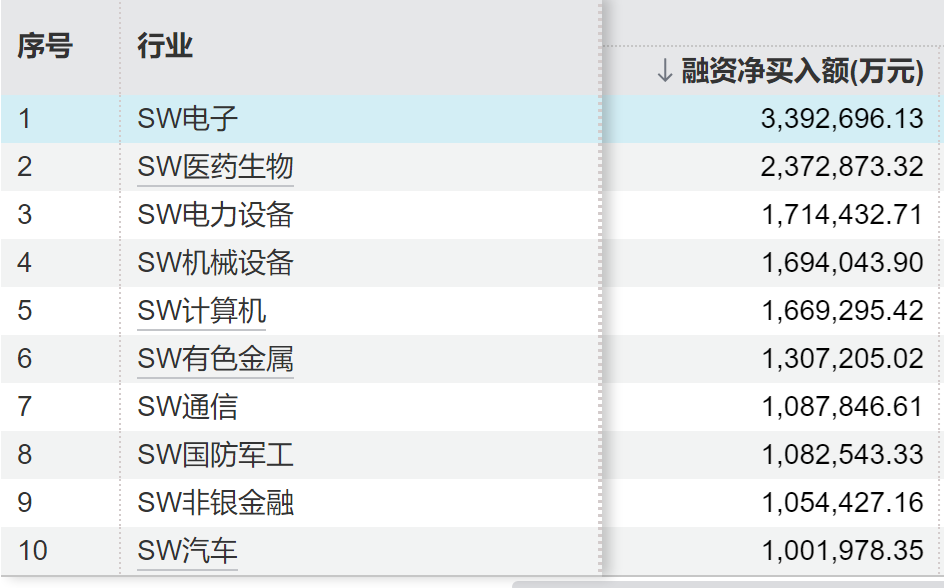
Group 1 - The article suggests that analyzing fundamentals may hinder investment opportunities, advocating for a more aggressive approach in the current market [1] - Despite a significant drop in the market last Thursday, a strong rebound occurred on Friday, indicating volatility and potential for recovery [2] - Brokerage firms are characterized as the "riders" of a bull market, attracting retail investors due to their straightforward business model [3] Group 2 - The A-share investment structure is primarily driven by high dividend stocks, favored by institutional investors and insurance funds [5][6] - High-risk preference funds, such as margin trading and speculative capital, are more involved in sectors like technology, themes, and pharmaceuticals [7] - Margin trading has surpassed 2 trillion, with TMT, pharmaceuticals, and military industries being the main sectors for leveraged buying [8] Group 3 - The financing net buying amounts for various industries indicate strong interest in electronics, pharmaceuticals, and power equipment, with significant figures in millions [9] - Retail investors prefer brokerage stocks during bull markets due to their simplicity compared to complex sectors like technology and pharmaceuticals [9] Group 4 - The bond market is experiencing challenges, with the yield spread between 30-year and 10-year government bonds reaching a 24-year high, indicating potential instability [13] - The divergence between SHIBOR rates and government bond yields suggests a lack of quality assets in banks, leading to lower funding costs [18] - The upcoming reduction in government bond issuance may further complicate the credit environment for banks [19]
价格突然下滑!背后预示着什么?
大胡子说房· 2025-08-19 12:46
Core Viewpoint - The article emphasizes the significant changes in the bond market, particularly the decline in government bond prices and the rise in yields, which are critical signals for the future direction of the capital market [1][2][9]. Group 1: Bond Market Changes - Recently, government bonds have seen a widespread decline, especially in medium to long-term bonds [1][2]. - The 30-year government bond futures experienced a notable drop of 1.33%, marking the largest decline since March 17, with closing prices hitting new lows since March 24 [3][4]. - The yields on government bonds are rising, with the 30-year bond yield increasing by 6.10 basis points to 2.055%, returning above 2% for the first time in four months [10][11]. Group 2: Market Dynamics - The decline in bond prices and the simultaneous rise in yields indicate a weakening demand for bonds, suggesting that the attractiveness of bonds is diminishing [12][13]. - The article discusses the traditional inverse relationship between the stock and bond markets, where a strong stock market typically correlates with a weak bond market [15][16]. - However, the article argues that the current weakness in the bond market is not solely due to this stock-bond dynamic, as both short-term and long-term bonds are experiencing price and yield changes [19][24]. Group 3: Economic Expectations - The shift from a deflationary trading environment to an inflationary one is highlighted as a key factor influencing the bond market's performance [31][32]. - Recent economic indicators, such as rising CPI and increasing commodity prices, suggest a warming inflation outlook [36][37]. - The article notes that external factors, including increased foreign investment and potential policy changes, are contributing to a positive shift in market expectations [42][43]. Group 4: Future Outlook - The article concludes that the worst phase for the capital market has likely passed, and a prolonged recovery period is anticipated, with trading dynamics shifting towards inflation-driven strategies [48][49]. - The current market conditions indicate that the bond market may continue to weaken while the stock market remains strong, suggesting a new normal for capital market behavior [50].

博时宏观观点:A股市场机会或大于风险,微观增量流动性充裕
Xin Lang Ji Jin· 2025-08-19 09:14
Economic Overview - The impact of tariffs on US inflation is gradually moderating, with a slight decrease in the Consumer Price Index (CPI) and core CPI exceeding expectations, indicating limited internal inflationary pressure [1] - Domestic economic data for July shows a significant decline in credit, consumption, and investment, with corporate medium and long-term loans turning negative [1] - The A-share market maintains a high risk appetite, with an accelerated inflow of financing, suggesting a positive outlook for future market performance [1] Market Strategy - The bond market experienced a sharp increase in risk appetite, with equities and commodities performing strongly, while the bond market adjusted and the yield curve steepened [1] - Despite weak financial and economic data, the risk appetite remains high due to easing overseas tariffs and geopolitical tensions, leading to a muted response from the bond market to positive fundamentals [1] - The monetary policy report for Q2 2025 indicates a positive tone for the domestic economy, with a decreased emphasis on growth stabilization and an increased focus on risk prevention [1] A-share Market - The A-share market is expected to present more opportunities than risks, with a strong index performance anticipated, particularly during the earnings reporting season [2] - There is an emphasis on capturing high-growth sectors and market rotation opportunities as the market enters a period of concentrated earnings disclosures [2] Hong Kong Market - The expectation of easing financial conditions before the Federal Reserve's interest rate cut is beneficial for non-US markets, including Hong Kong [3] Commodity Markets - Oil demand is projected to be weak in 2025, with continuous supply release putting downward pressure on oil prices, influenced by non-linear geopolitical changes [4] - The expectation of easing financial conditions prior to the Federal Reserve's rate cut is also favorable for gold performance in the short term [5]