
供需紧平衡

Search documents
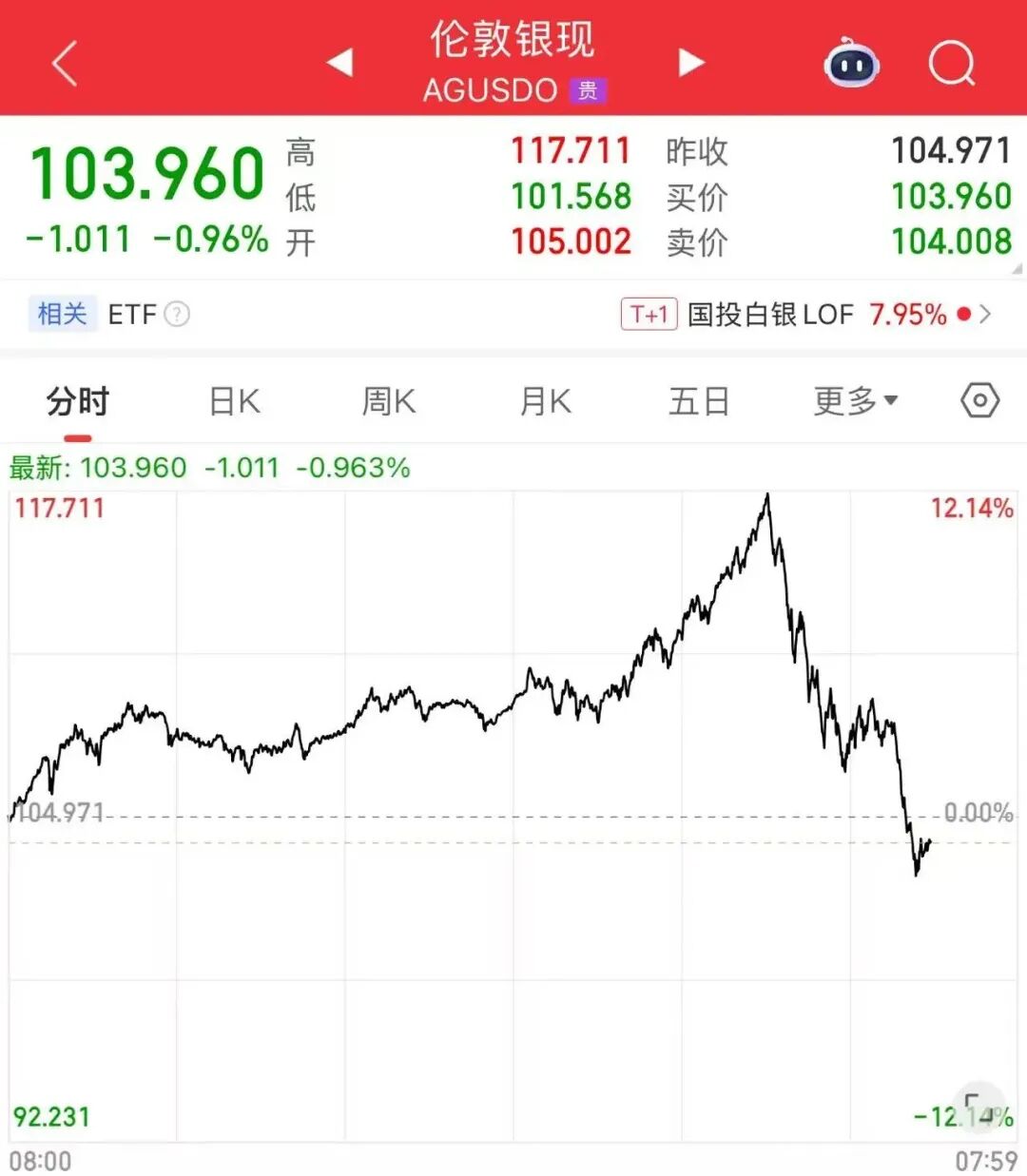
突然崩了:银价大跳水!刚刚,特朗普称将提高对韩国关税!美军航母打击群正部署中东
Qi Huo Ri Bao· 2026-01-26 23:33
早上好,先来关注下黄金和白银。 26日晚,白银价格加速上涨。伦敦银现货价格涨幅扩大至12%,纽约期银主力合约涨逾16%。 不过,今天凌晨,黄金与白银价格大幅回调,伦敦银现货价格转跌,报约103美元/盎司,此前最高触及117美元/盎司。伦敦金现货价格同样转跌,一度跌 破5000美元/盎司,此前在5100美元/盎司附近运行。 消息面上,据CCTV国际时讯最新报道,美国总统特朗普在其社交平台"真实社交"发文称,由于韩国国会未批准并落实此前与美国达成的贸易协议,美国 将提高对韩国商品征收的关税——他已决定将对韩国汽车、木材、制药产品以及其他对等关税项目的税率从15%上调至25%。 此外,特朗普在接受采访时表示,并未完全排除通过外交途径解决伊朗问题的可能性,他同时认为伊朗方面"确实希望与美国达成协议"。 据新华社报道,负责中东地区美军行动的美军中央司令部26日在社交媒体发布消息说,美国海军"亚伯拉罕·林肯"号航空母舰打击群"正部署到中东"。稍 早时候,美国哥伦比亚广播公司新闻部网站援引一名美国官员的话报道,该航母打击群已经驶入美军中央司令部辖区。 截至收盘,伦敦金现货价格下跌0.77%,报5000.2美元/盎司,较日内 ...

热卷日报:震荡整理-20260126
Guan Tong Qi Huo· 2026-01-26 11:17
1. Industry Investment Rating - Not provided in the report 2. Core Viewpoints - The current supply of hot-rolled coils is contracting, and the demand is resilient. The overall supply and demand are in a tight balance. Pre-holiday winter stockpiling is an important support for the current demand. The social inventory has decreased month-on-month, and the pressure on the factory inventory is controllable. The overall inventory risk has improved marginally, but the year-on-year inventory is still relatively high. Attention should be paid to the impact of the post-holiday resumption of work and production on supply and demand. In general, the tight balance between supply and demand and inventory reduction support the price. In the future, attention should be paid to raw material costs and the strength of the post-holiday demand recovery. Technically, in the short term, attention should be paid to the support near the 5-day and 30-day moving averages, and a bullish view should be maintained [6] 3. Summary by Directory Market行情回顾 - **Futures Price**: On Monday, the open interest of the main hot-rolled coil futures contract increased by 27,500 lots, and the trading volume was 391,114 lots, which was higher than the previous trading day. The intraday low was 3,298 yuan, the high was 3,320 yuan, and it fluctuated within the day. From the perspective of the daily moving average, it stood above the 5-day and 30-day moving averages. If it holds steady, the probability of continued strengthening in the short and medium term is relatively high. It closed at 3,302 yuan/ton, up 4 yuan or 0.12% [1] - **Spot Price**: The price of hot-rolled coils in the mainstream Shanghai area was reported at 3,300 yuan/ton, up 10 yuan from the previous trading day [2] - **Basis**: The spot-futures basis was -2 yuan, and the futures were slightly at a premium to the spot [3] Fundamental Data - **Supply**: As of January 22, the weekly output of hot-rolled coils decreased by 29,500 tons month-on-month to 3.0541 million tons, and decreased by 172,300 tons year-on-year. The output decreased month-on-month and significantly year-on-year, reflecting that the capacity release of steel mills has converged, which may be affected by factors such as maintenance arrangements and profit fluctuations, supporting the price [4] - **Demand**: As of January 22, the weekly apparent consumption decreased by 42,000 tons month-on-month to 3.0996 million tons, and increased by 73,900 tons year-on-year. The demand decreased slightly month-on-month but maintained growth year-on-year. Pre-holiday stockpiling supported the demand, and the overall demand was relatively resilient [4] - **Inventory**: As of January 22, the total inventory decreased by 45,500 tons week-on-week to 3.5778 million tons (the social inventory decreased by 46,600 tons week-on-week, and the steel mill inventory increased by 1,100 tons). The year-on-year increase was 212,700 tons (the social inventory increased by 241,800 tons year-on-year, and the factory inventory decreased by 29,100 tons year-on-year). The total inventory decreased month-on-month, and the inventory pressure was marginally relieved. The year-on-year increase reflected that the inventory accumulation speed this year was slightly faster than last year, and the overall risk was controllable [4] - **Policy**: The new regulations on the export license management of steel products have been introduced. In the short term, it will lead to fluctuations in exports, an increase in supply, and price pressure. In the long term, it will promote industrial upgrading, structural optimization, and competitiveness improvement. The Central Economic Work Conference held in December proposed a proactive fiscal policy and a moderately loose monetary policy, and listed in-depth rectification of involutionary competition as a key task for 2026, which is beneficial to prices and industry profitability. Efforts will be made to stabilize the real estate market and expand domestic demand [5] Market Driving Factor Analysis - **Bullish Factors**: Decrease in supply output, expectation of winter storage demand, export rush market, policy support ("15th Five-Year Plan", infrastructure investment), and strong iron ore as a furnace charge [6] - **Bearish Factors**: Unexpected resumption of production by steel mills in January, seasonal weakening of demand, insufficient manufacturing orders, and inventory accumulation suppressing prices [6]
分析师认为白银波动性高 伦敦银低点反弹向上
Jin Tou Wang· 2026-01-22 06:33
Group 1 - The core viewpoint indicates that silver prices are experiencing volatility, characterized by a "roller coaster" trend, with analysts noting that the smaller market size and higher leverage of silver lead to exponential recovery speeds [2] - Industrial demand remains the dominant factor for silver, driven by the green economy, particularly in photovoltaic cell electrodes, with silver paste now accounting for 19.3% of component costs due to rising prices [2] - The supply-demand balance for silver is expected to remain tight in the long term, as there has been a persistent supply-demand gap since 2019, compounded by rigid supply and emerging applications [2] Group 2 - The current trading range for silver is projected to be between a support level of $90.00 and a resistance level of $98.00 [4] - Short-term bullish trends are dominating the market, with prices expected to rise above $90.00, targeting a resistance level of $98.00 [3]
和讯投顾华飞凡:能源金属的故事为何还能继续演绎
Sou Hu Cai Jing· 2026-01-22 02:59
Core Insights - The narrative of non-ferrous metals, particularly energy metals, will continue to evolve in 2026, driven by a complex interplay of supply-demand balance, liquidity easing, and resource value reassessment [1][4] - The simultaneous rise of copper and gold, traditionally viewed as inversely correlated, is attributed to three main factors: global liquidity easing, inflation-driven appreciation of physical assets, and the core drivers of each metal creating a resonance effect [1][2] Supply and Demand Dynamics - Copper prices are primarily driven by insufficient supply and strong demand from new sectors such as AI computing centers and grid modernization, while gold prices are supported by ongoing central bank purchases and concerns over the credibility of the US dollar [2] - The current supply-demand tightness is expected to persist until at least 2028, with new growth points in demand including energy storage, AI computing, global infrastructure projects, and increased military spending due to geopolitical tensions [2] Potential Investment Directions - Lithium, particularly lithium carbonate, is on the verge of a demand surge due to the expansion of energy storage applications, driven by new pricing policies [3] - Strategic minor metals such as rare earths, tungsten, molybdenum, cobalt, nickel, and tin are expected to see continued value reassessment, influenced by geopolitical factors and supply chain concentration [3] - Gold remains a key asset as a global ultimate currency, with a clear long-term upward trend due to the declining value of the US dollar and ongoing central bank purchases exceeding 1,000 tons annually [3]
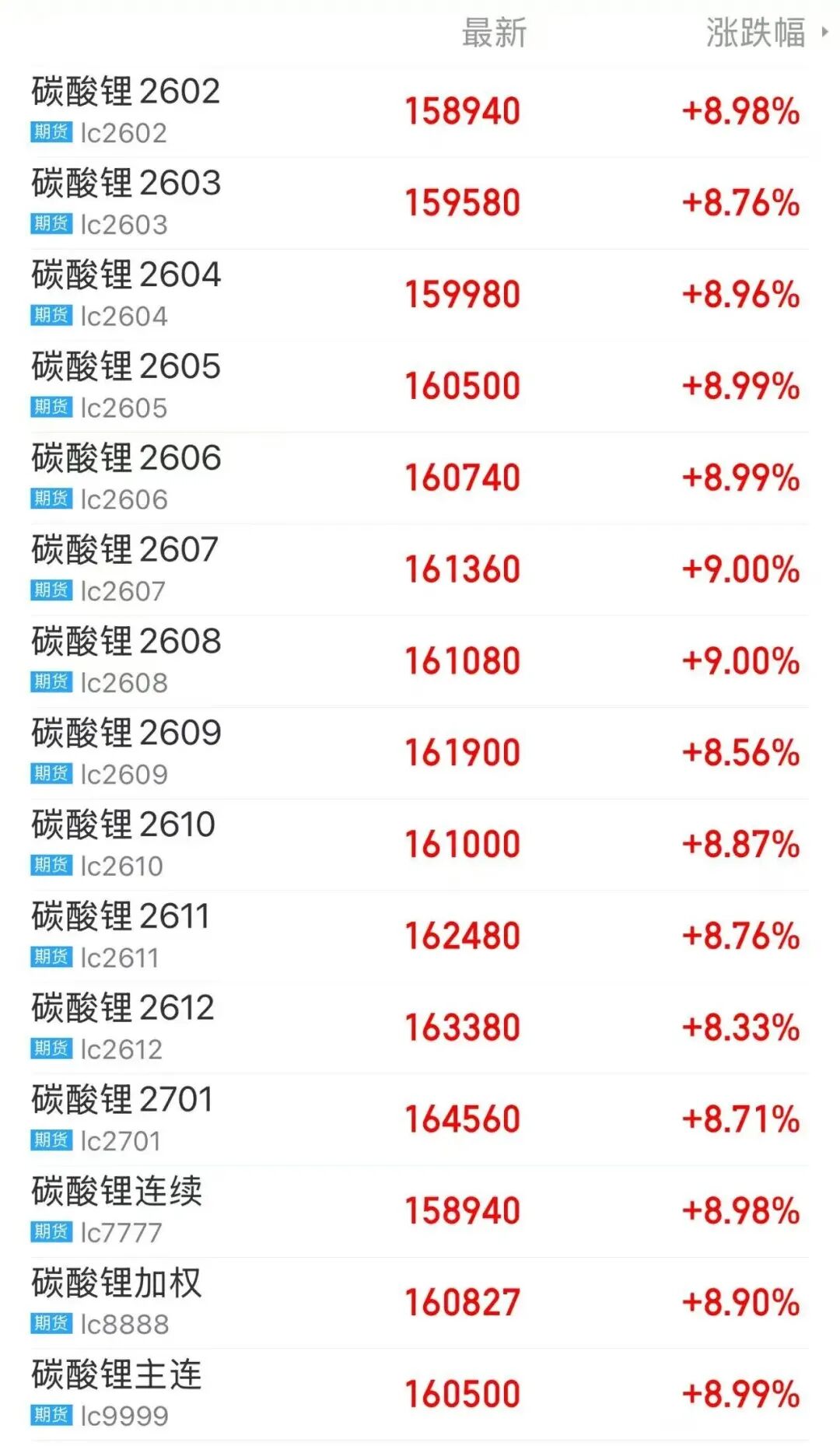
供应扰动发酵,碳酸锂期货多个合约涨停
Qi Huo Ri Bao· 2026-01-20 23:49
Core Viewpoint - The recent surge in lithium carbonate prices is primarily driven by concerns over supply constraints, particularly in the Jiangxi production area, where there are reports of potential production halts and increased regulatory scrutiny [3][4][6]. Group 1: Market Dynamics - The lithium carbonate price has seen significant increases, with futures prices rising by approximately 8.33% to 9.00% across various contracts [1]. - Analysts indicate that the market is experiencing a tight supply-demand balance, with current supply levels remaining high but limited potential for future increases [4]. - There is a notable shift in demand dynamics, with some downstream sectors, particularly in iron phosphate lithium, resuming production and increasing output after adjusting processing fees [4]. Group 2: Inventory and Supply Concerns - As of mid-January, lithium carbonate weekly inventory totaled 109,700 tons, reflecting a decrease of 263 tons week-on-week, with variations in inventory levels across different market segments [4]. - The current market is characterized by locked-up inventories, leading to limited available spot supplies, which is contributing to upward price pressure [4][5]. - Analysts express caution regarding the potential for price fluctuations as the market navigates between strong current realities and weaker future expectations [5]. Group 3: Regulatory and Risk Management - The introduction of new mining laws and stricter environmental regulations is expected to impact production norms and regulatory oversight in the lithium mining sector [3][4]. - In response to increasing uncertainties affecting lithium futures, the Guangxi Futures Exchange has implemented a series of risk control measures to ensure market stability [5].
一夜暴涨24元/克!金饰突破1450元,现在入手还是坐等回调?避坑指南必看
Sou Hu Cai Jing· 2026-01-19 23:55
Group 1 - The core point of the article is the significant increase in gold prices, with major brands in the industry collectively raising their prices for gold jewelry, reflecting broader market trends and economic factors [1][2][3] - On January 19, 2025, the price of gold jewelry rose sharply, with notable increases across various brands, indicating a collective industry response to market conditions [1] - The underlying logic for the surge in gold prices is attributed to global liquidity expansion and the depreciation of the US dollar, with central banks, particularly in China, increasing their gold reserves [3][4] Group 2 - Geopolitical tensions and supply-demand imbalances are accelerating the gold price rally, with recent conflicts impacting market sentiment and supply constraints [4] - The demand for gold is shifting, with investment demand surpassing decorative demand for the first time in China, indicating a fundamental change in consumer behavior and market dynamics [8] - Analysts predict that gold prices will continue to rise, driven by macroeconomic conditions, supply-demand tightness, and geopolitical factors, making high volatility a new norm in the market [4][7]




国泰海通|金属新材料:波动不改上行趋势
国泰海通证券研究· 2026-01-19 14:03
Group 1 - The core viewpoint emphasizes the importance of macroeconomic factors, such as monetary policy, macro expectations, geopolitical dynamics, and supply disruptions, in influencing metal price trends, despite a balanced supply-demand situation [1] Group 2 - Precious metals prices are experiencing fluctuations, with a slight increase attributed to positive U.S. employment data. Central bank gold purchases and rising gold ETF holdings are expected to support gold prices through 2026 [2] - Silver's rental rates in London have decreased, but U.S. silver inventories are declining rapidly [2] Group 3 - Copper prices are under short-term pressure due to macro sentiment adjustments and revised demand forecasts from Nvidia, but tight supply and ongoing demand from AI and power grid investments are expected to support prices. The State Grid's projected fixed asset investment of 4 trillion yuan during the 14th Five-Year Plan represents a 40% increase from the previous plan [3] Group 4 - Aluminum prices are experiencing high volatility due to mixed macro signals. Domestic new electrolytic aluminum projects are ramping up production, while demand is weakening ahead of the Spring Festival, leading to inventory increases [3] - Tin prices are expected to fluctuate as market sentiment cools following significant price movements and adjustments in trading regulations [3] Group 5 - Lithium carbonate inventories have begun to decrease, with demand showing signs of strength. The expected reduction in export tax rebates for battery products may lead to front-loaded demand [4] - The cobalt sector is facing high prices due to tight raw material supplies, while companies are extending their reach into downstream electric new energy sectors to enhance competitive advantages [4] Group 6 - Rare earth prices are recovering due to policy support and pre-holiday inventory demand, indicating strong investment value in rare earths as strategic resources [5]

波动不改上行趋势
GUOTAI HAITONG SECURITIES· 2026-01-19 07:30
Investment Rating - The report rates the industry as "Buy" [4] Core Insights - The report emphasizes the importance of macroeconomic factors such as monetary policy, macro expectations, geopolitical dynamics, and supply disruptions in influencing metal price trends, despite a balanced supply-demand situation [2] - Precious metals are expected to continue their upward trend supported by central bank gold purchases and rising gold ETF holdings [8] - Copper prices are under short-term pressure due to macro sentiment adjustments, but long-term demand from AI and power grid construction remains strong [10] - Aluminum prices are expected to maintain high volatility due to mixed macro signals and seasonal demand fluctuations [10] - Energy metals like lithium are seeing inventory reductions, with expectations of front-loaded demand due to changes in export tax policies [11] - Rare earth prices are recovering, driven by policy support and pre-holiday stocking demand [11] Summary by Sections Precious Metals - Gold prices have risen, with SHFE gold increasing by 3.17% to 1,032.32 CNY per gram and COMEX gold rising by 2.23% to 4,601.10 USD per ounce [8] - Silver prices surged, with SHFE silver up 22.82% to 22,483 CNY per kilogram and COMEX silver up 13.37% to 89.95 USD per ounce [9] Copper - Copper prices have seen a slight decline, with SHFE copper down 0.63% to 100,770 CNY per ton and LME copper down 1.50% to 12,803 USD per ton [10] - Supply remains tight, with significant labor actions expected to impact production [10] Aluminum - Aluminum prices are experiencing high volatility, with SHFE aluminum down 1.66% to 23,925 CNY per ton [10] - The processing operating rate has slightly increased to 60.2% [10] Energy Metals - Lithium inventory is decreasing, with demand expected to strengthen due to changes in export tax policies [11] - The cobalt sector is facing tight raw material supply, leading to higher prices [11] Rare Earths - Rare earth prices are on the rise, with significant increases in the prices of praseodymium-neodymium oxide and dysprosium oxide [11]
期现同步走强,旺季支撑凸显
Hua Long Qi Huo· 2026-01-19 02:38
Report Industry Investment Rating - Not provided in the content Core Viewpoints of the Report - Since January, the spot price of eggs has risen by over 15%, and the futures market has also strengthened. The concentrated release of pre - Spring Festival stocking demand and the marginal shrinkage of supply have supported the market. However, the current inventory of laying hens is still relatively high, and potential supply pressure and post - holiday demand decline expectations may limit price increases. In the long - term, the core driver lies in the pace of production capacity reduction. The inventory of laying hens is expected to turn from an increase to a decrease year - on - year in the second quarter of this year, but short - term price increases face multiple constraints [9][60] Summary by Relevant Catalogs 1. Trend Review (1) Futures Price - Last week, the main contract of egg futures changed to JD2603, with a volatile and slightly upward trend. As of the close on January 16, the main JD2603 contract was reported at 3072 yuan per 500 kilograms, up 0.39% [6][14] (2) Spot Price - Last week, egg prices in production and sales areas rose together, and the regional price difference continued to narrow. As of January 16, 2026, the average price of eggs in the main production areas was 3.5 yuan per catty, and in the main sales areas was 3.54 yuan per catty [8][17] (3) Basis Situation - Last week, due to the concentrated release of pre - Spring Festival stocking demand, the shipping speed in production areas accelerated, inventory decreased, and the spot premium significantly expanded. As the market was worried about post - holiday demand decline, the futures price increase was restricted. As of last Friday, the main contract JD2603 closed at 3072 yuan per 500 kilograms, with a basis of 428 yuan per 500 kilograms [20] 2. Fundamental Analysis (1) Supply Side a. Inventory of Laying Hens - In December, the national inventory of laying hens was about 1.295 billion. Since August last year, the inventory has been decreasing monthly but remains at a relatively high level in recent years [29] b. Old Hen Slaughter Volume - Last week, the slaughter volume of old hens decreased slightly. The total slaughter volume of old hens in the sample market was 658,500, a month - on - month decrease of 0.53%. The average slaughter age was 487 days, the same as the previous week [33] c. Shipping Volume in Production Areas - As the Spring Festival approached, the market's bullish expectation strengthened, downstream dealers and terminal channels were more active in stocking, and the shipping of eggs in production areas accelerated. Last week, the total shipping volume of the sample market in the main production areas was 7,600.70 tons, a month - on - month increase of 14.46% and a year - on - year increase of 26.91% [35] (2) Demand Side a. Sales Volume in Sales Areas - Recently, the downstream stocking atmosphere has been strong, demand has been improving, and sales in sales areas have increased month - on - month. Last week, the sales volume of eggs in representative markets in sales areas was 7,792.88 tons, a month - on - month increase of 9.35% and a year - on - year increase of 37.75% [39] b. Old Hen Slaughter Volume - Last week, the slaughter volume of old hens decreased month - on - month. The total slaughter volume of sample slaughter enterprises was 2.3249 million, a decrease of 81,000 from the previous week, a month - on - month decrease of 0.35% [42] (3) Inventory Situation - Supported by the consumption peak season, market circulation accelerated. As of January 16, the national production - link inventory was 0.26 days, and the circulation - link inventory was 0.44 days [45] (4) Egg - Laying Hen Breeding Cost and Profit - Last week, the cost per catty of eggs was 3.54 yuan per catty, a month - on - month increase of 0.02 yuan per catty or 0.57%. The profit was - 0.18 yuan per catty, a month - on - month increase of 0.24 yuan per catty or 57.14%. The cost of egg - laying hen breeding was 133.57 yuan per hen, a month - on - month increase of 0.47 yuan per hen or 0.35%. The breeding profit was 4.70 yuan per hen, a month - on - month increase of 9.54 yuan per hen [53] (5) Related Product Situation a. White - Feathered Broilers - Last week, the national price of white - feathered broilers decreased month - on - month. The average price in front of the shed was 3.75 yuan per catty, a month - on - month decrease of 0.27% and a year - on - year increase of 2.46% [57] b. 817 Small White Chickens - Last week, the price of 817 small white chickens was stable. The national weekly average price was 3.92 yuan per catty, with no change month - on - month [59] 3. Market Outlook - Since January, the spot price of eggs has risen by over 15%, and the futures market has also strengthened. The concentrated release of pre - Spring Festival stocking demand and the marginal shrinkage of supply have supported the market. However, the current inventory of laying hens is still relatively high, and potential supply pressure and post - holiday demand decline expectations may limit price increases. In the long - term, the core driver lies in the pace of production capacity reduction. The inventory of laying hens is expected to turn from an increase to a decrease year - on - year in the second quarter of this year, but short - term price increases face multiple constraints [9][60] 4. Operation Strategy - Unilateral: Temporarily wait and see, and continuously monitor the pace of production capacity reduction; Arbitrage: None; Options: None [10][61]
碳酸锂期货先扬后抑,旺季临近生猪震荡偏强|期货周报
2 1 Shi Ji Jing Ji Bao Dao· 2026-01-18 23:24
Commodity Market Overview - The commodity market showed mixed performance from January 12 to January 16, with the base metals sector leading gains while the black metals sector declined [1] - Energy and chemical sectors saw slight increases, with fuel up 0.32% and crude oil up 1.22% [1] - The black metals sector experienced declines, with coking coal down 2.05%, coke down 1.77%, and iron ore down 0.31% [1] - The base metals sector saw lithium carbonate up 1.94%, zinc up 3.06%, and nickel up 1.62% [1] - Precious metals saw significant gains, with gold up 2.57% and silver up 20.03% [1] - Agricultural products showed mixed results, with eggs up 1.05% and live pigs up 1.78%, while soybean meal fell 2.12% [1] Lithium Market Dynamics - Lithium carbonate futures experienced volatility, initially rising 17% before a sharp decline, closing the week at 146,200 yuan/ton after hitting a limit down [2][3] - Supply remained slightly increased, with domestic lithium carbonate production at 22,605 tons for the week, a 0.3% increase [2] - Demand remained strong despite seasonal trends, with December sales of new energy vehicles reaching 1.71 million units, a 28% year-on-year increase [2] Pig Market Trends - The pig futures market showed a strong upward trend ahead of the Spring Festival, with the main contract up 1.78% to 11,950 yuan/ton [4] - Supply dynamics indicated a slowdown in the outflow of pigs, with the number of breeding sows stable at 39.9 million heads [4] - Demand is expected to increase as the Spring Festival approaches, with slaughter rates showing slight improvements [4][5] Export Growth Insights - December 2025 saw a 6.6% year-on-year increase in exports, driven by strong performance in non-US markets and high-end manufacturing [6][7] - Key drivers included a significant increase in automobile exports and a recovery in consumer electronics demand [6][7] - The overall export growth is expected to remain resilient, supported by ongoing capital expenditure needs in Belt and Road Initiative countries [8] Financial Data and Policy Measures - December 2025 financial data revealed a decrease in new social financing, with a total of 2.21 trillion yuan, reflecting a year-on-year decline [9][10] - The People's Bank of China introduced structural monetary policy tools aimed at supporting targeted sectors, indicating a shift from broad monetary easing [12] - The focus on corporate loans showed a significant increase, while household loans continued to decline, indicating cautious consumer behavior [10][11]