AI泡沫

Search documents
11月新增非农谈不上强劲:环球市场动态2025年12月17日
citic securities· 2025-12-17 02:37
Economic Indicators - In November 2025, the U.S. added 64,000 non-farm jobs, exceeding the expected 50,000, while the unemployment rate rose to 4.6%, higher than the anticipated 4.5%[5] - October's non-farm employment saw the largest decline in five years, with a drop of 105,000 jobs, primarily due to federal employees opting for "delayed resignation" programs[5] Stock Market Performance - U.S. stock indices showed mixed results, with the Dow Jones falling 302 points (0.62%) to 48,114, while the Nasdaq rose 0.23% to 23,111[8] - European markets declined, with the UK FTSE 100 down 0.68% to 9,684 and the German DAX down 0.63% to 24,076[8] Commodity and Currency Trends - WTI crude oil prices fell below $55 per barrel for the first time since 2021, influenced by oversupply and geopolitical tensions[27] - The U.S. dollar index decreased by 0.2%, reflecting a year-to-date decline of 9.5%[26] Bond Market Insights - U.S. Treasury yields fell by 1-3 basis points, with the 10-year yield at 4.15% and the 30-year yield at 4.81%[30] - The bond market showed mixed signals, with the 2-year Treasury yield at 3.49%, down 1.5 basis points[30] Asian Market Dynamics - The Asia-Pacific stock markets mostly declined, with South Korea's KOSPI dropping 2.2% to 3,999 points, while Vietnam's index rose 2.0% to 1,679 points[21] - Hong Kong's Hang Seng Index fell 1.54% to 25,235 points, with significant declines in technology and financial sectors[10]



2026科技投资怎么投?这场策略会拆解十大关键问题
Zhong Guo Ji Jin Bao· 2025-12-17 02:07
即将过去的2025年,科技产业历经诸多变革,助推科技股成为贯穿全年的行情主线。年末之际,人工智能、芯片、新能源等科技主题的行情波动明显放 大。随着AI泡沫之争再起,新一年的科技投资脉络成为市场关注焦点。 迷雾之中,长城基金2026年度投资策略会如约而至。赵凤飞、尤国梁、梁福睿、龙宇飞、韩林、刘疆等多位深耕"科技+"领域的基金经理,聚焦科技投资 领域的热门问题展开深度探讨。 以下为本次策略会中长城基金"科技+"基金经理分享的部分精彩观点: 赵凤飞:2026年的市场风格将更加均衡:一是算力板块内海外与国产算力趋向均衡,二是AI领域内算力与应用趋向均衡,三是科技板块内AI与商业航 天、量子计算等非AI赛道趋向均衡。 尤国梁:前不久的可回收火箭发射相当于商业航天产业的"成人礼",直接为卫星互联网、太空算力、6G等未来赛道铺好了运力底座,一个全新的万亿级 市场正在被打开。 梁福睿:面对国内集采、海外药价管控带来的全球医药通缩压力,只有具备全球化能力、能迭代现有治疗方式的创新药与器械企业,才能突破发展瓶颈。 龙宇飞:医药行业核心竞争力标准持续演进:十几年前比拼商业化能力,5-10年前转向产品研发与产品力,如今则要求研发与 ...


期货市场交易指引2025年12月17日-20251217
Chang Jiang Qi Huo· 2025-12-17 01:52
| 指标 | 最新价 | 涨跌幅 | | --- | --- | --- | | 上证综指 | 3,824.81 | -1.11% | | 深圳成指 | 12,914.67 | -1.51% | | 沪深 300 | 4,497.55 | -1.20% | | 上证 50 | 2,954.79 | -1.08% | | 中证 500 | 7,001.32 | -1.58% | | 中证 1000 | 5,903.58 | 0.25% | | 日经指数 | 49,383.29 | -1.56% | | 道琼指数 | 48,114.26 | -0.62% | | 标普 500 | 6,800.26 | -0.24% | | 纳斯达克 | 23,111.46 | 0.23% | | 美元指数 | 98.2199 | -0.06% | | 人民币 | 7.0425 | -0.11% | | 纽约黄金 | 4,332.20 | -0.05% | | WTI 原油 | 55.27 | -2.73% | | LME 铜 | 11,619.00 | -0.57% | | LME 铝 | 2,882.50 | 0.26% | ...
“非农数据”喜忧参半!美联储主席人选,大消息!机构:A股调整进入尾声
Xin Lang Cai Jing· 2025-12-17 00:05
Group 1: Employment Data - The unemployment rate in the US rose to 4.6% in November, the highest level since October 2021 [1][11] - The total number of unemployed individuals reached approximately 7.83 million, significantly higher than the 7.12 million reported in the same month last year [1][11] - In November, 64,000 new non-farm jobs were added, primarily in healthcare, construction, and social assistance sectors, while jobs in transportation, warehousing, and federal government sectors decreased [1][11] Group 2: Federal Reserve and Interest Rate Expectations - Following the employment data release, market expectations shifted towards the possibility of 3 to 4 interest rate cuts by the Federal Reserve next year [7][16] - The probability of a 25 basis point rate cut in January is estimated at 24.4%, with a 75.6% chance of maintaining current rates [12] - The market anticipates a cumulative 25 basis point cut by March, with a probability of 43.5% for a cut and 47.5% for no change [12] Group 3: Market Reactions - Following the employment data, US stock futures rose, the dollar index fell, and US Treasury yields declined, indicating an increase in market risk appetite [16] - The adjustment in the global stock market is attributed to various factors, including disappointing earnings from major tech companies and concerns over AI project delays [15] - A-shares are expected to rebound in line with global liquidity remaining accommodative, supported by the anticipated easing of monetary policy [16][17] Group 4: A-Share Market Outlook - Analysts believe that the A-share market has entered a layout window, with strong support at lower levels despite increased volatility [17][18] - Key factors influencing A-share performance include domestic liquidity conditions, economic data trends, and the global liquidity environment, particularly the Federal Reserve's interest rate path [17][18] - Financial and technology sectors are highlighted as areas of potential opportunity, with financial stocks benefiting from increased trading volumes and policy support [18][19]

中金:内外因素引发回调,中期向好逻辑未改
中金点睛· 2025-12-16 23:50
Group 1 - The A-share market has shown weak performance recently, with the Shanghai Composite Index closing down 1.1% on December 16, marking a cumulative decline of 2.5% over the past six trading days [2] - The market is experiencing a broad decline, with over 4,000 listed companies falling, while the trading volume on December 16 was 1.75 trillion yuan, slightly down from the previous day [2] - The sectors performing well include retail, beauty care, and social services, while telecommunications, non-ferrous metals, and power equipment saw the largest declines [2] Group 2 - Both internal and external factors have contributed to a temporary decline in market risk appetite, with external factors playing a dominant role. The recent FOMC meeting indicated a neutral to hawkish stance, with expectations of only one rate cut by 2026, raising concerns about liquidity [3] - Domestic economic data for November showed a continued slowdown compared to October, with significant declines in fixed asset investment and retail consumption growth, leading to increased market focus on fundamental data [3] Group 3 - The underlying logic for market growth remains intact, with a positive mid-term trend expected through 2026. The macro policy shift since last year has changed investor sentiment, providing a stable foundation for market recovery [4] - The fundamental drivers of the current market rally include the restructuring of the international monetary order and advancements in industrial innovation, both of which have not been disrupted [4] Group 4 - The current market pullback may offer good positioning opportunities for the first half of 2026, as overall valuations in the A-share market remain attractive compared to global peers and major asset classes [5] - Suggested investment strategies include focusing on growth styles during market corrections, with three main lines of focus: 1) sectors experiencing growth such as AI technology and innovative pharmaceuticals, 2) companies benefiting from overseas expansion, and 3) cyclical sectors nearing improvement points [5][6]

资产配置日报:考验定力-20251216
HUAXI Securities· 2025-12-16 15:25
Market Overview - On December 16, global markets experienced a decline in equities while bonds showed limited recovery, with the A-share market down 1.45% and trading volume decreasing by 463 billion yuan compared to the previous day[1][2]. - The Hang Seng Index fell by 1.54%, and the Hang Seng Tech Index dropped by 1.74%, with net inflows into Xiaomi and XPeng but outflows from Alibaba and China Mobile[1][2]. Global Economic Pressures - The decline in markets is attributed to global factors, including expectations of a 25 basis point interest rate hike by the Bank of Japan on December 19, raising concerns about potential impacts on equity markets[2]. - The Nasdaq index has seen a cumulative decline of 2.52% since December 11, driven by renewed fears regarding the AI bubble[2]. Market Sentiment and Strategy - The current market downturn, coupled with reduced trading volume, suggests that investors may be holding onto their positions rather than selling at a loss, indicating a potential lack of buying interest[2]. - Analysts recommend a cautious approach, advising to observe for stabilization signals before making further moves in the market[2]. Bond Market Dynamics - The bond market saw a slight recovery, with 10-year and 30-year government bond yields decreasing by 0.65 basis points and 0.40 basis points, respectively, to 1.85% and 2.28%[4]. - Fund behavior indicates a shift towards selling longer-duration bonds while increasing holdings in shorter-duration bonds, reflecting a strategy to reduce duration risk[4]. Sector Performance - The market is characterized by structural trends, with the North China 50 index rising by 0.54% while other indices fell, suggesting selective strength in smaller-cap stocks[3]. - There is a notable focus on sectors such as commercial aerospace, smart driving, fintech, and consumer goods, although overall market sentiment remains weak[3]. Commodity Market Trends - The commodity market is experiencing a cooling of sentiment, with precious metals like gold and silver seeing declines of 0.60% and 0.30%, respectively[6]. - Industrial metals also faced declines, with copper and aluminum down by 0.79% and 0.21%[6]. Capital Outflows - Significant capital outflows were noted, with the commodity index experiencing a net outflow of 4 billion yuan, continuing a trend from the previous day[7]. - Precious metals faced substantial selling pressure, with gold and silver seeing outflows of 2.9 billion yuan and 1.7 billion yuan, respectively[7]. Employment Data Impact - The U.S. employment data released showed a slight increase in non-farm payrolls but a rise in the unemployment rate to 4.6%, indicating a cooling labor market and reinforcing expectations for continued monetary easing by the Federal Reserve[8]. - This data led to a rebound in gold prices, which rose by over $10, reaching a peak of $4312.5 per ounce[8]. Policy Implications - The central economic work conference emphasized the importance of domestic demand, which may lead to increased policy support in the coming year[3]. - Analysts suggest that the market may react positively to potential policy adjustments aimed at boosting consumption[3].
美银全球基金经理抽样大调查:现金持有量低至3.3%,AI与黄金交易最拥挤
Zhi Tong Cai Jing· 2025-12-16 13:20
Core Viewpoint - The recent survey by Bank of America indicates a significant rise in optimism among fund managers, with macroeconomic confidence reaching its highest level since August 2021, while cash holdings have dropped to a record low of 3.3%, highlighting potential risks from AI bubbles and private credit [1] Group 1: Macroeconomic Outlook - 57% of fund managers anticipate a "soft landing" for the global economy, characterized by moderate growth and controlled inflation, while 37% expect continued strong growth, and only 3% are concerned about a "hard landing" [2] - Global growth expectations have risen to a four-year high, with corporate earnings expectations also reaching their peak since August 2021, as 41% of respondents believe that corporate earnings in the Asia-Pacific region will strengthen [2] Group 2: Liquidity Environment - The liquidity environment is assessed as the best since September 2021, with 69% of investors betting on Kevin Hassett to become the next Federal Reserve Chair [3] Group 3: Risks and Crowded Trades - Despite the optimism, 37% of respondents identify potential risks from an "AI bubble" [4] - 40% of respondents see a risk of a credit crisis, with private credit being the largest source of systemic credit events [5] - The most crowded trades include 54% of investors going long on the "Wall Street Seven" and 29% on gold, indicating the most popular investment directions [6] Group 4: Asset Allocation - Fund managers are undergoing aggressive asset reallocation, with cash holdings plummeting to a historical low of 3.3%, approaching a "sell signal" as per Bank of America's cash rule [6] - Net overweights include stocks at 42%, the highest since December 2024, and commodities at 18%, the highest since September 2022 [7] - Net underweights include bonds at 29%, the lowest since October 2022, and significant underweights in cash, consumer staples, and energy stocks [8] Group 5: Sector Preferences - Top three sectors with net overweights are healthcare at 35%, banks at 32%, and technology at 21%, with technology stock allocations reaching their highest since July 2024 [8] - The bottom three sectors with net underweights are energy at 26%, consumer staples at 20%, and consumer discretionary at 16% [8] - Japan remains the most favored market with a net overweight of 41%, while India has a moderate overweight of 10% [8] - Expectations for the semiconductor cycle have rebounded to the highest level since July 2024, with 55% of respondents believing the semiconductor industry will strengthen in the next 12 months [8]


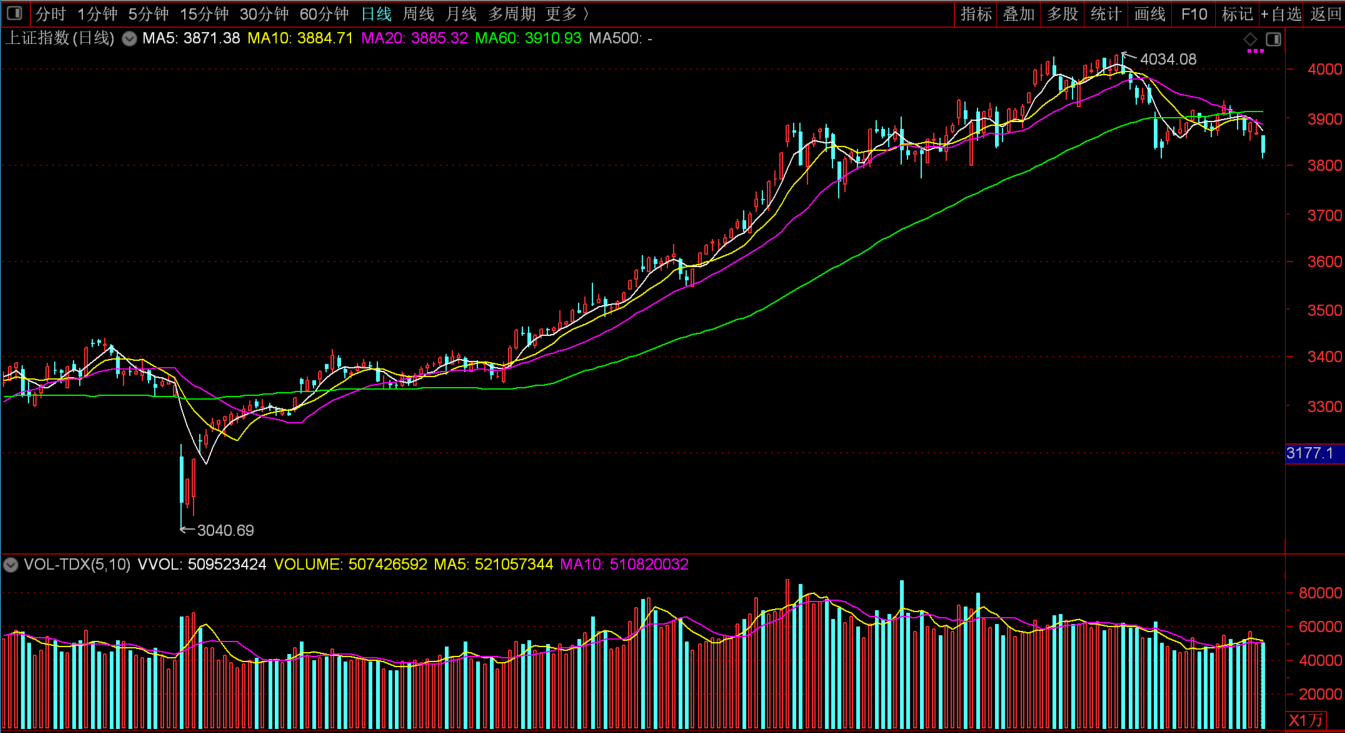
A股,突然跳水逼近3800点,资金在担心什么?
Sou Hu Cai Jing· 2025-12-16 11:11
接下来A股怎么走? 眼下对沪指来说,重点是3800点的支撑,最好的方式是在这个位置之下形成空头陷阱,这样市场整体的强势就保住了,如果说3800点成了多空分水岭,那就 要有风险防范意识了,我说这话大家好好想想。 实际上创业板现在看还处在高位,3000点则是多空力量的关键点,以不跌破3000点为强势,否则的话就要另当别论了。 以我的看法,3800点之下市场应该会形成明显的支撑,至于这种想法是否现实,那就要看下一步消息面的变化了,以及美股那边涨跌情况而定。 这种情形下,再看看A股的走势,低开之后直线下挫,沪指在一个多小时就下跌了1.31%,盘中最低到了3815点,上次的低点也被打破了,尤其是创业板指 数盘中一度重挫了2.5%,像这么弱的单日走势,在近期其实并不多见,所以说今天市场有点出乎意料。 其一,我觉得主要还是美股科技股的影响,舆论对部分美股大型科技股的AI泡沫呼声很高,如此美股已经连续调整两天了,当前不只是美股在高位,A股的 科技股虽然说出现了阶段性震荡,不过从绝对的位置看,这波其实没有调整多少,还是存在大量的获利盘,这种情形下,只要美股那边稍微有点风吹草动, A股这边往往就会成为惊弓之鸟。 今天A股科技龙头 ...
美元、A股与黄金的2026:经济学家解码全球资产“避风港”
和讯· 2025-12-16 10:09
Group 1: Global Asset Allocation - The core viewpoint emphasizes that investors should focus on building resilient investment portfolios amid uncertainty rather than trying to predict market turning points [2] - Morgan Stanley's chief economist for China, Xing Ziqiang, predicts that the US economy will maintain resilience over the next two years, with real growth close to 2% and nominal growth reaching 4-5% [3] - The support for this prediction is based on the "AI investment boom" and the unique US strategy of "high growth, high inflation, and low interest rate" for debt management [3] Group 2: Market Perspectives - Lianhua Asset Management's partner, Hong Hao, anticipates significant market volatility in 2026 due to potential Federal Reserve policy missteps, suggesting that the dollar may be losing its traditional safe-haven status [4] - Hong Hao believes that the US stock market may experience a "rise then fall" pattern, with liquidity cycles still supporting risk assets in the short term, but warns of high valuation risks [4] - In contrast, Hong Hao is more optimistic about commodities, particularly industrial metals, which he sees as essential in the AI era for building data and energy centers [4][5] Group 3: Domestic Market Insights - Xing Ziqiang highlights the "bright side" of the Chinese economy, noting that new technology sectors provide opportunities for investors, especially after the "9.24 policy" improved market vitality [8] - Hong Hao points out that China is undergoing a significant transition from a real estate-driven economy to one driven by new productive forces, including AI and robotics [8] - The outlook for the Chinese stock market is characterized by dynamic highlights that can sustain growth despite macroeconomic challenges [8][10] Group 4: Long-term Strategy - Xing Ziqiang proposes a new asset allocation strategy termed "6-2-2," suggesting 60% in equities, 20% in gold, and 20% in bonds, reflecting a reassessment of strategic asset values amid declining fiat currency credibility [10] - Hong Hao expresses cautious optimism about gold, suggesting potential prices of $4000 for gold and $60 for silver, while noting that current prices may already reflect most positive factors [11] - The final investment advice emphasizes the importance of position management and constructing a portfolio with multiple independent sources of alpha to achieve controllable volatility and attractive returns [12]

观察| 资产暴跌时,钱去了哪里?
未可知人工智能研究院· 2025-12-16 10:02
Core Viewpoint - The article discusses the volatility and illusion of wealth in the AI industry, emphasizing that perceived losses in market value are often just numerical illusions rather than actual wealth being transferred or lost [2][3][4]. Group 1: Market Dynamics and Illusions - The AI industry experienced a dramatic rise and fall in valuations, with companies like SenseTime and Cambricon losing significant market value as the hype around AI waned [2][3]. - The concept of "wealth" in the market is described as a collective illusion, where perceived losses are merely a return to reality rather than actual money disappearing [3][4]. - The valuation mechanisms in the market are compared to AI's propensity for "hallucination," where both can create misleading perceptions based on limited data [6][8]. Group 2: Valuation Mechanisms - The article illustrates how market valuations can fluctuate dramatically based on limited trading activity, leading to significant changes in perceived wealth without any actual change in the underlying assets [9][10]. - It highlights that the majority of stocks remain untraded, yet their valuations are influenced by the prices of a small fraction of shares that do trade [26][28]. - The phenomenon of "mark-to-market" accounting is discussed, where the value of all shares is adjusted based on the price of a few traded shares, leading to widespread valuation changes [10][12]. Group 3: Wealth Creation and Destruction - Wealth is described as not being conserved like physical entities; it can be created or destroyed based on market perceptions and valuations [8][17]. - The article emphasizes that the disappearance of wealth during market corrections is not due to funds being withdrawn but rather a change in collective valuation consensus [28][39]. - The example of a fictional AI chip company illustrates how market sentiment can lead to rapid valuation changes, demonstrating the volatility inherent in the AI sector [9][10][12]. Group 4: Insights on Investment Behavior - Investors are cautioned to be aware of the speculative nature of AI stocks, where hype can lead to inflated valuations that do not reflect true company performance [70][71]. - The article advises distinguishing between the technological value of AI and the market's speculative valuations, which can often diverge significantly [71][72]. - It encourages a rational approach to understanding market fluctuations, recognizing that wealth is not solely defined by stock prices but also by skills and knowledge [73][74]. Group 5: Broader Economic Implications - The article draws parallels between the AI market and the real estate market, illustrating how perceived value can change without any physical alterations to the assets themselves [54][60]. - It discusses the broader economic impact of wealth disappearance, particularly in the context of consumer behavior and economic growth [61][62]. - The phenomenon of wealth illusion is further exemplified through the cryptocurrency market, where valuations can be even more volatile and disconnected from tangible assets [63][64].