货币政策

Search documents
金融期货早评-20260129
Nan Hua Qi Huo· 2026-01-29 02:23
Report Industry Investment Rating No relevant content provided. Core Viewpoints of the Report - The current global market is in a transition phase where overseas markets are waiting for policy verification and domestic markets are waiting for demand recovery. The Fed's latest FOMC meeting maintained the federal benchmark interest rate, and the market expects no rate adjustment before June. There are differences in the stances on the US dollar exchange rate between Trump and Bessent. Domestically, the economy is in a weak recovery, but there are positive signs, and industrial enterprise profits are expected to shift from phased recovery to moderate growth in 2026 [2][3]. - For various commodities, different trends and investment suggestions are presented based on their respective fundamentals and market conditions, such as the expected performance of financial futures, the price trends of various metals, energy products, agricultural products, and chemical products [1][13][27][31]. Summary by Relevant Catalogs Financial Futures - **Macro**: The Fed released a patient signal. The National Energy Administration reported the cumulative power - generation installed capacity by the end of 2025. The Fed's January interest - rate meeting maintained the rate, and there were differences in voting. The Bank of Canada and Brazil's central bank also made rate - related decisions. Trump's statements and geopolitical tensions were also mentioned [1]. - **RMB Exchange Rate**: The Fed's interest - rate meeting kept the rate unchanged. The on - shore RMB against the US dollar rose, and the RMB against the US dollar central parity rate was adjusted up. The future trend of the RMB is affected by the US dollar index and the central bank's exchange - rate regulation. Short - term strategies for export and import enterprises were suggested [3]. - **Stock Index**: The Fed's decision to pause rate cuts is expected to have limited impact on A - shares. The market sentiment is optimistic, but regulatory measures may suppress the rise of large - cap stock indexes. Short - term stock indexes are expected to show a structural market [4][5]. - **Treasury Bonds**: The market expects the central bank to introduce new policy tools. It is recommended to hold medium - term long positions, reduce positions in the March contract on rallies, and not chase the market in the short term [5][6]. - **Container Shipping on the European Line**: Geopolitical tensions and weather disturbances drove the futures prices to rebound. The market is affected by both positive and negative factors, and the main contract is expected to fluctuate in a range, with the far - month contract potentially stronger [8][9][11]. Commodities New Energy - **Lithium Carbonate**: The futures price decreased, but downstream replenishment increased. It is expected that the price and basis of lithium carbonate will strengthen before the Spring Festival. In the long - term, the demand growth logic of downstream applications remains unchanged, but price rises may suppress demand. It is recommended to buy on dips but not chase high prices [13][14]. - **Industrial Silicon and Polysilicon**: The futures prices of both decreased. In the short - term, the demand for industrial silicon is expected to increase due to export policies, but the supply contraction of polysilicon may limit the price increase of industrial silicon. The market is waiting for the results of relevant meetings [14][15][17]. Non - ferrous Metals - **Copper**: The copper prices rose. The inventory of copper increased in some exchanges. The research report suggests avoiding short positions temporarily and provides strategies for long - position holders and enterprises that need to purchase copper [18][19][21]. - **Aluminum Industry Chain**: The rise of Shanghai aluminum may be due to capital speculation. The long - term trend of aluminum prices is bullish, but it is not recommended to participate in long positions at present. Alumina is expected to be weak in the medium - to - long - term, and casting aluminum alloy is expected to be strong. Different investment suggestions are provided for each [21][22]. - **Zinc**: The zinc price was strong, mainly due to the rebound after the previous day's decline and the overall strength of the non - ferrous metal sector. The supply is expected to be relatively loose, and the demand is weak. The future trend depends on macro and geopolitical factors [22]. - **Nickel and Stainless Steel**: The nickel price was in a high - level shock, and the stainless - steel price was in a wide - range shock. The trading logic of nickel is neutral, and the stainless - steel market is affected by the upstream and downstream factors. It is recommended to pay attention to the follow - up trend of nickel [22][24]. - **Tin**: The tin price was in a wide - range shock. The short - term supply is affected by supply - loss themes, and the long - term price is expected to rise due to resource depletion. It is recommended to be cautious when entering the market [24][25]. - **Lead**: The lead price was in a narrow - range shock. The supply is affected by raw - material tightness and high prices, and the demand lacks new drivers. The price is expected to fluctuate within a range [25]. Oils and Fats and Feeds - **Oilseeds**: The oilseeds sector rebounded. The supply of imported soybeans may have a gap in the first quarter, but the state's procurement and reserve - rotation measures have alleviated the short - term tension. The domestic soybean meal market is affected by supply and demand, and the rapeseed meal market is affected by Sino - Canadian relations [27]. - **Oils**: The oil sector was strong in the short - term. The palm oil market is affected by geopolitical conflicts and production reduction expectations. The soybean oil market is affected by the harvest in Brazil and Argentina and the US biofuel policy. The rapeseed oil market is affected by the production in Canada and the uncertainty of Sino - Canadian relations [28][29]. Energy and Oil and Gas - **Fuel Oil**: The high - sulfur fuel - oil market is affected by geopolitical factors and supply - demand changes. The supply is gradually recovering, and the demand is mainly in the bunkering market. The low - sulfur fuel - oil market has increasing supply pressure and weak demand, and it is recommended to narrow the internal - external price difference [31][32]. - **Asphalt**: The asphalt price showed signs of weakness in the rise. The rise was driven by multiple factors, but the long - term supply pressure is large, and the demand is affected by the season. It is recommended to pay attention to the winter - storage situation of refineries [33][34][35]. Precious Metals - **Platinum and Palladium**: The prices of platinum and palladium rose significantly. The price movement is affected by the Fed's dynamics, exchange margin adjustments, and geopolitical uncertainties. In the medium - to - long - term, the bull market foundation remains, and it is recommended to buy on dips [36][37][38]. - **Gold and Silver**: The prices of gold and silver rose strongly. The trading logic is affected by the Fed's chairman selection, corporate earnings, and geopolitical risks. The precious - metal market is in an upward - trending pattern, but short - term adjustment pressure exists [39][40][41]. Chemicals - **Pulp - Offset Paper**: The pulp and offset - paper futures prices rose. The pulp price is affected by the spot market and potential supply reduction, but there are still many negative factors. The offset - paper price is driven by the cost and market sentiment. It is recommended to wait and see [41][42]. - **LPG**: The LPG price was supported in the short - term. The supply is relatively low, and the demand is weakening. The price is affected by overseas factors, and attention should be paid to the upper - limit risk [42][43]. - **PTA - PX**: The PX - TA sector was in a shock. The supply of PX is expected to be high, and the PTA supply is affected by device restarts. The demand for polyester is weakening. The high valuation of PX - TA is not recommended for chasing long positions, and it is recommended to buy on dips [44][45][46]. - **MEG - Bottle Chips**: The ethylene - glycol price was in a small - scale callback. The supply and demand of ethylene glycol are affected by device operations and downstream demand. It is not suitable to short - sell in the short - term, and attention should be paid to geopolitical risks [46][47][49]. - **PP**: The PP price had little short - term pressure. The supply is expected to increase slightly, and the demand is supported by downstream film factories. The price is affected by macro sentiment, and attention should be paid to PDH device dynamics [49][50]. - **PE**: The PE price continued to be strong. The supply pressure is increasing, and the demand is in the off - season. The price is mainly affected by macro sentiment, and it is recommended to wait and see [50][51][52]. - **Pure Benzene - Styrene**: The prices of pure benzene and styrene rose due to geopolitical disturbances. The supply and demand of styrene are turning to be loose, and attention should be paid to export increments, oil - price fluctuations, and downstream feedback [52][53]. - **Rubber**: The natural - rubber price was strong. The price is affected by geopolitical tensions, inventory changes, and synthetic - rubber trends. The synthetic - rubber market is expected to be strong in a shock, and attention should be paid to external risks [53][54][57]. - **Urea**: The urea price rose. The supply of urea is in an over - capacity stage, and the price is affected by export policies. It is recommended to hold long positions for the 05 contract [58][59][60]. - **Glass and Soda Ash**: The trends of glass and soda ash are unclear. The soda - ash supply is expected to be high, and the demand is limited. The glass market is in a situation of weak supply and demand, and attention should be paid to supply - side changes [60][61]. - **Propylene**: The propylene price was in a high - level shock. The price is affected by cost and supply - demand changes. Attention should be paid to geopolitical and device - operation situations [61][62]. Black Metals - **Rebar and Hot - Rolled Coil**: The prices of rebar and hot - rolled coil were in a range - bound shock. The supply is expected to increase slightly, and the demand is affected by the season. The prices are expected to fluctuate within a certain range [64]. - **Iron Ore**: The iron - ore price is supported by restocking. The supply and demand are weak in the short - term, but the price has a certain support below. Attention should be paid to the impact of the rainy season in the Southern Hemisphere [64][65][66]. - **Coking Coal and Coke**: The first - round price increase of coke was implemented. The coking - coal supply is relatively loose, and the coke supply is less over - capacity. The prices are affected by factors such as production, imports, and downstream demand. Attention should be paid to post - holiday production resumption and macro - sentiment changes [67]. - **Ferrosilicon and Ferromanganese**: The ferrosilicon and ferromanganese prices were in a range - bound shock. The production is expected to remain stable, and the demand is limited. The prices are supported by cost and restricted by inventory [67][68]. Agricultural and Soft Commodities - **Cotton**: The domestic cotton price is affected by downstream profits, import volume, and supply - demand expectations. It is recommended to buy on dips but not chase high prices, and pay attention to downstream imports and new orders [70][71]. - **Sugar**: The international sugar price was under pressure, and the domestic sugar price had limited upward space due to weak demand [71][72]. - **Rubber**: The natural - rubber price was strong, and the synthetic - rubber price was in a shock. The prices are affected by geopolitical, inventory, and cost factors. It is recommended to wait and see or hold light positions [73][75][76]. - **Apple**: The apple demand is weak, and the spot price is loose. The futures price may be affected by capital. Attention should be paid to the logic of short - supply of delivery products [76][77][78]. - **Jujube**: The jujube price was in a low - level shock. The supply is abundant, and the demand is mainly for rigid needs. The price is expected to remain low in the short - term and be under pressure in the long - term [78][79]. - **Log**: The log price was in a low - volatility state. The spot price was stable, and the futures price was at a neutral discount. It is recommended to wait and see, and some trading strategies were provided [80][81].
美联储宣布:维持利率不变!黄金白银继续上涨
Sou Hu Cai Jing· 2026-01-29 02:03
来源:北京新闻 1月28日,黄金和白银价格继续大幅上涨。4月黄金期货价格创下每盎司5370美元的历史新高,3月白银 期货价格一度达到每盎司117美元。 转自:新华社 据新华社消息,美国联邦储备委员会1月28日结束为期两天的货币政策会议,宣布将联邦基金利率目标 区间维持在3.5%至3.75%之间不变。这一决定符合市场预期。 芝加哥商品交易所美联储观察工具显示,截至当日早些时候,市场认为美联储在此次货币政策会议上维 持利率不变的概率超过95%。 ...
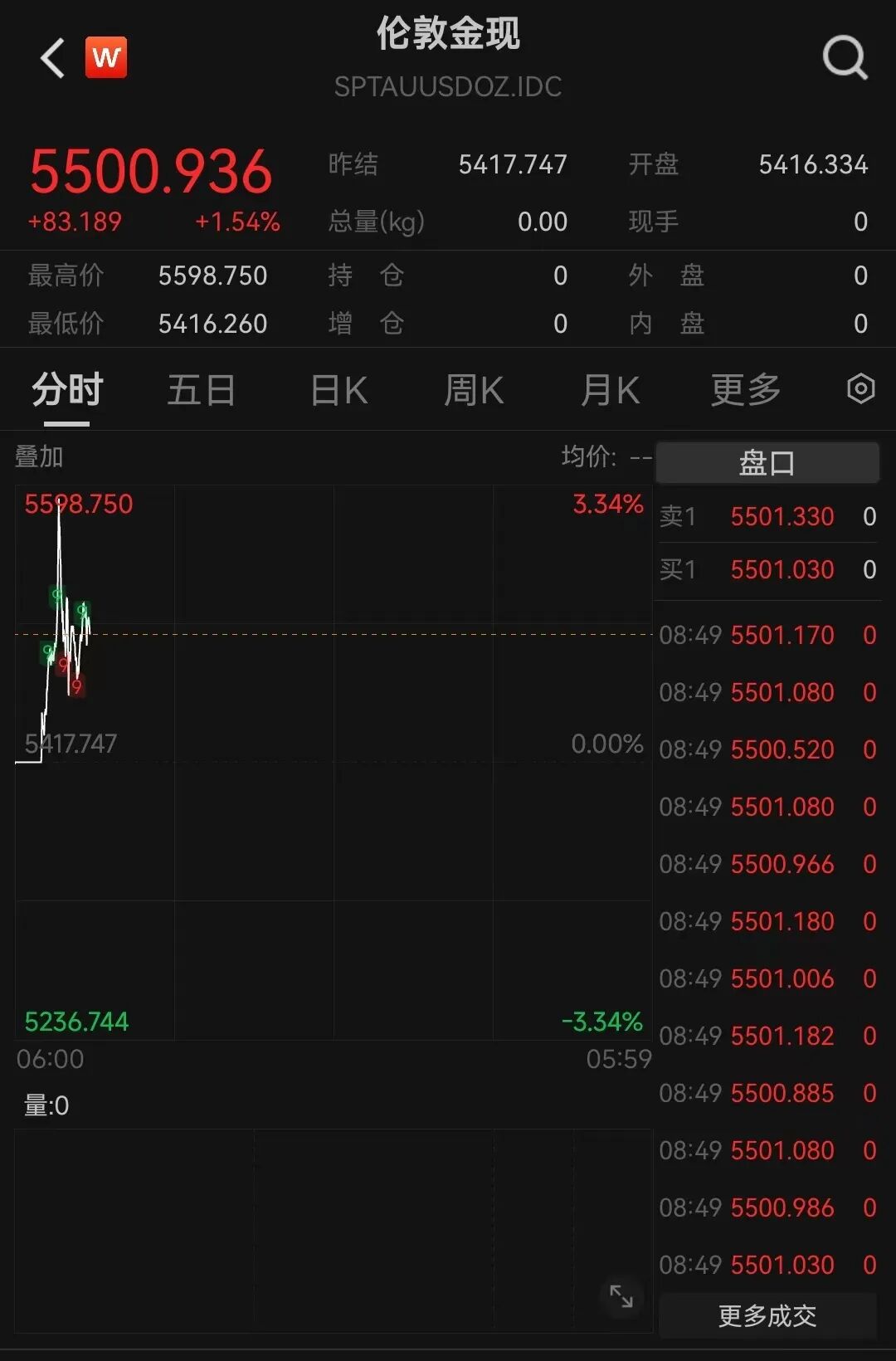
美联储暂停降息,现货黄金冲上5400美元关口
Guo Ji Jin Rong Bao· 2026-01-29 01:38
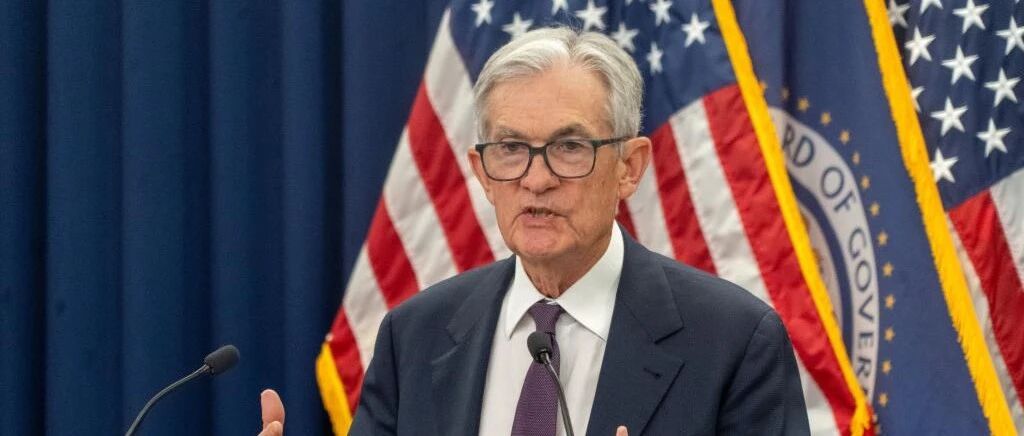
北京时间1月29日凌晨,美国联邦公开市场委员会(FOMC)公布最新利率决议,将联邦基金利率 目标区间维持在3.50%—3.75%不变,符合市场预期。这是美联储自去年9月起连续三次降息后的首次暂 停行动。 本次会议以10比2的投票结果通过,下任美联储主席人选之一的沃勒和美国总统特朗普"钦点"的另 一位理事米兰都支持继续降息,成为反对此次利率决议的少数派。 美联储声明和美联储主席鲍威尔的发言都暗示美联储并不急于降息,同时鲍威尔建议下一届美联储 主席与政治划清界限。 当天,美股三大指数涨跌不一,截至收盘,道指涨0.02%,报49015.6点;标普500指数微跌0.01%, 报6978.03点;纳斯达克指数上涨0.17%,报23857.4点。美元指数反弹0.75% 现货黄金价格强势站上5400美元/盎司关口,日内暴涨约4.5%。 不急于降息 本次美联储声明对经济活动的表述从上个月的"温和速度扩张",改为以"稳健的速度扩张",删除了 就业风险增加的表述,只表示就业增长仍然缓慢,失业率已显现出一定的企稳迹象,通胀依然略高。 FOMC力求长期内实现最大化就业和2%的通胀率。经济前景的不确定性仍处于较高水平。委员会 密切关注 ...
A股三大指数开盘涨跌不一,沪指涨0.11%
Feng Huang Wang Cai Jing· 2026-01-29 01:31
Group 1: Special Fiber Industry - The special fiber sector is expected to see significant growth in 2026, driven by increasing demand for high-performance PCBs due to rapid growth in computing power requirements [1] - The slow production ramp-up of industry leader Nitto Denko creates opportunities for domestic companies to provide sample certifications to downstream clients [1] - The current supply-demand imbalance in the industry is unlikely to change in the short term due to technical barriers, leading to a positive outlook for the special fiber market [1] Group 2: Federal Reserve and Economic Outlook - The Federal Reserve is expected to lower interest rates twice in 2026, with the first cut potentially delayed until the second quarter [2] - The Fed's recent meeting maintained interest rates, aligning with market expectations, while highlighting that the unemployment rate has stabilized [2] - Structural issues such as income distribution imbalance and affordability pressures on households are identified as core economic problems that monetary policy alone cannot resolve [2] Group 3: Optical Fiber Demand - The demand for optical fibers is projected to grow rapidly due to AI and other technologies, with significant increases expected in global optical module demand by 2026 [3] - Anticipated "Scale up" demand for optical fibers is expected to emerge around 2027, potentially being 2-3 times the current enterprise network business volume [3] - "Scale Across" demand is also expected to contribute to substantial growth in optical fiber requirements [3]
10票赞成2票反对,美联储宣布不降息!鲍威尔向继任者提议:与美国政治“划清界限”;微软、特斯拉公布“成绩单”,黄金突破5500美元关口
Mei Ri Jing Ji Xin Wen· 2026-01-29 01:26
Group 1: Federal Reserve Policy and Economic Outlook - The Federal Reserve decided to maintain the federal funds rate target range at 3.5% to 3.75%, with a vote of 10 in favor and 2 against [1][4] - Powell indicated that the labor market is showing signs of stabilization, with consumer spending remaining resilient and business investment continuing to grow [2][4] - The Fed's assessment of economic activity has shifted from "moderate expansion" to "robust expansion," reflecting a more optimistic view of the labor market [3] Group 2: Inflation and Tariff Impact - Powell noted that inflation remains high, primarily driven by tariffs rather than demand, with core PCE inflation slightly above 2% after excluding tariff impacts [2][3] - The expectation is that the impact of tariffs on goods will peak this year and then decline, which could allow the Fed to ease policies if labor market risks do not re-emerge [2][4] Group 3: Market Reactions - Following the Fed's announcement, U.S. stock indices showed mixed results, with the Dow Jones up 0.02%, Nasdaq up 0.17%, and S&P 500 down 0.01% [4] - Storage concept stocks saw significant gains, with Seagate Technology rising over 19% and Western Digital increasing over 10% [5]

新加坡维持货币政策不变 同时上调通胀预期
Xin Hua Cai Jing· 2026-01-29 01:18
新加坡金融管理局(MAS)周四表示,将维持其政策区间的斜率、宽度和中心位置不变。 新加坡金融管理局每年进行四次政策评估,在2025年曾两次放松货币政策——分别在1月和4月——以支 持经济增长,然后在去年剩余时间里保持不变,因为这个依赖贸易的国家在很大程度上免受特朗普关税 攻势的影响。 新华财经北京1月29日电新加坡连续第三次维持货币政策不变,同时上调了通胀预期,暗示其下一步可 能是收紧货币政策。 (文章来源:新华财经) ...
连破两道关口 纽约金价28日单日飙升超220美元
Xin Hua Cai Jing· 2026-01-29 01:04
Core Viewpoint - International gold prices surged significantly on the 28th, breaking through the $5300 and $5400 per ounce thresholds, reaching a historical high due to a weak dollar and positive comments from the Federal Reserve Chairman [1] Group 1: Gold Market - On the New York Commodity Exchange, the most actively traded April 2026 gold futures price rose by $229, closing at $5447.80 per ounce, marking a 4.39% increase [1] - The Federal Reserve maintained interest rates between 3.5% and 3.75%, with expectations of three 25 basis point cuts in 2025 [1] - The FOMC statement indicated a stable unemployment rate and steady economic expansion in the U.S., but noted slow job growth and high inflation [1] Group 2: Federal Reserve Insights - Federal Reserve Chairman Powell stated that the current federal funds rate is generally "neutral" and core inflation is expected to reach 3% by December 2025 [1] - Powell mentioned that if prices peak as anticipated in 2026 and begin to decline, it would allow for further easing of monetary policy, indicating that rate hikes are not a fundamental assumption for the next steps [1] Group 3: Silver Market - Silver prices continued to rise, prompting exchanges to tighten risk controls, resulting in silver's performance being slightly weaker than gold over the past two trading days [3] - The Chicago Mercantile Exchange Group announced an increase in margin requirements for silver futures, raising non-high-risk margin from 9% to 11% and high-risk margin from 9.9% to 12.1% [3] Group 4: Silver Price Movement - On the same day, March silver futures prices increased by 427.5 cents, closing at $116.62 per ounce, reflecting a 3.81% rise [4]
美联储按下暂停,鲍威尔未“抗争”
HUAXI Securities· 2026-01-29 01:02
证券研究报告|宏观点评报告 [Table_Date] 2026 年 01 月 29 日 [Table_Title] 美联储按下暂停,鲍威尔未"抗争" 1 月 29 日,美联储暂停降息,维持 3.5-3.75%。沃勒和米兰持异议,支持降息 25bp。资产表现方面,美 元、美债利率冲高回落,黄金先小幅回调再冲高,美股波动不大。 第一,美联储声明对经济和劳动力市场转向略偏乐观。1 月会议声明指出,经济活动"稳步"扩张 (solid),而 12 月会议声明的对应表述为"温和"(moderate)。声明指出"就业增长保持低位,失业率出现一 些企稳迹象",而且删除了 12 月会议中关于就业下行风险的表述。表述略偏乐观,但未明显超出预期。北京时间 3:00 声明发布后,2 年期美债收益率小幅上行接近 1bp,美元指数上涨 0.18%,市场反应不大。 第二,鲍威尔讲话整体中性,并未进一步抗争。从市场反应来看,3:30 新闻发布会开始后,2 年和 10 年 美债利率一度下行 2bp 左右,美元指数下跌 0.3%,黄金冲高上涨接近 0.9%,标普涨约 0.2%。鲍威尔的讲话整 体偏中性,但打消了市场对于司法部调查引发鲍威尔更趋鹰 ...
美联储宣布:不降息!黄金又冲高
Sou Hu Cai Jing· 2026-01-29 00:42
当地时间1月28日,美联储最新的联邦公开市场委员会(FOMC)货币政策会议纪要显示,美联储决定将联邦基金利率目标区间继续维持在3.5%至3.75%之 间。 会议纪要显示,现有指标表明,就业增长仍处于低位,失业率已显现出趋于稳定的迹象。通胀水平仍处于较高水平。委员会致力于实现最大就业和长期通 胀率达到2%的目标。经济前景的不确定性仍然很高。委员会密切关注其双重使命面临的风险。为支持其目标,美联储决定将联邦基金利率目标区间继续 维持在3.5%至3.75%之间。 具体表决细节显示,美联储以10票赞成、2票反对的结果,决定将基准利率维持在3.5%至3.75%区间。美联储理事沃勒以及米兰投下反对票,主张降息25 个基点。 | W | | | 伦敦金现 | | | | | | --- | --- | --- | --- | --- | --- | --- | --- | | | | | SPTAUUSDOZ.IDC | | | | | | 5422.457 "F | | | 5413.805 | 总量 | | | 0 | | +8.652 | +0.16% 开盘 | | 5416.334 | 现手 | | | 0 | | ...
美联储宣布维持利率不变
新华网财经· 2026-01-29 00:42
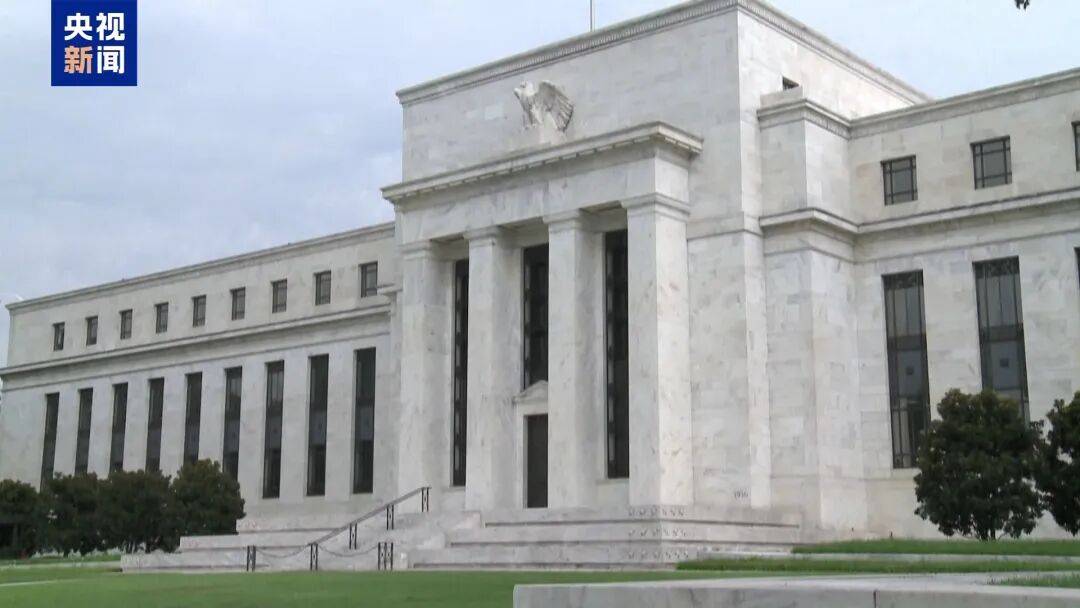
芝加哥商品交易所美联储观察工具显示,截至当日早些时候,市场认为美联储在此次货币政策会议上维持利率不变的概率超过95%。 来源:新华社 记者: 刘亚南 关注" 新华网财经 "视频号 更多财经资讯等你来看 1月28日,在美国首都华盛顿,美国联邦储备委员会主席鲍威尔出席记者会。新华社发(李源清摄) 美国联邦储备委员会28日结束为期两天的货币政策会议,宣布将联邦基金利率目标区间维持在3.5%至3.75%之间不变。这一决定符合市场 预期。 福耀科技大学50名大一学生被企业抢光?校长王树国回应 男子用SIM卡炼出191克黄金,价值21万元?当事人最新回应 往期推荐 ...