美联储降息

Search documents
加速升值!人民币资产重估下 A股牛市稳了?
Sou Hu Cai Jing· 2025-11-28 03:27
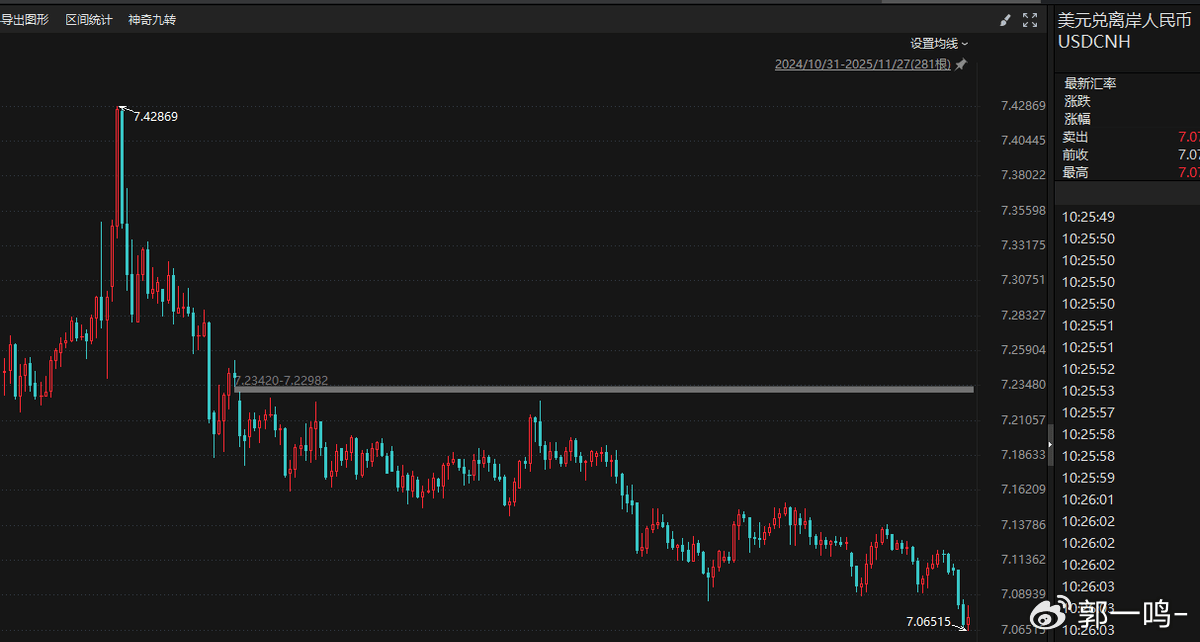
Group 1 - The recent appreciation of the Renminbi (RMB) against the US dollar has reached new highs, with the offshore RMB surpassing 7.08 and the onshore RMB exceeding 7.09, marking the highest levels in over a year [1][3] - The RMB's middle exchange rate against the US dollar has increased by approximately 1000 basis points this year, while the CFETS RMB exchange rate index has risen to 98.22, indicating a strong performance against a basket of currencies [1][3][4] Group 2 - The appreciation of the RMB is attributed to multiple factors, including a decline in the US dollar index, which has dropped over 8% since the beginning of the year, and expectations of further interest rate cuts by the Federal Reserve [4][6] - Domestically, the resilience of the Chinese economy, particularly strong export performance, has provided support for the RMB, with a surplus of 80.9 billion USD in foreign exchange settlements in the first ten months of the year [6] Group 3 - The appreciation of the RMB is expected to positively impact the stock market through three main channels: capital flow, corporate profitability, and policy space, with historical data showing a correlation between RMB appreciation and stock market performance [7][8] - Specific sectors such as aviation, paper manufacturing, and non-ferrous metals are likely to benefit significantly from the RMB's appreciation due to reduced import costs [10] Group 4 - Looking ahead, the RMB is expected to maintain a strong performance, supported by a stable monetary policy environment and ongoing structural adjustments in the economy [11] - The current environment presents a significant opportunity for the revaluation of RMB assets, particularly in sectors like new energy vehicles and semiconductors, which are enhancing their international competitiveness [13]

【机构策略】A股市场有望迎来结构性的修复机会
Zheng Quan Shi Bao Wang· 2025-11-25 01:20
银河证券认为,"十五五"开局之年改革政策预期强化,人民币汇率向上等价格因素支撑流动性向好,市 场信心有望得到提振。在居民存款搬家持续演绎、机构投资者加大入市力度、全球资本流向重塑叠加政 策工具护航下,A股市场仍将受益于流动性向上逻辑。当前A股估值处于相对合理区间,从全球主要权 益市场比较来看仍处于中等偏低水平。2026年,盈利有望接棒估值,成为市场聚焦的关键点。预计上市 公司基本面延续改善态势,中国经济转型的深化与新兴产业的持续发展将成为盈利增长的关键驱动力, PPI降幅收窄也有望带动企业利润率水平进一步回升。同时,关注美国中期选举、地缘风险等因素的阶 段性扰动。2026年,A股市场有望呈现出向上动能。 财信证券认为,周一,A股大盘的缩量反弹基本在市场预期之内。一方面是市场上周经历较大波动后, 技术面上存在反弹需求;而另一方面则是周末消息面上,并未出现能很快扭转当前较浓观望情绪的信 号,因此资金风险偏好延续较低水平。短期内,仍需等待市场回暖的明确信号。预计12月中旬左右,随 着机构资金重新布局明年方向、美联储降息靴子落地,届时A股市场将迎来新一轮做多窗口期。 东莞证券认为,周一,A股三大指数小幅上涨。从技术分 ...
宏观周报:国内10月社融及经济数据显示内需增长有所放缓-20251118
Zhe Shang Qi Huo· 2025-11-18 05:07
1. Report Industry Investment Rating No relevant content provided. 2. Core View of the Report The report shows that domestic social financing and economic data indicate a slowdown in domestic demand growth. In October, economic data showed weak domestic demand, with consumption, investment, and manufacturing all experiencing varying degrees of decline. Social financing and credit growth also slowed down, mainly due to reduced fiscal support and insufficient effective demand from the private sector. However, there are also some positive factors, such as the potential support from new policy - based financial instruments and local government bond balance limits in the remaining two months of the year, ensuring the achievement of the annual growth target. Abroad, the US government shutdown affected economic data release and economic activities, and the Fed's interest - rate cut decision faced internal differences [3][15][34]. 3. Summary by Relevant Catalogs 3.1 Economic Situation - **Consumption**: In October, the total retail sales of consumer goods increased by 2.9% year - on - year. The growth of retail sales of goods continued to weaken, while service retail and catering improved. The growth of consumer goods retail sales excluding automobiles was 4.0%. Holiday - driven travel and service - related consumption increased, but the per - capita consumption was lower than last year, and the demand for durable goods such as cars and home appliances declined rapidly [15]. - **Investment**: From January to October, national fixed - asset investment (excluding rural households) was 40,814 billion yuan, a year - on - year decrease of 1.7%. Excluding real - estate development investment, national fixed - asset investment increased by 1.7%. Infrastructure investment decreased by 0.1%, manufacturing investment increased by 2.7%, and real - estate development investment decreased by 14.7%. Newly - built commercial housing sales area decreased by 6.8% year - on - year, and sales volume decreased by 9.6% [3][15]. - **Industrial Production**: In October, the industrial added value increased by 4.9% year - on - year. From January to October, the industrial added value of large - scale industries increased by 6.1% year - on - year. The manufacturing PMI in October was 49.0%, a decrease of 0.8 percentage points from the previous month, indicating a slowdown in both supply and demand [3][4]. - **Foreign Trade**: In the first three quarters, China's total goods trade imports and exports were 33.61 trillion yuan, a year - on - year increase of 4%. Exports increased by 7.1%, and imports decreased by 0.2% [5]. 3.2 Social Financing and Credit - **Overall Situation**: In October, financial data generally slowed down. The growth rates of social financing, credit, and M1 declined. The increment of social financing in October was 81.5 billion yuan, a year - on - year decrease of 59.7 billion yuan. The increment of new RMB loans was 22 billion yuan, a year - on - year decrease of 28 billion yuan [34]. - **Structural Features**: Bill financing increased year - on - year, corporate credit was weak, and household financing contracted. Bill financing increased by 33.12 billion yuan year - on - year. Corporate short - term and medium - long - term loans were - 19 billion and 3 billion yuan respectively. Household short - term and medium - long - term loans both had net repayments [34]. 3.3 Price - **CPI**: In October, the CPI increased by 0.2% year - on - year and 0.2% month - on - month. The core CPI (excluding food and energy) increased by 1.2% year - on - year, with the increase expanding for the sixth consecutive month. Food prices decreased by 2.9%, and non - food prices increased by 0.9% [3][39]. - **PPI**: In October, the PPI decreased by 2.1% year - on - year, with the decline narrowing for the third consecutive month. The PPI increased by 0.1% month - on - month, the first increase this year [39]. 3.4 Overseas Macro - **US Economy**: In September, US CPI data slowed down more than expected, mainly due to the decline in rent prices. The US federal government shutdown affected economic data release and economic activities, causing direct losses to the economy [44][45]. - **Eurozone Economy**: Relevant economic data such as the Eurozone HICP were released, and the performance of the manufacturing and service industries was also presented [12]. 3.5 Interest Rates and Exchange Rates - **Exchange Rates**: In November, the RMB exchange rate showed a stable operation trend. The central parity rate of the RMB against the US dollar was adjusted upwards to below 7.10. The RMB exchange rate is expected to maintain a stable tone in the future, but short - term disturbances from external risks should be watched out for [52]. - **Interest Rates**: Data on various interest rates such as DR007, SHIBOR, LPR, and treasury bond yields were presented, showing the market's interest - rate situation [53].
有色金属行业深度分析:金属牛市或延续,业绩弹性仍可期
Guotou Securities· 2025-11-17 05:04
Investment Rating - The report maintains an investment rating of "Outperform the Market - A" [4] Core Views - The report is optimistic about the continuation of the metal bull market in 2026, particularly for precious metals, industrial metals (copper, aluminum, tin), rare earths, tungsten, and uranium [1][2] - Gold is expected to rise due to increased demand for hedging against dollar credit and policy uncertainties, with a focus on the potential for new highs in gold prices [1][18] - Industrial metals like copper and aluminum are facing supply constraints, while tin demand is on the rise, indicating a favorable outlook for these metals [2][8] Summary by Sections Gold - The report highlights the strengthening of gold prices driven by concerns over U.S. dollar credit and rising geopolitical uncertainties, with gold prices reaching $3999.4 per ounce as of November 7, 2025, a 52% increase from the previous year [17][18] - The Federal Reserve's interest rate cuts are expected to further support gold prices, with a projected decline in the policy rate to 3-3.25% by the end of 2026 [21][22] - Key stocks to watch include Shandong Gold, Shandong International, and China National Gold [1] Copper - The report notes increasing supply constraints in copper mining, with production disruptions leading to a downward revision of copper output forecasts for 2025 [1][2] - Demand for copper is expected to grow significantly due to the rise of electric vehicles and investments in global power grids, with a notable increase in demand from AI data centers [1][2][18] - Key stocks to monitor include Luoyang Molybdenum, Jinchuan Group, and Jiangxi Copper [1] Aluminum - The aluminum market is characterized by tight supply and strong demand, with domestic production nearing capacity limits and a projected price increase to around 21,500 yuan per ton by 2026 [2] - The report anticipates a supply-demand gap in the aluminum market, supporting price increases [2] - Key stocks to consider include Nanshan Aluminum, China Hongqiao, and Yunnan Aluminum [2] Tin - The tin market is expected to see price increases driven by stable supply and rising demand from sectors like semiconductors and consumer electronics, with global refined tin consumption projected to grow by 3.1% in 2026 [8] - Key stocks to watch include Yunnan Tin and Hunan Tin [8] Rare Earths - The report indicates a slowdown in supply quota growth for rare earths, but strong demand from the renewable energy sector is expected to improve the supply-demand balance [8] - The global demand for neodymium-iron-boron is projected to grow significantly, with a compound annual growth rate of 8.83% from 2020 to 2028 [8] - Key stocks to monitor include China Rare Earth and Northern Rare Earth [8] Tungsten - The tungsten market is expected to remain tight, with prices likely to continue rising due to limited supply and stable demand [8] - Key stocks to consider include Xiamen Tungsten and Zhongtung High-tech [8] Cobalt - The cobalt market is facing supply constraints, with a significant drop in imports of cobalt intermediates into China, leading to a tight supply situation [10] - Demand from the electric vehicle sector is expected to support cobalt prices [10] - Key stocks to watch include Luoyang Molybdenum and Huayou Cobalt [10] Uranium - The uranium market is entering a new cycle of growth due to supply constraints and a revival in nuclear power, with a projected supply-demand gap of approximately 7,452 tons by 2030 [11] - Key stocks to monitor include China National Nuclear Corporation [11]
新世纪期货交易提示(2025-11-17)-20251117
Xin Shi Ji Qi Huo· 2025-11-17 03:42
Report Industry Investment Ratings - Iron ore: Volatile [2] - Coking coal and coke: Volatile [2] - Rolled steel and rebar: Volatile [2] - Glass: Volatile [2] - Soda ash: Volatile [2] - CSI 500: Rebound [4] - CSI 1000: Rebound [4] - 2-year treasury bond: Volatile [4] - 5-year treasury bond: Volatile [4] - 10-year treasury bond: Upward [4] - Gold: High-level volatile [4] - Silver: High-level volatile [4] - Logs: Bottom volatile [6] - Pulp: Bottom rebound [6] - Offset paper: Volatile [6] - Soybean oil: Range-bound [6] - Palm oil: Range-bound [6] - Rapeseed oil: Range-bound [6] - Soybean meal: Volatile [6][7] - Soybean No.2: Volatile [7] - Soybean No.1: Volatile [7] - Live pigs: Volatile and slightly stronger [7] - Rubber: Volatile [9] - PX: On the sidelines [9] - PTA: Volatile [9] - MEG: Wide-range volatile [9] - PR: On the sidelines [9] - PF: On the sidelines [9] Core Views - The macro利好 has landed, and black prices are returning to fundamentals. The supply and demand surplus pattern of iron ore is difficult to reverse, and steel mill profits are squeezed again. Coal and coke's upward driving force has weakened, but there is still support in the short term. Steel supply and demand contradictions still exist, and prices are mainly in volatile adjustment. Glass demand is weak, and the industry chain surplus contradiction needs to be resolved by reducing production. The market is in short-term consolidation, and the medium-term trend is still upward. Gold's pricing mechanism is changing, and its price is expected to be in high-level volatile [2][4]. - Log supply pressure increases, and prices are expected to be in bottom volatile. Pulp cost support weakens, and demand performance is poor, but prices are expected to rebound from the bottom. Offset paper supply pressure still exists, and prices are expected to be volatile. Oil supply is abundant, and demand is weak, and prices are expected to continue range-bound. Soybean meal and soybean No.2 are affected by import costs and domestic fundamentals, and prices are expected to be volatile in the short term. Live pig supply is expected to increase, but demand support is limited, and prices may decline [6][7]. - Rubber supply is affected by weather, and demand is improving. Inventory is in a downward trend, and prices are expected to be in wide-range volatile. PX and PTA prices are affected by raw material prices, and MEG supply is in a high position, and demand is worrying. PR and PF prices are affected by multiple factors, and the market is expected to be in volatile adjustment [9]. Summary by Related Catalogs Black Industry - Iron ore: China's 47-port arrival volume decreased by 16.44% to 2.7693 billion tons. Iron water increased slightly, but steel demand is weak. Port inventory continued to increase, and the supply and demand surplus pattern is difficult to reverse. Short-term negative feedback probability is small, and prices are mainly volatile [2]. - Coking coal and coke: The heating season supply guarantee meeting was held, and the market is worried about subsequent production resumption. Coking plant cost pressure is high, and the fourth round of coke price increase is still in the game. Steel mill profitability has declined rapidly, and blast furnace maintenance and production reduction have increased. There is still support for coal and coke in the short term [2]. - Rolled steel and rebar: The Fed cut interest rates as expected, and Sino-US preliminary meetings were held. The macro利好 has landed, and prices are returning to fundamentals. Rebar static valuation is low, and steel demand is weak. Steel price stability depends on whether production reduction can be strictly implemented in the fourth quarter of 2025 and the intensity of anti-"involution" policies [2]. - Glass: Spot prices are relatively weak, and some manufacturers have started to cut prices. The news of coal-to-gas conversion in Shahe has fermented. Real estate completion has continued to decline during the peak season, dragging down demand prospects. Enterprise inventory has continued to increase, and the industry chain surplus contradiction needs to be resolved by reducing production [2]. Financial Sector - Stock index futures/options: The previous trading day, the CSI 300 index recorded -1.57%, the SSE 50 index recorded -1.15%, the CSI 500 index recorded -1.63%, and the CSI 1000 index recorded -1.16%. The forestry and gas sectors showed capital inflows, while the semiconductor and Internet sectors showed capital outflows. The market is in short-term consolidation, and the medium-term trend is still upward. It is recommended to hold long positions in stock indexes [2]. - Treasury bonds: The central bank conducted 212.8 billion yuan of 7-day reverse repurchase operations, with a net investment of 7.11 billion yuan. Treasury bond spot rates are in consolidation, and the market trend is slightly rebounding. It is recommended to hold long positions in treasury bonds with a light position [4]. - Gold: In the context of high interest rates and globalization reconstruction, gold's pricing mechanism is changing. Central bank gold purchases are the key, and its de-fiat currency attribute is prominent. Geopolitical risks continue, and market risk aversion demand still exists. China's physical gold demand has increased significantly. The logic driving the current round of gold price increase has not completely reversed, and the Fed's interest rate policy and risk aversion sentiment may be short-term disturbing factors. It is expected that gold will be in high-level volatile [4]. Light Industry - Logs: The average daily port shipment volume of logs last week was 663,000 cubic meters, an increase of 35,000 cubic meters from the previous week. The average daily national outbound volume was stable above 600,000 cubic meters, but demand growth is difficult to maintain. New Zealand's log shipments to China in October increased by 2% from the previous month. The port inventory pressure is high, and inventory accumulation is expected to continue. Spot market prices are running steadily, and the ex-warehouse price is expected to decline. It is recommended to continue to pay attention to the delivery situation [6]. - Pulp: The previous trading day, spot market prices rose and fell. The latest ex-warehouse price of softwood pulp decreased by another 20 US dollars to 680 US dollars per ton, and the latest ex-warehouse price of hardwood pulp increased by 20 US dollars to 540 US dollars per ton. The cost support for pulp prices has weakened. The profitability of the paper industry is at a low level, and paper mills have high inventory pressure and low acceptance of high-priced pulp. Demand performance is poor, and currently paper mills purchase raw materials on a rigid basis, which is negative for pulp prices. Spot market price increases may drive futures prices, and it is expected that pulp prices will rebound from the bottom [6]. - Offset paper: The previous trading day, spot market prices were running steadily. Offset paper supply pressure still exists, and production has recovered compared with the previous week. Publishing tenders have been launched one after another, but market expectations are cautious. At the same time, paper price profits are at a low level, and the enthusiasm for high-price inventory is low. It is expected that prices will be mainly volatile [6]. Oil and Fat - Soybean oil: Malaysian palm oil production is higher than market expectations, and exports are strong, alleviating inventory accumulation concerns. It is expected that inventory will remain at a historical high in the next two months. The focus later will turn to the production reduction rate in November and export resilience. Recently, international oil prices have fluctuated sharply, and the attractiveness of biodiesel raw materials is limited. A large amount of soybeans have continued to arrive in China, and the oil mill operating rate has declined. Although the oil inventory has declined, the supply is abundant, while the demand is weak. At the same time, oil mills are more willing to support soybean meal prices to repair pressing profits, but there is support from raw material soybean costs. It is expected that the overall oil and fat will continue to be range-bound. Pay attention to the weather in the Brazilian soybean producing area and the production and sales changes of Malaysian palm oil [6]. - Palm oil: Same as soybean oil [6]. - Rapeseed oil: Same as soybean oil [6]. Agricultural Products - Soybean meal: The USDA report shows that US soybean production, exports, and ending stocks have all been revised down compared with September, but the global ending stocks have been revised up to 18.27 million tons, higher than market expectations. The global supply is slightly loose. Although the Sino-US trade agreement is helpful to promote US exports to China, US soybean prices do not have an export advantage. After the USDA report expectations are fulfilled, US soybean futures prices lack further driving force. The Brazilian soybean planting progress has improved, and the weather in the central and southern regions will be favorable for soybean crops. Argentina's soybean sowing is expected to accelerate due to favorable weather. Domestic oil mill operating rates have declined, and a large amount of imported soybeans have arrived. Soybean meal supply is abundant, demand is weak, and purchases are mainly on a rigid basis. Overall transactions are light. Soybean meal is affected by both import cost support and domestic fundamental pressure. It is expected that soybean meal will be volatile in the short term. Pay attention to the weather in the Brazilian soybean producing area and the actual progress of Sino-US trade [6][7]. - Soybean No.2: After the USDA expectations are fulfilled, US soybean futures prices lack further driving force. China has lowered tariffs on some US agricultural products and resumed purchasing a small amount of US soybeans, but traders are still waiting for larger-scale soybean purchases. The weather in the South American soybean producing area is generally favorable. Domestic near-month shipping imports of soybeans have accelerated, and port soybean inventory has continued to rise. Supply is very abundant. It is expected that soybean No.2 will be volatile in the short term. Pay attention to the weather in the Brazilian soybean producing area, Sino-US trade progress, and other uncertainties [7]. - Live pigs: The average transaction weight of live pigs across the country has increased slightly. The average transaction weight of live pigs has reached 124.65 kilograms, an increase of 0.11% from the previous week. Most regions have shown an upward trend in live pig transaction weight, except for a slight decline in the Northeast. Some large-scale farms concentrated on slaughtering in the first half of last month, and the weight of pigs available for slaughter at the end of the month was relatively light. At the beginning of this month, they generally adopted a strategy of reducing volume and increasing weight. The demand for large-weight白条 pigs has increased in some regions, and the price difference between fat and thin pigs has gradually narrowed. Slaughtering enterprises have correspondingly increased their purchasing efforts for medium and large-sized pigs, driving a slight increase in the average transaction weight. As the slaughtering rhythm of the breeding end gradually returns to normal, the supply of live pigs is expected to increase, but the demand support in the downstream market is limited, and there may be passive backlogging. It is expected that the average transaction weight of live pigs across the country may continue to maintain a slight upward trend next week. The average settlement price of live pigs by key slaughtering enterprises across the country was 12.67 yuan per kilogram, a decrease of 0.86% from the previous period. The enthusiasm for secondary fattening has declined this week. The operating rate of key domestic slaughtering enterprises has shown a slow recovery trend at a low level. The average operating rate of slaughtering enterprises across the country this week was 37.06%, a slight decrease of 1.02 percentage points from the previous week. The slaughtering volume of the breeding end was relatively limited from the end of last month to the beginning of this month, and the downstream stocking enthusiasm was insufficient. Slaughtering enterprises reported that it was difficult to sell白条, and only the slaughtering volume in some regions increased. Currently, the cost is high, and orders are limited. The slaughtering end has no sign of actively increasing the slaughtering volume, and the support for the market is limited. The average weekly price of live pigs may decline in the next week [7]. Soft Commodities - Rubber: The weather in Yunnan's rubber-producing area has limited impact, and raw material supply has remained stable. The purchase price has been slightly adjusted downward, and the rubber tapping profit is in the negative range. Hainan has been affected by continuous rain and typhoon weather, which has had a greater impact on rubber tapping operations. The overall glue production is lower than the same period last year and lower than expected. The processing profit is in the red, leading to a reduction in raw material prices. The production cost of local processing plants has decreased, and the profit inversion has improved. In Thailand, there has been a lot of rain, and typhoons have affected the southern producing area. The cup lump price has continued to rise, with a weekly average of 54.41 Thai baht per kilogram. The weather in the Vietnamese producing area has improved, and the previous supply pressure has been alleviated. The overall inventory is still at a low level. On the demand side, the capacity utilization rate of China's semi-steel tire sample enterprises is 71.07%, and that of full-steel tire sample enterprises is 63.96%. The capacity utilization rate of sample enterprises has increased this week. Some enterprises had short-term maintenance plans before, which significantly dragged down the enterprise capacity utilization rate. As the maintenance enterprises resume operation, the device capacity will be gradually released. According to the China Association of Automobile Manufacturers, China's automobile production and sales in September were 3.276 million and 3.226 million vehicles respectively, a month-on-month increase of 16.4% and 12.9% respectively, and a year-on-year increase of 17.1% and 14.9% respectively. Natural rubber inventory has continued to show a downward trend. Currently, the total social inventory of natural rubber in China is 1.08 million tons, a month-on-month decrease of 0.7%. Bonded warehouses have accumulated inventory, and general trade warehouses have continued to reduce inventory. The inventory reduction volume is greater than the inventory increase volume. The main producing areas have been affected by rain and typhoons, which have affected rubber tapping, but the expectation of increased supply in the future suppresses raw material prices. In the short term, rubber prices will follow the macro trend, and natural rubber prices may show a wide-range volatile operation [9]. - PX: The intensity of the Russia-Ukraine conflict has increased, and the relationship between the US and Venezuela also has risks, leading to rising oil prices. North American gasoline inventory is at a low level, and gasoline profitability is good. The market is speculating on the aromatics blending oil logic, which drives up PX prices regardless of oil price fluctuations [9]. - PTA: The medium- and long-term oil price expectation is not good, and the cost-side support is not good. PTA supply has decreased marginally, but there are new device test runs. The downstream polyester factory load has remained stable at a high level. Overall, PTA supply and demand have improved. Especially, the announcement of maintenance plans for multiple devices recently and the sharp increase in raw material prices have led to short-term PTA prices mainly following the raw material price fluctuations [9]. - MEG: It is expected that port inventory will continue to rise last week, while domestic production load has slightly declined. The overall supply is still at a high level. The polyester load on the demand side has temporarily stabilized with a decline, but at the end of the peak season, there are concerns about the future. The future supply and demand are expected to be in surplus. Although the long-term inventory accumulation pressure suppresses prices, short-term factors such as device accidents affect the inventory accumulation expectation, and the futures market has warmed up [9]. - PR: Crude oil prices have risen, and the cost still has strong support. However, there has been no substantial improvement in supply and demand, and the upward momentum of polyester bottle chips is insufficient. It is expected to be in weak volatile consolidation [9]. - PF: The demand side has shown average performance, but the PTA supply has decreased. Coupled with the large increase in oil prices over the weekend, it may continue to boost the cost-side trend. It is expected that under the game of multiple factors, the polyester staple fiber market may be in a warming consolidation this week [9].
几乎所有因素都“利好”,美国债市有望创2020年以来“最佳表现”
Hua Er Jie Jian Wen· 2025-11-17 01:33
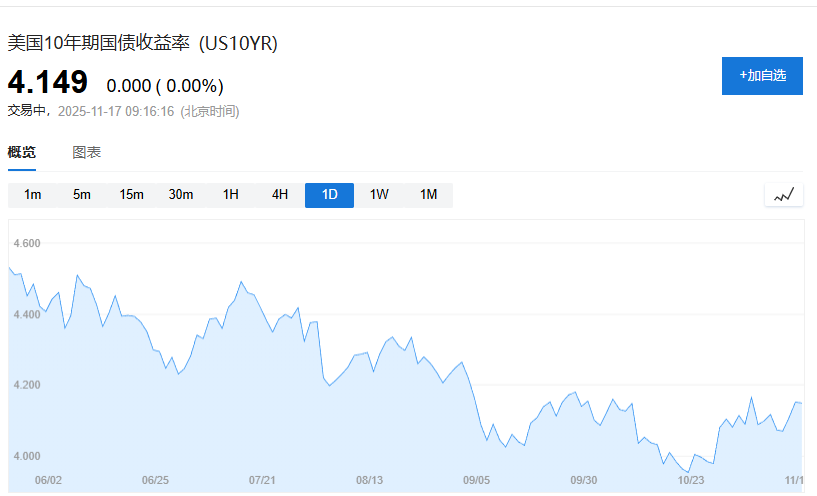
Core Viewpoint - The U.S. bond market is experiencing its best performance since 2020, driven by multiple favorable factors including Federal Reserve rate cuts, moderate economic slowdown, and easing inflation pressures [1][2]. Group 1: Market Performance - The Bloomberg U.S. Aggregate Bond Index has achieved a return of approximately 6.7% year-to-date, marking a potential best annual performance since 2020 [1]. - The 10-year U.S. Treasury yield has decreased by nearly 0.5 percentage points this year, closing at 4.149% last Friday [3]. Group 2: Federal Reserve Actions - The Federal Reserve's rate cuts have become the core driver of the bond market's rise, as bonds issued at higher rates become more valuable when market expectations shift towards lower rates [2]. - The labor market cooling has prompted the Federal Reserve to cut rates twice this year, with the possibility of further cuts [2]. Group 3: Economic Concerns - Despite concerns over the U.S. budget deficit impacting yields, the decline in interest rates has largely overshadowed these worries [6]. - The U.S. budget deficit for fiscal year 2025 is projected at $1.8 trillion, remaining stable compared to 2024, which could pose future challenges for the bond market [9]. Group 4: Investor Sentiment - Investors are optimistic about the continuation of favorable conditions, believing that despite rising uncertainties, there is still room for further rate declines [9]. - The additional yield spread of investment-grade corporate bonds relative to Treasuries fell to 0.72 percentage points in September, the lowest since the late 1990s, indicating potential overvaluation in the corporate bond market [8].
A股2026年策略展望:“小登”时代,牛途仍在
Guoxin Securities· 2025-11-13 09:30
Group 1 - The current bull market, which began with the "924" rally in 2024, is still ongoing and has entered its second phase, shifting from sentiment-driven to fundamentals-driven [2][6][9] - Technology is the main theme for 2026, with a focus on applications such as AI glasses, robotics, intelligent driving, AI programming, and AI in life sciences [2][4][71] - The market is experiencing style rotation, with attention on previously lagging sectors like real estate, brokerage, and liquor consumption, suggesting a new logic for traditional dividend stocks [2][4][14] Group 2 - The bull market is characterized by three phases: nurturing, explosive, and frenzied, with the current phase being explosive, similar to the "519" market [5][6][9] - The recovery of corporate ROE and contract liabilities, along with upward revisions in profit expectations, indicate a solidifying fundamental backdrop for the market [2][10][11] - The trend of "deposit migration" continues, with a shift from long-term deposits to more liquid forms, supporting micro liquidity in the market [27][29][30] Group 3 - The report highlights the significant contribution of major technology stocks to the overall market performance, with 15 large-cap tech stocks accounting for a 10% increase in the total A-share market [2][67] - The "small登" assets have significantly outperformed "old登" assets, with a 189% increase in the "small登" stock portfolio since 2025, compared to just 2% for "old登" stocks [23][26] - The report emphasizes the importance of the "Scaling Law" in AI development, indicating a robust demand for computational power and applications in the tech sector [101][105]
宏观周报:国内10月CPI同环比变化均录得上涨-20251110
Zhe Shang Qi Huo· 2025-11-10 08:22
1. Report Industry Investment Rating No relevant content was found in the provided report. 2. Core Viewpoints of the Report - In October 2025, China's CPI increased both year - on - year and month - on - month, with the core CPI showing continuous growth. The PPI decline narrowed, indicating some improvement in the domestic economic situation. The implementation of policies to expand domestic demand continued to show results [3][41]. - The US government "shutdown" has a negative impact on the economy, and although the September inflation data slowed down more than expected, it is difficult to change the Fed's interest - rate cut rhythm [45][46]. - In November 2025, the RMB exchange rate showed a stable operation trend, supported by multiple factors, and is expected to maintain a stable tone in the future [54]. 3. Summaries According to Relevant Catalogs 3.1 Economic Situation - **GDP**: In the first three quarters of 2025, China's GDP increased by 5.2% year - on - year, with a growth rate 0.4 percentage points higher than the same period in 2024. The actual GDP growth rate in the third quarter was 4.8%, a 0.4 - percentage - point decrease from the second quarter [17]. - **Industrial Added Value**: In September 2025, the industrial added value of large - scale industries increased by 6.5% year - on - year and 0.64% month - on - month. The high - tech manufacturing industry accelerated its growth, with a cumulative year - on - year increase of 9.6% from January to September [18]. - **Fixed - Asset Investment**: The year - on - year growth rate of fixed - asset investment in the first nine months turned negative, at - 0.7%. In September, fixed - asset investment (excluding rural households) decreased by 7.1% year - on - year. Real estate investment continued to cool down, while the decline in narrow - sense infrastructure investment narrowed [18]. - **Social Retail Consumption**: In September 2025, the total retail sales of social consumer goods increased by 3.0% year - on - year. The growth rate of service retail sales from January to September was 5.2%, an increase of 0.1 percentage points from the previous value [18]. - **Unemployment Rate**: In September 2025, the national urban surveyed unemployment rate was 5.2%, a 0.1 - percentage - point decrease from the previous month [18]. - **Import and Export Data**: In the first three quarters of 2025, China's total goods trade imports and exports were 33.61 trillion yuan, a 4% year - on - year increase. In September, exports and imports in US dollars increased by 8.3% and 7.4% year - on - year respectively, exceeding expectations [7]. 3.2 Financial Situation - **Social Financing Data**: In September 2025, China's new social financing was 3.53 trillion yuan, and the stock of social financing at the end of September was 437.08 trillion yuan, a year - on - year increase of 8.7%. The new RMB loans were 1.29 trillion yuan [35]. - **Credit Data**: In September 2025, credit increased by 129 billion yuan, a year - on - year decrease of 30 billion yuan. The recovery rhythm of credit demand was uneven, and the structure continued to improve [36]. - **Money Supply**: In September 2025, the M2 - M1 scissors gap reached a new low for the year, at 1.2 percentage points, reflecting positive signals such as increased business activity and recovery of personal investment and consumption demand [35]. 3.3 Price - Related - **CPI**: In October 2025, the CPI increased by 0.2% year - on - year and month - on - month. The core CPI increased by 1.2% year - on - year, with the growth rate expanding for the sixth consecutive month. Food and energy prices were still at a low level, but the decline rates narrowed [41]. - **PPI**: In October 2025, the PPI increased by 0.1% month - on - month, the first increase this year, and decreased by 2.1% year - on - year, with the decline rate narrowing for the third consecutive month [41]. 3.4 Overseas Macro - **US Economy**: In September 2025, the US CPI data slowed down more than expected, mainly affected by the decline in rent prices. The US federal government "shutdown" has a negative impact on the economy, and the Fed may still cut interest rates by 25 basis points in October [45][46]. - **Eurozone Economy**: In October 2025, the Eurozone HICP decreased by 0.1% month - on - month, and the core HICP remained unchanged [14]. 3.5 Interest Rates and Exchange Rates - **RMB Exchange Rate**: In November 2025, the RMB exchange rate showed a stable operation trend, supported by factors such as the recovery of the domestic economic fundamentals, improvement of the international balance of payments, and policy guidance. It is expected to maintain a stable tone in the future [54]. - **Interest Rates**: The report also presented data on various interest rates such as DR007, SHIBOR, LPR, and government bond yields [55][56].
市场发生了什么?加密、黄金、美股、AH股怎么都在跌?
Xin Lang Cai Jing· 2025-11-05 13:00
Group 1 - The market is experiencing declines in various asset classes including cryptocurrencies, gold, and both US and AH stocks [1] - The SOFR-IORB spread is highlighted as a key indicator for assessing market recovery; a failure to narrow quickly may necessitate urgent repurchase activities and quantitative easing policies [2] - Predictions suggest that the government shutdown will be resolved around mid-November, specifically between November 10 and November 15, which could restore liquidity and lead to asset recovery [2] Group 2 - Goldman Sachs anticipates that the government will reopen within two weeks, which would restore liquidity and facilitate asset recovery [2] - A bold prediction indicates that the government shutdown will be resolved by November 15, with a subsequent 25 basis point rate cut by the Federal Reserve in December, potentially leading to a favorable market environment during the holiday season [2]