能源

Search documents
国际铜银价格从高位回落
Zhong Guo Neng Yuan Wang· 2025-12-15 09:25
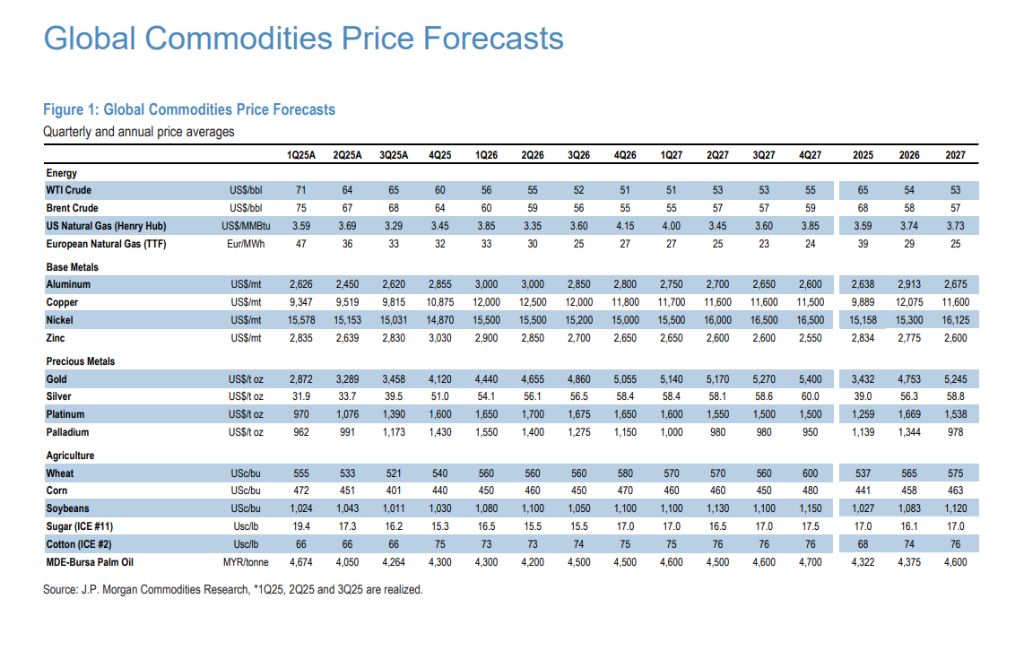
Group 1: Oil and Metal Prices - International crude oil prices declined, with West Texas Intermediate (WTI) closing at $57.34 per barrel, down 0.69% and Brent crude at $61.17 per barrel, down 0.62% [1] - Precious metal prices showed mixed results, with silver retreating from high levels, while platinum and palladium prices increased [1] Group 2: Uranium and Iron Ore Prices - Uranium (U3O8) price rose to $77.90 per pound, an increase of 0.45% [2] - Iron ore prices also saw an uptick, with 62% grade iron ore powder at $106.05 per ton, up 0.28%, and 58% grade at $93.55 per ton, up 0.40% [3] Group 3: Base Metal Prices - London Metal Exchange (LME) copper futures fell to $11,551.00 per ton, down 2.39%, while aluminum decreased to $2,873.00 per ton, down 0.78% [3] - Other base metals also experienced declines: lead at $1,966.00 per ton, down 0.88%; zinc at $3,138.50 per ton, down 1.83%; nickel at $14,585.00 per ton, down 0.07%; and tin at $41,125.00 per ton, down 1.56% [3] Group 4: Precious Metal Prices - Gold prices increased to $4,298.0 per ounce, up 0.42%, while silver fell to $62.01 per ounce, down 2.41% [3] - Platinum rose to $1,756.8 per ounce, up 2.98%, and palladium increased to $1,513.0 per ounce, up 0.97% [3]
如何规划企业数据湖以成功实现数据价值
3 6 Ke· 2025-12-15 06:16
Core Insights - The implementation of data lakes addresses the limitations of traditional databases in handling the explosive growth of data volume and complexity, providing a unified and scalable infrastructure for storing structured, semi-structured, and unstructured data [2][7] - Data lakes serve as the foundation for modern analytics and artificial intelligence, enabling real-time insights, self-service business intelligence, and predictive modeling [2][6] Group 1: Definition and Importance of Data Lakes - A data lake is a centralized storage system that allows organizations to store all types of data in its raw format until needed for analysis, contrasting with traditional data warehouses that require data to be structured before storage [6][7] - The construction of a data lake is crucial for organizational success, as it provides a flexible, cost-effective, and future-proof solution for data storage and analysis [7][10] - Data lakes enable organizations to combine historical and real-time data, supporting advanced use cases such as predictive analytics and fraud detection [6][10] Group 2: Core Architecture of Data Lakes - Data lakes are organized into multiple layers that work together to transform raw information into valuable business insights, including ingestion, storage, processing, governance, and consumption layers [11][20] - The ingestion layer brings data from various sources into the data lake, preserving its original format for later analysis [12] - The storage layer holds raw data in scalable and cost-effective repositories, supporting all data types [13][14] - The processing layer cleans, validates, and enriches data, organizing it into different zones for business analysis [15] - The governance layer ensures data remains trustworthy, secure, and compliant throughout its lifecycle [16] - The consumption layer provides tools for users to extract value from data, enabling self-service analytics while maintaining governance controls [17] Group 3: Implementation Steps and Best Practices - The first step in implementing a data lake is to clarify objectives and identify key use cases, translating them into key performance indicators (KPIs) [23] - Selecting the appropriate cloud platform is crucial, with options like AWS, Azure, and GCP offering various tools for storage, analysis, and governance [24][26] - Designing a layered architecture helps maintain data organization and trustworthiness, with clear definitions for raw, refined, and business-ready data [27][28][29] - Implementing governance and security measures from the outset is essential, including data ownership, access controls, and compliance tracking [31] - Continuous monitoring, optimization, and documentation of data processes are necessary to ensure the data lake remains scalable and efficient [33][42] Group 4: Real-World Case Studies - Shell Energy built a data lake on Microsoft Azure to integrate IoT, operations, and energy management data, reducing data preparation time by 60% and enhancing collaboration between data scientists and business teams [55] - Comcast utilized a Databricks data lake to integrate customer interaction, billing, and service data, enabling near-real-time analysis and improving customer retention rates [56] - HSBC adopted a cloud-based data lake to upgrade its risk management and compliance framework, enhancing the accuracy and transparency of regulatory reporting [57]


重要大宗商品指数再平衡在即,黄金白银期货将迎巨大抛压!
Hua Er Jie Jian Wen· 2025-12-15 04:41
Core Viewpoint - A significant "technical storm" driven by index rules is anticipated, primarily affecting gold and silver due to an upcoming rebalancing of the Bloomberg Commodity Index (BCOM) in January 2026, which is expected to exert substantial selling pressure on these precious metals [1][2]. Group 1: Technical Selling Pressure - The core driver of the anticipated selling pressure is the mean reversion effect, as gold and silver have outperformed other commodities over the past three years, leading to an inflated weight in the BCOM index [2]. - The forced selling operations are projected to occur between January 8 and 14, 2026, coinciding with the BCOM index roll period, potentially resulting in concentrated capital outflows from the market [2]. Group 2: Seasonal Factors vs. Technical Selling - January will present a battleground of bullish and bearish factors for gold investors, with historical data indicating an average price increase of 4.6% during the last ten trading days of the year and the first twenty trading days of the new year, with an 80% probability of price increases [3]. - However, the significant technical selling pressure from the index rebalancing may counteract this seasonal bullish trend, particularly with silver facing greater selling pressure than in previous years [3]. Group 3: Broader Commodity Market Impacts - The rebalancing will not only impact precious metals but will also create complex long and short dynamics across other commodities, as different indices will adjust their weights differently [4]. - The oil market outlook is cautious, with expectations of a growing oversupply in 2026 and 2027, which may exert downward pressure on oil prices [4]. Group 4: Specific Commodity Predictions - Silver is expected to face the heaviest selling pressure, with the anticipated sell-off amounting to approximately 9% of its total open interest in the futures market [5]. - Gold's projected selling pressure is estimated at about 3% of its total open interest, which, despite being lower than silver's, still represents a significant absolute value due to gold's large market size [5]. - Cocoa is predicted to be the biggest winner from the rebalancing, with expected buying pressure equivalent to 22% of its total open interest, significantly surpassing other agricultural products [6]. Group 5: Market Volatility and Key Observations - The rebalancing will also involve the S&P GSCI index, with both indices adjusting during the same period, which could amplify market volatility due to the large asset scale tracking BCOM exceeding $60 billion [8]. - Notably, there are significant directional discrepancies between the two indices, such as cocoa being a large buy in BCOM while facing substantial sell pressure in S&P GSCI, potentially leading to cross-index arbitrage activities and unusual market fluctuations [8].

李连成:构建现代化基础设施体系
Bei Jing Ri Bao Ke Hu Duan· 2025-12-15 02:17
Core Viewpoint - The 20th Central Committee's Fourth Plenary Session emphasizes the construction of a modern infrastructure system as a crucial task for building a modern industrial system and strengthening the foundation of the real economy [1] Group 1: Importance of Modern Infrastructure - Infrastructure plays a strategic, foundational, and leading role in national development, significantly impacting economic and social progress [2] - The Central Committee has consistently promoted the construction of a modern infrastructure system, recognizing its importance for long-term national development [2] - Infrastructure is essential for industrial development and serves as a critical component of the modern industrial system, reflecting a country's development level and civilization [2] Group 2: New Quality Productivity - The development of a modern infrastructure system is vital for nurturing new quality productivity, as historical innovations have relied on corresponding infrastructure [3] - Modern infrastructure networks facilitate the flow of technological innovation and production factors, enhancing efficiency and reducing costs [3] Group 3: Current Challenges - There are significant gaps in China's infrastructure compared to developed countries, with issues such as insufficient coordination and resilience in key areas [4] Group 4: Characteristics of Modern Infrastructure - The modern infrastructure system must be advanced, systematic, efficient, safe, and green, aligning with the needs of a socialist modernized nation [5] - Emphasis on integrating advanced technology with economic benefits is crucial for modern infrastructure development [5] Group 5: Transition to Systematic Planning - There is a need to shift from single-domain planning to cross-domain systematic planning for infrastructure, addressing imbalances and structural issues [6][7] Group 6: Development Direction - The development of modern infrastructure should focus on intelligence, greenness, and integration, leveraging new technologies for enhanced efficiency and sustainability [8] Group 7: Key Tasks for the 14th Five-Year Plan - The 14th Five-Year Plan aims to consolidate and expand China's infrastructure advantages, focusing on modernizing transportation and energy systems while enhancing safety and resilience [9][12] Group 8: New Energy Infrastructure - The new energy infrastructure will prioritize non-fossil energy sources and develop a new power system, aiming for a significant increase in clean energy supply [12] Group 9: Modern Water Network - The construction of a modern water network is essential for national public service systems, focusing on flood control and efficient water resource management [13] Group 10: Urban Infrastructure Resilience - Enhancing urban infrastructure to support both daily functions and emergency responses is critical for improving resilience and sustainability [14]
国泰海通:跨年攻势已经开始,看好科技、券商与消费
Ge Long Hui· 2025-12-15 00:47
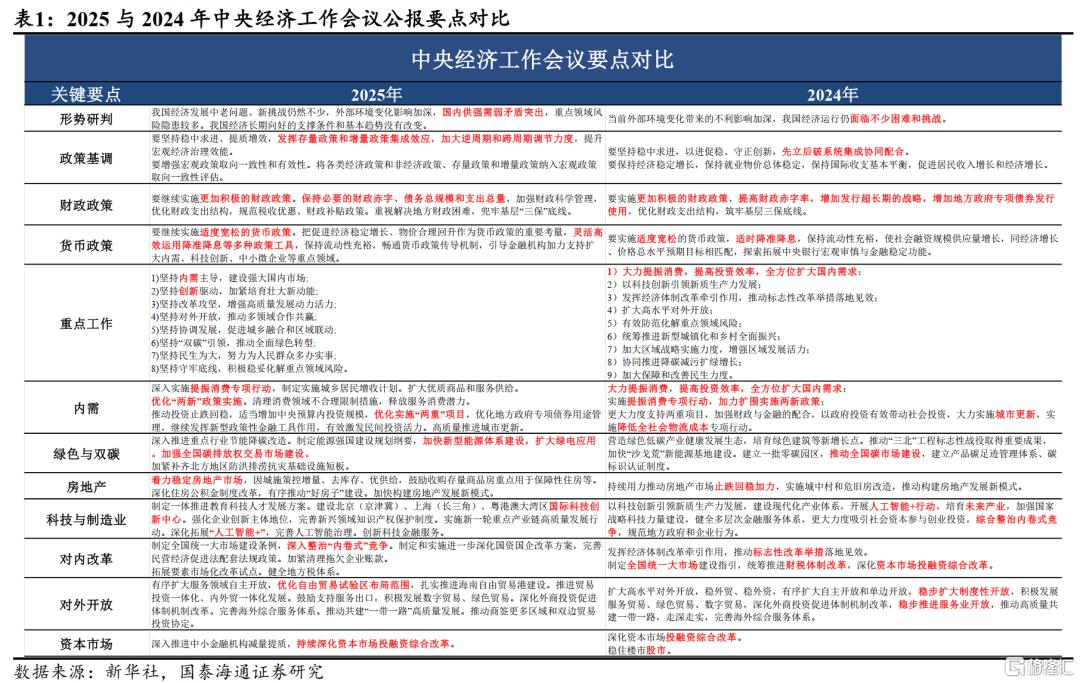
本文来自格隆汇专栏:国泰海通策略方奕,作者:方奕、张逸飞、陶前陈、苏徽 摘要 在较长时间的横盘震荡后,中国"转型牛"将重振旗鼓,拾级而上。11月24日上证指数跌至3800点悲观之际,国泰海通策略团队判断"关键位置:进入击球 区,布出先手棋",近两周以来创业板指已基本收复失地。对于后市,国泰海通比市场共识更乐观:部分投资者以"跨周期"解读政策不积极存在谬误, 2025年超常规是相较以2024年尾部风险暴露。面向2026年,中央经济工作会议明确"巩固拓展经济稳中向好势头",并要求财政政策"更加积极"与"内需主 导",首次提出"推动投资止跌回稳"(2025年负增长),并时隔十年重提房地产"去库存";中财办副主任韩文秀表示将根据形势变化出台实施增量政策, 继续实施"国补"与靠前实施"十五五"重点项目,隐含了实现"十五五"良好开局的开门红重要性。考虑近期经济活动转淡与房地产销售面积下滑加快,政策 预期有望上修。在人民币稳定的前提下,2026年初中国央行降息预期有望提高。在交易层面,保收益降仓位已经步入尾声,岁末年初的再配置与机构资金 回流有望改善市场流动性和活跃成交,跨年攻势已经开始了。 春季行情规律:大盘搭台小盘唱戏 ...

中国能建战新产业营收增16.75% 两海外项目获33.38亿融资支持
Chang Jiang Shang Bao· 2025-12-14 23:44
Core Viewpoint - Despite a decline in profits due to adjustments in the real estate market, China Energy Engineering Corporation (China Energy) demonstrates strong growth resilience, with significant increases in international business contracts and revenue [1][4]. Group 1: Financial Performance - In the first three quarters of 2025, China Energy achieved new contract amounts, operating revenue, and total profit of 992.775 billion yuan, 323.544 billion yuan, and 8.507 billion yuan, respectively, with year-on-year growth of 0.40%, 9.62%, and 0.09% [5]. - The international business revenue grew by 21.21%, with total profits increasing by 21.29% [5]. - The company reported a decrease in net profit attributable to shareholders by 12.43% in the same period, reflecting pressures from the real estate market [5][6]. Group 2: Strategic Developments - China Energy has established a wholly-owned subsidiary in the Netherlands to facilitate the development of two solar projects in Uzbekistan, with a total investment of approximately 4.711 billion yuan [2][3]. - The company signed financing agreements for these projects, securing loan amounts of 1.654 billion yuan and 1.684 billion yuan, totaling 3.338 billion yuan [3]. Group 3: Business Segments and Growth - The energy and water sectors, which are core businesses, saw revenue and total profit growth of 16.76% and 18.42%, respectively, contributing over 75% to the company's overall performance [6]. - Strategic emerging industries reported a revenue increase of 16.75%, accounting for 38.81% of total revenue, indicating a shift towards high-end industrial structure [7]. Group 4: Innovation and R&D - China Energy emphasizes technological innovation as a core driver for high-quality development, focusing on new energy systems and key technologies such as energy storage and hydrogen energy [6]. - In the first three quarters, R&D expenses reached 8.892 billion yuan, a year-on-year increase of 7.72%, with 1,496 patents granted, including 498 invention patents [6].

南海明珠、向海图强 海南奋力谱写开放发展新篇章
Zheng Quan Ri Bao· 2025-12-14 23:19
Core Insights - Hainan Free Trade Port is undergoing significant transformation, with a comprehensive blueprint established by the central government in June 2020, aiming for full island closure operations by December 18, 2025 [1] Group 1: Port Development - Haikou Port is the core of Hainan's modern port cluster, with new facilities improving cargo handling efficiency, reducing wait times from hours to under 15 minutes [2] - The "Four Ports" strategy aims to enhance global competitiveness, with Haikou Port, Yangpu Port, Sanya Port, and Qionghai Port working in synergy [2][3] - Yangpu Port has registered 73 international vessels with a total tonnage of approximately 4.075 million tons, and its container throughput has increased by 204% from 1.02 million TEUs to 3.1 million TEUs [4] Group 2: Air Transport - Hainan's three major airports are expected to exceed 50 million passenger throughput by 2025, with international passenger volume projected to grow by 30% [6] - The "Air-to-Air Transfer" model is gaining traction, with 6,763 tons of cargo transported under this system in the first 11 months of 2025, covering various product categories [7] Group 3: Marine Economy - Hainan aims to establish a "Marine Strong Province" within ten years, focusing on shallow sea aquaculture, deep-sea energy, and oceanic scientific research [8] - The marine production value in Hainan is projected to grow from 160.62 billion to 300 billion yuan by 2025, with an annual growth rate of 13.9% [10] Group 4: Financial Services - The establishment of multi-functional free trade accounts (EF accounts) has expedited cross-border fund transfers, reducing processing time from 1-2 days to 2-3 hours [12] - The implementation of cross-border asset management pilot programs is expected to attract more international investors and financial institutions to Hainan [13]
南海明珠 向海图强 海南奋力谱写开放发展新篇章
Zheng Quan Ri Bao· 2025-12-14 16:15
Group 1: Overview of Hainan Free Trade Port Development - Hainan Free Trade Port is undergoing significant changes, with a comprehensive blueprint established by the central government in June 2020, aiming for full island closure operations by December 18, 2025 [1] - The development is characterized by a focus on maritime economy, with initiatives in port construction, logistics, and transportation [2][3] Group 2: Port Infrastructure and Logistics - Haikou Port serves as the core of Hainan's modern port cluster, with significant improvements in cargo handling efficiency, reducing customs clearance time from hours to under 15 minutes [2] - The "Four Directions, Five Ports" strategy aims to enhance global competitiveness and operational efficiency of Hainan's ports, with specific roles assigned to each port [2][3] - Yangpu Port has registered 73 international vessels, with a total tonnage of approximately 4.075 million tons, and has seen a 204% increase in container throughput from 1.02 million TEUs to 3.1 million TEUs [4] Group 3: Air Transport and Connectivity - Hainan's three major airports are projected to exceed 50 million passenger throughput by 2025, with international passenger traffic expected to grow by 30% [6] - The "Air-to-Air Transfer" model is gaining traction, facilitating the movement of goods through multiple flights, with a significant portion of cargo being transferred internationally [7] Group 4: Marine Economy and Development - Hainan aims to establish a "Marine Strong Province" by enhancing its marine economy through initiatives in shallow sea aquaculture, deep-sea energy, and oceanic scientific research [8] - The marine production value in Hainan is expected to grow from 160.62 billion to 300 billion by 2025, with a compound annual growth rate of 13.9% [10] Group 5: Financial and Investment Opportunities - The establishment of the Hainan Free Trade Port is seen as a major opportunity for companies, particularly in the agriculture and aquaculture sectors, to streamline import and export processes [9] - The EF account system has significantly expedited cross-border fund transfers, with over 600 accounts opened and transactions exceeding 200 billion [12] - New regulations allow foreign investors to access various financial products in Hainan, attracting more financial institutions to the region [13]
能源及能量环球(01142)接获Daily Loyal Limited向香港高等法院存档的传讯令状
智通财经网· 2025-12-14 10:48
Core Viewpoint - The company, Energy and Energy Global (01142), has received a summons from Daily Loyal Limited, alleging a breach of a global settlement agreement established on October 25, 2024, with the case set for September 29, 2025 [1]. Group 1 - The summons is related to an unspecified amount, making it difficult for the company's board to assess the validity of the claims [1]. - The summons does not include a statement of claim, further complicating the company's ability to evaluate the situation [1]. - The company has taken proactive measures by instructing its legal advisors to represent it in the lawsuit and has sought to review court records, although it faced challenges in obtaining relevant court documents [1].
A股下周将有大动作!三大主线+多只上涨股曝光
Xin Lang Cai Jing· 2025-12-14 06:52
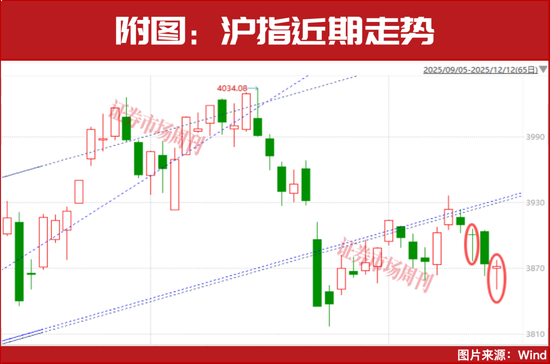
来源:证券市场周刊市场号 文 |牛犇 本周,A股市场持续调整,沪指仅在周五小幅反转。 但从技术面看,市场已频频出现止跌反弹信号,这或意味着下周将有不错的表现,而最新的重要会议同 样释放了积极信号。 机会方面,业内人士指出,可关注重要会议的指引方向,而AI、消费和新能源三大主线已成明牌。 止跌反弹信号出现 近期,A股止跌反弹信号不断出现,如沪指在近三个交易日已出现三根较长的下影线(见附图)。 在K线图中,下影线是从实体向下延伸的细线,与上影线一起长期被看作趋势反转的信号。在阳线中, 它是当日开盘价与最低价之差;在阴线中,它是当日收盘价与最低价之差。一般说,产生下影线的原因 是多方力量大于空方力量而形成的,股票开盘后,股价由于空方的打压一度下落,但由于买盘旺盛,使 股价回升,收于低点之上,产生下影线。这种形态表明,个股或大盘有可能结束弱势行情,将转入强势 行情,且下影线越长,表示反转力量越强。 上影线则与之相反,通常由个股或大盘冲高后回落形成,位于阶段性低位可能预示见底反转,上升途中 多为洗盘结果,而高位出现则提示见顶风险,11月14日的出现长上影线,市场即见顶调整就印证了这个 逻辑。 在技术面之外,A股市场也迎 ...