
有色

Search documents
帮主郑重:十五五规划藏玄机!未来5年财富地图看这几条主线
Sou Hu Cai Jing· 2025-10-09 17:51
Group 1 - The 14th Five-Year Plan (2026-2030) is crucial for achieving the modernization goals set for 2035, focusing on tackling key challenges in various sectors [3] - The main theme is "new quality productivity," emphasizing technological innovation as a core driver, with AI expected to see significant growth by 2026, alongside opportunities in renewable energy and biomedicine [3] - The green transition is highlighted as a continuing opportunity, with the plan aiming for comprehensive economic greening, leading to maturity in clean energy and storage sectors, and new opportunities in traditional industries like construction materials [3] Group 2 - Consumer stability is emphasized, with traditional sectors like food and retail expected to rebound due to policy support, while new trends in service consumption, such as medical aesthetics and smart healthcare, are anticipated to grow with rising incomes [4] - The importance of aligning investment with policy implementation and industry cycles is stressed, particularly in areas like food and energy security, which may benefit the non-ferrous metals sector [4] - The overall investment strategy should follow clear policy directions: new quality productivity as the leader, green transition as the foundation, and consumer recovery as the basic support [4]


两融季节性卖出,北上与 ETF 阶段成为主要增量资金
SINOLINK SECURITIES· 2025-10-09 11:24
Group 1: Macro Liquidity - The US dollar index has declined, and the degree of "inversion" in the China-US interest rate spread has narrowed. The nominal and real yields of 10Y US Treasuries have both decreased, indicating a drop in inflation expectations [1][14]. - Offshore dollar liquidity has tightened, while the domestic interbank funding situation remains balanced. The term spread (10Y-1Y) has widened [1][18]. Group 2: Market Trading Activity - Overall market trading activity continues to decline, with major indices showing reduced volatility. More than half of the sectors, including real estate, automotive, electronics, and chemicals, have trading heat above the 80th percentile [2][23]. - The volatility of major indices has mostly decreased, although the communication sector remains above the 80th historical percentile [2][30]. Group 3: Institutional Research - The sectors with the highest research activity include electronics, pharmaceuticals, communications, non-ferrous metals, and food and beverages. The research activity in power and utilities, light industry, and machinery sectors has also increased [3][42]. Group 4: Analyst Forecasts - The net profit forecasts for the entire A-share market for 2025/2026 have been adjusted, with increases in sectors such as computers, machinery, banking, and consumer goods. The forecasts for the Shanghai 50, ChiNext Index, and CSI 300 have been raised, while the CSI 500 has seen a decrease [4][21]. - The proportion of stocks with upward revisions in net profit forecasts for 2025/2026 has decreased/increased, indicating a mixed outlook across different sectors [4][17]. Group 5: Northbound Trading Activity - Northbound trading activity has decreased, but there has been a net buying of A-shares overall. The buying ratio in sectors like electronics and non-banking has increased, while the ratio in communications and pharmaceuticals has decreased [5][31]. - Northbound trading primarily net bought sectors such as computers, electronics, and pharmaceuticals, with slight net selling in home appliances and transportation [5][33]. Group 6: Margin Financing Activity - Margin financing activity has approached the highest point since July 2020, with significant net buying in non-banking and consumer goods sectors, while electronics and communications saw net selling [6][35]. - The trading heat of the "Dragon and Tiger List" continues to decline, with automotive, chemicals, and computers showing relatively high trading volumes [6][41]. Group 7: Fund Positioning - Active equity funds have increased their positions in non-banking, automotive, and electronics sectors, while reducing positions in TMT, pharmaceuticals, and consumer services [7][46]. - ETFs have continued to see net subscriptions, particularly in sectors like electronics, new energy, and computers, while non-banking sectors experienced net selling [7][52].
博时宏观观点:流动性和风险偏好支撑有色与成长
Xin Lang Ji Jin· 2025-10-09 11:09
Market Overview - The profit cycle remains weak, but liquidity and risk appetite factors have improved, making the market relatively attractive in the medium term [1] - The Federal Reserve's interest rate cuts are favorable for gold, copper, and growth styles [1] - Global stock indices have risen, with gold surpassing $4000 per ounce, while oil prices remain weak [1] Economic Indicators - In September, the manufacturing PMI marginally increased to 49.8% from 49.4% in August, while the non-manufacturing business activity index slightly decreased to 50% from 50.3% [1] - The production side shows stronger improvement compared to the demand side, indicating a high market risk appetite [1] Market Strategy - In the bond market, interest rates are expected to fluctuate at high levels before the holiday, with intense long-short battles [1] - The central bank is expected to maintain a supportive monetary policy stance, but cautious liquidity measures indicate a focus on preventing capital turnover [1] - The bond market may remain in a volatile pattern due to upcoming events such as the Fourth Plenary Session and US-China negotiations [1] A-Share Market - Despite the National Day consumption not exceeding expectations, the market is still in a window period for the Federal Reserve's interest rate cuts [1] - Anticipation of new domestic demand policies from the Fourth Plenary Session and the Central Economic Work Conference suggests limited downside risk for indices [1] - The technology growth sector is expected to continue outperforming, driven by domestic and international AI industry catalysts [1] Hong Kong Stock Market - Following the Federal Reserve's preemptive interest rate cuts, the Hong Kong stock market typically shows strong resilience [2] Oil Market - Oil demand is expected to remain weak over the next 25 years, with continuous supply release putting downward pressure on oil prices [3] Gold Market - A positive long-term outlook for gold prices is anticipated, with short-term upward pressure from events such as the US government shutdown [4]
事关绿色工厂,工信部通知!
中国能源报· 2025-10-09 11:05
Core Viewpoint - The Ministry of Industry and Information Technology (MIIT) has initiated the 2025 Green Factory Recommendation Work to enhance energy conservation and carbon reduction, focusing on 53 key industries to improve the green competitiveness of enterprises [1][5]. Group 1: Overall Requirements - The recommendation work includes both green factories and green industrial parks, with enterprises or parks voluntarily conducting self-evaluations based on new evaluation criteria [5][6]. - Provincial industrial and information departments will select enterprises or parks that meet the requirements, ensuring that recommended entities are at least at the average level of existing national green factories and parks in their regions [5][6]. Group 2: Specific Requirements - New applicants for national green factories and parks must register on the Industrial Energy Conservation and Green Development Management Platform and complete self-evaluations without needing third-party evaluation reports [6][7]. - Existing national green factories and parks are required to conduct self-evaluations against new criteria, with those scoring in the bottom 5% for three consecutive years being removed from the list [6][7]. Group 3: Work Requirements - Provincial departments must ensure the authenticity and accuracy of data and supporting materials submitted by enterprises or parks, with a deadline for submission set for November 7, 2025 [7]. - The MIIT will review the recommended lists and publicize the final list of 2025 green factories and parks, with penalties for any falsification of data [7]. Group 4: Key Industries - The 53 key industries supported in this initiative include sectors such as steel, petrochemicals, non-ferrous metals, building materials, machinery, light industry, textiles, and electronics [14][15][16][17][18][19][20].

【建投策略】节后商品配置的几点想法
Xin Lang Cai Jing· 2025-10-09 09:12
Group 1: Domestic Consumption and Travel Market - During the double holiday period, the domestic consumption and travel market showed strong recovery momentum, with an average daily cross-regional flow of 304 million people, up 6.3% year-on-year, reaching a historical high for the same period [1] - Self-driving travel dominated, with an average daily flow of over 240 million small passenger cars on highways, accounting for about 80% of total travel [1] - The increase in electric vehicle travel significantly boosted the payment amount for charging stations, which rose by over 40% year-on-year [1] - Railway and civil aviation passenger volumes steadily recovered, with the "high-speed rail + airplane" travel model gaining popularity [1] - Outbound tourism saw a notable rebound, with an average of over 2 million inbound and outbound travelers per day during the holiday, up 7% year-on-year [1] - New trends in destination choices emerged, such as "taste tours" focusing on food and "small town tours" emphasizing cost-effectiveness, indicating strong consumption potential in lower-tier markets [1] Group 2: Commodity Market Trends - Precious metals and non-ferrous metals continued to lead the commodity market rebound, while the agricultural products sector showed weaker recovery [2] - Gold, supported by fundamentals and macro disturbances, has seen a strategic shift in central bank purchasing behavior, with China's central bank increasing gold reserves for 11 consecutive months, reaching approximately 2303.5 tons by the end of September [2] - The ongoing growth in official demand is positioning gold as a "timeless asset," reflecting concerns over the U.S. dollar credit system and geopolitical uncertainties [2] - Silver has strengthened relative to gold due to expectations of preventive interest rate cuts, with its dual role as a financial and industrial asset providing greater elasticity [3] - In the industrial metals sector, the copper market is undergoing a fundamental shift due to rising resource nationalism, impacting supply stability and costs [4] - Supply growth for copper is expected to decline from 1.8% to below 1.5% in the next 2-3 years, while demand from electric vehicles and renewable energy is projected to maintain a growth rate of 2.2%-2.5% [5] - The oil market is facing a different scenario, with OPEC+ implementing a gradual production increase strategy, potentially leading to a surplus of 1.5 to 2 million barrels per day by 2026 [5]

十月A股行情如何演绎?以史为鉴这些行业上涨概率更高
天天基金网· 2025-10-09 07:07
Core Viewpoint - The article highlights the performance of A-share indices in October over the past decade, indicating a mixed trend for the Shanghai Composite Index, while the Shenzhen Component Index and ChiNext Index show higher winning rates, particularly in specific sectors like semiconductors and automotive parts [1][5]. Summary by Sections A-share Index Performance - Over the past ten years, the Shanghai Composite Index has shown a 50% win rate in October, while the Shenzhen Component Index has a 70% win rate, and the ChiNext Index has a 60% win rate [2][5]. - The performance of these indices varies significantly, with notable years of decline in 2018, 2022, and 2023 for the Shenzhen and ChiNext indices [2][5]. Sector Performance - In the last five years, the semiconductor, other electronics, and automotive parts sectors have achieved a 100% win rate in October [1][5]. - Other sectors such as commercial vehicles, internet e-commerce, automation equipment, wind power equipment, consumer electronics, and components have an 80% win rate [5]. Investment Recommendations - Multiple brokerages suggest focusing on technology and "anti-involution" themes, especially during the third-quarter report window [6]. - The market is expected to maintain a trend of gradual upward movement, with key attention on third-quarter earnings reports and policy expectations [6][7]. - Key investment themes include AI capital expenditure, the "14th Five-Year Plan" expectations, and sectors likely to benefit from potential policy reversals related to "anti-involution" [7].

量化点评报告:十月配置建议:价值股的左侧信号
GOLDEN SUN SECURITIES· 2025-10-09 06:10
- The "ERP and DRP standardized equal-weight calculation model" is used to compute A-share odds, which as of September end, declined to 0.2 standard deviations, indicating a neutral level[10] - The "macro victory rate scoring card model" synthesizes asset victory rates based on factors like credit and PMI pulses, which recently bottomed out, pushing A-share victory rates to 19%[10] - The "bond odds model" is constructed using the expected yield difference between long and short bonds, with recent bond odds retreating to -0.9 standard deviations, reflecting valuation risks for long bonds[11] - The "bond victory rate model" integrates credit and growth expansion data, showing a decline to -6%, indicating low victory rates[11] - The "AIAE indicator model" for US stocks is at 54%, its historical peak, corresponding to 2.4 standard deviations, signaling high pullback risks[15] - The "Federal Reserve liquidity index model" combines quantity and price dimensions, showing a tightening liquidity index at 20%, a medium-high level[15] Model Backtesting Results - ERP and DRP model: A-share odds at 0.2 standard deviations, victory rate at 19%[10] - Bond odds model: -0.9 standard deviations, victory rate at -6%[11] - AIAE indicator model: 54% historical peak, 2.4 standard deviations[15] - Federal Reserve liquidity index: 20% medium-high level[15] Factor Construction and Evaluation - Value factor: High odds (0.9 SD), medium trend (-0.3 SD), low crowding (-1.4 SD), comprehensive score 3, recommended for focus[19][22] - Small-cap factor: Medium odds (-0.2 SD), strong trend (1.6 SD), medium-low crowding (-0.5 SD), comprehensive score 2.2, configuration value improved[20][23] - Quality factor: High odds (1.4 SD), weak trend (-1.2 SD), medium-low crowding (-0.5 SD), comprehensive score 0.6, recommended for long-term attention[24][26] - Growth factor: Medium-high odds (0.8 SD), medium trend (0.1 SD), high crowding (1.0 SD), comprehensive score 0.1, recommended for standard allocation[27][28] Factor Backtesting Results - Value factor: Odds 0.9 SD, trend -0.3 SD, crowding -1.4 SD, score 3[19][22] - Small-cap factor: Odds -0.2 SD, trend 1.6 SD, crowding -0.5 SD, score 2.2[20][23] - Quality factor: Odds 1.4 SD, trend -1.2 SD, crowding -0.5 SD, score 0.6[24][26] - Growth factor: Odds 0.8 SD, trend 0.1 SD, crowding 1.0 SD, score 0.1[27][28] Strategy Construction and Evaluation - "Odds-enhanced strategy" allocates assets based on odds indicators under volatility constraints, achieving annualized returns of 6.6%-7.5% and maximum drawdowns of 2.4%-3.0% since 2011[39][41] - "Victory rate-enhanced strategy" uses macro victory rate scoring to allocate assets, achieving annualized returns of 6.3%-7.7% and maximum drawdowns of 2.3%-2.8% since 2011[42][44] - "Odds + victory rate strategy" combines risk budgets from both strategies, achieving annualized returns of 7.0%-7.6% and maximum drawdowns of 2.7%-2.8% since 2011[45][47] Strategy Backtesting Results - Odds-enhanced strategy: Annualized returns 6.6%-7.5%, max drawdowns 2.4%-3.0%[39][41] - Victory rate-enhanced strategy: Annualized returns 6.3%-7.7%, max drawdowns 2.3%-2.8%[42][44] - Odds + victory rate strategy: Annualized returns 7.0%-7.6%, max drawdowns 2.7%-2.8%[45][47]
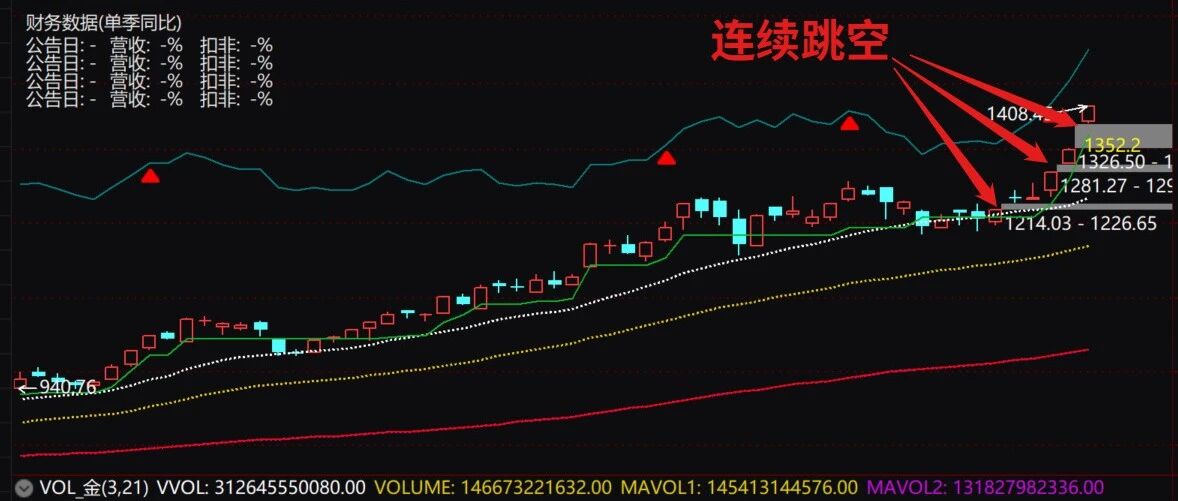
跳空加速,注意风险
猛兽派选股· 2025-10-09 04:03
Core Viewpoint - The article discusses the cyclical nature of the metals and chemicals industry, emphasizing that these sectors typically perform well during the second phase of a bull market, driven by monetary easing and inflation expectations, as well as demand growth from economic recovery [4]. Group 1: Industry Performance - The metals and chemicals sectors are identified as strong cyclical industries that usually do not miss out on bull markets, particularly during the second phase of such markets [4]. - Recent financial reports indicate a recovery in performance for many companies within these sectors, suggesting a positive trend in earnings [4]. Group 2: Market Behavior - Retail investors are cautioned against impulsive buying during market peaks, as this can lead to increased stress and potential losses [3]. - The article highlights the importance of reflecting on missed opportunities, particularly during initial entry points and during low-volume pullbacks [4]. Group 3: Market Dynamics - The article notes that the main themes in the market are likely to continue evolving, with fluctuations and rotations occurring within established themes rather than new ones emerging [4]. - It suggests that the current market phase is characterized by residual momentum, indicating that while there may be opportunities, they are part of a broader cyclical pattern [4].
薛鹤翔:降息预期驱动大宗上涨——国庆假期全球市场动态
Sou Hu Cai Jing· 2025-10-09 03:45
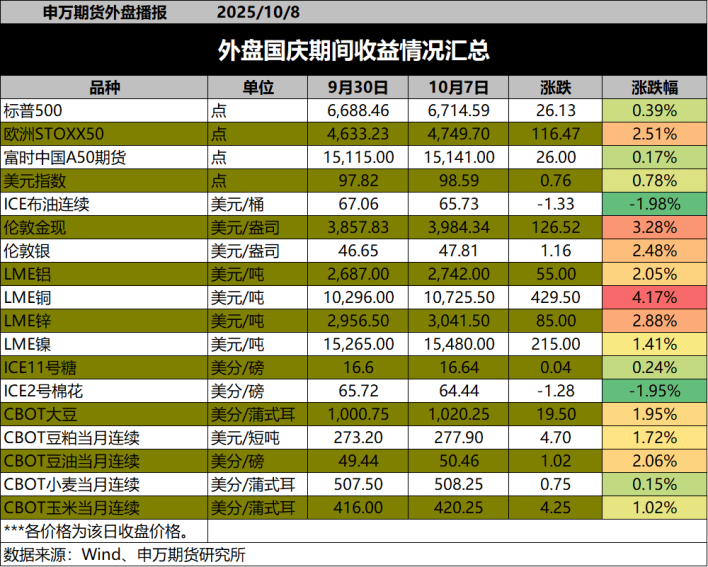
Domestic Macro - The domestic macroeconomic landscape shows distinct characteristics in consumption and industrial policy, with a shift towards rational travel decisions during the National Day holiday, as overall travel intensity was lower than during the May Day holiday [1][6] - The tourism market is evolving towards diversification and personalization, with traditional attractions losing some popularity while niche tourism options like "inter-provincial border tours" and "border tourism" are gaining traction [1][6] - The expansion of visa-free travel has stimulated outbound tourism, reflecting the release of domestic residents' international travel demand and the positive effects of national tourism opening policies [1][6] Foreign Macro - During the National Day holiday, the U.S. ADP employment and services PMI data were weaker than expected, with a decrease of 32,000 jobs in September, significantly below the expected increase of 51,000 [1][13] - The U.S. services PMI fell to 50, indicating a slowdown in business activity and new orders, which may impact global market sentiment [1][13] Precious Metals - Gold prices reached a historical high, surpassing $4,000 per ounce, driven by concerns over U.S. debt sustainability and demand for risk hedging against the dollar [2][17] - The overall trend for gold remains bullish, supported by expectations of continued market easing following the initial interest rate cuts [2][17] Oil Market - International oil prices fluctuated during the holiday, ultimately stabilizing around pre-holiday levels, influenced by ongoing supply increases and insufficient demand [2][18] - OPEC+ announced an increase in production by 137,000 barrels per day, reflecting a focus on maintaining market share amid competitive pressures [2][18] Film Industry - The National Day box office exceeded 1.5 billion yuan, with several films surpassing 100 million yuan in ticket sales, indicating a strong recovery in cultural consumption [8] - The diversity of content, including various genres, has driven demand, with family-oriented films performing particularly well [8] Industrial Policy - The release of growth stabilization plans by seven major industries before the holiday marks a significant shift towards quality and efficiency improvement rather than mere scale expansion [11] - The focus on supply-demand balance and the integration of artificial intelligence aligns with current technological trends, promoting high-end and intelligent industrial development [11] Overall Economic Outlook - The current domestic macroeconomic environment is characterized by structural optimization and diversified demand in consumption, alongside a commitment to high-quality development in industrial policy, which together create a favorable environment for economic growth [12][12] Key Commodity Trends - LME copper prices rose by 2.85% during the holiday, driven by supply concerns from Indonesia and ongoing tightness in the copper market [19] - LME zinc prices increased by 3.7%, supported by declining inventories and stable processing fees [19] - LME aluminum prices continued to rise, reflecting a tight supply-demand balance and positive macro sentiment [20] Agricultural Products - U.S. cotton prices weakened during the holiday due to market information delays caused by the government shutdown, while domestic cotton prices face pressure from new crop expectations [21] - International sugar prices are expected to remain weak due to increased supply from Brazil, while domestic sugar prices are supported by low inventory levels [22] Shipping Industry - During the National Day holiday, shipping rates increased significantly, with major shipping lines raising prices for the second half of October [48] - The market is expected to enter a phase of competition for the year-end peak season, with attention on the impact of shipping rate adjustments [48]
南华期货早评-20251009
Nan Hua Qi Huo· 2025-10-09 02:11
1. Report Industry Investment Ratings No relevant content provided. 2. Core Views of the Report - Domestic economic repair depends on the demand side, with potential incremental policies. Overseas, the US government shutdown increases market uncertainty, and the Fed's decision - making may be affected. The Japanese political situation also impacts the market [2]. - The RMB exchange rate needs continuous improvement in internal and external environments and policy signals for trend - like appreciation. Short - term strategies are provided for export and import enterprises [4]. - A - shares are expected to be easy to rise and hard to fall after the holiday, with a likely structural market. Attention should be paid to multiple events in the future [7]. - Treasury bonds are expected to continue the oscillatory trend, and it is advisable to enter long positions at low prices without chasing high [8]. - The shipping market is affected by the US policy on Chinese ships and the Gaza cease - fire negotiation. The 10 - contract may decline, and other contracts are likely to oscillate [12]. - Precious metals are expected to remain strong, but there may be price adjustments. Any adjustment is a mid - to - long - term buying opportunity [13][14][15]. - Copper prices are driven up by supply disruptions and Fed's rate - cut expectations. However, high - price industrial acceptance is a risk [16][17]. - Nickel prices are expected to rise slightly after the holiday, showing an oscillatory and strong pattern, and attention should be paid to multiple factors [18]. - For lithium carbonate, focus on downstream restocking. For industrial silicon and polysilicon, the price of industrial silicon may rise slightly, and polysilicon has high volatility and risks [20][21]. - Steel products face de - stocking pressure, and the market is expected to be under pressure. Iron ore prices are likely to rise in the short - term due to supply disturbances. Coal and coke prices' rebound depends on the steel market. Ferroalloys have prominent supply - demand contradictions [24][27][28]. - LPG is expected to run weakly. PX - TA and MEG - bottle chips are expected to oscillate weakly. Methanol supply pressure increases. PVC is in a weak - reality and strong - policy - disturbance pattern. Pure benzene and styrene follow the cost decline. Fuel oil is expected to open flat, and low - sulfur fuel oil is expected to open slightly lower. Asphalt may open slightly lower, with a possible last - chance rise this year [30][33][34][37][39][40][41][42][44]. - Glass, soda ash, and caustic soda are expected to oscillate weakly. Propylene prices rise slightly [45][47][48][49]. - The pig market is in a supply - strong and demand - weak situation, and it is advisable to short at high prices. Oilseeds are affected by Sino - US negotiations. Oils may rebound after the holiday. Soybean prices are expected to decline. Cotton prices are under pressure, and it is advisable to short on rebounds. Sugar prices may open high and go high in the short - term. Egg prices are expected to be weak, and it is advisable to be cautious. Apple prices may rise due to bad weather. Red dates may face downward pressure [52][54][56][59][61][63][65][66][68]. 3. Summaries According to Relevant Catalogs Financial Futures Macro - Key information includes the Fed's meeting minutes, the US government shutdown, the US budget deficit, and international political situations. Domestic economic repair focuses on the demand side, and overseas uncertainties increase [1][2]. RMB Exchange Rate - The previous trading day's RMB exchange rate data is provided. The RMB exchange rate is affected by the Fed's decision, the US government shutdown, and the Japanese political situation. Short - term strategies for enterprises are given [3][4]. Stock Index - Before the holiday, A - shares were strong, and overseas stock indexes were also strong during the holiday. A - shares are expected to be easy to rise and hard to fall, with attention on multiple events [6][7]. Treasury Bonds - The Fed's internal differences and the US government shutdown are important information. The bond market rebounded before the holiday, and it is expected to oscillate after the holiday [8]. Container Shipping - Spot market prices are relatively stable. Global trade volume and the Gaza cease - fire negotiation are key factors. Short - term strategies for different contracts are provided [9][10][12]. Commodities Non - ferrous Metals - **Gold & Silver**: Prices rose strongly during the holiday, driven by investment demand, inflation concerns, and the US government shutdown. Attention should be paid to data release and the Fed's meeting [13][14]. - **Copper**: Prices rose during the holiday due to supply disruptions and Fed's rate - cut expectations. There are concerns about industrial acceptance at high prices [16][17]. - **Nickel**: Prices were strong during the holiday, affected by Indonesian policies. It is expected to rise slightly after the holiday with limited upward momentum [18]. - **Carbonate Lithium**: There were no significant changes during the holiday. Attention should be paid to the resumption of production and downstream restocking [20]. - **Industrial Silicon & Polysilicon**: There were no significant changes during the holiday. Industrial silicon prices may rise slightly, and polysilicon has high volatility and risks [21]. Black Metals - **Rebar and Hot - Rolled Coil**: Inventory increased significantly during the holiday. The market faces de - stocking pressure, and the price is expected to be under pressure [23][24]. - **Iron Ore**: Supply disturbances increase. The price is expected to rise in the short - term due to demand recovery and supply issues [25][26][27]. - **Coking Coal and Coke**: Supply elasticity is limited, and the price is supported by winter storage. The rebound depends on the steel market. Strategies for different contracts are provided [28][29]. - **Silicon Iron & Silicon Manganese**: There is a prominent supply - demand contradiction, with high supply and weak demand [29]. Energy and Chemicals - **LPG**: Overseas prices were weak during the holiday. Supply pressure remains in the fourth quarter, and the demand requirement is higher [30]. - **PTA - PX**: It oscillates weakly with the cost side. The polyester season is not very strong, and PTA processing fees have limited expansion [33]. - **MEG - Bottle Chips**: There is a marginal improvement in supply and demand, but the long - term inventory increase expectation makes it difficult to break through upward [34][35][36]. - **Methanol**: Supply pressure increases, and attention should be paid to the 1 - 5 reverse spread [37]. - **PVC**: There were few changes during the holiday. The market is in a weak - reality and strong - policy - disturbance pattern [38][39]. - **Pure Benzene and Styrene**: Prices follow the cost decline. The supply of pure benzene is high, and the supply of styrene will increase later. Consider widening the price spread [40]. - **Fuel Oil**: It is expected to open flat, with a strong self - performance. Low - sulfur fuel oil is expected to open slightly lower, following the cost [41][42]. - **Asphalt**: Supply increases, and demand is affected by weather and funds. There may be a last - chance rise this year [43][44]. - **Glass, Soda Ash, and Caustic Soda**: They are expected to oscillate weakly, with different influencing factors for each [45][47][48]. - **Propylene**: Prices rise slightly, with changes in supply and demand [49]. Agricultural Products - **Hogs**: Prices declined during the holiday, in a supply - strong and demand - weak situation. Short at high prices [52][53]. - **Oilseeds**: Affected by Sino - US negotiations, with different trends in the internal and external markets. Strategies for contracts are provided [54][55]. - **Oils**: May rebound after the holiday, with different supply and demand situations for different oils [56][57][58]. - **Soybeans**: Prices are expected to decline, with attention on policy and market factors [59][60]. - **Cotton**: Prices are under pressure, and it is advisable to short on rebounds, with a focus on multiple factors [61][62]. - **Sugar**: Prices may open high and go high in the short - term, affected by production and disasters [63][64]. - **Eggs**: Prices were weak during the holiday, and it is advisable to be cautious or short far - month contracts [65]. - **Apples**: Prices may rise due to bad weather, with different price levels for good and poor - quality products [66][67]. - **Red Dates**: May face downward pressure, with attention on weather and inventory [68].
