
Qi Huo Ri Bao

Search documents
“四川钢铁行业面临严峻挑战”!一封告知函引发市场关注→
Qi Huo Ri Bao· 2025-10-16 23:40
本周三,一封告知函成为钢铁市场的焦点。 东海期货黑色金属首席研究员刘慧峰告诉期货日报记者,近期川渝地区部分钢厂给代理商发出了稳价通 知函,这背后与8月份以来钢材价格持续下跌和钢厂利润持续下滑不无关系。四川作为内陆地区,其物 流成本相对偏高,这在一定程度上保护了本地钢铁企业的市场份额,但也使钢材价格容易受到外部因素 影响。 记者从知情人士处获悉,自去年下半年以来,受西部地区基础设施建设增加影响,外部钢铁资源大量进 入川渝地区,导致市场供需失衡。成都和上海地区的螺纹钢价差自去年10月下旬的290元/吨收窄至60 元/吨附近。另外,10月第二周成都和重庆的螺纹钢社会库存上升至44.47万吨,去年同期仅13.84万吨。 中信建投(601066)期货钢材研究员张少达表示,8月以来全国建材价格普跌,累计跌幅超200元/吨, 钢厂生产利润大幅收缩,经营压力显著增加。在行业"反内卷"背景下,钢厂维持市场良性运转的意愿强 烈。近两年四川地区供需格局出现了显著变化,周围省份钢厂增产较多,大量资源流入四川,且呈现逐 年增加的态势,对当地价格带来较大的冲击。 与此同时,螺纹钢需求依然疲弱,高频需求指标延续低位运行,最近一周表观需求为 ...


刚刚,突破4350美元/盎司,金价再创新高!特朗普:将与普京在布达佩斯举行会晤
Qi Huo Ri Bao· 2025-10-16 23:38
特朗普:将与普京在布达佩斯举行会晤 据新华社消息,美国总统特朗普16日在社交媒体上发文说,他当天与俄罗斯总统普京进行了长时间通话,主要讨论结束俄乌冲突及其后的俄美贸易等议 题。双方将在匈牙利首都布达佩斯举行面对面会晤。 特朗普写道,他和普京的通话"富有成效""取得很大进展"。双方同意下周举行美俄高级别会晤,美方代表团将由国务卿鲁比奥率领,会晤地点有待确定。 在高级别会晤后,他和普京将在布达佩斯会晤,谈论如何结束俄乌冲突。特朗普没有提及美俄领导人会晤的日期。 金价再创新高,交易所、银行提示风险 昨夜今晨,现货黄金价格大涨,盘中一度突破4378美元/盎司,再创历史新高。截至发稿,现货黄金价格报4356.13美元/盎司。 16日,上海黄金交易所发布通知,内容提到,近期影响市场稳定的因素较多,国际贵金属价格波动剧烈。提示投资者做好风险防范工作,合理控制仓位, 理性投资。 上期所发布通知,近期国际形势复杂多变,贵金属市场波动较大,请各有关单位采取相应措施,提示投资者做好风险防范工作,理性投资,共同维护市场 平稳运行。 近日,工商银行、建设银行等多家银行发布提示,近期国内外贵金属价格波动加剧,市场风险提升。建议投资者基于 ...



苯乙烯期价创5年来新低!持续下跌的原因是?
Qi Huo Ri Bao· 2025-10-16 23:38
Core Viewpoint - The significant decline in styrene futures prices since late September is attributed to multiple factors, including a sharp drop in oil prices and weak fundamentals in the styrene market [1][2]. Group 1: Price Decline Factors - Styrene futures prices began to decline from a high of 7831 yuan/ton in late June 2025, reaching a low of 6437 yuan/ton by October 16 [1]. - The drop in oil prices is a major factor affecting styrene prices, driven by geopolitical risks, trade tensions, and an oversupply situation as the demand season ends [1][2]. - The overall chemical product prices have also fallen due to macroeconomic disturbances and OPEC+ production increases, impacting styrene prices [1]. Group 2: Supply and Inventory Dynamics - Styrene's weak fundamentals are reflected in rising port inventories and a marginal weakening in the upstream pure benzene supply-demand balance [2]. - As of mid-October, styrene inventories at East China ports were around 200,000 tons, significantly higher than the approximately 40,000 tons from the same period last year, marking a five-year high [2]. - Despite maintenance activities reducing production slightly, the overall supply remains high, and demand has also decreased, leading to a continued oversupply situation [2][3]. Group 3: Industry Chain Analysis - The basic fundamentals of pure benzene, the direct raw material for styrene, are also weak, with expectations of declining demand due to losses in downstream products [3]. - High hidden inventories of pure benzene, concentrated in styrene plants, are expected to keep production rates high, as plants are unlikely to significantly reduce output to maintain market share [3]. - The entire industry chain, including pure benzene, styrene, and downstream synthetic materials, is experiencing historically high inventory levels, which will take time to alleviate [3]. Group 4: Market Outlook - Short-term reversal of styrene prices is considered difficult, with potential for a temporary rebound due to supply constraints from geopolitical factors [4]. - For a price reversal to occur, improvements in oil prices, upstream pure benzene fundamentals, and downstream orders are necessary [5]. - The likelihood of a decrease in styrene inventory and low valuation suggests that overly bearish views may not be warranted, although new production capacity and oil price declines pose challenges [5].
各方共话铝产业风险管理与转型路径
Qi Huo Ri Bao· 2025-10-16 16:04
Core Viewpoint - The aluminum industry is exploring high-quality development through the integration of futures and spot markets amidst global market fluctuations [1][2]. Group 1: Forum Overview - The "2025 Futures-Spot Integration to Support High-Quality Development of the Aluminum Industry Forum" was held on October 16 in Zhengzhou, as part of the "2025 Third Central Plains Zhengzhou International Aluminum Industry Exhibition" [1]. - The forum was organized by Futures Daily and the Industry Service Alliance, with support from various futures trading institutions [1]. - Awards for excellent risk management cases and service providers were presented, showcasing the achievements of futures institutions in serving the real economy [1]. Group 2: Industry Challenges and Trends - The global macroeconomic environment is experiencing structural slowdown and uncertainty, with a shift in economic development philosophy from "efficiency first" to "safety and controllability" [2]. - The aluminum industry is facing both strategic opportunities for transformation and challenges such as price volatility and rising costs [2]. - High-quality development is deemed essential for the industry to navigate current challenges, with futures-spot integration identified as a key driver [2]. Group 3: Futures Market Dynamics - The interaction between aluminum futures and spot markets has improved market effectiveness and enhanced price discovery and risk management [3]. - The futures market is seen as a risk management hub and a financial service engine for the green and low-carbon transition of the aluminum industry [3]. - Companies are encouraged to utilize futures tools for risk control and profit maximization, moving away from purely directional trading strategies [3]. Group 4: Challenges in Futures Market Utilization - Challenges in the futures market include a lack of understanding of futures and hedging among key enterprises and a shortage of composite talent [4]. - There is a call for collaboration between futures companies and the aluminum industry to enhance futures application levels and promote high-quality development [4]. - Companies are advised to explore options beyond traditional hedging and basis trading, including customized over-the-counter options for better risk management [4]. Group 5: Future Directions - Enhancing the pricing power of domestic bulk commodities is crucial for serving the industry, with a focus on rule-making capabilities as a core competitive advantage [4]. - The role of media and alliances in bridging the gap between capital markets and the real economy is emphasized, aiming to promote the integration of futures and spot markets in the aluminum sector [5].
期现结合赋能铝产业链韧性与安全水平提升
Qi Huo Ri Bao· 2025-10-16 16:04
Core Insights - The aluminum industry is experiencing a high prosperity cycle, driven by supply-side structural reforms and strong demand from sectors like new energy vehicles and data centers [1][4] - The integration of futures and spot markets is seen as a crucial strategy for enhancing the resilience and safety of the aluminum supply chain [1][5] Industry Overview - Domestic electrolytic aluminum production capacity is nearing its limit, with high utilization rates and low supply elasticity expected in the future [1] - Global electrolytic aluminum supply is only able to maintain rigid growth due to long-term power supply restrictions overseas [1] - Demand for electrolytic aluminum is projected to grow at an annual rate of around 2%, supported by traditional consumption and emerging industries [1] Company Strategies - Companies are encouraged to adopt structural adjustments for product differentiation and quality enhancement to cope with order shortages [2] - Risk management is emphasized as a survival skill across all industries, with companies advised to negotiate long-term agreements to mitigate price volatility [2][5] - The shift from a passive reliance on spot markets to an active management model using futures for risk hedging is highlighted as essential for modern traders [2][3] Trading and Risk Management - The concept of basis trading is presented as a sustainable profit strategy for traders, focusing on local supply-demand dynamics rather than absolute price predictions [3] - A complete futures market system has been established, providing a comprehensive risk hedging framework for the aluminum industry [3] Regional Insights - Henan province is a key player in China's non-ferrous metal production, with significant contributions from advanced aluminum-based materials [4] - The participation of local enterprises in futures trading has seen a growth rate of 23% over the past three years, demonstrating the value of futures in risk management [4] Future Directions - Companies are advised to build a three-tiered risk management system, focusing on traditional futures integration, expanding options usage, and collaborating with futures companies for data sharing [5] - The forum concluded with a sense of optimism about the deepening integration of the aluminum industry with the futures market, positioning it as a powerful engine for navigating uncertainties [5]
多晶硅价格显著回升,产能调控政策即将出台?
Qi Huo Ri Bao· 2025-10-16 00:58
Core Viewpoint - The recent increase in polysilicon futures prices is attributed to rising market optimism and potential regulatory measures aimed at controlling photovoltaic production capacity [1][2]. Group 1: Market Sentiment and Price Movements - Polysilicon futures prices have rebounded after a period of decline, with the main 2511 contract rising for two consecutive days [1]. - Market analysts indicate that the sentiment has shifted towards bullish due to expectations of policy changes regarding production capacity [1][2]. - The current spot price of polysilicon has stabilized at an average of 50,000 yuan per ton as of October 15, following a significant drop to 47,720 yuan per ton earlier [1]. Group 2: Supply and Demand Dynamics - The polysilicon market is currently characterized by an oversupply, with global production in October reaching 133,300 tons and silicon wafer production at 61.92 GW [2]. - Despite expectations of production cuts, the actual reduction in polysilicon output has not met forecasts, leading to continued inventory accumulation [2]. - Analysts suggest that the core issue for the fourth quarter will be weak demand, which is likely to pressure spot profits and maintain the oversupply situation [2][3]. Group 3: Future Outlook - There is an expectation that the reduction in polysilicon production in November will exceed that of silicon wafers, potentially restoring supply-demand balance [3]. - If regulatory policies are implemented effectively and the supply-demand balance improves, there may be positive price movements for polysilicon [3]. - However, the market remains cautious, with high inventory levels and weak demand continuing to exert pressure on prices [3].
广州期货:避险需求升温,黄金延续涨势
Qi Huo Ri Bao· 2025-10-16 00:56
Core Viewpoint - The current market environment is characterized by heightened risk aversion due to ongoing trade tensions, the U.S. government shutdown, recession fears, and the Federal Reserve's shift towards interest rate cuts, which have collectively driven gold and silver prices to new highs [1][4]. Group 1: Market Dynamics - Gold and silver have shown remarkable performance year-to-date, with Shanghai gold rising approximately 55% and Shanghai silver increasing about 57%, while COMEX gold and silver prices have surged around 59% and 75% respectively [1]. - The renewed trade tensions have acted as a catalyst for increased market risk aversion, leading to a preference for gold and silver as safe-haven assets [1][4]. - The Federal Reserve's decision to lower interest rates has made precious metals more attractive as non-yielding assets, further boosting their demand [1][4]. Group 2: Central Bank Activities - Global central banks are strategically increasing their gold reserves, providing structural support for gold prices. As of September, China's central bank reported a gold reserve of 74.06 million ounces, up from 74.02 million ounces in August, marking eleven consecutive months of gold accumulation [2]. - The World Gold Council indicates that by August 2025, seven countries, including China, are expected to increase their gold holdings by 2 tons or more, driven by strategic security and asset allocation needs [2]. Group 3: Geopolitical and Economic Factors - Recent geopolitical developments, such as the easing of tensions in the Middle East, have not significantly reduced global geopolitical risks, which remain elevated due to ongoing conflicts in Ukraine and the Pakistan-Afghanistan border [2]. - The market anticipates a strong likelihood of the Federal Reserve adopting a more aggressive easing policy in response to potential economic downturns, with a 95.67% probability of a 25 basis point cut in October and a cumulative 50 basis point cut by December [3]. Group 4: Investment Outlook - Multiple favorable factors are contributing to a strong outlook for precious metals, including persistent geopolitical uncertainties, the Federal Reserve's easing stance, and ongoing strategic accumulation by global central banks [4]. - Despite potential technical corrections, the mid-term upward trend in precious metal prices is expected to continue, with a focus on monitoring key driving factors [4].
螺纹钢去库存压力大
Qi Huo Ri Bao· 2025-10-16 00:46
Core Viewpoint - After a brief rebound in mid-September, rebar futures prices have weakened again, with the main contract falling below 3100 yuan/ton, marking a new low for the period [1] Group 1: Macroeconomic Sentiment - The U.S. announced a 100% tariff on Chinese exports of rare earths and related items, leading to market risk aversion and a decline in risk asset prices [2] - The impact of the new round of tariffs on the black industry is limited, as direct exports of steel to the U.S. are minimal; however, escalating trade tensions could indirectly affect steel exports through related industries like automotive and home appliances [2] Group 2: Inventory Levels - Rebar inventory has risen to a relatively high level, with a total of 6.5965 million tons as of October 10, an increase of 574,000 tons during the National Day holiday [3] - The inventory-to-consumption ratio has significantly increased to 4.518, with year-on-year growth of 49.56% and 154.68% for inventory and inventory-to-consumption ratio, respectively [3] - Weekly rebar production has decreased to 2.034 million tons, with short-process steel mills seeing a 25.50% drop in production [3] Group 3: Cost Support - Despite weak steel prices, raw material prices remain relatively strong, with iron ore and coke prices supporting high production costs [4] - The iron ore price index is at 109.2 USD/ton, while the average daily pig iron output from 247 sample steel mills is 2.4154 million tons, reflecting a year-on-year increase of 3.63% [4] - The proportion of profitable steel mills has dropped to 56.28%, indicating that most varieties have turned to losses [4] Group 4: Market Outlook - The combination of supply contraction, weak demand, and high inventory liquidation pressure, along with the backdrop of trade tensions, suggests that rebar prices are likely to continue a weak and volatile trend [4]
产能持续出清 玻璃关注阶段性反弹机会
Qi Huo Ri Bao· 2025-10-16 00:28
Core Viewpoint - Glass futures prices have been declining, retracing most of the gains since July 1, with the 2601 contract closing down 1.74%, marking a new low in nearly a month [1] Supply and Production - The National Development and Reform Commission has issued guidelines to support energy-saving and carbon reduction transformations in key industries, including building materials and glass [2] - The optimization and upgrading of float glass production capacity is recognized as an industry consensus, with different production lines based on raw materials: natural gas, petroleum coke, and coal gas [2] - As of October 10, the average weekly profit for float glass production lines using natural gas increased by 70 CNY/ton, coal gas by 48 CNY/ton, and petroleum coke by 42 CNY/ton, indicating a slight recovery in production [3] - The national weekly production of float glass reached 1.1289 million tons, with a utilization rate of 80.63%, reflecting a minor increase [3] Demand and Inventory - Post-October holiday, float glass inventory increased by nearly 6% compared to the end of September, contrasting with a significant decrease in the same period last year [5] - The real estate sector's slow recovery has had a limited positive impact on float glass demand, with significant declines in construction and investment metrics reported [7] - As of October 9, total inventory for float glass reached 6.2824 million weight boxes, up 5.85% month-on-month and 6.76% year-on-year, with a notable 20.63% increase in North China [5] Market Outlook - In the short term, while supply is recovering due to profit restoration, weak demand from downstream sectors and declining construction metrics contribute to a bearish market outlook for float glass [8] - Long-term trends indicate a clear direction towards capacity reduction and structural upgrades, with potential positive impacts from environmental policies and ongoing upgrades in production lines [8]
去库存压力大 螺纹钢价格易跌难涨
Qi Huo Ri Bao· 2025-10-16 00:18
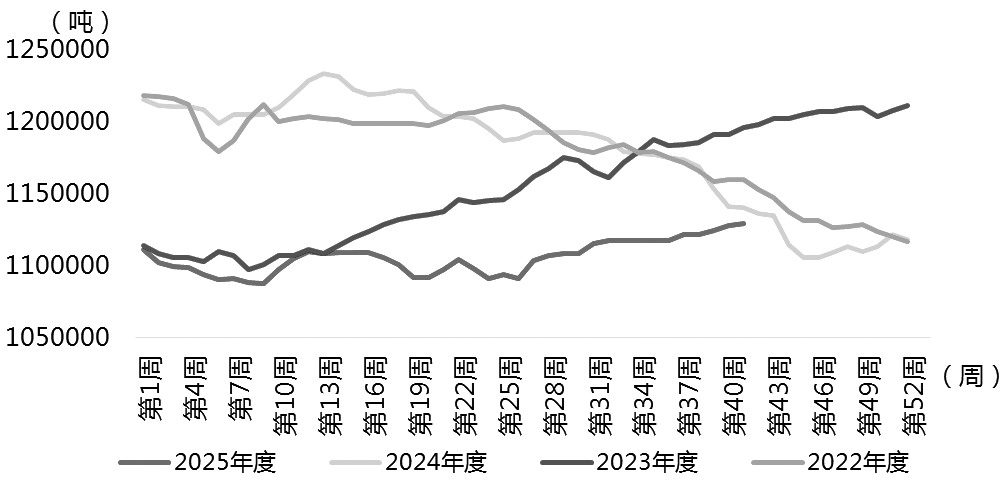
Core Viewpoint - After a brief rebound in mid-September, rebar futures prices have weakened again, with the main contract falling below 3100 yuan/ton before the National Day holiday, marking a new low for the period [1] Group 1: Inventory and Supply-Demand Dynamics - Rebar inventory has risen to a relatively high level, with a total of 6.5965 million tons as of the week ending October 10, an increase of 574,000 tons during the National Day holiday [2] - The inventory-to-consumption ratio has significantly increased to 4.518, with both inventory levels and ratios showing notable year-on-year growth of 49.56% and 154.68%, respectively [2] - The market is currently experiencing weak supply and demand, with weekly production dropping to 2.034 million tons, and the production from short-process steel mills decreasing by 25.50% to 232,900 tons [2] - The proportion of profitable electric arc furnace steel mills has fallen to only 25.62%, leading to production cuts due to increasing losses [2] - Apparent demand for rebar remains weak at 1.46 million tons, the lowest for the same period in the past five years, with cement and concrete shipments also showing low levels [2] Group 2: Cost and Price Dynamics - Despite the weak steel prices, raw material prices have shown relative strength, with the Platts iron ore price index at 109.2 USD/ton, near its yearly high [3] - The average daily pig iron production among 247 sample steel mills is at 2.4154 million tons, continuing to remain at a yearly high, with a year-on-year increase of 3.63% [3] - The high production costs, driven by rising iron ore and coke prices, provide some support for steel prices, which have seen a cumulative decline of 220 yuan/ton since early August [3] - Overall, the rebar market is expected to continue a weak and volatile trend, with a focus on demand performance amid supply contraction and high inventory de-stocking pressure [3]