Qi Huo Ri Bao

Search documents
央行今日开展9000亿元买断式逆回购操作
Qi Huo Ri Bao· 2026-01-14 18:09
"央行通过买断式逆回购向银行体系注入中期流动性,能够引导资金面处于较为稳定的充裕状态。"东方 金诚首席宏观分析师王青表示,这在助力政府债券发行,引导金融机构加大货币信贷投放力度的同时, 也在释放数量型政策工具持续加力的信号,显示货币政策延续支持性立场。(齐宣) 本报讯1月14日,中国人民银行发布消息称,为保持银行体系流动性充裕,2026年1月15日,中国人民银 行将以固定数量、利率招标、多重价位中标方式开展9000亿元买断式逆回购操作,期限为6个月(181 天)。 数据显示,1月有6000亿元6个月期买断式逆回购到期。由此,央行1月15日开展9000亿元买断式逆回购 操作,意味着当月6个月期买断式逆回购加量续作,加量规模3000亿元,为6个月期买断式逆回购连续第 五个月加量续作,加量规模较上月增加1000亿元。 ...
中国制造业采购经理指数升至扩张区间
Qi Huo Ri Bao· 2026-01-14 08:04
从分类指数看,在构成制造业PMI的5个分类指数中,生产指数、新订单指数和供应商配送时间指数均 高于临界点,原材料库存指数和从业人员指数均低于临界点。其中,生产指数为51.7%,比上月上升1.7 个百分点,表明制造业企业生产活动加快。新订单指数为50.8%,比上月上升1.6个百分点,表明制造业 市场需求有所改善。供应商配送时间指数为50.2%,比上月上升0.1个百分点,表明制造业原材料供应商 交货时间继续加快。 从企业规模看,大型企业PMI为50.8%,比上月上升1.5个百分点,高于临界点;中型企业PMI为49.8%, 比上月上升0.9个百分点,仍低于临界点;小型企业PMI为48.6%,比上月下降0.5个百分点,低于临界 点。 与此同时,中国期货市场监控中心交易报告库(TR)数据显示,4月份以来,受商品类场外衍生品规模增 长的带动,期货公司风险管理子公司场外衍生品持仓规模持续增长。2025年12月31日,风险管理子公司 场外衍生品总持仓名义本金达3808.6亿元,为2025年年内新高。其中,商品类场外衍生品总持仓名义本 金为2469.8亿元,较4月底(2121.5亿元)增长16.4个百分点,持仓规模占比已接近2 ...
2025猪市在成本与效率中重塑,微利时代寻求新平衡
Qi Huo Ri Bao· 2026-01-14 06:41
Core Viewpoint - The domestic pig market in 2025 is experiencing significant adjustments due to abundant supply and weak demand, leading to a decline in average prices and creating challenges for producers [1][2]. Group 1: Market Trends - The average price of pigs in 2025 is approximately 13.80 yuan/kg, significantly lower than in 2024, with prices fluctuating from around 16 yuan/kg at the beginning of the year to below 11 yuan/kg by late October [1][2]. - The supply of pigs is robust, driven by a high number of breeding sows and increased production efficiency, resulting in actual pork supply exceeding market expectations [2][5]. - Demand for pork is weakening, with traditional consumption peaks failing to stimulate demand, leading to a situation where price increases do not correspond with demand growth [2][6]. Group 2: Cost Management and Industry Dynamics - In response to declining prices, pig farming companies are undergoing an "efficiency revolution," focusing on cost reduction to survive, with leading companies like Muyuan Foods reducing their breeding costs from approximately 13 yuan/kg to 11.3 yuan/kg [5][6]. - The cost reduction is attributed to improved production efficiency and utilization rates, with leading firms achieving a PSY (pigs weaned per sow per year) of over 28, indicating fewer sows are needed for the same amount of pork production [5][6]. - The competition in the pig farming sector is intensifying, with a shift towards "cost reduction and efficiency enhancement," leading to increased pressure on smaller farms and a trend towards larger, more efficient operations [5][6]. Group 3: Future Outlook - For 2026, there is cautious optimism, with expectations of continued supply pressure in the first half but potential improvements in the second half as production capacity decreases and seasonal demand increases [6][7]. - The average price for pigs in 2026 is projected to be between 12 and 13 yuan/kg, with a potential for prices to rise later in the year [7]. - Policy interventions are expected to play a crucial role in stabilizing prices, with ongoing regulatory measures aimed at restoring prices to reasonable levels [7][8]. Group 4: Risk Management Strategies - The industry is evolving towards a new paradigm characterized by "policy guidance, market adjustment, and efficiency supremacy," necessitating an upgrade in survival strategies for pig farmers [8]. - Recommendations for pig farmers include maintaining biosecurity, enhancing efficiency, managing production capacity, and utilizing futures and derivatives for risk management [8][9]. - The trading volume of pig futures in 2025 reached 17.993 million contracts, indicating increased market liquidity and the growing importance of risk management tools among producers [9].


二次育肥博弈加剧,或成主导2026年上半年生猪行情关键变量
Qi Huo Ri Bao· 2026-01-14 06:14
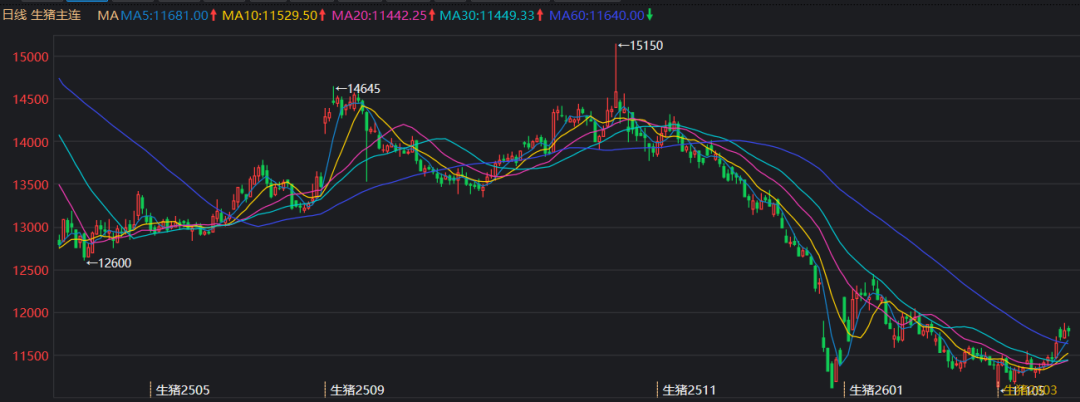
Group 1 - After the New Year, the live pig spot price has shown a fluctuating trend within a range, with supply pressure easing at the beginning of January due to a reduction in the number of pigs being marketed by large farming groups [1] - As of the end of October 2025, the number of breeding sows in the country was 39.9 million, a decrease of 450,000 heads (1.1% decline), marking the first time since 2019 that the number fell below 40 million [1] - The core logic behind capacity reduction is profit, with pig farming enterprises entering a loss phase in late September 2025, but the loss was small and short-lived, leading to a recovery in profits by year-end [2] Group 2 - Market enthusiasm for replenishing stock has increased again after the New Year, driven by low secondary breeding inventory and a limited number of large pigs in the hands of smallholders [3] - The supply rhythm and price uncertainty are significantly influenced by secondary fattening, with the utilization rate of pig pens dropping to around 30% by the end of December due to increased selling pressure from smallholders [2][3] - The live pig spot price has returned to a fluctuating pattern, with a notable decline in market demand after the New Year, particularly in northern regions, which has suppressed spot prices [4]
高库存压制 甲醇呈近弱远强态势
Qi Huo Ri Bao· 2026-01-14 00:56
Group 1: Market Overview - Recent turmoil in Iran has raised investor concerns about potential disruptions in oil supply, leading to a rise in international crude oil prices to the highest level since early December 2025 [1] - Methanol futures prices have shown a gradual rebound since January 2026, driven by geopolitical tensions in the U.S. and escalating situations in the Middle East [1] - Domestic methanol port inventories remain high, with the 2605 contract still operating under a "weak reality, strong expectations" framework [1] Group 2: Production and Supply - As of December 2025, China's methanol production reached 101.8 million tons, a year-on-year increase of 9.9% [2] - The operating rate of coal-based methanol plants was 103.6%, up 1.1 percentage points month-on-month, while natural gas-based methanol plants saw a decrease to 48.4%, down 2.5 percentage points month-on-month [2] - Methanol imports in November 2025 were 1.4176 million tons, showing a significant year-on-year increase despite a month-on-month decline [2] Group 3: Inventory and Pricing - As of January 8, 2026, domestic methanol port inventories rose to 1.5372 million tons, with expectations of maintaining high levels in January, which may exert pressure on near-term contract prices [3] - The inventory levels of inland methanol enterprises were around 447,700 tons, with slight price adjustments observed from manufacturers [3] - The market anticipates a significant decrease in methanol shipments from Iran in January, which could impact supply dynamics [3] Group 4: Downstream Demand - Domestic methanol-to-olefins (MTO) facilities are expected to gradually restart by late January, although traditional downstream demand remains weak [4] - The operating rate for olefins was 89.28%, reflecting a month-on-month increase, while other downstream products showed varied performance in their operating rates [4] - The coal market remains stable, with normal production levels in major coal-producing regions, although demand is slightly increasing due to colder temperatures [4] Group 5: Market Sentiment and Strategy - High port inventories continue to suppress market sentiment for methanol, but global geopolitical disturbances warrant close monitoring of the situation in Iran [5] - Despite expectations for the restart of some MTO facilities, caution is advised regarding the economic viability of these facilities if prices rise [5] - The methanol market is expected to remain in a "weak reality, strong expectations" state, with high inventory levels limiting upward price movement and a likelihood of wide fluctuations [6]
焦煤期权即将上市,产业企业构建立体风险管理体系
Qi Huo Ri Bao· 2026-01-14 00:44
Core Viewpoint - The launch of coking coal options on January 16 marks a new phase in risk management for the coal-coke-steel industry, enhancing the existing framework established by coking coal futures since 2013 [1][5]. Group 1: Market Context and Demand - Coking coal is a critical raw material for the steel and coal chemical industries, with China's production in 2024 projected at 165 million tons, accounting for 53% of global output, and consumption at 206 million tons, representing 63% of global consumption [2]. - The volatility of coking coal prices has increased significantly, with prices for Anze low-sulfur coking coal dropping from 4600 yuan/ton in October 2021 to around 1170 yuan/ton by June 2025, a decline exceeding 70% [2]. - The stable operation of coking coal futures since their introduction has made them an essential tool for enterprises to manage price risks, with a daily average trading volume of 1.06 million contracts and a high correlation of 97% with spot prices in 2025 [2]. Group 2: Implementation of Futures and Options - Companies like Shanxi Yaxin Energy Group have developed comprehensive hedging management systems, utilizing futures data to guide procurement negotiations and manage inventory risks effectively [3]. - The introduction of coking coal options is seen as a timely enhancement to the existing futures market, providing additional tools for risk management and improving the overall risk management framework for the coal-coke-steel industry [5][9]. - The options market is expected to allow for more precise risk hedging, lower capital costs, and flexible strategies for companies, enhancing their ability to manage price fluctuations [8][11]. Group 3: Strategic Planning and Future Outlook - Companies are preparing clear application plans for the new options tool, indicating that options will complement futures to stabilize operations amid price volatility [9]. - Yaxin Energy has categorized its options application into three scenarios: bottom layout, high-position hedging, and rights-inclusive trading, focusing on efficient capital use and inventory management [10]. - Zhongyang Zhixu plans to adopt a strategy of 80% futures hedging and 20% options for flexible adjustments, aiming to lock in core risks while utilizing options for additional revenue [11].
重压之下,铁矿石行情如何演绎?
Qi Huo Ri Bao· 2026-01-14 00:39
Core Viewpoint - The global iron ore market is entering a new growth cycle, with production expected to increase from 2.4 billion tons to 2.5 billion tons over the next five years, driven by new capacity from the Guinea Simandou project and a more relaxed supply-demand balance [1][8]. Group 1: Iron Ore Supply Dynamics - The Guinea Simandou project is projected to significantly contribute to global iron ore supply, with its production capacity expected to reach 200 million tons by 2030 [7][8]. - The supply structure is shifting towards a multi-polar model, with Australia, Brazil, and Africa becoming key players in iron ore supply [2][8]. - The production capacity of major mining companies is on the rise, with capital expenditures for Rio Tinto, BHP, Vale, and FMG showing consistent growth [3][4][5]. Group 2: Capital Expenditure Trends - Vale's capital expenditure is expected to rise from 25.84 billion yuan in 2019 to 47 billion yuan by the end of 2024, with a compound annual growth rate of 12.7% [3]. - Rio Tinto's capital expenditure is projected to grow from 20.89 billion yuan in 2016 to 70.14 billion yuan in 2024, with a compound annual growth rate of 11.3% [4]. - FMG's capital expenditure is anticipated to increase from 2.39 billion yuan in 2016 to 27.05 billion yuan by 2025, reflecting a compound annual growth rate of 30.9% [5]. Group 3: Domestic and International Demand - Domestic iron ore production in China is expected to stabilize around 1 billion tons, influenced by stricter safety and environmental regulations [10][14]. - The steel industry in China is showing signs of recovery, with profits rebounding after a significant decline, which may lead to increased production [11][12]. - Emerging economies, particularly in Asia and Africa, are experiencing robust steel demand due to ongoing infrastructure investments, contrasting with declining production in developed economies [13]. Group 4: Price Trends and Market Outlook - The iron ore price is expected to gradually decline as the market transitions from a phase of quantitative to qualitative changes in supply and demand [1][14]. - The average iron ore price is projected to stabilize around 750 yuan per ton, with fluctuations expected to increase compared to the previous two years [2][14].
新世纪期货:螺纹钢宽幅震荡为主
Qi Huo Ri Bao· 2026-01-14 00:39
Group 1 - After the New Year holiday, the steel market is resuming production, with rebar supply pressure expected to rise quickly, while apparent demand continues to decline to near five-year lows, exacerbating supply-demand conflicts in the industry [1] - The first quarter of 2026 is expected to see a rebound in crude steel production, with the central bank signaling a focus on promoting high-quality economic development and reasonable price recovery, potentially implementing about two interest rate cuts and one to two reserve requirement ratio cuts [2][3] - The steel industry is experiencing a structural contraction, with crude steel production in 2025 from January to November at 89.167 million tons, down 4.0% year-on-year, while steel production increased by 4.0% [2] Group 2 - Steel production has entered a recovery phase, with total production of five major steel varieties increasing by 34,100 tons week-on-week to 8.1859 million tons, indicating a gradual transition towards a moderately loose supply [3] - The demand side remains under significant pressure, with fixed asset investment showing three consecutive months of negative growth, and real estate development investment down 15.9% year-on-year [3] - The current steel market is characterized by a conflict between strong expectations and weak realities, with macroeconomic easing expectations and real estate financing support creating upward pressure, while weak investment, particularly in real estate, continues to suppress steel prices [3] Group 3 - The inventory of major steel products has recently increased after a 12-week decline, with total inventory rising by 217,700 tons to 12.5392 million tons, a year-on-year increase of 10.74% [4] - The construction materials market has seen a significant reduction in inventory, but plate inventory remains high due to weak demand, indicating a slower pace of destocking compared to construction materials [4] - As steel mills gradually resume production, inventory is expected to continue rising, with the peak potentially occurring earlier than expected due to the late Spring Festival and prolonged off-season [4] Group 4 - Looking ahead, the rebar market faces weakening supply and demand, with significant upward pressure remaining, primarily supported by mild recovery in exports and manufacturing, while the real estate and infrastructure sectors are unlikely to exceed expectations [5] - The market dynamics before the Spring Festival will be driven by macro expectations and cost support, while post-festival trends will depend on demand signals [5]
刚刚 美政府再次警告:离开伊朗!特朗普取消与伊朗官员所有会面!美军指挥官希望“在发起潜在打击前巩固阵地”!俄方表态
Qi Huo Ri Bao· 2026-01-14 00:21
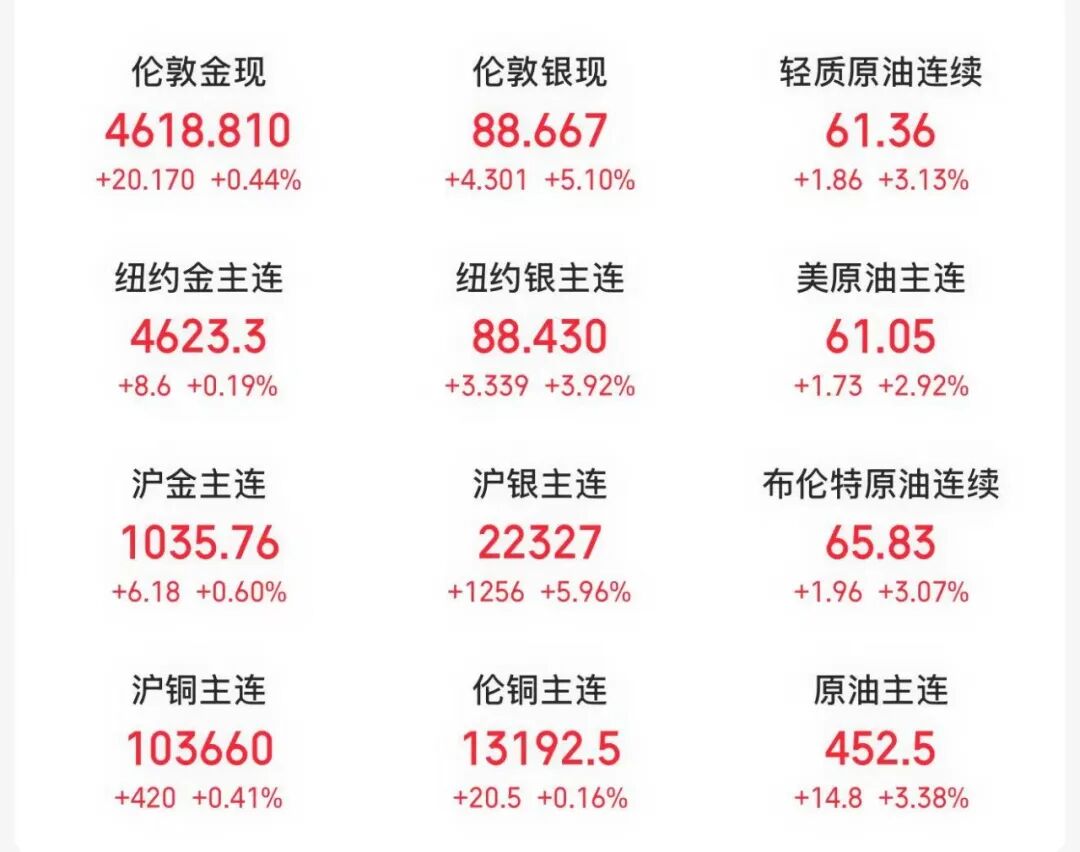
据CCTV国际时讯消息,美国总统特朗普昨日在其社交媒体"真实社交"上发文称,他已经"取消了与伊朗官员的所有会面"。 《纽约时报》援引美军官员的话报道称,美军在中东地区的指挥官希望"在发起任何潜在打击前,预留更多时间来巩固美军阵地,为伊朗可能发动的报复 性袭击做好准备"。 据悉,特朗普11日说,伊朗方面已与美国政府官员接触并提议进行谈判,"会议正在安排中"。 据央视新闻最新消息,美东时间1月13日,美国国务院通过"虚拟驻伊朗德黑兰使馆"发布全国性安全警告称,敦促美国公民立即离开伊朗,并建议在安全 可行的情况下经陆路前往土耳其或亚美尼亚,同时提醒不要依赖美国政府直接协助撤离。美国国务院12日曾发布紧急安全警示,要求美国公民立即离开伊 朗。 另据新华社消息,俄罗斯外交部发言人扎哈罗娃13日表示,俄方强烈谴责外部势力干涉伊朗内政,美国威胁对伊朗发动军事打击是"绝对不可接受的"。 银价、油价大涨 早上好,先来关注下国际局势。 13日晚,现货黄金、白银价格均刷新历史纪录,同时,WTI原油期货、布伦特原油期货价格也大幅走高。 | 伦敦金现 | 伦敦银现 | 轻质原油连续 | | --- | --- | --- | | 46 ...
注意 化工板块新年强势崛起!有哪些投资机会?
Qi Huo Ri Bao· 2026-01-14 00:15
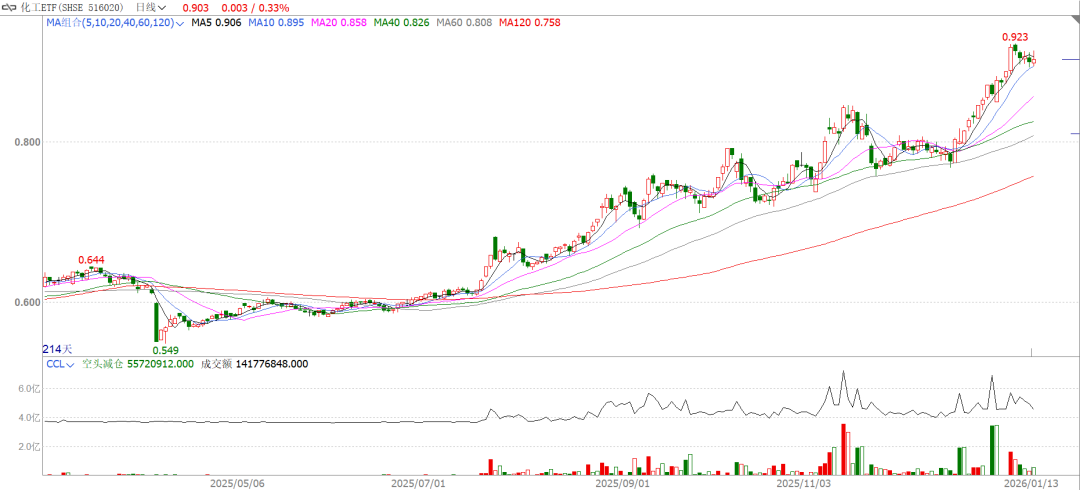
Core Viewpoint - The chemical sector has shown a strong resurgence at the beginning of the year, with a notable "stock market leading, futures and spot resonance" trend, indicating a recovery in industry sentiment [1]. Group 1: Market Performance - The core chemical ETF (516020) saw a gain of over 5% in the first week of the year, with leading products experiencing cumulative increases exceeding 10% and a single-day net inflow surpassing 200 million [5]. - The stock market's bullish sentiment has quickly transmitted to the commodity market, with chemical products rising and trading becoming active, particularly in the energy chain sector [5]. - The market is witnessing a clear leading pattern among top players in various sub-sectors, including bio-chemicals, new materials, and refining [5]. Group 2: Factors Influencing the Market - The current market trend is attributed to a fourfold resonance of policy, cost, supply, and demand, with the policy front providing a "strong tonic" for the sector [5]. - The Central Economic Work Conference has set a tone for stable growth, with ongoing "two new" policies and a focus on consumption, alongside plans to eliminate outdated production capacities [5]. - The geopolitical situation has raised oil prices, which is expected to support the profitability recovery of the chemical industry, with predictions of Brent crude oil prices stabilizing between $60 and $70 per barrel by 2026 [6]. Group 3: Demand and Supply Dynamics - Demand is expected to rebound significantly after the Spring Festival, supported by the "14th Five-Year Plan" focusing on expanding domestic demand, particularly in sectors like new energy, real estate, and automotive [6]. - The supply side is experiencing a noticeable contraction, with domestic chemical industry expansion nearing its end and overseas capacity exiting at an accelerated pace, leading to supply shortages in key areas like PX [6]. Group 4: Short-term and Mid-term Outlook - In the short term (1-3 months), the chemical sector is expected to have strong bottom support, with the resumption of work in February likely to enhance demand growth expectations [7]. - In the mid-term (3-6 months), the sector may experience increased differentiation, with performance largely dependent on demand resilience, supply disruptions, and oil price trends [7]. - Overall, the early-year rally in the chemical sector marks the beginning of industry recovery, but the structural and phase characteristics of the market are significant, necessitating close monitoring of macro policies, supply-demand changes, and oil price fluctuations [7].