美联储降息

Search documents
能化板块周度报告-20251031
Xin Ji Yuan Qi Huo· 2025-10-31 13:18
1. Report Industry Investment Rating No information provided in the content. 2. Core Views of the Report Polyester Sector - In the short - term, the supply - demand situation has no significant improvement, the rebound momentum of the polyester sector is limited, and the oil price affects the market fluctuation rhythm. It is necessary to pay attention to the OPEC+ meeting results [30]. - In the medium - to - long - term, the supply is expected to increase, the demand peak season is not significant, and the polyester sector is under overall pressure [30]. Methanol Sector - In the short - term, with the continuation of high supply, unresolved high port inventory, and weakened main demand support, methanol may continue to decline in a volatile manner [49]. - In the medium - to - long - term, the inflection point of port inventory is the core point of the market. If the medium - to - long - term signals are positive, methanol may rebound [49]. 3. Summary by Relevant Catalogs Polyester Sector Macro and Crude Oil Information - The Fed cut the federal funds rate target range by 25 basis points to 3.75% - 4.00% on October 30. The outlook for December's rate action is uncertain, and market risk appetite has weakened [5]. - China and the US reached a joint arrangement on economic and trade issues, which helps improve oil demand expectations [5]. - Russia's crude oil exports in October are expected to remain at about 2.33 million barrels per day, alleviating concerns about supply disruptions [5]. - As of the week ending October 24, US crude oil production increased, and commercial crude and refined product inventories decreased. OPEC+ may continue to increase production [6]. Futures and Spot Prices - WTI crude oil futures prices decreased by 2.40% week - on - week, while PX601, TA601, PF512, and PR601 futures prices increased [8]. - The spot prices of PX, PTA, and polyester products showed different changes, with PX and PTA prices rising [8]. Supply and Demand of Each Product - **PX**: Domestic PX capacity utilization and production increased this week. Next week, a 700,000 - tonne device of Dalian Fujia will restart, and supply is expected to continue to increase [15]. - **PTA**: Domestic PTA supply increased this week. Although some devices reduced production, new devices are about to be put into operation, and supply is expected to increase slightly next week [17]. - **Ethylene Glycol**: Domestic supply decreased this week, but is expected to increase next week. Port inventory increased slightly this week and may continue to accumulate next week [18]. - **Polyester End**: The average weekly polyester start - up rate increased slightly by 0.03 percentage points [19]. - **Polyester Inventory**: Short - fiber inventory increased slightly, while long - fiber inventory continued to decline [22]. - **Terminal**: As of October 31, the start - up rate of Jiangsu and Zhejiang looms increased, the order days of weaving enterprises increased, and the inventory of grey cloth decreased [28]. Methanol Sector Price Trends - The futures price of MA2601 decreased by 4.05% week - on - week, and the spot prices of methanol and its downstream products showed different changes [33]. Cost and Profit - The profits of coal - based and coke - oven gas - based methanol production continued to decline, while the profit of natural gas - based production was basically flat. The downstream gross profit continued to decline, and MTO remained in a deep loss state [39]. Supply - As of October 30, the domestic methanol start - up rate was 86.7%, and production increased. This week, the number of returning devices was greater than that of overhauled devices. Next week, some devices are planned to resume production, and there are no new overhaul plans [42]. Demand - Affected by profit squeeze, the overall demand start - up load continued to weaken. The MTO start - up load decreased slightly, and there is still an overhaul expectation in the next period. The traditional downstream was generally flat [45]. Inventory - As of October 29, port inventory decreased slightly, while inland inventory increased. Port inventory remained stable at a high level, and inland inventory accumulated but was still at a low level compared to previous years [48].
每日核心期货品种分析-20251031
Guan Tong Qi Huo· 2025-10-31 12:18
Report Summary 1. Report Industry Investment Rating No information provided. 2. Report's Core View - As of the close on October 31, most domestic futures main contracts declined, with polysilicon and precious metals rising, and lithium carbonate and some industrial products falling. The capital flow shows significant inflows into polysilicon and soybean meal, and large outflows from copper and gold futures. Different varieties have different market conditions due to factors such as supply - demand, cost, and macro - policies [6][7]. 3. Summary by Relevant Catalogs 3.1 Commodity Performance and Market Overview - As of October 31, domestic futures main contracts mostly fell. Polysilicon rose over 2%, and silver, soybean meal, and gold futures rose over 1%. Lithium carbonate fell over 3%, and many other commodities like 20 - rubber and methanol fell over 2%. In stock index futures, IF, IH, and IC declined, while IM rose slightly. In bond futures, 2 - year and 5 - year contracts fell slightly, and 10 - year and 30 - year contracts rose [6][7]. - In terms of capital flow, polysilicon 2601, soybean meal 2601, and PVC2601 had capital inflows, while copper 2512, gold 2512, and CSI 1000 2512 had large outflows [7]. 3.2 Market Analysis of Specific Varieties - **Copper**: The Fed's reduced probability of a December rate cut and a stronger dollar suppress copper prices. Although the supply of copper concentrates is tight due to overseas mine accidents, high copper prices have curbed downstream demand. In the long - term, copper prices remain strong due to tight supply - demand [9]. - **Lithium Carbonate**: The price of lithium carbonate decreased during the day. The cost of lithium ore supports the price, and both supply and demand are strong. However, today's market was affected by news, and attention should be paid to the authenticity of the news [11]. - **Crude Oil**: OPEC + plans to increase production, the demand peak season has ended, and the market is worried about demand. Although the US sanctions on Russian oil companies may limit exports, the overall supply is still in excess, and the price is expected to fluctuate [12][14]. - **Asphalt**: The supply is expected to decrease in November. The downstream demand has increased, and the inventory is at a low level. Considering the impact of crude oil price fluctuations, it is recommended to observe the asphalt futures price cautiously [15]. - **PP**: The downstream and enterprise operating rates are at a low level. The cost is affected by crude oil, and the demand is less than expected. PP is expected to fluctuate weakly [16][17]. - **Plastic**: The operating rate has increased slightly, and the downstream demand is in the peak season but less than expected. The cost is affected by crude oil, and plastic is expected to fluctuate weakly [18]. - **PVC**: The supply and downstream operating rates have increased. Exports are expected to weaken, and the inventory is still high. The real - estate market is still adjusting, and PVC is expected to fluctuate [20]. - **Coking Coal**: The supply is tight, and the inventory is being transferred downward. Although the downstream demand has decreased, the winter - storage demand will be released, and coking coal remains strong [21][22]. - **Urea**: The supply is high, and the cost is supported by coal prices. The demand has improved slightly, but the supply - demand pattern is still loose, and the price is expected to fluctuate narrowly [23].
钢材月报:预计11月份前中期震荡偏强,但趋势不改-20251031
Jian Xin Qi Huo· 2025-10-31 12:14
1. Report Industry Investment Rating No relevant content provided. 2. Core View of the Report - The steel industry is expected to experience a volatile and upward trend in the first and middle of November, but may decline again later in the month [5][10][15]. 3. Summary by Relevant Catalogs 3.1 Market Review - In October, the main contracts of rebar and hot-rolled coil futures (RB2601 and HC2601) first declined and then rebounded significantly. By the end of October, the RB2601 contract rose 34 yuan/ton or 1.11%, and the HC2601 contract rose 55 yuan/ton or 1.69% [20][21][23]. - The premium of hot-rolled coil over rebar first narrowed and then significantly widened in October, increasing from 181 yuan/ton at the end of September to 202 yuan/ton at the end of October [24][26][27]. 3.2 Analysis of Main Influencing Factors - In October, the social inventory of rebar turned to destocking after three consecutive months of accumulation, while the social inventory of hot-rolled coil reached a high and then declined. The seasonal demand for rebar recovered significantly, while its production remained at a low level since late February. The production of hot-rolled coil was still high, but its demand had a periodic trough. As a result, the price difference between hot-rolled coil and rebar first narrowed and then widened [28][29]. - Since the end of September, the blast furnace capacity utilization rate of 247 steel mills nationwide has significantly declined to a new low since mid-September. The average daily output of crude steel of large and medium-sized steel mills in the first and middle of October decreased compared with the same period in September but increased compared with late September. The apparent consumption of the five major steel products has generally strengthened to a new high since early May, except for a significant shrinkage in early October. The seasonal demand for steel continued to recover, leading to a significant destocking of rebar social inventory, but the social inventory of hot-rolled coil further increased due to high production and periodic low demand. It is expected that the steel demand in November may be high in the front and low in the back, and the steel price may be strong first and then weak [33][39][42]. - In the past four weeks, the production of rebar further declined, and the production of hot-rolled coil also turned to decline. The mill inventory of rebar turned to accumulation, while the mill inventory of hot-rolled coil continued to decline. This indicates that the spot market demand for rebar still needs to be improved, while the demand and supply of the hot-rolled coil market are relatively balanced. As a result, the premium of hot-rolled coil over rebar recovered to a relatively high level after narrowing in the first half of October [43][44]. - In October, the spot profits of blast furnace rebar and hot-rolled coil turned from profit to significant loss, the spot profit of electric furnace construction steel showed a slight expansion of the loss, and the disk profit of rebar showed a significant expansion of the loss. The main reason is that the spot prices of rebar and hot-rolled coil first declined and then rebounded, while the spot price of iron ore continued to rise, and the spot price of coke increased twice, leading to a significant decline in the spot profits of rebar and hot-rolled coil. In the futures market, the steel futures rebounded after reaching a low, the iron ore futures rose again after a correction, and the coke futures rose significantly, resulting in a continuous decline in the overall disk profit of steel [45][47][49]. - Compared with January - August, the demand of the steel downstream industries in January - September showed different performances. The demand for construction steel such as rebar, represented by real estate development investment, has decreased for seven consecutive months. The demand for construction steel such as rebar, represented by the new housing construction area, has shown a narrowing decline after a slight expansion. The demand for manufacturing machinery steel, represented by the output of metal cutting machine tools, has increased for four consecutive months. The demand for real estate-related machinery steel, represented by the output of excavators, has shown a narrowing increase after a significant expansion. The demand for hot-rolled coil, represented by automobile production, has increased from stable to expanding, and the demand for cold-rolled coil, represented by household appliance production, has declined. In November, the seasonal demand for construction steel may be high in the front and low in the back, and the demand for industrial plate steel is expected to be relatively stable, which will contribute to the rise and then fall of steel prices in November [50][54][62]. 3.3 Future Outlook - With the improvement of the low-temperature weather in most parts of the north, the terminal demand is expected to improve. Although the social inventory of steel is significantly higher than in previous years, the improvement in demand may reduce the inventory pressure. - In the raw material market, the shipments of iron ore from Australia and Brazil and the arrivals at Chinese ports have increased by 3% - 4% month-on-month in the past four weeks, and the ports have continued to accumulate inventory. However, due to the expected recovery of downstream steel profits, the price of iron ore has strengthened significantly. The production of coke by independent coking enterprises has significantly declined recently, and the coke inventory in ports and independent coking enterprises is generally low, leading to the third round of price increases for coke spot at the end of the month. The coal price has generally increased due to the previous low-temperature weather in the north and stricter coal mine safety production inspections. The coking coal port inventory is at a low level, and although coking coal imports have recovered, there is still a year-on-year decline of more than 6% from January to September, resulting in a significant jump in the spot price of coking coal. - Against the background of the easing of the geopolitical situation, the positive expectations brought by two major industry policies, combined with the relatively stable increase in the costs of coal, coke, and ore, have led to a significant rebound in black metal commodity futures. It is expected that the steel market will continue to show a volatile and upward trend after consolidation in the first and middle of November, but may decline again later in the month. Attention should be paid to the cooperation of the spot market and the positive cycle effect of the expected improvement in the steel market on the raw material market [63][64].
美联储“摸黑”决策,就业疲软与通胀阴影继续笼罩美国经济
2 1 Shi Ji Jing Ji Bao Dao· 2025-10-31 11:55
Group 1: Federal Reserve Actions and Market Reactions - The Federal Open Market Committee (FOMC) lowered interest rates by 25 basis points, but the financial market reacted tepidly, with major indices like the Dow Jones, S&P 500, and Nasdaq experiencing declines of 0.23%, 0.99%, and 1.57% respectively [1] - Following the rate cut, bond market yields rose across the board, indicating investor skepticism about the effectiveness of the rate cut in alleviating economic pressures [1] - The average FICO score for personal loans in the U.S. dropped by 2 points, marking the largest decline since 2009, while the 30-year mortgage rate increased to 6.33% [2] Group 2: Economic Challenges and Employment Market - The U.S. economy faces three main issues: a weak job market, persistent inflation pressures, and uncertainty in economic growth [2] - The job market is characterized by "slow firing slow hiring," with a decline in both labor supply and demand due to tightened immigration policies [3] - The Federal Reserve's independence is under scrutiny, as its ability to make high-quality decisions is crucial for maintaining the credibility of the U.S. dollar [3] Group 3: Inflation and Tariff Policies - Inflation remains a significant concern, with the Consumer Price Index showing an upward trend in inflation rates from May to September, peaking at 3.0% in September [5] - The impact of new tariff policies on prices is viewed as a one-time effect, with the Federal Reserve officials believing that inflation pressures will persist in the near term [5] - The ongoing negotiations regarding tariff policies create uncertainty, complicating the economic landscape for investors [6] Group 4: Market Sentiment and Investment Trends - Investor sentiment is negatively affected by the high valuations in the stock market driven by AI investments, with concerns that a potential bubble could lead to severe consequences if it bursts [6] - The shift in focus from interest rate cuts to economic fundamentals such as employment, inflation, and government debt indicates a complex economic environment that cannot be resolved solely through monetary policy [6] - The financial market is experiencing volatility as investors begin to secure profits, leading to potential adjustments in stock prices, particularly in the AI investment sector [6]
美联储内部吵翻了!鸽派想多降50,鹰派反对,鲍威尔:还不一定降
Sou Hu Cai Jing· 2025-10-31 11:46
Core Viewpoint - The Federal Reserve's recent decision to lower interest rates by 25 basis points and halt the balance sheet reduction reflects internal divisions and concerns about economic stability and inflation [1][12]. Group 1: Interest Rate Cut - The Federal Reserve has reduced the federal funds rate from 4.00%-4.25% to 3.75%-4.00%, marking the fifth rate cut since September 2024 and the second consecutive month of cuts [4][12]. - Lower borrowing costs for banks may lead to reduced interest rates for mortgages and corporate loans, potentially stimulating economic activity and increasing wages [4][5]. Group 2: Balance Sheet Reduction Halt - The Fed has decided to stop its balance sheet reduction, which began in 2022, where it allowed $6.6 trillion in assets to "naturally disappear" by not reinvesting in maturing securities [6][9]. - Starting December 1, the Fed will reinvest the principal from maturing mortgage-backed securities into short-term Treasury bonds, signaling a return of liquidity to the market [7][9]. Group 3: Market Reactions - Following the Fed's announcement, financial markets experienced volatility, with initial gains in U.S. stocks and gold prices, but later corrections occurred after Fed Chair Powell indicated uncertainty about future rate cuts [12][13]. - The Dow Jones index fell by 0.16%, while the Nasdaq index rose by 0.55%, driven by strong performance from tech stocks like Nvidia, which saw a nearly 3% increase [12][13]. Group 4: Internal Divisions - The Fed is experiencing notable internal divisions, with dovish members advocating for aggressive rate cuts to stimulate the economy, while hawkish members express concerns about potential inflation risks [15][16]. - The debate extends to the balance sheet strategy, with differing opinions on whether to continue reducing the asset size or maintain the current level to ensure market stability [16].



硅铁市场周报:成本高位利润亏损,库存中性供需偏弱-20251031
Rui Da Qi Huo· 2025-10-31 11:40
Report Industry Investment Rating - Not mentioned in the provided content Core Viewpoints of the Report - The market expectation has increased this week due to multiple factors including the completion of the autumn maintenance of the Datong - Qinhuangdao Railway, the release of the "15th Five - Year Plan" suggestions, relevant government notices, the Fed's interest rate cut, and the Sino - US leaders' meeting [7]. - The supply - demand of silicon ferroalloy is in a weak balance, with inventory at a neutral level. Lanthanum coke prices are stable, providing short - term cost support. However, the spot profit in Inner Mongolia and Ningxia is in a loss state [7]. - Technically, the weekly K - line of the silicon ferroalloy main contract is below the 60 - day moving average, showing a bearish trend on the weekly chart [7]. - It is expected that from November to December, the output of silicon ferroalloy will decline compared with the same period. The national policy of reducing crude steel production will continue, and the profit of coke is difficult to improve significantly. The alloy is likely to remain in a loss state. The silicon ferroalloy is expected to fluctuate in the range of 5400 - 5700 [7]. Summary According to the Directory 1. Weekly Key Points Summary - **Macro Aspect**: On October 25, the autumn maintenance of the Datong - Qinhuangdao Railway was completed. On the 28th, the "15th Five - Year Plan" suggestions were released, and on the 29th, relevant government notices were issued. The Fed cut interest rates by 25 basis points, and the probability of a December rate cut decreased. The US will cancel the 10% so - called "fentanyl tariff" on Chinese goods, and the 24% reciprocal tariff will be suspended for another year [7]. - **Supply - Demand and Profit**: Supply - demand is in a weak balance, inventory is at a neutral level. Lanthanum coke prices are stable, providing short - term cost support. The spot profit in Inner Mongolia is - 380 yuan/ton, and in Ningxia is - 360 yuan/ton [7]. - **Technical Aspect**: The weekly K - line of the silicon ferroalloy main contract is below the 60 - day moving average, showing a bearish trend on the weekly chart [7]. - **Strategy Suggestion**: Considering the market and winter equipment maintenance, the planned production of a Gansu enterprise in October is postponed to next year. It is expected that the output from November to December will decline compared with the same period. The national policy of reducing crude steel production will continue, and the silicon ferroalloy is expected to fluctuate in the range of 5400 - 5700 [7]. 2. Futures and Spot Market - **Futures Market**: As of October 31, the position of silicon ferroalloy futures contracts was 318,600 lots, a decrease of 41,000 lots compared with the previous period. The 5 - 1 contract monthly spread was 66, a decrease of 4 points compared with the previous period. The number of silicon ferroalloy warehouse receipts was 4,471, a decrease of 6,692 compared with the previous period. The price of silicon ferroalloy in Ningxia was 5,270 yuan/ton, an increase of 10 yuan/ton compared with the previous period [13][17]. - **Spot Market**: As of October 31, the basis of silicon ferroalloy was - 310 yuan/ton, an increase of 62 points compared with the previous period [25]. 3. Industrial Chain Situation - **Supply - Demand and Inventory**: The national average daily output of 136 independent silicon ferroalloy enterprises was 16,170 tons, a decrease of 125 tons compared with the previous week. The weekly demand for silicon ferroalloy in five major steel types was 20,275.3 tons, an increase of 1.70% compared with the previous week. The national silicon ferroalloy output (weekly supply) was 113,200 tons. The inventory of 60 independent silicon ferroalloy enterprises was 71,990 tons, an increase of 5,430 tons compared with the previous week [28][34]. - **Upstream Situation**: As of October 27, the electricity prices in Ningxia and Inner Mongolia for silicon manganese and silicon ferroalloy remained unchanged. As of October 30, the prices of lanthanum coke in Inner Mongolia and Shenmu remained unchanged. The spot production cost of silicon ferroalloy in Inner Mongolia was 5,682 yuan/ton, a 1.18% increase, and in Ningxia was 5,579 yuan/ton, a 1.20% increase. The spot profit in Ningxia was - 409 yuan/ton, unchanged [38][42]. - **Downstream Situation**: The average daily molten iron output of 247 steel mills was 2.3636 million tons, a decrease of 35,400 tons compared with the previous week. From January to September 2025, the cumulative export of silicon ferroalloy with a silicon content greater than 55% was 292,900 tons, a decrease of 22,900 tons compared with the same period last year, a 7.25% year - on - year decrease [46].

资讯日报:苹果对12月季度提供乐观业绩指引-20251031
Guoxin Securities Hongkong· 2025-10-31 08:20
Market Overview - Hong Kong's Hang Seng Index closed at 26,283, down 0.24% for the day but up 31.02% year-to-date[3] - The S&P 500 index closed at 6,822, down 0.99% for the day and up 15.99% year-to-date[3] - The Nasdaq index closed at 23,581, down 1.57% for the day and up 22.11% year-to-date[3] Sector Performance - Semiconductor stocks faced significant declines, with ZTE Corporation dropping over 11% and other major players like SMIC falling over 1%[9] - The coal sector continued its upward trend, with Yancoal Australia and Jinma Energy both rising over 5%[9] - The non-ferrous metals sector showed strong performance, with Ganfeng Lithium surging nearly 15% and China Aluminum rising over 10%[9] Company Highlights - Apple reported Q3 revenue of $102.47 billion, a year-on-year increase of 8%, with iPhone sales up 6.1%[12] - Meta Platforms saw a significant drop of 11.33% following its quarterly earnings report, raising concerns over increased capital expenditures in AI[9] - Amazon's Q3 revenue grew 13% to $180.2 billion, exceeding market expectations[14] Economic Indicators - The U.S. initial jobless claims fell to approximately 218,000, indicating a tightening labor market[12] - The Bank of Japan maintained its interest rate at around 0.5%, with no preset timetable for future rate hikes[12] - Fitch Ratings noted that the Chinese real estate market has not yet bottomed out, with ongoing pressure on prices and transaction volumes[9]

国投期货综合晨报-20251031
Guo Tou Qi Huo· 2025-10-31 07:32
Group 1: Energy and Metals Investment Ratings No specific investment ratings are provided in the report. Core Views - The crude oil market faces medium - term supply - demand pressure due to OPEC+ production increases, although short - term support exists from Sino - US trade war easing [2]. - Precious metals are in a high - level volatile platform, and investors should wait for a stable and low - volatility entry opportunity [3]. Summary by Category - **Crude Oil**: OPEC+ may increase the December production quota by 137,000 barrels per day on November 2nd, and the market has a downward risk despite short - term support [2]. - **Precious Metals**: The Fed cut interest rates as expected, but Powell's hawkish stance and policy divergence among officials, along with Sino - US tariff cuts, lead to market sentiment swings [3]. - **Copper**: After hitting a record high, the copper price has a short - term callback, but the long - term potential remains, and bulls can hold at 86,500 [4]. - **Aluminum**: The short - term trend is slightly bullish, but the upside space is limited due to general domestic inventory and consumption [5]. - **Zinc**: The LME zinc inventory is low, supporting the high - level operation of LME zinc, but there is short - term callback pressure. The export window of zinc ingots is open, and the market expects an increase in exports in November [8]. - **Nickel and Stainless Steel**: The nickel market is weak, with high - nickel pig iron prices falling and inventories changing [10]. - **Tin**: Tin prices are expected to be short - term bearish, and investors can hold short positions based on 285,000 [11]. - **Carbonate Lithium**: The futures price is strong, and the market is concerned about inventory reduction and policy increments, with a short - term bullish and volatile outlook [12]. - **Industrial Silicon**: The futures price has a slight increase, but the short - term upside space is limited due to potential supply and demand weakening [13]. - **Polysilicon**: The futures price is volatile, and the market needs to wait for the implementation of enterprise production cuts in November to improve the supply - demand pattern [14]. - **Iron Ore**: The global iron ore shipment is high, and the demand support for prices is weakening. The market is expected to be in high - level oscillation [16]. - **Coke and Coking Coal**: There is an expectation of a third price increase, but the coking profit is average, and the market should pay attention to the impact of Sino - US leader negotiations [17][18]. - **Manganese Silicon and Ferrosilicon**: The demand for ironmaking maintains a high level, but the iron production in Tangshan may decline. The supply and demand of both are relatively stable [19][20]. Group 2: Chemicals Core Views - Most chemical products face various supply - demand and cost - related challenges, with different price trends. Summary by Category - **Fuel Oil and Low - Sulfur Fuel Oil**: High - sulfur fuel oil's support may be unsustainable, and the medium - term supply is expected to be loose. Low - sulfur fuel oil is weak, but there may be supply contractions [22]. - **Asphalt**: The "peak season" demand is weaker than expected, and the long - term de - stocking slowdown limits the upside space [23]. - **Liquefied Petroleum Gas**: The fundamentals are improving, and the near - month contract is in a slightly bullish oscillation [24]. - **Urea**: The supply exceeds demand, but demand and cost provide some support, and the short - term price is low [25]. - **Methanol**: The near - term port inventory pressure is high, and the demand is weak, but it may gradually stop falling and stabilize [26]. - **Pure Benzene**: The import volume is high, and the market is under pressure. The focus is on port inventory accumulation [27]. - **Styrene**: The price may continue to be weak due to cost and inventory concerns [28]. - **Polypropylene, Plastic, and Propylene**: The cost support weakens, and the downstream demand decreases, leading to price declines or narrow - range adjustments [29]. - **PVC and Caustic Soda**: PVC has cost support but weak fundamentals, while caustic soda is in a state of inventory accumulation and price decline [30]. - **PX and PTA**: The supply of both is increasing, and the market is in a weak oscillation without more positive news [31]. - **Ethylene Glycol**: The supply and demand are expected to lead to inventory accumulation, and the price follows the market decline [32]. - **Short - Fiber and Bottle - Chip**: Short - fiber may face inventory accumulation in November, and bottle - chip demand is weakening [33]. - **Glass**: The market is in a weak situation, and the price decline space is limited at a low valuation [34]. - **Natural Rubber, Synthetic Rubber, etc.**: The strategy is bullish, and cross - variety arbitrage opportunities should be noted [35]. - **Soda Ash**: The supply is increasing, and the long - term is in a supply - surplus pattern, with a strategy of shorting at high prices [36]. Group 3: Agricultural Products Core Views - Sino - US trade relations affect the agricultural product market, and the supply - demand situation of each product varies. Summary by Category - **Soybeans and Soybean Meal**: Sino - US trade is easing, and the market should pay attention to policies on US soybean imports and price quotes [37]. - **Soybean Oil and Palm Oil**: In the short term, soybean meal is expected to be stronger than oil, and attention should be paid to palm oil supply and Sino - US soybean trade [38]. - **Rapeseed Meal and Rapeseed Oil**: The uncertainty of rapeseed - related trade is high, and rapeseed meal is expected to rebound in the short term while rapeseed oil is under pressure [39]. - **Corn**: The supply is abundant, and the price may continue to be weak at the bottom. Attention should be paid to Sino - US trade and corn imports [41]. - **Hogs**: The futures price is falling due to potential supply pressure, and there may be a second bottom - testing next year [42]. - **Eggs**: The price is supported by rising vegetable prices, and the futures price is rising. Wait for a short - selling opportunity in the fourth quarter [43]. - **Cotton**: The new cotton cost provides some support, but the market is in a weak peak season. The short - term rise is a rebound with limited space [44]. - **Sugar**: The international sugar supply is sufficient, and the domestic market focuses on the new - season sugar production estimate [45]. - **Apples**: High - quality apples have stable high prices, but low - quality apples may cause inventory pressure later [46]. - **Timber**: The low inventory supports the price, but the supply and demand situation is complex [47]. - **Pulp**: The port inventory is high, the supply is loose, and the demand is average. The operation is mainly short - term or wait - and - see [48]. Group 4: Financial Products Core Views - The A - share market may maintain a relatively strong pattern in the medium term, and the bond market is in a repair stage. Summary by Category - **Stock Index**: The A - share market fell with technology stocks adjusting. The Sino - US economic and trade negotiation results are positive for the medium - term market sentiment, and the focus should be on the technology growth sector [49]. - **Treasury Bonds**: The treasury bond futures are slightly bullish. The Japanese central bank may raise interest rates, and the domestic bond market is entering a repair stage [50].
10.31黄金暴走130美金 急坠穿4000调整
Sou Hu Cai Jing· 2025-10-31 07:24
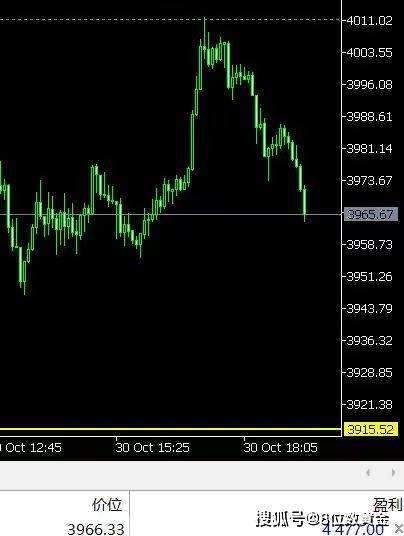
Market Overview - Gold experienced a significant drop but rebounded sharply, reaching a new high of $130 before adjusting below $4000 [1] - After a strong rally, gold surpassed the $4040 mark [4] - The market saw a rapid decline, dropping to $3990 for adjustment [5] - A quick flash drop occurred, indicating continued adjustments, particularly with resistance at $4030 [6] - The market continued to decline below $3990, with support seen at $3915 [7] - A rebound occurred at $3990, indicating potential for further upward movement [8] - The market is expected to face resistance at $4030 and $4075, with adjustments looking towards $4100 and $3900 [10] Influencing Factors - The Federal Reserve's decision to lower interest rates and end balance sheet reduction is expected to increase liquidity, benefiting gold [11] - The U.S.-China summit resulted in positive signals, including the suspension of a 10% tariff for one year, easing global trade tensions [11] - The upcoming U.S. PCE data is crucial as it reflects inflation levels and may influence future Fed rate decisions [12] - Discrepancies within the Federal Reserve regarding interest rate cuts may impact both the dollar and gold prices [13] Economic Context - Central banks in Japan and Europe are maintaining their current policies, while the Fed is cautious amid inflation risks [14] - Global central banks are beginning to slow down their easing measures, leading to heightened market volatility [15] - The market is entering a phase of high volatility, with rising prices contributing to increased instability [16] - Speculation about the potential for a bull market in 2025 raises questions about the sustainability of current trends [17]
黄金直线跳水,发生了什么?
Zheng Quan Shi Bao· 2025-10-31 06:58
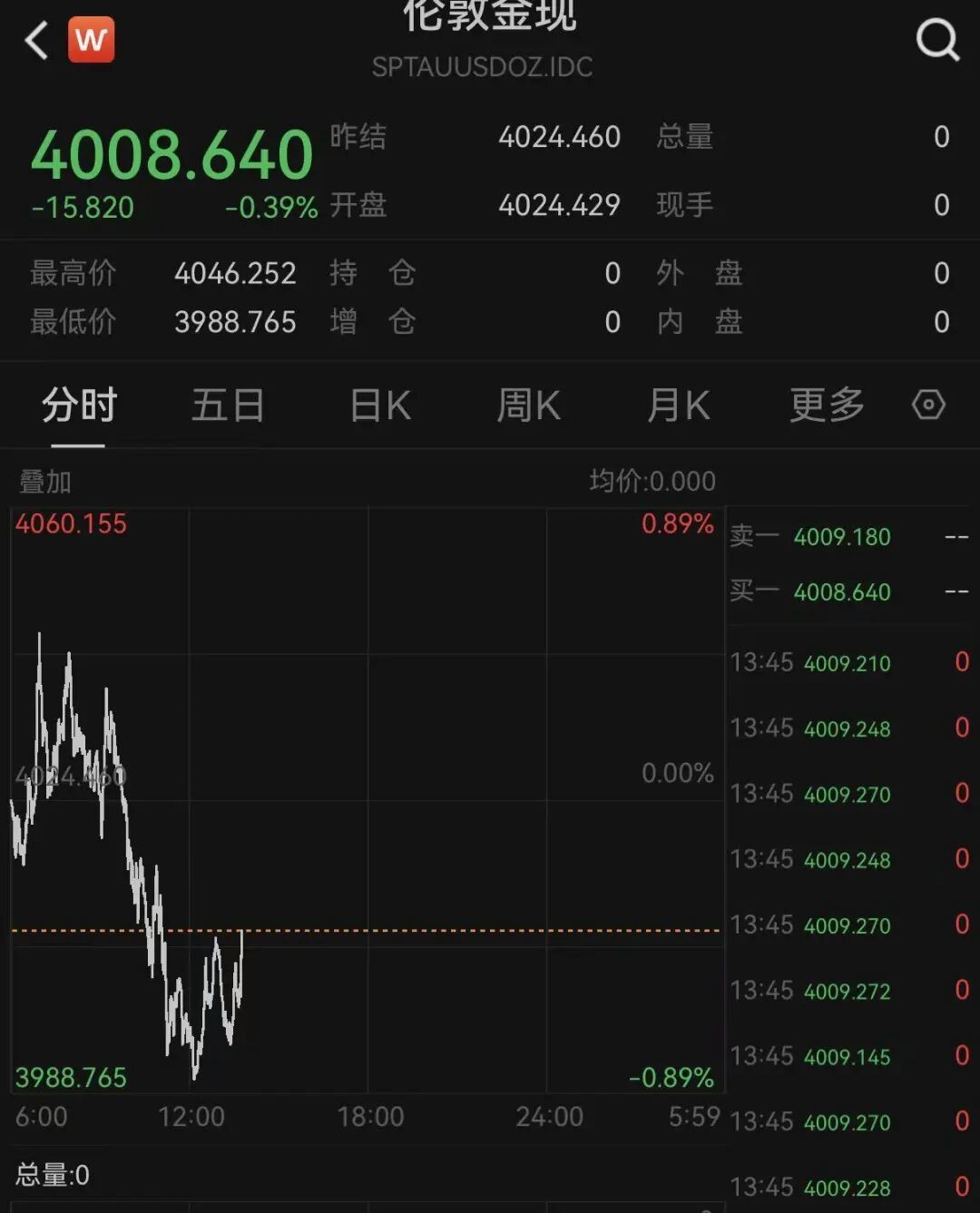
Core Viewpoint - The recent fluctuations in gold prices are attributed to uncertainties surrounding the Federal Reserve's interest rate decisions, particularly regarding a potential rate cut in December [2][4]. Group 1: Gold Market Dynamics - Spot gold prices experienced a significant drop, falling nearly 0.4% to around $3988 after initially rising to challenge the $4050 mark [1][2]. - The volatility in gold prices is linked to the Federal Reserve's mixed signals about future interest rate cuts, with Chairman Powell indicating that a December rate cut is not guaranteed [2][4]. Group 2: Federal Reserve's Interest Rate Outlook - Federal Reserve Governor Milan voted against a 25 basis point cut, advocating instead for a 50 basis point reduction, reflecting internal divisions within the Fed [3]. - Nomura Securities revised its expectations, now predicting that the Federal Reserve will maintain interest rates in December, contrary to previous forecasts of a rate cut [4]. - The ongoing U.S. government shutdown has exacerbated uncertainties, delaying the release of key economic data, which complicates the Fed's decision-making process [4].