中游制造

Search documents
华创张瑜:关税、美元与中国复苏验证
Xin Lang Cai Jing· 2026-02-27 23:44
炒股就看金麒麟分析师研报,权威,专业,及时,全面,助您挖掘潜力主题机会! 一瑜中的 ①【大势研判·张瑜】关税、美元与中国复苏验证 各位投资朋友新年好。新年第一期旬度,我主要聚焦四大议题:第一是大国关系,第二是全球关税,第 三是美元指数的强弱逻辑,第四是中国经济复苏的验证三部曲,以及我们对当前结构性景气的看法。 一、大国关系:上半年有望维持低水平稳定 当前,4月美方访华仍是中美日程中确定性较高的事项,相关安排正按正常节奏推进,双方表态均较为 积极,这意味着短期中美关系的下限有明确保障。从历史经验来看,大国元首会晤前后,双边关系可大 致维持3-6个月的低水平稳定状态,所以我们也认为,今年上半年中美关系大概率将维持低水平稳定的 格局。 二、全球关税:关税差收窄利好中国出口相对优势 近期美国对等关税被美国最高法院宣布违宪,相关政策大概率将取消;与此同时特朗普提出拟对全球普 遍加征15%关税,但美国国会、白宫发布的官方通告中仍标注为10%,后续具体方案仍待进一步确认。 整体来看,若按普提10%关税的情景测算,美国对华关税相对其对全球其他经济体的关税差值将有所收 窄,中国将明确受益。从2025年全年实际关税税率来看,美国 ...

宏观-关税-美元与中国复苏验证
2026-02-24 14:16
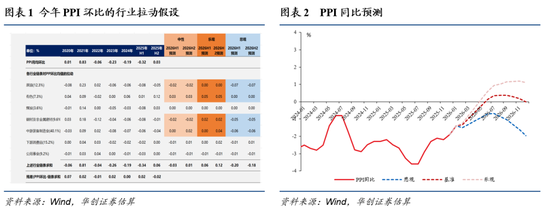
Summary of Key Points from Conference Call Industry or Company Involved - The discussion primarily revolves around the macroeconomic environment, U.S.-China relations, and the impact of tariff policies on various industries, particularly focusing on China's export sectors such as semiconductors and machinery. Core Insights and Arguments - **U.S.-China Relations Stability**: The market anticipates that U.S.-China relations will remain stable in the first half of 2026, supported by planned high-level meetings and positive attitudes from both sides [3] - **Tariff Policy Changes**: The U.S. Supreme Court's ruling on tariffs has led to a reduction in China's effective tariff rate from 29.8% to 22%, narrowing the gap with global rates by 6.5%. This is expected to benefit China's export sectors, especially semiconductors and machinery [4][22] - **Economic Recovery Indicators**: China's economic recovery is being validated through a three-step process, including positive CPI and PPI data, with expectations for PPI to turn positive by the end of Q2 2026 [7][8] - **Strong Consumer Demand**: During the Spring Festival, retail and catering sales increased by 8.6% year-on-year, indicating robust consumer demand. Port throughput also grew by 13.2%, reflecting active economic activity [8][9][10] - **Financial Data Insights**: January financial data showed strong corporate deposit growth, indicating potential for production investment and improved economic circulation. However, consumer loan growth remains weak [13][14] - **PPI Trends**: January 2026 PPI rose by 0.4%, marking the highest monthly increase since mid-2021. The forecast for PPI indicates a potential positive shift by mid-2026, driven by improved supply-demand dynamics in the manufacturing sector [16] Other Important but Possibly Overlooked Content - **AI and Economic Growth**: The development of AI is seen as a crucial factor in addressing U.S. debt issues and enhancing the long-term credibility of the dollar. AI-driven growth could lead to a scenario where inflation remains low, allowing for potential interest rate cuts [6] - **Old vs. New Economy Performance**: While traditional sectors like real estate and durable goods are underperforming, new economy sectors, particularly exports and midstream manufacturing, are thriving, contributing to overall economic growth [12] - **Global Monetary Policy Trends**: The global monetary policy landscape is characterized by continued easing, with expectations that the aggressive phase of monetary expansion will taper off by 2026 [18][19] - **Liquidity in Financial Markets**: Despite volatility, global liquidity remains healthy, with improvements in dollar liquidity and stable credit spreads, indicating a resilient financial environment [21] This summary encapsulates the key points discussed in the conference call, highlighting the macroeconomic context, industry-specific insights, and broader financial trends.
国泰海通|策略:2月金股策略:成长与价值共进
国泰海通证券研究· 2026-02-02 14:19
Core Viewpoint - The report emphasizes that the "transformation bull market" has significant potential, driven by the downward shift of risk-free returns, capital market reforms, and China's economic transition, suggesting that value stocks may see a crucial turning point after years of decline and valuation compression [1] Economic Transition and Profit Improvement - By Q4 2025, the economic transition is expected to accelerate, with the new economic growth center notably rising and expanding from AI to sectors like overseas markets, resource products, and service consumption [2] - The emerging technology industry is characterized by strong supply and demand, with an increasing number of internal segments experiencing price hikes [2] - Four structural features of profit growth in Q4 are identified: 1. Emerging economies remain the primary high-growth area for Q4 performance, with significant increases in electricity consumption in the tech service sector [2] 2. Profit share from mid-to-lower manufacturing is increasing, benefiting from improved inflation and smooth cost transmission from the new economy [2] 3. Large and mid-cap companies show greater profit growth elasticity, with improved production expectations and orders [2] 4. High-tech exports maintain high growth rates, particularly in semiconductors, automobiles, and power equipment, with emerging markets driving exports more than developed markets [2] Technology and Manufacturing Insights - The growth in technology and manufacturing is driven by increased AI penetration and accelerated overseas expansion [3] - Emerging technology sectors are experiencing a surge in demand due to rising AI-related business penetration across various industries [3] - In the new round of easing, industrial construction in emerging market countries is expected to accelerate, benefiting China's strong industrial production efficiency [3] Investment Recommendations - Focus on sectors with revised profit expectations and low crowding, such as non-bank financials, batteries, electronics, machinery, two-wheeled vehicles, and commercial vehicles [4] - Two dimensions are used to assess sectors where stock prices have not fully reflected current profit expectation revisions: 1. Profit-stock price matching: sectors like batteries, components, shipbuilding, motorcycles, and engineering machinery have seen profit expectations revised upward but stock performance lagging since November 2025 [4] 2. Profit-crowding matching: sectors like non-bank financials, machinery, and electronics have upward revisions in profit expectations but limited stock price increases [4]

申万宏源傅静涛:业绩改善确定性增强,中游制造或率先走出通缩
Xin Lang Cai Jing· 2026-01-16 08:31
Core Viewpoint - The current market shows skepticism regarding the macroeconomic improvement and the next phase of China's economic growth drivers, with a cautious attitude prevailing among most analysts [3][9]. Group 1: Market Trends - Two significant trends are identified: first, the improvement in listed companies' performance is more certain than the overall economic improvement; second, the core logic driving advanced manufacturing development is that the supply clearance in the midstream manufacturing sector has reached historical highs [3][9]. - By 2026, the midstream manufacturing sector is expected to emerge from the deflationary cycle, with marginal improvements in this area being more certain than in upstream cyclical industries [3][9]. Group 2: Investment Opportunities - Investment strategies focusing on midstream manufacturing are projected to have higher certainty compared to traditional cyclical products like steel and coal [3][9]. - A forecast suggests that the A-share market may experience two significant milestones in 2026: an effective upward marginal improvement in overall profitability and the potential for double-digit positive growth in the market [3][9][10]. - The past five years have not seen double-digit growth, but the improvement in the fundamental cycle is expected to significantly expand the range of investment opportunities, the number of targets, and the investment success rate for investors in 2026 [4][10].


从“三驾马车”看2026,华创证券张瑜:出口成核心引擎,中游制造景气可持续
Xin Lang Cai Jing· 2026-01-15 08:59
Core Viewpoint - The chief economist of Huachuang Securities, Zhang Yu, predicts that the nominal GDP growth rate for 2026 will be around 4.5%-4.6%, with the real GDP growth rate expected to be in the range of 4.8%-5.0% [7][10]. Group 1: Economic Growth Analysis - Exports are expected to become the core driving force of economic growth, with growth rates likely to exceed the overall economic growth, providing crucial support for overall price levels and industrial prosperity [3][9]. - Consumption is viewed as a stabilizing force in the economy, with growth rates not being strong but also not too low, serving as a central stabilizing power [4][10]. - The main challenge lies in fixed asset investment, which is deeply tied to real estate and traditional economies, with growth rates expected to fall into a low range of 0-1%, posing downward pressure on the economy [4][10]. Group 2: Investment Insights - The prosperity of the midstream manufacturing sector is expected to be sustainable, driven by exports, and is not a short-term phenomenon. This trend is likely to continue for two to three years, leading to new market value structures and investment opportunities [5][10]. - The consumption sector holds value for allocation. Although consumption growth is stabilizing and lacks high growth potential, when valuations are adjusted appropriately and cost-effectiveness is highlighted, its stable high dividend characteristics will make it a valuable allocation choice [5][10].
富国基金2026策略重磅:A股双重共振,十大主线精准锚定
Sou Hu Cai Jing· 2026-01-12 08:40
Group 1 - The core logic for A-shares in 2026 is the dual resonance of traditional industry profit recovery and improved risk appetite [3] - The manufacturing, technology services, and non-bank financial sectors are expected to lead the profit recovery, with the real estate chain's profit squeeze being a key variable for A-share profit growth [3] - The macro backdrop of synchronized interest rate cuts in China and the US will create diverse investment opportunities, with a focus on long-term asset reallocation [4] Group 2 - The AI sector is shifting from hardware to applications, with significant long-term potential in areas like AI coding and autonomous driving [6] - The pharmaceutical industry is focusing on the global competitiveness of domestic innovative drugs, particularly in oncology, with an emphasis on safety and efficacy in selection [6] - The consumer sector is anticipated to improve with inflation recovery and service consumption upgrades, with a focus on sectors like tourism and aviation [6] Group 3 - The cyclical sector is expected to benefit from policy support and external demand recovery, with industrial metals and precious metals showing strong price support [7] - The "14th Five-Year Plan" emphasizes the construction of a modern industrial system, which will accelerate investments in key sectors like high-end equipment and green energy [7] - The fixed income and "fixed income plus" sectors should focus on capturing trading opportunities through flexible duration management [7] Group 4 - A diversified asset allocation strategy is crucial for risk dispersion in the context of global monetary easing and changing asset correlations [8] - The investment logic for Hong Kong and overseas markets will evolve with liquidity trends and industry developments, particularly in AI applications [9] - The 2026 investment landscape is characterized by structural opportunities in traditional industry profit recovery and breakthroughs in emerging sectors [9]

价格阶段性修复,货币政策需保存宽松定力
金融街证券· 2026-01-09 15:26
Inflation Data - December CPI increased to 0.8% year-on-year, the highest in 34 months, up 0.1 percentage points from November[2] - Core CPI remained stable at 1.2% year-on-year, with a slight decrease in the non-gold core CPI to 0.83%[2] Producer Price Index (PPI) Insights - December PPI decreased by 1.9% year-on-year, but the decline narrowed by 0.3 percentage points from November, indicating a substantial improvement[3] - PPI increased by 0.2% month-on-month in December, above the seasonal average of -0.2%[3] - The PPI's tail effect is expected to drop sharply to -1.5 percentage points in January 2026, likely leading to a significant decline in year-on-year PPI data[3] Economic Outlook - The current price recovery is not firmly supported by effective demand, necessitating continued monetary easing and potential policy rate cuts to stimulate investment and consumption[4] - A genuine improvement in prices should stem from enhanced household income expectations and growth in terminal demand, rather than solely relying on low base effects from the previous year[3] Industry Analysis - Downstream industries may face dual pressures from rising raw material costs and stagnant factory prices, risking profit margin erosion, particularly in sectors lacking brand strength[3] - The recovery in PPI for downstream sectors is lagging compared to upstream sectors, indicating a potential risk of downward revisions in profit expectations for Q4[3]
布局2026年 科技成长仍是主角?公募最新投资策略来了
天天基金网· 2026-01-05 08:41
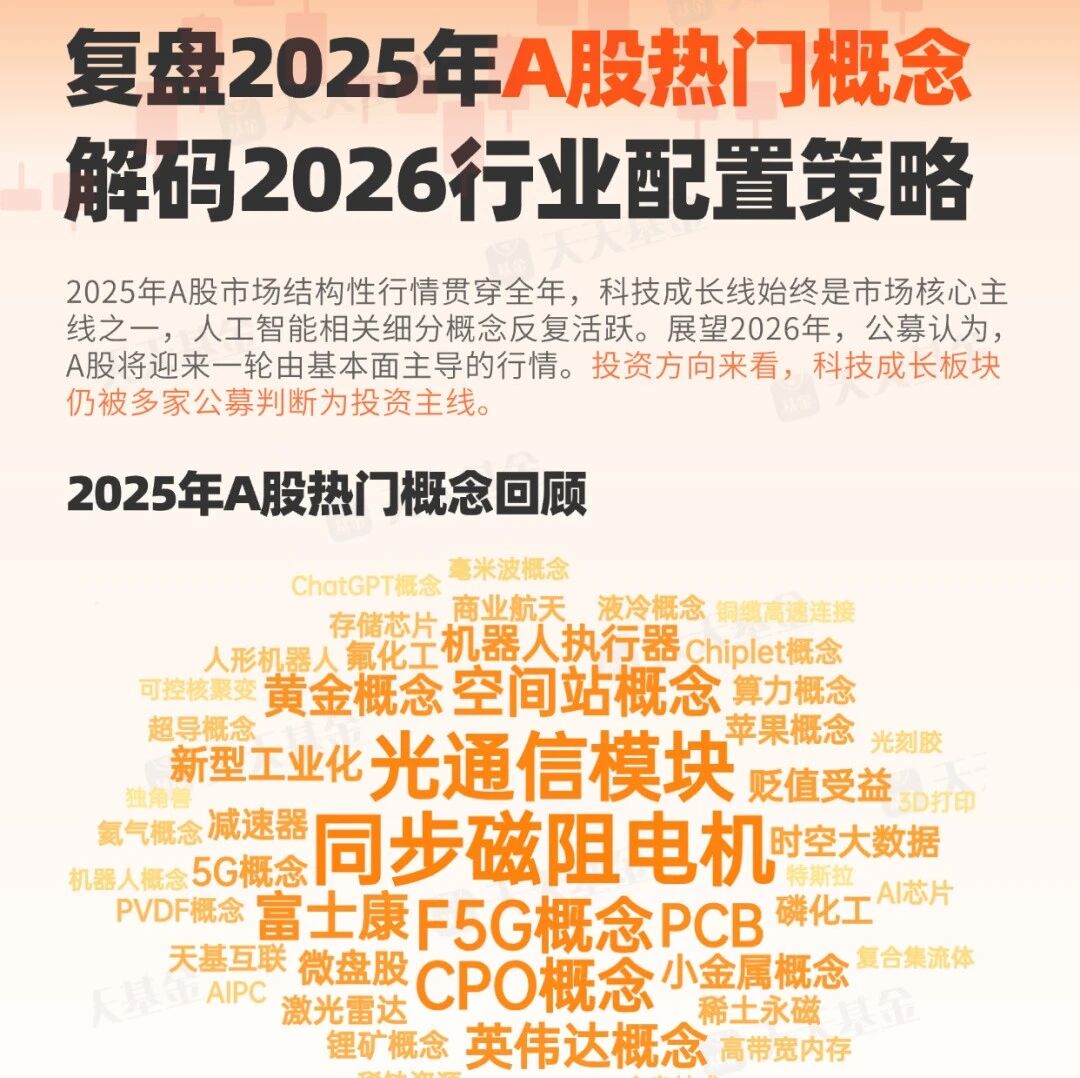
Core Viewpoint - The A-share market in 2025 experienced a structural trend with technology growth as a core theme, particularly in artificial intelligence-related sectors. Looking ahead to 2026, public funds anticipate a market driven by fundamentals, with technology growth remaining a key investment focus [1][8]. Summary by Sections 2025 A-share Market Overview - The A-share market in 2025 was characterized by a clear rotation of concept sectors, with major themes alternating and a rapid iteration of hotspots. Over 90% of concept indices saw an increase, with the synchronous reluctance motor achieving the highest growth at 165.05%, followed by optical communication modules at 156.02% [11]. 2026 Investment Outlook - Public funds predict a fundamental-driven market in 2026, with technology growth sectors still viewed as the main investment line. HSBC Jintrust Fund suggests a potential market rebalancing, shifting from TMT to lower-positioned industries with profit recovery potential. Investors focusing on safety margins should consider midstream manufacturing, consumption, and cyclical sectors [9][11]. Sector-Specific Insights - CITIC Prudential Fund indicates that a solid growth style may persist throughout the year, but broad market rallies may end. Companies with genuine technological barriers and commercialization capabilities in AI applications, domestic substitution, and overseas expansion are expected to attract market attention due to their high growth potential [12]. - Zhongjia Fund emphasizes that technology, particularly AI, remains a focus for aggressive sectors in 2026, combining short-term performance with long-term narratives. Other sectors of interest include event-driven stocks and stable, defensive attributes in Hong Kong dividends, finance, agriculture, and precious metals [12].
方正证券:港股市场将迎风险偏好修复 建议关注高景气新兴产业补涨机会
Zhi Tong Cai Jing· 2026-01-03 12:58
A-share Market Insights - The market is expected to transition from "consolidation" to "spring rally" as the year-end approaches, with high-quality A-share assets offering attractive value globally [1][2] - Key investment directions include: 1) long-term opportunities in technology growth assets, 2) cyclical sectors with strong pricing power driven by supply-demand imbalances, and 3) blue-chip assets favored by long-term institutional investors [2] Hong Kong Market Insights - The influx of southbound capital is accelerating, providing solid financial support for the Hong Kong market [2] - The easing of US-China trade tensions is likely to boost market risk appetite, while the anticipated December interest rate cut and balance sheet expansion by the Federal Reserve will enhance global liquidity, benefiting Hong Kong stocks [2] US Market Insights - Despite stable earnings projections for US stocks in 2025, valuation and market concentration have returned to historical highs, indicating potential for increased volatility [2] - Earnings growth in 2026 is expected to continue, driven by sustained AI demand, reduced tariff risks, and accommodative monetary and fiscal policies [2] - Investment strategies may focus on two main themes: 1) ongoing narratives in technology stocks, particularly in AI, and 2) recovery opportunities in cyclical sectors, especially in midstream manufacturing and essential consumer goods [2] Domestic Bond Market Insights - The domestic bond market is entering a phase characterized by "weak economic recovery, stable yet easing policies, and central bank caution against excessive moves" [3] - The central bank's commitment to maintaining stable interest rates will limit the downward movement of long-term rates, leading to a range-bound market [3] - Investors are advised to shift focus from capital gains to coupon income and liquidity management, while closely monitoring potential signals from the central bank regarding long-term yield guidance [3] Commodity Market Insights - The ongoing anti-involution policies warrant attention to the actual implementation of capacity reduction measures [4] - Oil prices are under short-term pressure due to geopolitical tensions easing and OPEC+ shifting towards supply expansion [4] - Industrial metals are expected to see demand recovery driven by improved global economic growth forecasts, with supply-side disruptions likely to reshape the supply-demand landscape [4] - Gold's monetary attributes may continue to be favorable amid ongoing government leverage, particularly in the US, where long-term deficit rates are challenging to reduce [4]

创金合信基金首席经济学家魏凤春展望今年A股市场 内需消费板块或将“结构性崛起”
Shen Zhen Shang Bao· 2026-01-01 21:49
Core Viewpoint - In 2026, the A-share market is expected to continue its upward trend, shifting from "expectation overdraft" to "profit realization," with performance certainty becoming the core basis for valuation [3][4]. Group 1: Market Performance and Trends - In 2025, the A-share market showed a volatile upward trend, with the Shanghai Composite Index rising nearly 20% and reaching 4000 points at one point; technology growth stocks led the rally, with the ChiNext Index surging by 50% [3][4]. - The structural differentiation in the market is attributed to the evolution of asset pricing logic, focusing on technology growth sectors, particularly driven by new productive forces [4][5]. Group 2: Investment Opportunities - Investment opportunities are identified in the new productive forces sector (electronics, high-end equipment) and midstream manufacturing and upstream resource products [4][5]. - The consumer sector is expected to experience a "structural rise" rather than a full recovery, with new consumption trends becoming the main line of growth, while traditional consumption may see only a rebound from oversold conditions [5][6]. Group 3: Policy and Economic Factors - Policy measures aimed at promoting consumption are expected to resonate with changes in consumer behavior, benefiting virtual and emotional consumption sectors, such as AI-enabled consumption scenarios and digital cultural products [6]. - The share of service consumption in total consumption is projected to continue increasing, with emerging service sectors like health care and cultural tourism benefiting from supply optimization and scenario relaxation [6]. Group 4: Asset Allocation Strategies - For asset allocation in 2026, a strategy focusing on "offensive through profits, defensive through liquidity, and structural differentiation" is recommended [6]. - In the stock market, priority should be given to the new productive forces sector and cyclical products benefiting from PPI recovery, while maintaining low-volatility dividend stocks as a base [6]. - In the bond market, a "low volatility + narrow fluctuation" strategy is advised, emphasizing interest income and liquidity balance, with a focus on high-rated credit bonds [6][7].