Qi Huo Ri Bao

Search documents
铜价 回调空间有限
Qi Huo Ri Bao· 2026-01-16 02:29
Group 1 - The overall trend of copper prices is strong, with the main contract on the Shanghai Futures Exchange breaking through 105,500 yuan/ton [1] - The relationship between supply and demand ultimately determines commodity prices, with copper market inventory changes reflecting the balance between consumption and replenishment [1] - The marginal signals from supply and demand are more easily captured by the market when macroeconomic conditions support copper prices, leading to increased price elasticity [1] Group 2 - Historical data shows a stable correlation between LME copper inventory and price trends, with inventory changes providing significant guidance for assessing global supply and demand balance [2] - During periods of inventory accumulation, prices tend to be under pressure, while during inventory depletion, prices usually receive support [2] - In specific phases, macroeconomic factors may have a more dominant impact on prices than inventory levels, as seen during the European debt crisis [2] Group 3 - The structure of warehouse receipts, particularly the proportion of canceled warehouse receipts, is a crucial indicator for assessing inventory trends [3] - A decrease in the proportion of canceled warehouse receipts typically indicates a slowdown in inventory depletion, with historical patterns suggesting a higher probability of inventory turning points when this ratio falls to around 15% or lower [3] - Current copper price trends show similarities to early 2006, with increasing U.S. copper inventory and tighter inventory in non-U.S. regions indicating regional disparities [3] Group 4 - If low inventory levels persist and macroeconomic factors continue to provide support, copper prices have a solid basis for upward movement [4] - The negative correlation between copper inventory and prices remains stable, with current macroeconomic conditions being generally positive and market risk appetite recovering [4] - Attention should be paid to potential disruptions in prices due to changes in the macroeconomic environment, weakening demand, and fluctuations in inventory structure [4]
窗沿雨幕与期市潮声
Qi Huo Ri Bao· 2026-01-16 02:17
Core Viewpoint - The news highlights the impact of geopolitical conflicts, specifically the airstrikes in Venezuela, on the oil futures market, emphasizing the volatility and risks associated with such events [1][2]. Group 1: Market Impact - Venezuela has the largest proven oil reserves in the world, and while its export volume is low, the airstrike news is expected to influence market dynamics significantly [1]. - Geopolitical conflict news often serves as a catalyst for market fluctuations, particularly in the futures market where every moment can conceal substantial risks [1]. Group 2: Industry Response - The urgency of the situation prompted immediate outreach to analysts and traders for their insights and predictions, reflecting the industry's 24/7 nature and the constant readiness to respond to market changes [2]. - The process of gathering opinions and organizing information is crucial for understanding the market's direction amidst geopolitical tensions and capital dynamics [2]. Group 3: Professional Commitment - The article underscores the commitment of futures market reporters to provide valuable insights to investors, emphasizing the importance of responsibility and insight in navigating capital storms [3]. - The experience gained over a decade in the futures industry reinforces the dedication to illuminating the path for the industry amidst uncertainties [3].
“期货式”生活应变指南
Qi Huo Ri Bao· 2026-01-16 02:11
Group 1 - The futures market is characterized by constant fluctuations influenced by geopolitical changes, policy adjustments, and unexpected events, requiring traders to adapt their strategies flexibly [1] - Market volatility creates uncertainty but also presents hidden opportunities, necessitating a proactive approach to data analysis and strategy development [1] - Professionals in the industry must maintain a clear mind and sharp insight under pressure, continuously monitoring global news and market changes to capitalize on fleeting opportunities [1] Group 2 - The ability to remain calm and adjust strategies in response to unexpected events is a valuable skill developed in the futures market, which can also enhance personal life experiences [2][3]
期货日报:白银市场剧烈波动,如何操作?
Qi Huo Ri Bao· 2026-01-16 01:01
白银价格为何出现剧烈波动?南华期货贵金属新能源研究组负责人夏莹莹认为,主要是受一份美国232 调查公告影响。此前,美国总统特朗普推迟对关键矿物进口征收新的关税,但不排除这种可能性,加剧 了全球白银库存短缺。1月15日公布的一份由特朗普总统签署的《调整美国加工关键矿物及其衍生产品 的进口公告》则显示,美国商务部完成数月调查后,认定加工关键矿物及其衍生品进口威胁国家安全, 但特朗普选择通过谈判达成协议而非立即征税,这引发白银价格跳水。从公告内容来看,特朗普认为有 必要且适当与贸易伙伴进行谈判,调整关键矿物及其衍生品的进口量,以确保此类进口不会对美国国家 安全构成威胁;根据谈判结果,特朗普未来可能会考虑其他补救措施,包括对特定类型的关键矿物设定 最低进口价格等。 "周四白银价格剧烈波动是宏观政策和市场博弈共同作用的结果。一方面,当前美国暂不对关键矿产清 单内商品征税,白银属于清单内商品,市场预期这可能导致美国货源流出,构成一定利空。另一方面, 白银价格屡创历史新高,市场同时存在追涨需求和获利离场需求,因而在消息和市场情绪影响下,市场 波动进一步放大,表现出短线大幅下跌后的反复震荡博弈。"金瑞期货贵金属研究员吴梓杰说 ...
中州期货:铁矿石面临回落压力
Qi Huo Ri Bao· 2026-01-16 00:34
Group 1 - The current winter season has led to a significant decline in construction activities in the real estate and infrastructure sectors, particularly in northern regions due to low temperatures and frequent rain and snow, resulting in a traditional off-peak season for construction steel consumption [1] - Market focus is on the winter storage process, with some steel mills in Northeast and North China implementing winter storage policies, although traders generally have a pessimistic outlook on future consumption, leading to low enthusiasm for winter storage [1] - As of January 9, 247 steel mills reported a total pig iron output of 2.295 million tons, marking a three-week consecutive increase, but overall profits for steel mills remain low, particularly for hot-rolled coils, which are in a loss-making state, limiting the potential for increased pig iron output [1] Group 2 - As of January 9, 2026, the total iron ore inventory at 47 national ports reached 170.44 million tons, the highest seasonal level in recent years, while global major mining companies are steadily releasing production capacity [2] - BHP's iron ore production in Western Australia reached a record 257 million tons in the 2025 fiscal year, with production guidance for the 2026 fiscal year set between 251 million and 262 million tons, maintaining levels similar to the previous year [2] - Vale's S11D project expansion is progressing steadily, with an expected additional capacity of 20 million tons, aiming for full production in the second half of 2026, and a target of 335 million to 345 million tons for 2026 iron ore production, an increase of approximately 5 million tons from 2025 [2] Group 3 - Rio Tinto's West Pilbara iron ore project is designed to compensate for resource depletion in the Pilbara region, with a planned annual capacity of 25 million tons, expected to be fully operational by June 2025, and production is anticipated to grow in 2026 compared to 2025 [3] - The Simandou iron ore project in Guinea, the largest undeveloped high-grade iron ore resource globally, is set to ship its first batch of 200,000 tons by December 2025, with a target production of 5 to 10 million tons in 2026 [3] - Non-mainstream iron ore projects are also contributing to production increases, with the Onslow iron ore project expected to achieve stable production in early 2026, projecting a year-on-year increase of approximately 7 million tons [3] Group 4 - The steel market is currently in a traditional off-peak season, with weak downstream consumption expectations and low enthusiasm for winter storage among traders, which will suppress the upward trend of steel prices [4] - Low profit margins for steel mills are limiting the potential for increased pig iron output, leading to weak growth in iron ore consumption [4] - Port inventories are at historically high levels, and the total supply from the four major mining companies and non-mainstream miners is expected to increase year-on-year, leading to a more relaxed supply-demand balance in the iron ore market [4]
利多来袭 美豆油期价飙升!油脂板块表现分化
Qi Huo Ri Bao· 2026-01-16 00:20
Group 1: Market Overview - The oilseed market received positive news as the Trump administration plans to finalize the 2026 biofuel blending quotas by early March, maintaining the initial proposal while dropping penalties on renewable fuel imports [1] - The U.S. Environmental Protection Agency indicated an increase in biomass diesel targets made from soybean oil and other crops, which could significantly boost biomass diesel production if adopted [1] - Soybean oil futures surged by 3.81%, while domestic futures for rapeseed oil rose by 2.57%, and palm oil and soybean oil futures saw slight increases [1] Group 2: Palm Oil Market Dynamics - The palm oil market is shifting focus, with Indonesia experiencing a production decline due to the rainy season and strong export performance [2] - Indonesia is considering raising palm oil export taxes to support its B50 plan, which could elevate global price levels and enhance the competitiveness of Malaysian palm oil [2] - Strong export data, particularly a nearly 50% year-on-year increase in exports to India, has shifted market attention from static high inventories to tightening supply-demand expectations [2] Group 3: Rapeseed Oil Market Challenges - The rapeseed oil market is primarily driven by trade policy expectations, with short-term price support from delayed arrivals and low inventories [3] - However, long-term supply pressures are anticipated due to improved trade relations following the Canadian Prime Minister's visit to China, which may lead to policy adjustments [3] - Market participants are awaiting outcomes from high-level meetings between China and Canada, as any news regarding tariffs or trade policies could cause significant market fluctuations [3] Group 4: Soybean Oil Market Insights - Domestic demand for small packaged oil is strong ahead of the Spring Festival, with a forecasted decrease in soybean arrivals in Q1, supporting soybean oil prices [4] - However, favorable weather in Brazil is raising expectations for a bumper crop, alongside domestic policy-driven stock releases, which may limit price increases [4] - The domestic soybean oil inventory has dropped to a near five-month low, creating a solid price floor amid consumption peak expectations [4] Group 5: Future Market Outlook - The potential implementation of increased export taxes by Indonesia will be crucial in determining the sustainability of the palm oil price rebound, impacting global demand distribution [4] - The soybean oil market is expected to maintain a stable fundamental outlook in Q1 due to ongoing holiday consumption support, with limited changes anticipated [4] - The market is entering a phase of expectation validation, with a focus on the speed of inventory reduction in palm oil and a range-bound trading pattern for soybean oil until South American production is fully realized [5]
特朗普 突变!“暂缓决定是否对伊朗发动军事打击” 美军基地警戒级别降低!油价大跌
Qi Huo Ri Bao· 2026-01-16 00:20
Group 1: Oil Market Reaction - On January 15, international oil prices experienced a significant drop, with WTI crude oil futures falling over 5% and Brent crude oil futures declining nearly 5% [1][3] - The decline in oil prices is attributed to a shift in Trump's stance regarding military action against Iran, leading to increased uncertainty in the market [3] Group 2: Silver Market Volatility - On January 15, the price of London silver dropped sharply from $93 per ounce to $86.5 per ounce, with a peak decline of 7%, before recovering by the end of the trading session [4] - The volatility in silver prices is linked to a U.S. announcement regarding the delay of new tariffs on critical mineral imports, which has heightened market speculation and contributed to price fluctuations [9][10] - The silver market has been in a state of supply-demand imbalance for five consecutive years, with expectations of continued supply shortages in the current year [10] Group 3: Gold ETF Trends - The World Gold Council reported that global gold ETFs saw inflows of $89 billion in 2025, with total assets under management reaching $559 billion, marking record highs [7] - In December 2025, gold ETFs experienced inflows of approximately $10 billion, contributing to a total holding of 4,025 tons, also a historical peak [7]

深夜 锡价跳水!
Qi Huo Ri Bao· 2026-01-16 00:20
Core Viewpoint - The recent significant drop in tin futures prices on both domestic and international markets is attributed to regulatory changes aimed at stabilizing market operations and managing speculative trading [2][4]. Group 1: Market Dynamics - The main contract for Shanghai tin futures experienced a decline of over 5%, closing down 3.27%, while London tin prices fell by over 4% [2]. - The Shanghai Futures Exchange announced adjustments to the trading margin, price fluctuation limits, and trading quotas for tin futures, effective January 15, 2026, to promote rational market participation [2][4]. Group 2: Supply and Demand Factors - Tin prices had recently surged, reaching historical highs of 440,000 yuan per ton, driven by supply constraints from Myanmar and Indonesia, as well as regional conflicts affecting production in Africa [3]. - Domestic inventory levels have been reduced, with recent increases in futures inventory, while optimistic long-term demand expectations for electronic products and solder materials are noted [3]. Group 3: Analyst Insights - Analysts suggest that the current price increase may have overshot long-term expectations, with a potential shift in supply dynamics expected by mid-2026 [3]. - The adjustments in trading regulations are seen as a measure to prevent excessive speculation and ensure orderly market operations [4].
特朗普,突变!“暂缓决定是否对伊朗发动军事打击”,美军基地警戒级别降低!油价大跌
Qi Huo Ri Bao· 2026-01-15 23:57
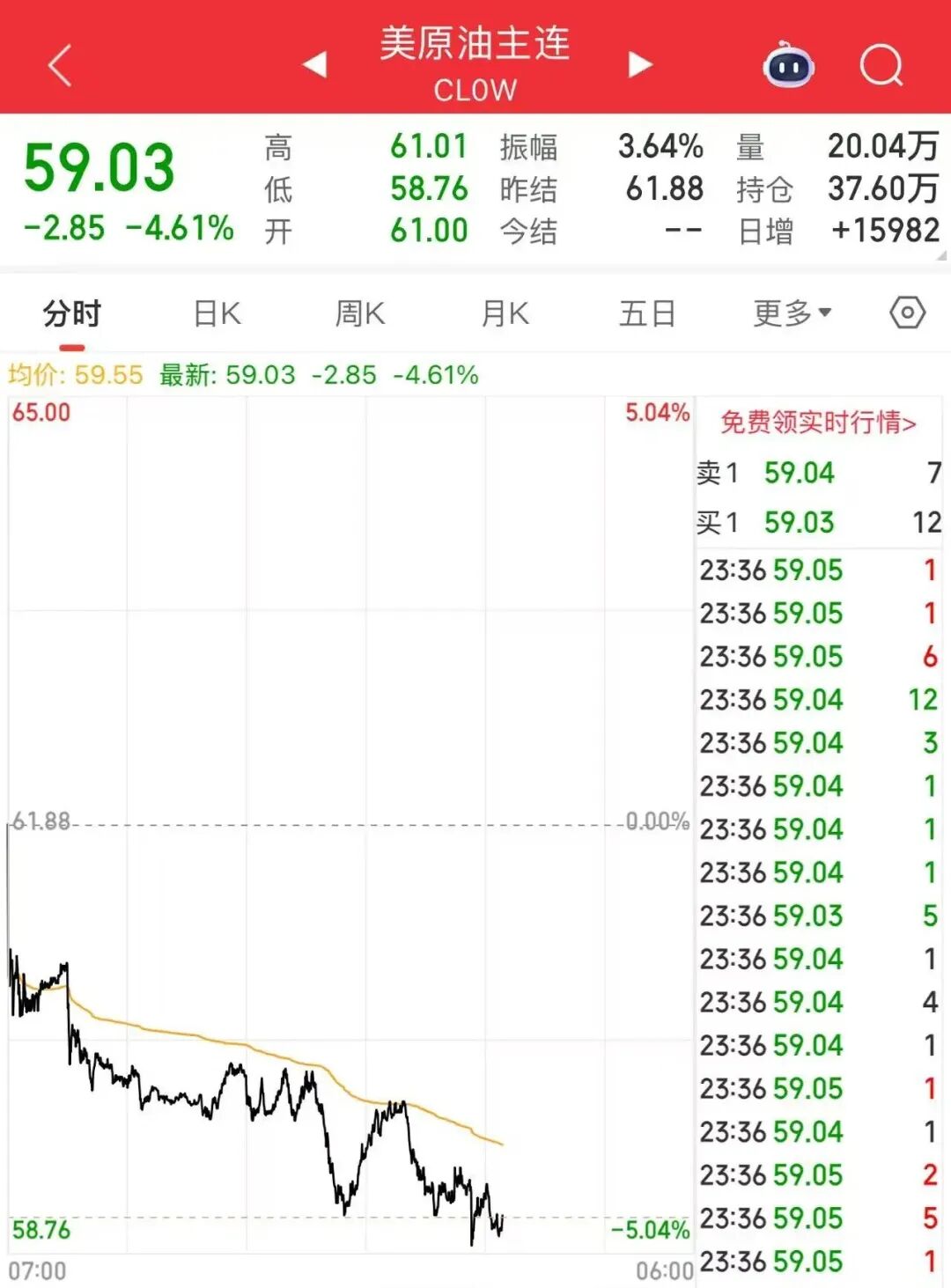
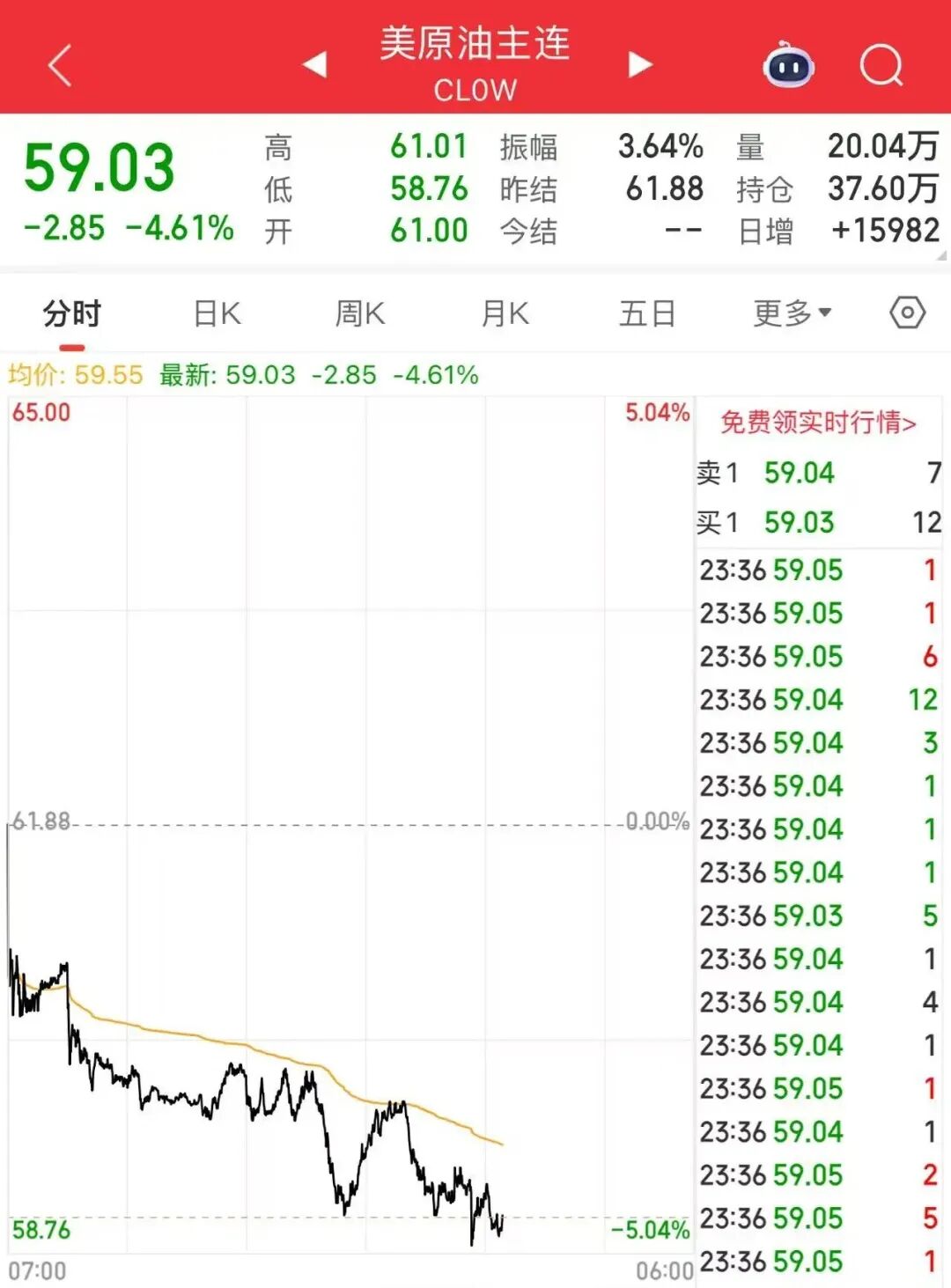
Group 1: Oil Market - On the evening of the 15th, international oil prices plummeted, with WTI crude oil futures dropping over 5% and Brent crude oil futures falling nearly 5% [1] - The WTI crude oil main contract opened at $61.00, reached a high of $61.01, and closed at $59.03, marking a decrease of $2.85 or 4.61% [2] Group 2: Silver Market - On January 15, silver prices experienced significant volatility, with London silver spot prices dropping from $93 per ounce to $86.5 per ounce, a decline of up to 7% before recovering [4] - The fluctuations in silver prices were influenced by a U.S. announcement regarding key mineral imports, which led to market panic selling, although the market is expected to stabilize as it returns to fundamentals [7][8] - The silver market is currently characterized by a supply-demand imbalance, with a continuous supply shortage expected to persist, particularly driven by demand from sectors like photovoltaics and AI [8][9] Group 3: Gold Market - The World Gold Council reported that global gold ETFs saw inflows of $89 billion in 2025, with total assets under management reaching $559 billion, both figures setting historical records [6] - The gold market is expected to experience steady growth, driven by macroeconomic uncertainties, with prices likely to exhibit a pattern of high volatility and gradual upward movement [9]
利多来袭,美豆油期价飙升!油脂板块表现分化
Qi Huo Ri Bao· 2026-01-15 23:50
Group 1 - The U.S. government plans to finalize the 2026 biofuel blending quotas by early March, maintaining the initial proposal while dropping penalties on renewable fuel imports, which could lead to a significant increase in biomass diesel production [1] - Soybean oil futures surged by 3.81% following the news, while domestic vegetable oil futures also saw gains, with palm oil and soybean oil futures rising slightly [1] - The palm oil market is currently in a state of "bad news exhausted, new drivers arriving," with a focus on the potential impact of Indonesia's export tax increase on palm oil, which could enhance its competitiveness globally [2] Group 2 - Indonesia's rainy season is expected to reduce palm oil production in January and February, while strong export performance is noted, particularly with a nearly 50% year-on-year increase in exports to India [2] - The palm oil price rebound faces challenges due to higher-than-expected production in December, leading to inventory accumulation, which creates price pressure [2] - The canola oil market is primarily driven by trade policy expectations, with short-term price support from delayed imports and low inventory, but long-term supply pressures are anticipated due to improved trade relations with Canada [3] Group 3 - Domestic demand for soybean oil is strong ahead of the Spring Festival, with a forecasted decrease in soybean imports in the first quarter, supporting short-term prices [3] - The international soybean market lacks new developments, but domestic soybean oil inventories have dropped to a five-month low, providing a solid price floor [3] - Future market dynamics will focus on the speed of inventory reduction for palm oil and the balance between tight supply and policy expectations for canola oil, with potential for trend-driven movements [4]