XPENG-W(09868)

Search documents
大行评级|大华继显:下调小鹏汽车目标价至125港元 研发支出激增抵销交付增长动能
Ge Long Hui· 2026-01-14 06:14
大华继显发表报告指,小鹏汽车为2026年设定了55万至60万辆的交付目标(同比增长28-40%),此目标基 于强劲的产品阵容及出口量翻倍,高于该行的预估。由于先进驾驶辅助系统、自动驾驶出租车及人形机 器人等新项目投入,2026年研发支出可能增加至超过100亿元。该行维持小鹏2025年净亏损预测为14.81 亿元,这意味着第四季净利润预测为4200万元,而市场共识预测为1亿元。基于更高的研发支出,该行 下调小鹏2026及2027年净利润预测39%及6%;维持"买入"评级,目标价从145港元下调至125港元。 ...
车企2025产销快报解析:四大板块齐头并进
Xin Lang Cai Jing· 2026-01-14 06:06
Core Insights - The Chinese passenger car market is projected to retail 23.78 million units in 2025, reflecting a 4% year-on-year growth, supported by policies like "trade-in" [20][21] - Major domestic automakers such as BYD, Geely, Changan, and Leap Motor have achieved significant breakthroughs, while several joint ventures are showing signs of recovery in China [20][21] Domestic Automakers Performance - BYD set a new annual sales record with 4.60 million units sold in 2025, a 7.73% increase, with pure electric vehicle sales reaching 2.25 million units, up 27.85% [21][22] - SAIC Group sold 4.51 million vehicles in 2025, marking a 12.3% increase, with its new energy vehicle sales growing by 33.1% to 1.64 million units [3][21] - China FAW achieved total vehicle sales of 3.30 million units, a 3.2% increase, with its new energy vehicle sales soaring by 71% to 366,000 units [3][22] - Geely exceeded its sales target with 3.02 million units sold, a 39% increase, and its new energy vehicle sales reached 1.69 million units, up 90% [4][22] - Changan's sales reached 2.91 million units, an 8.5% increase, with new energy vehicle sales growing by 51% to 1.11 million units [4][23] - Chery Group achieved a record high of 2.81 million units sold, with new energy vehicle sales increasing by 54.9% to 903,800 units [5][23] Joint Ventures Performance - Joint ventures are under pressure but some have found ways to adapt, with FAW-Volkswagen selling 1.59 million vehicles, maintaining its position as the top joint venture [26][27] - SAIC Volkswagen achieved sales of 1.06 million units, successfully surpassing the million mark [27] - Toyota's joint ventures in China reported positive growth, with FAW Toyota selling 805,500 units, marking three consecutive years of growth [27][28] New Energy Vehicle Market - The new energy vehicle segment is a common highlight across major automakers, with significant growth reported [21][22] - Leap Motor achieved a remarkable 103% year-on-year growth, delivering 596,600 units in 2025 [29] - Xpeng Motors delivered 429,400 units, a 126% increase, while NIO delivered 326,000 units, up 46.9% [30][31] Export Growth - China's automobile exports are expected to exceed 7 million units in 2025, marking a historic high [16][34] - Chery led the export of Chinese passenger cars with 1.34 million units, a 17.4% increase [34][35] - BYD's overseas sales surpassed 1 million units for the first time, reaching 1.05 million units, a 145% increase [35][36] Globalization Strategies - SAIC Group updated its overseas strategy, achieving 1.07 million units in overseas sales, a 3.1% increase [35][36] - Changan's overseas sales reached 637,000 units, an 18.9% increase, while Geely's overseas sales totaled 420,000 units [36][37] - New energy vehicle startups are also targeting international markets, with Leap Motor and Xpeng making significant strides in overseas deliveries [36][37]






车圈大佬预警!存储芯片、金属、电池价格全在涨!车企怎么办?|人民智行
Zheng Quan Shi Bao Wang· 2026-01-14 03:13
Core Insights - The automotive industry is facing unprecedented supply chain cost pressures due to rising prices of memory chips, metals, and batteries, which are significantly impacting manufacturing costs [1][4][10] - A predicted shortage of memory chips could lead to a supply satisfaction rate of less than 50% in 2026, exacerbating the cost challenges for automakers [2][8] - The competition for resources between the automotive sector and emerging industries like AI and energy storage is intensifying, leading to a resource squeeze on traditional manufacturing [4][11] Memory Chip Price Surge - The global DRAM market is experiencing its strongest price increase in history, with prices for DDR4 and DDR5 rising by 200-300% since last year [2][5] - High-end smart electric vehicles require significant storage, with demand for memory chips expected to reach TB levels, increasing costs per vehicle by hundreds to thousands of yuan [3][6] Impact of Metal Prices - Prices for key metals such as copper, silver, and lithium have been rising, contributing to increased costs in electric vehicle production [3][7] - The use of copper in electric vehicles is significantly higher than in traditional fuel vehicles, amplifying the cost impact [3][10] Supply Chain Challenges - Automakers are struggling to balance supply chain resilience with cost control, leading to potential price increases, configuration adjustments, and delivery delays [1][10] - The competition for high-end storage capacity is skewed in favor of AI companies, which are securing a majority of DRAM production capacity, leaving traditional industries with limited resources [5][6] Long-term Outlook - The supply chain crisis is expected to persist for 3-5 years, with automakers currently absorbing cost pressures without passing them on to consumers [8][10] - There is a growing recognition of the need for supply chain diversification and domestic production capabilities in the semiconductor industry [12][11] Strategic Responses - Automakers are exploring strategies such as long-term supply agreements and partnerships with local suppliers to mitigate risks associated with rising costs [11][12] - The industry may see a shift towards vertical integration, with companies considering in-house production of critical components like batteries and chips [12]


对近期重要经济金融新闻、行业事件、公司公告等进行点评:晨会纪要-20260114
Xiangcai Securities· 2026-01-14 01:54
Group 1: Machinery Industry - In December 2025, the total sales of excavators in China increased by 19.2% year-on-year, with domestic sales and exports growing by 10.9% and 26.9% respectively. For the entire year of 2025, total excavator sales rose by 17.0%, with domestic and export sales increasing by 17.9% and 16.1% respectively [2] - In December 2025, total sales of loaders in China grew by 30.0% year-on-year, with domestic sales and exports increasing by 17.6% and 41.5% respectively. For the full year of 2025, total loader sales increased by 18.4%, with domestic and export sales rising by 22.1% and 14.6% respectively [2] - The growth in excavator and loader sales is attributed to the peak construction season and overseas channel restocking. The demand for machinery is expected to continue growing in 2026 due to ongoing replacement needs, contributions from projects, and trends towards electrification [2] Group 2: Robotics Industry - According to Omdia, Zhiyuan Robotics topped the global humanoid robot shipment rankings with over 5,100 units shipped, capturing 39% of the global market share. The top six companies in humanoid robot shipments in 2025 are all Chinese, accounting for 86.9% of global shipments [3] - Recent financing activities in the robotics sector include Qiangna Technology raising approximately 2 billion RMB, and Mobileye announcing a $900 million acquisition of the humanoid startup Mentee Robotic. Other companies like Lingxin Qiaoshou and Xingjiguan also completed new financing rounds [3] - New product launches include Boston Dynamics' new generation Atlas humanoid robot, which has entered production, and Xiaopeng Motors announcing the mass production of its humanoid robot in 2026 [5] Group 3: Investment Recommendations - The manufacturing PMI in China rose by 0.9 percentage points to 50.1% in December 2025, indicating a return to expansion. This improvement is driven by the effects of policy implementation and pre-holiday inventory preparations [6] - The report maintains a "buy" rating for the machinery industry, highlighting the potential for sustained growth in performance for major machinery manufacturers due to resonating domestic and international demand [6] - The report suggests focusing on the engineering machinery sector (e.g., XCMG, SANY Heavy Industry) and the rapidly growing humanoid robotics sector (e.g., Estun, Greentech) as areas of significant investment opportunity [6]




嫣然天使儿童医院被曝拖欠房租,李亚鹏回应;DeepSeek发布梁文锋署名新论文;海底捞张勇再“出山”;麦当劳回应汉堡越做越小丨邦早报
创业邦· 2026-01-14 00:09
Core Viewpoint - The article discusses various developments in technology, healthcare, automotive, and entertainment sectors, highlighting significant changes, investments, and market trends that could present investment opportunities and risks. Group 1: Technology Developments - The U.S. has relaxed export controls on Nvidia's H200 chips to China, allowing sales to proceed under the supervision of the Commerce Department [3] - DeepSeek released a new paper on conditional memory for large language models, significantly improving performance in knowledge retrieval and reasoning tasks [4] - ByteDance has raised its option price by nearly 13% from $200.41 to $226.07 since last August, marking a more than fourfold increase since 2019 [5] Group 2: Healthcare Sector - The Yanran Angel Children's Hospital is facing rental debt issues, with the hospital's management stating they are negotiating with landlords to adjust rent to market levels [4] - Meta has begun layoffs in its Reality Labs division, shifting resources from VR and the metaverse to AI devices, affecting about 10% of its workforce [19] Group 3: Automotive Industry - Xiaopeng Motors plans to establish a localized supply chain team in Europe and Southeast Asia by 2026 to enhance operational efficiency [15] - BYD has maintained its position as the leading exporter of new energy buses for three consecutive years, exporting 4,234 units in 2025, a year-on-year increase of 18.2% [18] - Nissan's sales in China have declined for seven consecutive years, with a total of 653,000 units sold in 2025, a drop of 6.26% from the previous year [22] Group 4: Market Trends - The second-hand car market in China has surpassed 20 million transactions in 2025, marking a historical high with a total transaction value of 1,289.79 billion yuan [22] - The global smartphone market saw a 2% increase in shipments in 2025, with Apple leading with a 25% market share in Q4 [22] - Japan reported over 10,300 corporate bankruptcies in 2025, marking a 2.9% increase from the previous year, with the service industry being the most affected [24][25]



深圳这场盛会,TCL李东生、小鹏汽车何小鹏等企业家都说了啥?
Sou Hu Cai Jing· 2026-01-13 12:35
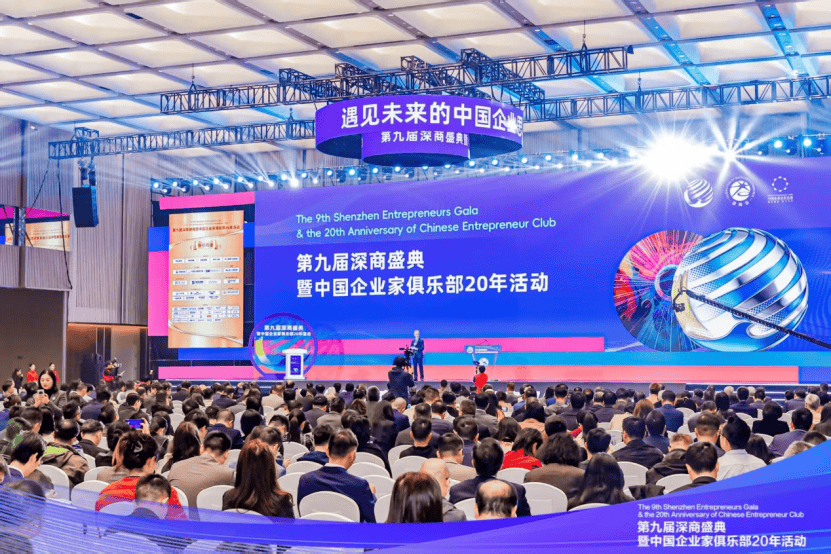
Group 1 - The event "The 9th Shenzhen Business Convention and 20 Years of China Entrepreneurs Club" focused on themes such as industrial innovation, technological breakthroughs, ecological construction, and social responsibility [1] - Notable entrepreneurs shared insights on technology innovation and development paths, highlighting China's evolution from a follower in the global supply chain to a pioneer in new strategic industries [3] - The global competition in technology is intensifying, with artificial intelligence transitioning from concept to deep industrialization, becoming a key driver of future economic growth [3] Group 2 - Companies like TCL, iFlytek, and XPeng Motors discussed their advancements in AI, automotive technology, and the importance of core technology autonomy for long-term success [3][4] - The Chinese automotive industry is moving from "electrification" to "intelligent competition," with breakthroughs in autonomous driving and smart cockpit technologies being crucial for gaining a competitive edge globally [3] - The concept of ESG (Environmental, Social, and Governance) has become a significant guiding principle for high-quality corporate development, emphasizing the integration of sustainability into business strategies [4]




小鹏智驾负责人刘先明:我肯定不用裸奔了,小鹏你就等着建食堂吧
2 1 Shi Ji Jing Ji Bao Dao· 2026-01-13 11:16
Core Viewpoint - The head of Xiaopeng's autonomous driving division, Liu Xianming, expressed confidence in the progress of their second-generation VLA, indicating that the development and testing processes are proceeding smoothly, with a stable version expected for users in the first quarter of this year [1] Group 1 - Liu Xianming humorously suggested that competitors should prepare for a "canteen" as they are likely to be disappointed with the performance of their products [1] - The company aims to provide users with an upgraded version of the autonomous driving system by August, which is expected to exceed the current capabilities [1] - The ongoing testing and development are on track, with a commitment to continuous improvement for the users [1]
四大板块齐头并进——车企2025产销快报解析
Zhong Guo Qi Che Bao Wang· 2026-01-13 09:43
Core Insights - The Chinese passenger car market is projected to retail 23.78 million units in 2025, reflecting a 4% year-on-year growth, supported by policies like "trade-in" [2] - Major domestic automakers such as BYD, Geely, Changan, and Leap Motor have achieved significant progress, while several joint venture companies are showing signs of recovery in China [2] Domestic Automakers Performance - BYD achieved a record annual sales of 4.60 million units in 2025, a 7.73% increase, with pure electric vehicle sales reaching 2.25 million units, up 27.85%, surpassing Tesla in global sales [3] - SAIC Group sold 4.51 million vehicles in 2025, a 12.3% increase, with its new energy vehicle sales growing by 33.1% to 1.64 million units [3] - China FAW's total vehicle sales reached 3.30 million units, a 3.2% increase, with its new energy vehicle sales soaring by 71% to 366,000 units [4] - Geely's total sales reached 3.02 million units, a 39% increase, with new energy vehicle sales hitting 1.69 million units, up 90% [4] - Changan's sales reached 2.91 million units, an 8.5% increase, with new energy vehicle sales growing by 51% to 1.11 million units [5] - Chery Group achieved a record high of 2.81 million units sold, with new energy vehicle sales increasing by 54.9% to 903,800 units [5] Joint Venture Automakers Performance - Joint venture automakers are under pressure but some have found ways to adapt, with FAW-Volkswagen leading in sales with 1.59 million units sold [7] - SAIC Volkswagen achieved sales of 1.06 million units, maintaining a strong position in the market [8] - Toyota's joint ventures in China reported positive growth, with FAW Toyota selling 805,500 units, a 3-year consecutive growth [8] New Energy Vehicle Market - New energy vehicles are a common highlight across major domestic automakers, with significant growth in sales and market penetration [3][4][5] - New entrants like Leap Motor and NIO are also showing strong growth, with Leap Motor achieving 596,600 units sold, a 103% increase [10] - Xpeng Motors delivered 429,400 units, a 126% increase, while NIO delivered 326,000 units, a 46.9% increase [11] Export Growth - China's automobile exports are expected to exceed 7 million units in 2025, marking a historic high [13] - Chery led the export of Chinese passenger cars with 1.34 million units, a 17.4% increase [13] - BYD's overseas sales surpassed 1 million units, a 145% increase, with significant growth in Europe [14] - New energy vehicle exports are also on the rise, with companies like Leap and Xpeng expanding their international presence [16]


部分热门中概股盘前走低,百度跌超3%
Mei Ri Jing Ji Xin Wen· 2026-01-13 09:17
Group 1 - Some popular Chinese concept stocks experienced a decline in pre-market trading, with Baidu dropping over 3% and Xpeng Motors falling more than 2% [1]

主打VLA2.0+超级增程技术,小鹏汽车四车同发开启2026年攻势
Jing Ji Guan Cha Wang· 2026-01-13 07:57
Core Insights - Xiaopeng Motors launched four new models at its global product launch on January 8, 2026, marking a significant push into the electric vehicle market with a focus on advanced technology and competitive pricing [4][6] - The company aims to leverage its VLA2.0 intelligent driving technology and Kunpeng super-range system to enhance its market position amidst a slowing automotive market [4][7] Group 1: Product Launch and Technology - The new models include the 2026 Xiaopeng P7+, G7 super-range, G6, and G9, priced between 170,000 to 270,000 yuan, showcasing a comprehensive attack on the electric vehicle market [4] - VLA2.0 technology, which eliminates traditional language translation steps, allows for direct conversion of visual information from cameras into vehicle control commands, enhancing the driving experience [4][5] - The VLA2.0 system has been trained on 1 billion kilometers of data and is expected to enable L3 level autonomous driving capabilities by March 2026 [5] Group 2: Market Strategy and Pricing - Xiaopeng's pricing strategy aims to position its vehicles as "smart-first" options in the 200,000 yuan market, offering advanced features at competitive prices [6] - The P7+ super-range version starts at 186,800 yuan, while the G7 super-range version starts at 195,800 yuan, both featuring high-end intelligent driving and fast-charging capabilities [6] - The company plans to cover a broader user base with its four-car strategy, addressing previous limitations in product diversity and enhancing market competitiveness [6][7] Group 3: Market Outlook and Challenges - The automotive market is expected to face significant pressure in 2026, with a projected 1% growth in retail sales and a 13% increase in new energy vehicle sales, down from 17.6% in 2025 [4][7] - Xiaopeng Motors aims to differentiate itself through technology and product strength, focusing on L4 level intelligent driving technology and range extension to alleviate consumer concerns about battery life [7] - Despite achieving significant growth in overseas sales, the company has yet to achieve profitability, and ongoing high R&D investments continue to exert pressure [7]