SAIC MOTOR(600104)

Search documents
万马奔腾迎春来:上汽2025的体系破局与价值重估
Xin Lang Cai Jing· 2026-01-13 11:33
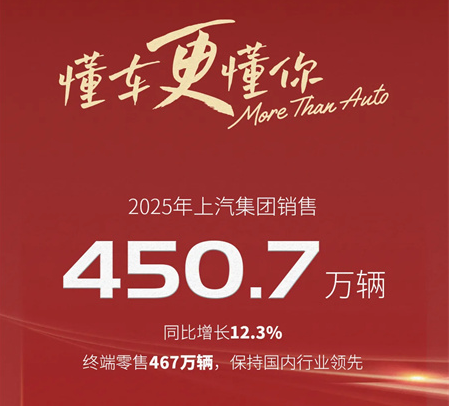
Core Insights - In 2025, SAIC Motor Corporation achieved significant growth, selling 4.507 million vehicles, a 12.3% increase year-on-year, and maintaining its position as the leading player in the domestic automotive industry [1][28] - A notable internal transformation occurred, with sales of self-owned brands reaching 2.928 million units, a substantial 21.6% increase, marking a historic high of 65% in total sales share [3][28] - The company's strategic focus on self-owned brand development and technological breakthroughs in smart electric vehicles is validated by market performance, indicating a successful transition from joint ventures to self-owned brands [5][30] Market Recognition - SAIC Motor's return to the SSE 50 Index in 2025 signifies a re-evaluation of its growth logic and intrinsic value by the capital market, reflecting a shift in focus from traditional manufacturing scale to sustainable high-quality development potential [6][30] - The return to the SSE 50 is seen as a "trust ticket" for future expectations, confirming that SAIC has successfully navigated its transformation [6][30] User Engagement and Product Innovation - The company is set to welcome its 100 millionth user in 2026, marking a significant milestone in its user-centric approach [7][31] - SAIC showcased a "cluster of blockbuster" products in 2025, demonstrating its capability to create star products across various market segments [7][31] Brand Highlights - The launch of the new generation of Zhiji LS6, featuring the "Star Super Range System" with a class-leading range of 1508 km, exemplifies SAIC's ability to establish a high-end intelligent electric brand [8][34] - The MG4, launched in August 2025, achieved over 10,000 deliveries for four consecutive months, driven by innovative technologies and a strong marketing strategy [11][35] - The Roewe M7 DMH, equipped with the latest DMH 6.0 hybrid system, addresses key consumer pain points with impressive range and fuel efficiency, solidifying its reputation as the "King of Family Cars" [14][38] - The launch of the SAIC Shangjie H5, developed in collaboration with Huawei, showcases a successful integration of smart travel solutions and manufacturing quality [17][41] Systematic Support for Innovation - SAIC's ability to produce multiple successful brands simultaneously is attributed to a robust systemic support structure that facilitates the "batch incubation of blockbusters" [20][44] - The company's comprehensive reform strategy aims to integrate management across passenger and commercial vehicle sectors, enhancing resource allocation and market responsiveness [21][45] - A focus on technology-driven and user-oriented product development has led to significant R&D investments, resulting in products with distinct technological features [23][47] Strategic Partnerships and Global Expansion - SAIC's strategic partnerships with leading tech companies like Huawei and OPPO enhance its technological capabilities and address gaps in smart vehicle features [24][48] - The company's global strategy has evolved to include localized R&D, production, and marketing, expanding its market reach and potential for blockbuster products [25][49] Future Outlook - SAIC's transformation serves as a model for upgrading traditional manufacturing in China, emphasizing strategic determination, technological resilience, ecological collaboration, and organizational vitality [26][50] - The company is positioned to lead the automotive industry towards a new phase of productivity, transitioning from scale leadership to quality leadership [26][50]


四大板块齐头并进——车企2025产销快报解析
Zhong Guo Qi Che Bao Wang· 2026-01-13 09:43
Core Insights - The Chinese passenger car market is projected to retail 23.78 million units in 2025, reflecting a 4% year-on-year growth, supported by policies like "trade-in" [2] - Major domestic automakers such as BYD, Geely, Changan, and Leap Motor have achieved significant progress, while several joint venture companies are showing signs of recovery in China [2] Domestic Automakers Performance - BYD achieved a record annual sales of 4.60 million units in 2025, a 7.73% increase, with pure electric vehicle sales reaching 2.25 million units, up 27.85%, surpassing Tesla in global sales [3] - SAIC Group sold 4.51 million vehicles in 2025, a 12.3% increase, with its new energy vehicle sales growing by 33.1% to 1.64 million units [3] - China FAW's total vehicle sales reached 3.30 million units, a 3.2% increase, with its new energy vehicle sales soaring by 71% to 366,000 units [4] - Geely's total sales reached 3.02 million units, a 39% increase, with new energy vehicle sales hitting 1.69 million units, up 90% [4] - Changan's sales reached 2.91 million units, an 8.5% increase, with new energy vehicle sales growing by 51% to 1.11 million units [5] - Chery Group achieved a record high of 2.81 million units sold, with new energy vehicle sales increasing by 54.9% to 903,800 units [5] Joint Venture Automakers Performance - Joint venture automakers are under pressure but some have found ways to adapt, with FAW-Volkswagen leading in sales with 1.59 million units sold [7] - SAIC Volkswagen achieved sales of 1.06 million units, maintaining a strong position in the market [8] - Toyota's joint ventures in China reported positive growth, with FAW Toyota selling 805,500 units, a 3-year consecutive growth [8] New Energy Vehicle Market - New energy vehicles are a common highlight across major domestic automakers, with significant growth in sales and market penetration [3][4][5] - New entrants like Leap Motor and NIO are also showing strong growth, with Leap Motor achieving 596,600 units sold, a 103% increase [10] - Xpeng Motors delivered 429,400 units, a 126% increase, while NIO delivered 326,000 units, a 46.9% increase [11] Export Growth - China's automobile exports are expected to exceed 7 million units in 2025, marking a historic high [13] - Chery led the export of Chinese passenger cars with 1.34 million units, a 17.4% increase [13] - BYD's overseas sales surpassed 1 million units, a 145% increase, with significant growth in Europe [14] - New energy vehicle exports are also on the rise, with companies like Leap and Xpeng expanding their international presence [16]





中欧电动汽车案磋商达成积极成果
Cai Jing Wang· 2026-01-13 09:08
Core Viewpoint - The EU-China Electric Vehicle anti-subsidy negotiations have made significant progress, emphasizing that the competitiveness of China's electric vehicle industry stems from continuous technological innovation and market competition, rather than subsidies [1][2]. Group 1: Negotiation Progress - The EU and China have engaged in multiple rounds of negotiations to address the EU's concerns regarding electric vehicles, aiming for a "soft landing" in the anti-subsidy case [1]. - The EU has issued guidance for Chinese exporters on submitting price commitment applications, which will allow them to address concerns in a WTO-compliant manner [1][3]. - The EU-China Chamber of Commerce welcomed the dialogue-driven approach to resolving the electric vehicle case, highlighting its importance for bilateral trade and investment cooperation [1]. Group 2: Price Commitment Framework - The EU has confirmed that it will evaluate price commitment applications based on objective and non-discriminatory principles, adhering to WTO rules [5]. - Two methods for determining minimum prices have been outlined: one based on the CIF price during the investigation period plus the applicable anti-subsidy tax rate, and the other based on the sales price of similar electric vehicles produced within the EU [5]. - Exporters may also make annual export quantity commitments to mitigate cross-subsidy risks, which will further strengthen the response to subsidy damages [5]. Group 3: Impact of Anti-Subsidy Tax - Despite the anti-subsidy tax, the market share of Chinese electric vehicles in the EU has increased from 7% in 2024 to 7.6% in the first eight months of 2025 [8]. - Several Chinese automakers are establishing local production in Europe to avoid tariffs, which will be a significant factor in price commitment negotiations [9]. Group 4: Investment Commitments - Investment commitments in local manufacturing will be positively considered in the evaluation of price commitment proposals, reflecting a broader industrial policy issue rather than just a trade dispute [9]. - Chinese electric vehicle companies have announced various investment and production plans in the EU following the introduction of the anti-subsidy tax, including BYD's establishment of a European headquarters and R&D center in Budapest [9].

ID. ERA 9X“定妆照”出炉,合资品牌强势入局“9系大战”
Zhong Guo Jing Ji Wang· 2026-01-13 08:57
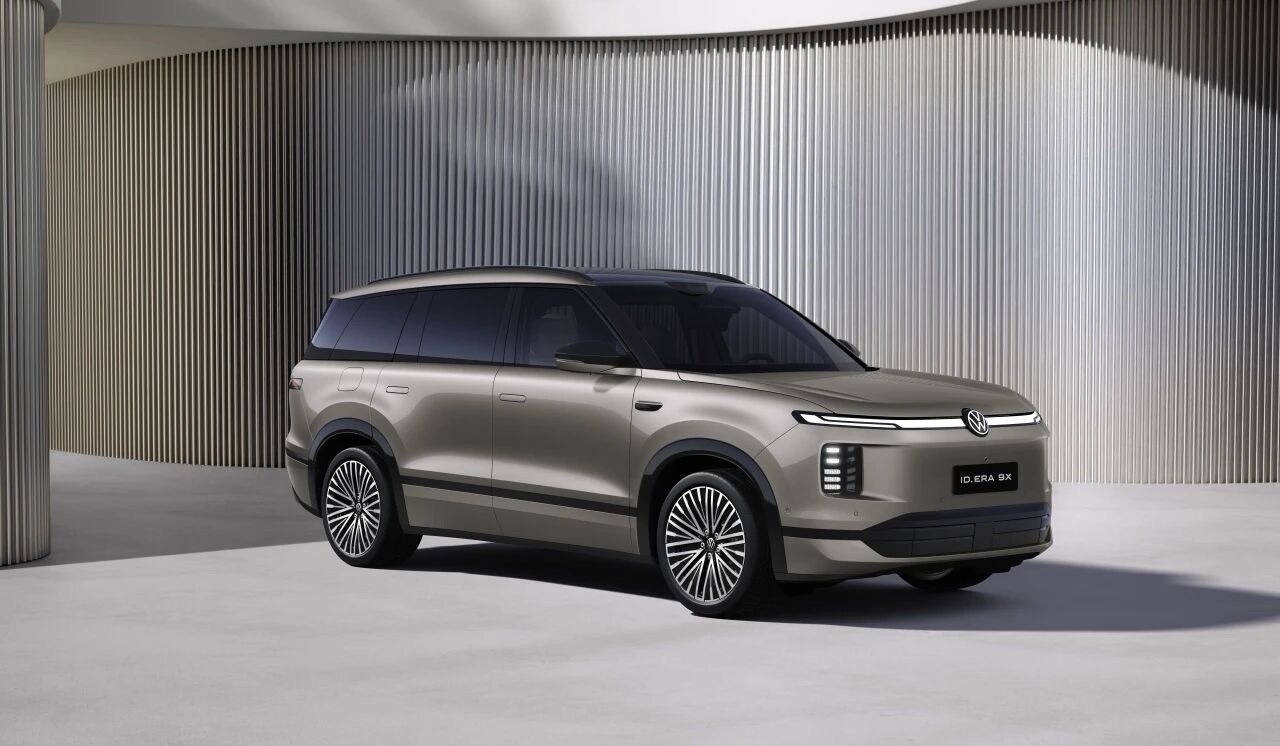
"对于上汽大众来说,一直聚焦于'价值竞争'。如果说2025年是上汽大众从战略转型到战略落地转型的关键年,那2026年,上汽大众在打好基础的同时,根 本目标是为品牌焕新做准备,借助新产品上市全面焕新品牌价值——进取、可靠、贴心。"上汽大众汽车有限公司党委书记、总经理陶海龙如是说。 即将到来的ID.ERA9X无疑将成为实现这一愿景的重要载体。日前,工信部《道路机动车辆生产企业及产品公告》公布了上汽大众ID.ERA9X申报图,将其 热度推向新高。作为大众集团全球首款、且唯一一款9系车型,ID.ERA9X定位"德系满级旗舰SUV",致力于满足成熟用户对"全场景、长周期"增程出行价值 的深层需求。 2025年收官阶段,上汽大众给市场带来了"悬念",如今正逐步揭晓。近日,工信部正式发布ID.ERA9X公告图。作为6座增程车型,ID.ERA9X拥有车身长 5207mm、宽1997mm、高1810mm、3070mm长轴距的旗舰身姿,是大众集团全球最大SUV。同时,短前悬与后悬设计、1:2窗身比配合大尺寸车窗等精心设 计,更是将实用功能美学发挥得淋漓尽致。细节上,ID.ERA9X以"大气、纯粹、硬朗"的全新设计语言,定义了旗舰 ...
乘用车板块1月13日跌0.71%,海马汽车领跌,主力资金净流出6.24亿元
Zheng Xing Xing Ye Ri Bao· 2026-01-13 08:56
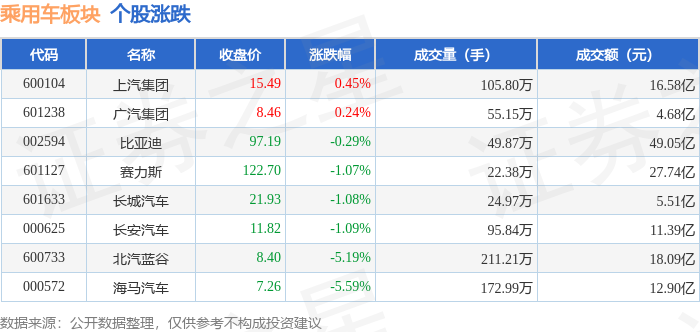
Market Overview - The passenger car sector experienced a decline of 0.71% on January 13, with Haima Automobile leading the drop [1] - The Shanghai Composite Index closed at 4138.76, down 0.64%, while the Shenzhen Component Index closed at 14169.4, down 1.37% [1] Individual Stock Performance - SAIC Motor Corporation (600104) closed at 15.49, up 0.45% with a trading volume of 1.058 million shares and a turnover of 1.658 billion yuan [1] - GAC Group (601238) closed at 8.46, up 0.24% with a trading volume of 551,500 shares and a turnover of 468 million yuan [1] - BYD (002594) closed at 97.19, down 0.29% with a trading volume of 498,700 shares and a turnover of 4.905 billion yuan [1] - Seres (601127) closed at 122.70, down 1.07% with a trading volume of 223,800 shares and a turnover of 2.774 billion yuan [1] - Great Wall Motors (601633) closed at 21.93, down 1.08% with a trading volume of 249,700 shares and a turnover of 551 million yuan [1] - Changan Automobile (000625) closed at 11.82, down 1.09% with a trading volume of 958,400 shares and a turnover of 1.139 billion yuan [1] - BAIC BluePark (600733) closed at 8.40, down 5.19% with a trading volume of 2.112 million shares and a turnover of 1.809 billion yuan [1] - Haima Automobile (000572) closed at 7.26, down 5.59% with a trading volume of 1.729 million shares and a turnover of 1.290 billion yuan [1] Fund Flow Analysis - The passenger car sector saw a net outflow of 624 million yuan from main funds, while retail investors contributed a net inflow of 451 million yuan [1] - The detailed fund flow for individual stocks shows: - SAIC Motor had a net inflow of 1.5 billion yuan from main funds, but a net outflow of 1.01 billion yuan from retail investors [2] - Great Wall Motors had a net inflow of 11.625 million yuan from main funds, with a net outflow of 9.9974 million yuan from retail investors [2] - GAC Group experienced a net outflow of 8.916 million yuan from main funds, with a net inflow of 440,000 yuan from retail investors [2] - BYD had a significant net outflow of 92.804 million yuan from main funds, but a net inflow of 10.8052 million yuan from retail investors [2] - Changan Automobile faced a net outflow of 1.15 billion yuan from main funds, while retail investors contributed a net inflow of 94.9543 million yuan [2] - Haima Automobile had a net outflow of 162 million yuan from main funds, but a net inflow of 143 million yuan from retail investors [2] - Seres had a net outflow of 2.02 billion yuan from main funds, with a net inflow of 178 million yuan from retail investors [2] - BAIC BluePark had a net outflow of 206 million yuan from main funds, while retail investors contributed a net inflow of 135 million yuan [2]




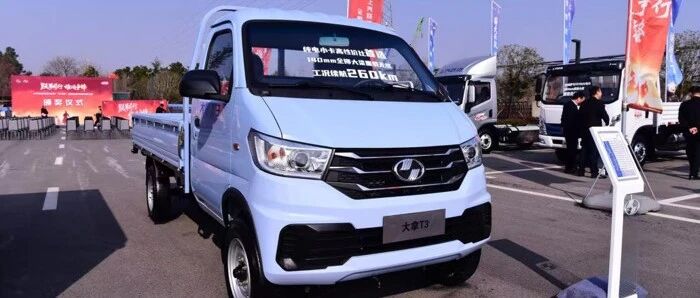
2026全场景产品力持续提升!上汽跃进或将成城配用户“首选” | 头条
第一商用车网· 2026-01-13 06:18
Core Insights - The article highlights that SAIC Yuejin aims to double its sales by 2025, targeting 56,000 units in 2026, focusing on product strength to enhance user wealth creation [1] - The domestic light truck market is expected to see slight growth, with a projected total scale of 1.03 million units in 2026, a 3% year-on-year increase, and a significant rise in demand for new energy light trucks [1] Market Performance - SAIC Yuejin has outperformed the market, achieving a sales increase from 17,000 to 40,000 units in 2025, representing a 127% year-on-year growth; in the new energy sector, retail sales reached 22,573 units, up 217% [3] - The market share in the wholesale sector increased from 2.0% to 4.0%, a rise of 2.1 percentage points [3] Competitive Positioning - In 2025, SAIC Yuejin secured five industry-leading positions: highest sales growth rate, fastest growth in new energy logistics vehicles, leading market share in specialized new energy chassis, and top sales among major B-end enterprises [5] - Despite challenges from new energy alternatives, traditional energy light trucks maintained a stable market share, with 22 out of 31 regions showing growth [5] Strategic Initiatives - SAIC Yuejin plans to invest billions to support channel expansion and build a stable, win-win ecosystem, shifting strategies from broad outreach to precise targeting and from volume-focused incentives to multi-dimensional collaboration [5] - The company will enhance service management and training, aiming for a 12-hour closure rate monitoring and improved service station layouts [5] Product Development - In 2026, SAIC Yuejin aims to launch 32 development projects, with 24 set to be produced that year, including new models on a seventh-generation platform [7] - The new energy vehicle lineup will include models with rapid battery swapping capabilities, supporting flexible purchasing options [9] Technological Advancements - New energy models will feature advanced intelligent driving assistance systems, enhancing safety and efficiency for users [11] - Collaboration with CATL will advance battery swapping network construction, aiming to create a comprehensive ecosystem for electric light trucks [11]
汽车周报:供应链涨价、购置税兜底驱缓,关注通胀环节投资机会-20260113
Shenwan Hongyuan Securities· 2026-01-13 04:13
Investment Rating - The report maintains a positive outlook on the automotive industry, indicating a favorable investment rating for the sector [2]. Core Insights - The report highlights the impact of rising prices for memory, copper, aluminum, and key components, which are expected to lead to an increase in consumer vehicle prices. It suggests focusing on supply chain companies with good supply-demand dynamics and price transmission capabilities, as well as mid-to-high-end vehicle manufacturers with model cycles [2]. - The report notes that the average daily retail sales of passenger vehicles in China reached 123,000 units in the last week of December, a year-on-year increase of 17% [2]. - The report emphasizes the importance of the recently implemented green consumption policies, which aim to support the purchase of new energy vehicles and enhance the automotive industry's supply chain [11][12]. Market Updates - The automotive industry recorded a total transaction value of 638.35 billion yuan, with a week-on-week increase of 11.27%. The automotive industry index rose by 2.53% during the week [2][13]. - The report indicates that the automotive industry index's growth was lower than that of the Shanghai and Shenzhen 300 index, which increased by 2.79% [13]. - The report lists significant stock movements, with 201 stocks rising and 68 falling, highlighting the top gainers and losers in the automotive sector [19]. Key Events - The Ministry of Industry and Information Technology released the 403rd batch of new vehicle approvals, featuring several notable models from various manufacturers [3][4]. - The report discusses the rising cost pressures in the automotive industry due to increasing memory prices, which are becoming a significant factor affecting profitability [6][8]. - The report mentions a strategic cooperation agreement between CATL and NIO, focusing on battery technology and market collaboration [36]. Financial Metrics - The automotive sector's price-to-earnings ratio stands at 30.20, ranking 18th among all primary industries, indicating a moderate valuation compared to the Shanghai and Shenzhen 300 index's 14.41 [16][18].

汽车早报|上汽集团总裁贾健旭拜访华为创始人任正非 岚图汽车与引望签署深化战略合作协议
Xin Lang Cai Jing· 2026-01-13 00:40
Group 1: China-Europe Electric Vehicle Negotiations - The Ministry of Commerce reported progress in negotiations regarding the EU's electric vehicle case against China, emphasizing mutual respect and the need for general guidance on price commitments for Chinese exporters [1] - The EU will issue guidelines for submitting price commitment applications, ensuring non-discrimination and objective evaluation based on WTO rules [1] - The negotiations reflect the willingness of both parties to resolve differences and maintain stability in the automotive supply chain, benefiting trade relations and the international trade order [1] Group 2: Automotive Industry Developments - Dongfeng Group announced a slight increase in total vehicle sales for 2025, with a total of 1,896,185 units sold, representing a year-on-year growth of approximately 0.01%, while electric vehicle sales surged by 42.62% to 562,833 units [3] - Volkswagen Group reported a decrease in deliveries in the Chinese market, with a total of 2,693,800 units sold in 2025, down 8% year-on-year [3] - ECARX, a technology company, secured a strategic investment of $45.6 million from Geely Holding Group, with shares priced at $1.67 each [3] - Zhaoyi Innovation and Chery Automobile signed a strategic cooperation agreement to integrate resources in chip and vehicle development [5] - Haima Automobile's subsidiary, Haima Finance, projected a 50.07% decline in net profit for 2025, estimating a profit of 11 million yuan [6] - Mercedes-Benz Group reported global sales of 2.16 million vehicles in 2025, with a notable increase in AMG deliveries by 7% [7] - Maruti Suzuki plans to invest approximately $550 million to increase production capacity in India by 1 million vehicles [8]
乘用车2026 | 2025政策促需 2026高端发力+智能平权+出海提速
汽车琰究· 2026-01-13 00:05
Group 1 - The core viewpoint of the article emphasizes that the demand for automobiles is driven by the continuation of the trade-in policy, leading to an unexpected penetration of new energy vehicles (NEVs) and improved profitability through high-end products and overseas expansion [3][4][5][6][7][8] Group 2 - In 2025, the cumulative wholesale sales of passenger cars reached 24.119 million units, a year-on-year increase of 12.6%, with NEVs growing by 30.7% [3][8] - The penetration rate of NEVs in wholesale sales was 50.4%, up by 7.0 percentage points year-on-year, while the penetration rate for insurance reached 53.3%, an increase of 6.6 percentage points [3][46] - The share of domestic passenger cars in wholesale sales reached 69.3%, a year-on-year increase of 4.9 percentage points, with brands like Geely, Xiaomi, and Leap Motor showing significant growth [3][50] Group 3 - Looking ahead to 2026, the trade-in policy is expected to continue, supporting demand, with projected insurance sales of 22.32 million units, a decrease of 5.0% year-on-year, and wholesale sales of 30.10 million units, an increase of 1.0% [4][5] - The NEV insurance sales are expected to reach 13.8 million units, a year-on-year increase of 6.2%, while wholesale sales are projected to be 17.3 million units, up by 13.4% [4][15] Group 4 - The competitive landscape is shifting, with joint ventures declining and domestic brands accelerating their rise in the mid-to-high-end market [5][10] - In the 5-15 million price range, price-sensitive consumers are expected to drive competition, while brands like Geely, BYD, and Leap Motor are anticipated to gain higher sales growth due to their advantages in intelligence and cost-effectiveness [5][10] Group 5 - The article highlights the acceleration of intelligent driving technology, with major players like Huawei and BYD pushing for the democratization of advanced driving features [6][10] - The L3 commercial deployment is expected to gain momentum in 2026-2027, with various automakers launching new high-level driving systems and models [6][10] Group 6 - The export of passenger cars is projected to reach 6.64 million units in 2026, a year-on-year increase of 15.5%, driven by the technological advantages of domestic NEVs and the expansion of overseas manufacturing [7][11] - Companies like BYD and Geely are expected to increase their export efforts, with BYD establishing overseas factories and Geely accelerating NEV exports [7][11]


汽车行业周报:如何展望2025Q4业绩?-20260112
Changjiang Securities· 2026-01-12 11:22
Investment Rating - The investment rating for the automotive industry is "Positive" and maintained [9] Core Insights - The wholesale sales of passenger vehicles in Q4 2025 are expected to be approximately 8.76 million units, a year-on-year decrease of 1% but a quarter-on-quarter increase of 14%. The profitability in Q4 may show differentiation compared to the same period last year, with expectations for a quarter-on-quarter improvement [2][5] - The revenue from automotive parts is anticipated to grow steadily quarter-on-quarter, but profitability may face pressure due to factors such as raw material costs and exchange rates [2][5] - The wholesale sales of heavy trucks are projected to be 314,000 units in Q4 2025, representing a year-on-year increase of 43.6% and a quarter-on-quarter increase of 11.5% [2][5] - The overall sales of buses are expected to see a significant quarter-on-quarter increase during the peak season, with sales of large and medium buses reaching 44,000 units, a year-on-year increase of 8.8% and a quarter-on-quarter increase of 42.2% [2][5] - The total sales of motorcycles are estimated to be around 4.73 million units in Q4 2025, reflecting a year-on-year increase of 11.0% but a quarter-on-quarter decrease of 6.2% [2][6] Summary by Sections Passenger Vehicles - Q4 2025 wholesale sales are expected to be about 8.76 million units, down 1% year-on-year but up 14% quarter-on-quarter. New energy vehicle sales are projected at 4.84 million units, up 13% year-on-year and 21% quarter-on-quarter [5] Automotive Parts - Revenue is expected to grow steadily quarter-on-quarter, but profitability may be pressured by raw material and exchange rate factors [5] Heavy Trucks - Q4 2025 wholesale sales are projected at 314,000 units, with a year-on-year increase of 43.6% and a quarter-on-quarter increase of 11.5% [5] Buses - Large and medium bus sales are expected to reach 44,000 units in Q4 2025, with a year-on-year increase of 8.8% and a quarter-on-quarter increase of 42.2% [5] Motorcycles - Total motorcycle sales are estimated at 4.73 million units in Q4 2025, reflecting an 11.0% year-on-year increase but a 6.2% quarter-on-quarter decrease [6]