Zijin Mining(601899)

Search documents
光大证券:重视各国战略金属收储带来投资机会 全面看好战略金属价值重估
智通财经网· 2026-01-19 01:52
Core Viewpoint - The report from Everbright Securities highlights the increasing importance of strategic metals (copper, aluminum, cobalt, nickel, tin, antimony, tungsten, rare earths) due to supply disruptions and the limitations in production capacity in China and abroad [1][2]. Group 1: Strategic Metal Storage Initiatives - Australia announced a strategic reserve plan for critical minerals worth AUD 1.2 billion, with AUD 185 million allocated for necessary mineral reserves, prioritizing antimony, gallium, and rare earths [2] - The European Commission approved a resource revival action plan to raise EUR 3 billion for supply chain strategies, establishing a platform to support critical material reserves [2] - The U.S. Defense Logistics Agency (DLA) plans to procure USD 500 million in cobalt, USD 245 million in antimony, USD 100 million in tantalum, and USD 45 million in scandium [2] Group 2: Investment Opportunities in Strategic Metals - The focus on strategic metal storage in the U.S. and Australia presents significant investment opportunities, particularly in metals with concentrated supply chains and security risks, such as cobalt from the Democratic Republic of Congo and lithium from South America [3] - The rapid development of AI and energy transition is expected to drive demand for copper, aluminum, and tin, although supply constraints exist for these metals [4] - Military-related metals like tungsten, antimony, and rare earths are facing tightening supply, with production declines attributed to lower resource grades and regulatory controls [5] Group 3: Supply Concentration and Constraints - Copper, lithium, cobalt, and nickel supply is highly concentrated in South America, the Democratic Republic of Congo, and Indonesia, with Chile and Peru accounting for 35% of global copper production and the Democratic Republic of Congo producing 76% of global cobalt [4] - The rapid growth of AI is expected to significantly increase demand for copper, aluminum, and tin, but supply for these metals is constrained [4] - Tungsten, antimony, and rare earths are critical for military applications, but their production has decreased due to resource management practices and regulatory measures [5] Group 4: Investment Recommendations - For copper, recommended companies include Zijin Mining, Luoyang Molybdenum, and Western Mining [5] - For aluminum, Yunnan Aluminum is recommended, with China Aluminum as a focus [5] - For cobalt and nickel, Huayou Cobalt is recommended, with attention to Liqin Resources and Shengtun Mining [5] - For tungsten, focus on China Tungsten High-tech [5] - For tin, Xiyang Tin Industry is recommended, with interest in Xingye Silver Tin [5] - For antimony, Huaxi Nonferrous is highlighted, and for rare earths, Northern Rare Earth is recommended with a focus on China Rare Earth [5]



港股开盘 | 恒指低开0.76% 贵金属板块走强 紫金矿业等涨超1%
Zhi Tong Cai Jing· 2026-01-19 01:48
Group 1 - The Hang Seng Index opened down 0.76% and the Hang Seng Tech Index fell 0.77%, with strong performance in the precious metals sector, particularly Zijin Mining and China Silver Group, both rising over 1%, while tech stocks like Alibaba dropped over 2% [1] - Tianfeng Securities believes that the Hong Kong stock market has a rebound basis supported by valuation repair and sentiment improvement in the short term, but the upward elasticity and sustainability are constrained by multiple factors due to high overseas interest rates and limited rate cut expectations [1] - China Merchants Securities notes that the lagging performance of Hong Kong stocks compared to A-shares is primarily due to overseas liquidity dynamics, with the US unemployment rate dropping to 4.4%, supporting a 95.6% probability of the Federal Reserve pausing rate cuts in January [1] Group 2 - Huatai Securities indicates that after a month of pessimistic consolidation, the Hong Kong stock market sentiment index has officially entered a panic zone, historically leading to a significantly increased probability of price increases in the following month [2] - Industrial Securities recommends prioritizing leading internet companies in the Chinese AI sector, expecting a resonance of buying from both domestic and foreign capital [2] - The report suggests focusing on dividend assets in a low-interest-rate environment, highlighting opportunities in insurance, banking, energy, property management, and public utilities [2]
2026年全球及中国钼金属行业背景、发展现状、市场供需、竞争格局及未来发展趋势研判:供需紧平衡凸显价值,高端转型开拓新局[图]
Chan Ye Xin Xi Wang· 2026-01-19 01:09
Core Insights - Molybdenum is a critical transition metal with high melting point and strength, categorized into four main forms: pure molybdenum, molybdenum alloys, molybdenum compounds, and molybdenum products [1][2][3] - The global molybdenum market is characterized by a long-term tight balance, with a projected demand gap of 0.39 million tons in 2024, which may expand in the future [1][7] - China holds a significant advantage in molybdenum reserves, becoming the core support for global molybdenum industry development, with production and consumption both leading globally [1][9] Industry Overview - The molybdenum industry is divided into three main segments: upstream (exploration and mining), midstream (smelting and processing), and downstream (deep processing and end applications) [5][6] - Upstream is dominated by major enterprises that control core resources, while midstream is characterized by high industry concentration but relies on imported high-end technologies [5][6] - Downstream applications are primarily in the steel industry, with rapid growth in emerging fields such as renewable energy and aerospace [1][6] Policy and Strategic Importance - Recent policies from the Chinese government aim to regulate resource management and promote industry upgrades, including export controls and support for green mining technologies [6][7] - Molybdenum is classified as a strategic mineral due to its scarcity and concentrated global distribution, with China, the US, and Peru being the top three countries in terms of reserves [6][7] Supply and Demand Dynamics - Global molybdenum production is expected to remain between 262,100 tons and 290,200 tons from 2020 to 2024, with consumption fluctuating between 247,600 tons and 294,100 tons [7][8] - In 2024, China's molybdenum production is projected to reach 133,700 tons, with consumption also on the rise, reflecting a compound annual growth rate of 6.78% from 2020 to 2024 [10][11] Competitive Landscape - The Chinese molybdenum industry is characterized by an oligopolistic structure, with leading companies like Jinduicheng Molybdenum Co., Ltd. and Luoyang Molybdenum Co., Ltd. controlling approximately 70% of the market share [11][12] - The competition is intensifying as smaller firms focus on niche markets, while larger firms leverage their resources and technology to maintain a competitive edge [11][12] Future Development Trends - The industry is expected to shift towards green and intelligent resource development, with a focus on efficient utilization of low-grade and associated molybdenum ores [12][13] - There will be a transition from traditional raw material output to high-end manufacturing, with an emphasis on domestic production of high-purity molybdenum products and specialized alloys [12][13] - Demand for molybdenum is anticipated to grow in both traditional sectors and emerging fields, with strategic support from policies aimed at enhancing the high-potential areas of the industry [12][14]




紫金矿业日赚1.4亿总市值触及万亿 联合金钼股份开发全球最大单体钼矿
Chang Jiang Shang Bao· 2026-01-19 00:23
矿业巨头 紫金矿业 (601899.SH、02899.HK)推动全球最大单体钼矿高效开发。 1月15日晚间,紫金矿业发布公告称,公司与上市公司 金钼股份 签署合作协议,就安徽金寨沙坪沟钼矿 一体化开发达成一揽子合作,涉及冶炼合作与股权交易两大核心内容。 根据协议,金钼股份将与持有沙坪沟钼矿100%权益的金沙钼业合资设立冶炼公司,金钼股份持股51% 并主导运营,匹配矿山开发规模形成协同。同时,紫金矿业以17.31亿元向金钼股份转让金沙钼业24% 股权,交易完成后紫金矿业仍持股60%并主导矿山运营。 2025年以来,受益于 黄金 和铜价格大涨,紫金矿业的业绩暴涨。根据业绩预告,公司2025年的归母净 利润预计为510亿元至520亿元,同比增幅约为59%至62%,以一年365天计算,紫金矿业预计日赚约1.4 亿元。 二级市场上,紫金矿业股价在2025年实现翻倍;2026年1月6日,公司总市值一度突破1万亿元,近两日 在万亿元左右波动。 加快推进沙坪沟钼矿开发 根据合作协议,在金钼股份承诺按协议约定完成冶炼公司设立、建设及运营的前提下,紫金矿业将以 17.31亿元的对价,向金钼股份转让金沙钼业24%的股权。交易完成后 ...
战略金属系列报告之二:战略收储风再起,金属价值续重估
EBSCN· 2026-01-18 14:46
Investment Rating - The report maintains an "Overweight" rating for the non-ferrous metals sector [5]. Core Insights - The report highlights the renewed focus on strategic metal reserves by countries like Australia, the EU, and the US, indicating a significant increase in the importance of "critical mineral resources" since 2025 [2][3]. - The strategic metal storage initiatives are expected to create investment opportunities, particularly in metals with concentrated supply chains and those essential for AI and energy transition [2][3]. Summary by Sections Strategic Metal Storage Initiatives - Australia announced a AUD 1.2 billion strategic reserve plan for critical minerals, prioritizing antimony, gallium, and rare earths [1]. - The EU plans to raise EUR 3 billion for a supply chain strategy, establishing a platform for critical materials [1]. - The US plans to procure USD 500 million of cobalt, USD 245 million of antimony, USD 100 million of tantalum, and USD 45 million of scandium [1]. Investment Opportunities - The report identifies investment opportunities in metals with high supply concentration and security risks, such as cobalt from the Democratic Republic of Congo, copper and lithium from South America, and nickel from Indonesia [2]. - It emphasizes the demand for copper, aluminum, and tin driven by AI and energy transition, while noting supply constraints for these metals [3]. - Military-related metals like tungsten, antimony, and rare earths are highlighted as having tight supply, with significant applications in defense [3]. Company Recommendations - The report recommends several companies based on their strategic positioning in the metals market: - Copper: Zijin Mining, Western Mining, and Luoyang Molybdenum [4]. - Aluminum: Yunnan Aluminum and China Aluminum [4]. - Cobalt and Nickel: Huayou Cobalt and others [4]. - Tungsten: China Tungsten High-Tech [4]. - Tin: Xiyang Tin and others [4]. - Antimony: Huaxi Nonferrous [4]. - Rare Earths: Northern Rare Earth and others [4].


产业债系列报告:基本面修复下的有色金属产业债
Hua Yuan Zheng Quan· 2026-01-18 14:13
1. Report Industry Investment Rating The report does not explicitly mention the industry investment rating. 2. Core Views of the Report - The fundamentals of each link in the non - ferrous metal industry chain are jointly repaired, and the core indicators of the issuing entities in the non - ferrous metal industry have improved [1][4]. - It is recommended to focus on allocating AA+/AAA - rated central enterprises and regional leading state - owned enterprises, and select entities with relatively superior core financial indicators, and appropriately extend the duration for higher coupon yields [3][56]. - The credit spread of non - ferrous metal industrial bonds has been narrowing, and coupon income may need to be explored in the medium - and long - term of high - quality central and state - owned enterprises [51][52]. 3. Summary by Relevant Catalogs 3.1产业链各环节基本面协同修复 - **Overall Industry Operation**: From January to November 2025, the cumulative year - on - year growth rate of the industrial added value of the non - ferrous metal mining and dressing industry above the national scale was 7.6%, and that of the smelting and rolling processing industry was 7.1%. The output of ten common non - ferrous metals reached 7,447.4 million tons, and the overall operating income scale exceeded 9 trillion yuan, with a cumulative year - on - year increase of 13.3% [5]. - **Upstream Resource Mining**: Central and local state - owned enterprises dominate. China has advantages in rare metals like rare earths but has a high external dependence on strategic minerals. In 2025, the price of non - ferrous metals showed an upward trend, driving the improvement of the operating conditions of upstream mining enterprises [1][8][9]. - **Mid - stream Smelting and Processing**: In January - November 2025, the output of refined copper and electrolytic aluminum increased by 7.0% and 2.4% respectively. The output of deep - processed products was much higher than that of smelting products. There was a structural differentiation in the prosperity, with new - energy metal smelting being a highlight [2][16][22]. - **Downstream Application**: Basic metals are mainly used in traditional industries, while lithium, cobalt, and nickel are used in emerging fields. In 2024, the demand for lithium increased by nearly 30%, and the demand for nickel and cobalt increased by 6% - 8%, with the new - energy industry being the core driving force [23]. 3.2有色金属行业发行主体核心指标改善 - **Profitability**: From Q1 to Q3 in 2025, 36 issuing entities achieved a total operating income of 41,067 billion yuan and a net profit of 2,058 billion yuan, with year - on - year increases of 8.5% and 30.6% respectively. The average ROE was 6.91%, and the average net sales profit margin was 6.04%, both showing significant improvements [4][25]. - **Operating Ability**: The average inventory turnover was 6.27 times, and the average current asset turnover was 2.45 times, with year - on - year increases of 0.28 and 0.17 times respectively, indicating improved payment collection and capital return efficiency [4][27]. - **Solvency**: As of Q3 2025, the average asset - liability ratio was 58.0%, the current ratio was 1.18 times, and the quick ratio was 0.61 times. The EBITDA interest coverage ratio increased significantly, indicating enhanced debt repayment ability [4][33]. 3.3有色金属产业债结构分布及机会挖掘 - **Bond Structure**: As of January 7, 2026, there were 290 non - ferrous metal industrial bonds with a total balance of 290.1 billion yuan. Most of the bonds were issued by state - owned enterprises and had high ratings, and the remaining maturity was mostly less than 3 years [43]. - **Credit Spread**: Since 2025, the credit spread of non - ferrous metal industrial bonds has been narrowing, mainly due to the low - interest - rate environment, sufficient capital, and the improvement of industry fundamentals [51]. - **Coupon Income**: The average static coupon of AA+ and above bonds with a remaining maturity of less than 3 years is less than 2%. Coupon income may need to be explored in the medium - and long - term of high - quality central and state - owned enterprises, such as the 3 - 5Y AA+ bonds with a static coupon of 2.13% as of January 7, 2026 [52]. - **Recommended Bonds**: The report recommends some 3 - 5Y non - ferrous metal industrial bonds issued by central and state - owned enterprises for investors' reference [58][59].


铜行业周报(20260112-20260116):全球三大交易所电解铜库存创2013年7月以来新高-20260118
EBSCN· 2026-01-18 12:26
Investment Rating - The report maintains an "Accumulate" rating for the copper industry [6] Core Viewpoints - The copper market is expected to remain tight in 2026, supporting upward price movement. As of January 16, 2026, SHFE copper closed at 100,770 CNY/ton, down 0.63% from January 9, while LME copper closed at 12,803 USD/ton, down 1.50% [1] - The report highlights that the market has largely priced in the Federal Reserve's decision not to cut interest rates in January 2026 [1] - The report anticipates that supply constraints and improving demand will lead to further increases in copper prices [4] Summary by Sections Inventory - Domestic copper social inventory increased by 17.2% week-on-week, while LME copper inventory rose by 4.6% [2] - As of January 16, 2026, global inventory across the three major exchanges reached 900,000 tons, up 7.7% from January 9 [2] Supply - The TC spot price reached a historical low of -46.6 USD/ton [3] - Domestic copper concentrate production in October 2025 was 130,000 tons, down 8.1% month-on-month and 12.1% year-on-year [2] - The price difference between refined copper and scrap copper decreased by 1,010 CNY/ton, indicating tighter scrap supply [2][55] Demand - The cable manufacturing industry's operating rate decreased by 0.6 percentage points to 55.99% [3] - The report notes that cable production accounts for approximately 31% of domestic copper demand [3] - Air conditioning production is projected to see a year-on-year increase of 11% in January 2026, followed by declines of 11.4% and 2.4% in February and March, respectively [3][95] Futures - SHFE copper active contract positions increased by 24% week-on-week, with a total of 226,000 contracts as of January 16, 2026 [4] - COMEX non-commercial net long positions decreased by 7.6% week-on-week [4] Investment Recommendations - The report recommends investing in Zijin Mining, Western Mining, Luoyang Molybdenum, and Jincheng Mining, while keeping an eye on Tongling Nonferrous Metals [4]

美联储换届生变,不改长期宽松预期
GOLDEN SUN SECURITIES· 2026-01-18 11:00
Investment Rating - The report maintains a "Buy" rating for several companies in the non-ferrous metals sector, including 山金国际, 赤峰黄金, 洛阳钼业, 中国宏桥, and 中钨高新 [10]. Core Insights - The non-ferrous metals sector is experiencing a general upward trend, with significant price increases across various metals, driven by macroeconomic factors and supply chain dynamics [11][19]. - The report highlights the impact of U.S. tariffs and trade policies on the supply and demand dynamics of key metals, particularly copper and aluminum [2][3]. - The report emphasizes the importance of monitoring inventory levels and production capacities, as these factors are critical in determining future price movements [26][35]. Summary by Sections Precious Metals - Concerns over tariffs have led to a temporary pullback in silver prices, but the long-term outlook remains positive [1]. - The report suggests monitoring companies such as 兴业银锡 and 盛达资源 for potential investment opportunities [1]. Industrial Metals - Copper inventories are rising, particularly in the U.S., raising concerns about supply tightness in non-U.S. regions [2]. - The report notes that while high copper prices are suppressing end-user demand, the long-term consumption outlook remains strong due to infrastructure investments [2]. Aluminum - The aluminum market is expected to experience price fluctuations due to geopolitical tensions and macroeconomic policies [3]. - The report indicates that production cuts in aluminum processing are occurring, particularly in regions like Guizhou and Henan [3]. Nickel - Nickel prices are on an upward trend, supported by supply tightening expectations from Indonesia [4]. - The report highlights the importance of monitoring companies like 华友钴业 and 力勤资源 for investment opportunities [4]. Tin - Supply chain bottlenecks and macroeconomic factors are providing short-term support for tin prices [5]. - The report suggests that companies like 华锡有色 and 兴业银锡 may benefit from these market conditions [5]. Lithium - Lithium prices are experiencing wide fluctuations due to export policy expectations and demand uncertainties [6]. - The report recommends关注 companies such as 赣锋锂业 and 天齐锂业 for potential investment [6]. Cobalt - Progress in cobalt shipments from the Democratic Republic of Congo is expected to support high cobalt prices in the short term [9]. - The report suggests monitoring companies like 华友钴业 and 腾远钴业 for investment opportunities [9].


“矿业双雄”的掘金密码
Zhong Guo Jing Ying Bao· 2026-01-18 10:48
Core Insights - In 2025, Zijin Mining and Luoyang Molybdenum both achieved record-high profits and market valuations, driven by strategic positioning in the global commodity market and effective operational management [1][2][4]. Financial Performance - Zijin Mining expects a net profit of 51-52 billion yuan for 2025, marking a year-on-year increase of 59%-62%, with core mineral products seeing significant price and volume growth [2][3]. - Luoyang Molybdenum anticipates a net profit of 20-20.8 billion yuan, representing a year-on-year growth of 47.8%-53.71%, and is entering the 20 billion yuan profit range for the first time [2][3]. Production and Market Position - Zijin Mining's production includes approximately 90 tons of gold, 1.09 million tons of copper, and 437 tons of silver, positioning it as the fourth-largest metal mining company globally and the largest gold mining company [2][3]. - Luoyang Molybdenum's copper production reached 741,100 tons, with cobalt, molybdenum, tungsten, and niobium also hitting historical highs [3][4]. Strategic Initiatives - Luoyang Molybdenum's success is attributed to its long-term strategic focus on the energy transition and early investments in overseas copper assets, alongside capitalizing on the current metal price upcycle [1][4]. - The company is advancing its KFM Phase II project, expected to add 100,000 tons of copper production annually by 2027, and is planning further expansions to reach a target of 1 million tons of copper by 2028 [4]. Management Changes - Zijin Mining has undergone a leadership transition, with a new management team emphasizing stability and internal promotion, which is seen as crucial for maintaining strategic continuity [5][6]. - Luoyang Molybdenum has introduced a new management team with significant external experience, aiming to enhance global management capabilities and adapt to evolving industry demands [7][8]. Industry Trends - The contrasting management strategies of Zijin Mining and Luoyang Molybdenum reflect broader trends in the mining industry, with Zijin focusing on internal stability and Luoyang on external talent acquisition to drive innovation and digital transformation [9].
站上2.7万亿元,杠杆资金最新动向曝光!下周这些板块获投资者看好
Xin Lang Cai Jing· 2026-01-18 10:09
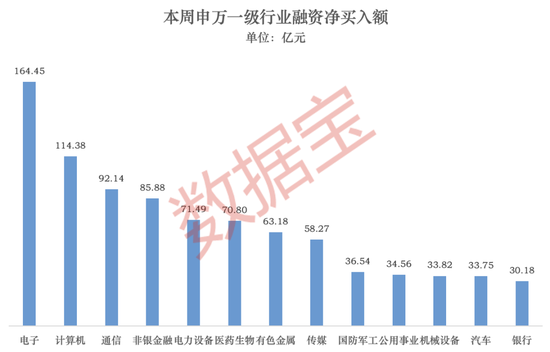
Group 1 - A-shares financing balance has reached a new high of 27,012.4 billion yuan, with a net buy of 1,006.51 billion yuan this week [2][20] - The electronics and computer sectors saw net purchases exceeding 10 billion yuan, with amounts of 16.445 billion yuan and 11.438 billion yuan respectively [2][20] - The power equipment sector is expected to benefit from increased fixed asset investments by the State Grid Corporation, projected to reach 400 billion yuan during the 14th Five-Year Plan, a 40% increase from the previous plan [4][21] Group 2 - Notable stocks with significant net purchases include China Ping An (3.343 billion yuan), TBEA (2.279 billion yuan), and Zhongji Xuchuang (1.979 billion yuan) [4][24] - The storage chip sector is experiencing a "super bull market," with DDR5 memory prices rising over 300% since September 2025, and DDR4 prices increasing over 150% [23] - Investors are optimistic about the power sector, with 9% of surveyed investors expressing confidence in this area, driven by the anticipated investments in the power grid [15][33]