
供需平衡

Search documents
国投期货能源日报-20250916
Guo Tou Qi Huo· 2025-09-16 11:39
Report Industry Investment Ratings - Crude oil: The trend is bearish in the medium term, with a short - term potential for supply fluctuations due to geopolitical factors, but the upside space is limited. The strategy of combining high - level short positions and call options can be continued [2]. - Fuel oil & Low - sulfur fuel oil: FU and LU are expected to follow the crude oil trend, with short - term rebound risks and medium - term downward pressure. It is recommended to focus on the strategy of buying the spread between high - sulfur and low - sulfur fuel oil when the spread is low [3]. - Asphalt: The overall inventory level has decreased, and the futures price has bottom - support [4]. - Liquefied petroleum gas (LPG): The overseas market is strong, and the short - term price - to - oil ratio is expected to be strong. Pay attention to the peak - season stocking market, and the near - month contract on the futures market is relatively strong [5]. Core Viewpoints - With the end of the gasoline consumption peak season, global refined oil inventory accumulation has accelerated. Considering the return of OPEC+ supply and the end of the summer peak season for oil demand, the market is expected to face greater loosening pressure in the fourth quarter, with the most oversupplied period in the first quarter of next year. The oversupply may reach 1.64 million barrels per day this year and 2.67 million barrels per day next year [2]. - Since Russian refineries have been frequently attacked, the weekly loading volume of Russian fuel oil has continued to decline. The increase in bunker fuel consumption in the Singapore market is concentrated in high - sulfur bunker fuel. The low - sulfur supply pressure has eased marginally, and the spread between high - sulfur and low - sulfur fuel oil is difficult to compress further [3]. - The latest data shows that asphalt plant inventory has decreased slightly, and social inventory has decreased by 50,000 tons weekly. The increase and subsequent decrease of warehouse receipts in East China are conducive to alleviating the downward pressure on spot prices in East China [4]. - The overseas LPG market remains strong. Affected by typhoons in South China, imported goods have decreased, and high - level refinery operating rates can be maintained due to good chemical profit margins [5]. Summary by Related Catalogs Crude Oil - Since the end of the gasoline consumption peak season, global refined oil inventory has increased by 4.7% and crude oil inventory has decreased by 0.9% since the second half of the year, with an overall increase of 1.2% in total oil inventory, continuing the inventory - building speed in the second quarter [2]. - Considering the supply return of OPEC+ and the end of the oil demand peak season, the market's loosening pressure will increase marginally in the fourth quarter, and the most oversupplied period will be in the first quarter of next year, with oversupply of 1.64 million barrels per day this year and 2.67 million barrels per day next year [2]. - The medium - term bearish trend of crude oil prices remains unchanged. Although short - term geopolitical factors may cause temporary supply fluctuations, the upside space for price rebounds is limited [2]. Fuel Oil & Low - sulfur Fuel Oil - Since Russian refineries have been frequently attacked, the weekly loading volume of Russian fuel oil has continued to decline. The increase in domestic local refinery operating rates is beneficial to fuel oil feedstock demand [3]. - The increase in bunker fuel consumption in the Singapore market is concentrated in high - sulfur bunker fuel, with an 11.6% year - on - year increase in high - sulfur bunker fuel loading volume in August and a 6% year - on - year increase in cumulative loading volume [3]. - FU and LU are expected to follow the crude oil trend, with short - term rebound risks and medium - term downward pressure. The low - sulfur supply pressure has eased marginally, and the spread between high - sulfur and low - sulfur fuel oil is difficult to compress further [3]. Asphalt - The latest data shows that asphalt plant inventory has decreased slightly, and social inventory has decreased by 50,000 tons weekly, with the overall inventory level decreasing month - on - month [4]. - Warehouse receipts in East China increased by 4,000 tons last Friday and decreased by 2,700 tons in the first two trading days of this week, which is conducive to alleviating the downward pressure on spot prices in East China [4]. - The asphalt futures price has bottom - support [4]. LPG - The overseas LPG market remains strong, and the overall sentiment is positive due to strong import demand and rising geopolitical risks [5]. - Affected by typhoons in South China, imported LPG has decreased. Good chemical profit margins allow high - level refinery operating rates to be maintained [5]. - The short - term price - to - oil ratio is expected to be strong. Pay attention to the peak - season stocking market, and the near - month contract on the futures market is relatively strong [5].
南华期货碳酸锂企业风险管理日报-20250916
Nan Hua Qi Huo· 2025-09-16 09:17
Report Industry Investment Rating No relevant content provided. Core Viewpoints of the Report - The core contradiction affecting the lithium carbonate futures price stems from the tug - of - war between supply - side expected changes and demand - side support during the peak season. The resumption of production at the Jianxiawo lithium mine under CATL will be a key variable. The supply - side dynamics have led to the market pricing in advance the potential downward pressure on prices due to future supply increases, while the demand side provides solid support. The resumption of production at the lithium mine has significant uncertainties, and before September 30, the lithium carbonate futures price is likely to remain stable, and it is expected to fluctuate between 6,8000 - 76,000 yuan/ton until National Day [3][4]. - There are both positive and negative factors in the market. Positive factors include the time - limit pressure on lithium mines in Jiangxi for report submission and the policy support for new energy vehicles and energy storage. Negative factors include the risk of insufficient restocking during the peak season and the expected resumption of production at the Jianxiawo lithium mine [4][5][6]. Summary by Directory 1. Futures Data - **Price and Volatility Forecast**: The strong resistance level of the lithium carbonate main contract is 80,000 yuan/ton, the current 20 - day rolling volatility is 39.0%, and the historical percentile of volatility in the past 3 years is 65.9% [2]. - **Futures Contract Data**: The closing price of the lithium carbonate main contract is 73,180 yuan/ton, with a daily increase of 500 yuan (0.69%) and a weekly increase of 280 yuan (0.38%); the trading volume is 500,267 lots, with a daily increase of 17,477 lots (3.62%) and a weekly decrease of 91,408 lots (-15.45%); the open interest is 300,437 lots, with a daily decrease of 9,009 lots (-2.91%) and a weekly decrease of 50,903 lots (-14.49%) [9][10]. 2. Spot Data - **Lithium Ore Quotes**: The average daily quotes of various lithium ores, such as lithium mica, lithium spodumene, and phospho - lithium - aluminum stone, show different price changes. For example, the average price of lithium mica (Li2O:2 - 2.5%) is 1,815 yuan/ton, with a daily increase of 40 yuan (2.25%) and a weekly decrease of 50 yuan (-2.68%) [24]. - **Carbon/Hydrogen Lithium Quotes**: The average price of industrial - grade lithium carbonate is 70,600 yuan/ton, with a daily increase of 400 yuan (0.57%) and a weekly decrease of 1,750 yuan (-2.42%); the average price of battery - grade lithium carbonate is 72,850 yuan/ton, with a daily increase of 400 yuan (0.55%) and a weekly decrease of 1,750 yuan (-2.35%) [27]. - **Downstream Product Quotes**: The average price of power - type lithium iron phosphate is 33,470 yuan/ton, with a daily increase of 95 yuan (0.28%); the average price of 523 (consumer - type) ternary materials is 114,375 yuan/ton, with a daily increase of 200 yuan (0%) [32][33]. 3. Basis and Warehouse Receipt Data - **Basis Quotes**: The basis quotes of different lithium carbonate brands, such as Shengxin Lithium Energy, Tianqi Lithium, etc., show different price differences. The four - material comprehensive basis quote for LC2507 is - 237.5 yuan/ton [35]. - **Warehouse Receipt Quantity**: The total number of warehouse receipts is 38,824 lots, a decrease of 139 lots from the previous day [38]. 4. Cost and Profit - **Production and Import Profits**: The report mentions the production profit of lithium carbonate from外购 lithium ore (including lithium spodumene and lithium mica) and the import profit of lithium carbonate, but specific numerical details are not fully presented [42]. Lithium - Ion Enterprise Risk Management Strategy Recommendations - **Procurement Management**: - For enterprises with no correlation between product prices, when worried about rising procurement costs, they can buy 60% of corresponding futures contracts at 67,000 - 71,000 yuan/ton (LC2511) and sell 40% of put options (P - 68,000) [2]. - For enterprises with correlated product prices, they can sell 20% of the futures main contract according to the procurement progress and use 20% of put options + call options [2]. - **Sales Management**: Enterprises worried about falling sales prices can sell 60% of corresponding futures contracts and use 20% of put options + call options according to the production plan [2]. - **Inventory Management**: Enterprises with high lithium carbonate inventory can sell 20% of the futures main contract at 76,000 - 80,000 yuan/ton (LC2511) and sell 40% of call options (C - 77,000) [2].
PTA、MEG早报-20250916
Da Yue Qi Huo· 2025-09-16 03:22
1. Report Industry Investment Rating No relevant content provided. 2. Core Views - PTA: The PTA futures fluctuated within a range yesterday, and the spot market had a fair negotiation atmosphere with a weakening spot basis. The market is expected to see a supply return, and the spot basis is gradually declining. The spot price of PTA will mainly fluctuate following the cost side. Attention should be paid to the changes in polyester upstream and downstream devices and terminal demand [5]. - MEG: On Monday, the price center of ethylene glycol adjusted at a low level, and the market trading was average. In the short - term, the supply and demand of ethylene glycol are still tight, and the basis has certain support during the delivery period. However, with the advancement of new device production, the supply and demand in the far - month will turn loose, and the disk performance will be under pressure. Attention should be paid to device changes [7]. 3. Summary by Directory 3.1前日回顾 No relevant content provided. 3.2每日提示 - **PTA** - Fundamental: Futures fluctuated, spot negotiation okay, basis weakened, 9 - month goods traded at 01 discount of 80, etc. [5] - Basis: Spot price 4610, 01 contract basis - 62, disk premium, bearish [6] - Inventory: PTA factory inventory 3.84 days, decreased by 0.06 days, bullish [6] - Disk: 20 - day moving average down, closing price below 20 - day moving average, bearish [6] - Main position: Net short, short position decreased, bearish [5] - Expectation: Supply return, basis decline, price follows cost, watch device and demand [5] - **MEG** - Fundamental: Price center adjusted low, trading average, disk fluctuated slightly up at noon [7] - Basis: Spot price 4377, 01 contract basis 89, disk discount, bullish [7] - Inventory: East China inventory 37.24 tons, decreased by 0.73 tons, bullish [7] - Disk: 20 - day moving average down, closing price below 20 - day moving average, bearish [7] - Main position: Net short, short position decreased, bearish [7] - Expectation: Port inventory may rise slightly this week, short - term tight supply - demand, far - month loose, watch device [7] 3.3今日关注 No relevant content provided. 3.4基本面数据 - **PTA Supply - Demand Balance Sheet**: It shows the data of PTA capacity, load, output, import, supply, polyester production, consumption, export, demand, inventory, etc. from January 2024 to December 2025 [11]. - **Ethylene Glycol Supply - Demand Balance Sheet**: It presents the data of EG production, import, supply, polyester production, consumption, port inventory, etc. from January 2024 to December 2025 [12]. - **Price - related Charts**: Include bottle - chip spot price, production margin, capacity utilization, inventory, PTA and MEG basis, month - to - month spread, spot spread, etc. from 2020 - 2025 [14][28][31] - **Inventory Analysis Charts**: Show the inventory days of PTA, MEG, PET chips, and polyester fibers in different regions and time periods from 2020 - 2025 [40] - **Upstream and Downstream开工率Charts**: Display the opening rates of PTA, paraxylene, ethylene glycol, polyester factories, and Jiangsu - Zhejiang looms from 2020 - 2025 [51][55] - **Profit - related Charts**: Illustrate the production margins of PTA, MEG, polyester fibers (short - fiber, DTY, POY, FDY) from 2022 - 2025 [60][61] 3.5利多因素 - The average operating load of polyester devices has further increased to 91.3%, a 1 - percentage - point increase from the previous week [10]. - With the approach of the traditional "Golden September and Silver October" peak season, the market's expectation of demand start is slightly reflected [10]. - Yisheng Hainan's 2 - million - ton plant is under maintenance and is expected to restart in November [10]. 3.6利空因素 - The profit margins of all links in the industrial chain continue to be under pressure, and the overall operating atmosphere remains cautious [9].
大越期货纯碱早报-20250916
Da Yue Qi Huo· 2025-09-16 03:20
Report Industry Investment Rating No relevant content provided. Core Viewpoints - The fundamentals of soda ash are weak, and it is expected to fluctuate in the short term [2]. - The supply - demand mismatch pattern in the soda ash industry has not been effectively improved [5]. Summary by Directory 1. Daily View - **Fundamentals**: Alkali plant maintenance is less, supply is at a high level; downstream float glass daily melting volume is stable, photovoltaic daily melting volume continues to decline, terminal demand is general, and soda ash factory inventory is at a historically high level for the same period; bearish [2]. - **Basis**: The spot price of heavy - quality soda ash in Hebei Shahe is 1,200 yuan/ton, the closing price of SA2601 is 1,308 yuan/ton, with a basis of - 108 yuan, and the futures price is at a premium to the spot price; bearish [2]. - **Inventory**: The national soda ash factory inventory is 1.7975 million tons, a decrease of 1.35% from the previous week, and the inventory is running above the 5 - year average; bearish [2][35]. - **Disk**: The price is running above the 20 - day line, and the 20 - day line is downward; neutral [2]. - **Main position**: The main position is net short, and short positions are increasing; bearish [2]. - **Expectation**: The fundamentals of soda ash are weak, and it is expected to fluctuate in the short term [2]. 2. Influence Factors Summary - **Positive factors**: The peak maintenance period within the year is approaching, and production is expected to decline [3]. - **Negative factors**: Since 2023, the production capacity of soda ash has expanded significantly, and there are still large production - launch plans this year, with the industry output at a historically high level for the same period; the production of photovoltaic glass, a downstream product of heavy - quality soda ash, has decreased, and the demand for soda ash has weakened; the positive sentiment of macro - policies has subsided [4]. 3. Soda Ash Futures Market | Indicator | Previous Value | Current Value | Change Rate | | --- | --- | --- | --- | | Main contract closing price (yuan/ton) | 1,290 | 1,308 | 1.40% | | Heavy - quality soda ash: Shahe low - end price (yuan/ton) | 1,200 | 1,200 | 0.00% | | Main basis (yuan/ton) | - 90 | - 108 | 20.00% | [6] 4. Soda Ash Spot Market - The low - end price of heavy - quality soda ash in the Hebei Shahe market is 1,200 yuan/ton, remaining unchanged from the previous day [11]. - **Production profit**: The profit of heavy - quality soda ash using the North China ammonia - soda process is - 96.30 yuan/ton, and that using the East China combined - production process is - 92.50 yuan/ton. The production profit of soda ash has rebounded from a historically low level [14]. - **Operating rate, production capacity and output**: The weekly operating rate of the soda ash industry is 87.29%. The weekly output of soda ash is 761,100 tons, of which heavy - quality soda ash is 421,700 tons, and the output is at a historical high [17][19]. - **Production capacity changes**: In 2023, the newly - added production capacity was 6.4 million tons; in 2024, it was 1.8 million tons; in 2025, the planned newly - added production capacity is 7.5 million tons, with an actual launch of 1 million tons [20]. 5. Fundamental Analysis - Demand - **Sales - to - production ratio**: The weekly sales - to - production ratio of soda ash is 103.23% [23]. - **Downstream demand**: The daily melting volume of national float glass is 160,200 tons, and the operating rate is 76.01% and stable; the price of photovoltaic glass continues to fall. Under the influence of the "anti - involution" policy, the industry has cut production, and the in - production daily melting volume continues a significant downward trend [26][32]. 6. Fundamental Analysis - Inventory The national soda ash factory inventory is 1.7975 million tons, a decrease of 1.35% from the previous week, and the inventory is running above the 5 - year average [35]. 7. Fundamental Analysis - Supply - Demand Balance Sheet | Year | Effective Capacity (10,000 tons) | Output (10,000 tons) | Operating Rate | Import (10,000 tons) | Export (10,000 tons) | Net Import (10,000 tons) | Apparent Supply (10,000 tons) | Total Demand (10,000 tons) | Supply - Demand Difference (10,000 tons) | Capacity Growth Rate | Output Growth Rate | Apparent Supply Growth Rate | Total Demand Growth Rate | | --- | --- | --- | --- | --- | --- | --- | --- | --- | --- | --- | --- | --- | --- | | 2017 | 3035 | 2715 | 89.46% | 14 | 152 | - 138 | 2577 | 2517 | 60 | 2.20% | 5.10% | 7.40% | 4.60% | | 2018 | 3067 | 2583 | 83.57% | 29 | 138 | - 109 | 2474 | 2523 | - 49 | 1.85% | - 4.86% | - 4.00% | 0.24% | | 2019 | 3247 | 2804 | 86.36% | 19 | 144 | - 125 | 2679 | 2631 | 48 | 5.05% | 8.56% | 8.29% | 4.28% | | 2020 | 3317 | 2757 | 73.40% | 36 | 138 | - 102 | 2655 | 2607 | 48 | 2.16% | - 1.68% | - 0.90% | - 0.91% | | 2021 | 3288 | 2892 | 71.90% | 23 | 73 | - 50 | 2842 | 2764 | 78 | - 0.87% | 4.90% | 7.04% | 6.02% | | 2022 | 3114 | 2944 | 85.26% | 11 | 206 | - 195 | 2749 | 2913 | - 164 | - 5.29% | 1.80% | - 3.27% | 5.39% | | 2023 | 3342 | 3228 | 87.76% | 82 | 144 | - 62 | 3166 | 3155 | 11 | 7.32% | 9.65% | 15.17% | 8.31% | | 2024E | 3930 | 3650 | 78.20% | 42 | 156 | - 114 | 3536 | 3379 | 157 | 17.59% | 13.07% | 11.69% | 7.10% | [36]
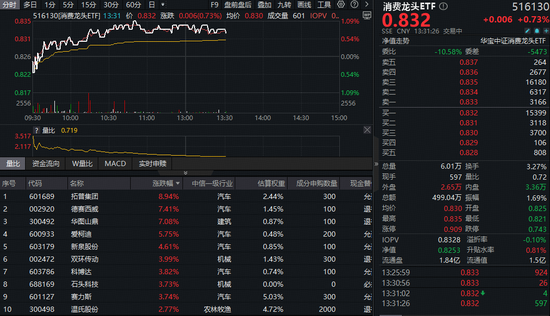
政策组合拳激活大消费,消费龙头ETF(516130)盘中涨超1%!基金经理火线解读
Xin Lang Ji Jin· 2025-09-15 05:47
Group 1 - The consumer sector showed strong performance on September 15, with the Consumer Leader ETF (516130) experiencing a rise of 0.73% during trading [1][3] - Key stocks in various sub-sectors such as automotive, construction, machinery, and agriculture saw significant gains, with Top Group rising over 8% and several others like Desai Xiwai and Huatu Shanding increasing over 7% [1][3] - The market is shifting focus from technology stocks, particularly those related to AI, to consumer sectors that have seen relatively lower valuations [1][3] Group 2 - The Consumer Leader ETF tracks the Consumer Leader Index, which selects the most representative and high-quality companies in the consumer sector, including major stocks like Kweichow Moutai and Gree Electric [5] - The index's price-to-earnings ratio was reported at 18.5 times, indicating a low valuation compared to historical data, suggesting a favorable long-term investment opportunity [3] - Upcoming consumption policies, particularly in regions like Zhejiang, are expected to stimulate domestic consumption during the Mid-Autumn Festival and National Day, potentially boosting the overall consumer sector [4]

工业硅期货早报-20250912
Da Yue Qi Huo· 2025-09-12 03:26
1. Report Industry Investment Rating There is no information provided in the report regarding the industry investment rating. 2. Core Viewpoints of the Report - For industrial silicon, the supply - demand situation is complex. The supply is stable, but demand is weak. The cost support is weakening in the flood season, and the market is expected to oscillate in the range of 8605 - 8875 [6][8]. - For polysilicon, the short - term supply schedule is decreasing, while the demand shows a continuous recovery trend. The cost support is stable, and the market is expected to oscillate in the range of 52660 - 54760 [10]. 3. Summary According to the Table of Contents 3.1 Daily Views Industrial Silicon - **Supply**: Last week, the supply was 90,000 tons, unchanged from the previous week [6]. - **Demand**: Last week, the demand was 81,000 tons, a 1.21% decrease from the previous week. The demand in the downstream sectors such as polysilicon, organic silicon, and aluminum alloy is in different states [6]. - **Cost**: The production of sample oxygen - passed 553 in Xinjiang is at a loss of 3322 yuan/ton, and the cost support is weakening in the flood season [6]. - **Other factors**: On September 11, the basis of the 11 - contract was 260 yuan/ton, with the spot price higher than the futures price. The social inventory decreased by 0.73%, and the sample enterprise inventory decreased by 1.55%. The main port inventory decreased by 1.68%. The MA20 is upward, and the 11 - contract futures price closed above the MA20. The net position of the main players is short, and the short position is decreasing [6][8]. Polysilicon - **Supply**: Last week, the production was 31,200 tons, a 3.31% increase from the previous week. The production schedule for September is expected to be 126,700 tons, a 3.79% decrease from the previous month [10]. - **Demand**: The production of silicon wafers last week was 13.88GW, a 0.72% increase from the previous week, and the inventory decreased by 1.78%. The production of battery cells and components is increasing, and the overall demand is recovering [10]. - **Cost**: The average cost of N - type polysilicon in the industry is 35,620 yuan/ton, and the production profit is 14,430 yuan/ton [10]. - **Other factors**: On September 11, the basis of the 11 - contract was - 2160 yuan/ton, with the spot price lower than the futures price. The weekly inventory increased by 3.79% and is at a low level compared to the same period in history. The MA20 is upward, and the 11 - contract futures price closed above the MA20. The net position of the main players is long, and the long position is decreasing [10]. 3.2 Market Overview Industrial Silicon - Futures prices of different contracts showed varying degrees of increase. For example, the 01 - contract increased by 0.94% [17]. - Spot prices of different grades of industrial silicon also showed increases, such as the price of East China non - oxygen - passed 553 silicon increased by 0.56% [17]. - Inventory data of different types, including social inventory, sample enterprise inventory, and main port inventory, showed a decreasing trend [17]. Polysilicon - Futures prices of different contracts increased. For example, the 01 - contract increased by 1.54% [19]. - Prices of silicon wafers, battery cells, and components were relatively stable, with small changes in some indicators [19]. - The export volume of battery cells and components increased, and the inventory of some products decreased [19]. 3.3 Price and Cost Trends - **Industrial Silicon**: The price - basis and delivery product spread trends, as well as the cost trends in sample regions, show fluctuations over time [21][38]. - **Polysilicon**: The market price and cost trends show that the price and cost of polysilicon have different change trends in different periods [64]. 3.4 Supply - Demand Balance - **Industrial Silicon**: The weekly and monthly supply - demand balance tables show that the supply - demand relationship is in a state of change, with different levels of balance or imbalance in different periods [41][44]. - **Polysilicon**: The monthly supply - demand balance table shows that the supply and demand are also in a dynamic state, with different balance results in different months [67]. 3.5 Downstream Market Trends Organic Silicon - The DMC price, production, and inventory trends show that the production capacity utilization rate is relatively stable, and the inventory has increased [47][53]. - The prices of downstream products such as 107 glue, silicone oil, and raw rubber are relatively stable [49]. Aluminum Alloy - The price, supply, inventory, and production trends of aluminum alloy show that the inventory is at a high level, and the production and import - export situation is complex [56][59]. - The demand in the automotive and wheel - hub sectors is related to the production and sales of automobiles and the export of wheel - hubs [60]. Polysilicon Downstream - **Silicon Wafers**: The price, production, inventory, and demand trends show that the production is increasing, and the inventory is decreasing [70]. - **Battery Cells**: The price, production, and export trends show that the production is increasing, and the export volume is also increasing [73]. - **Photovoltaic Components**: The price, production, inventory, and export trends show that the production and export are increasing, and the inventory is decreasing [76]. - **Photovoltaic Accessories**: The price, production, and import - export trends of photovoltaic accessories such as photovoltaic coating, photovoltaic film, and photovoltaic glass show different change trends [79]. - **Component Composition Cost - Profit**: The cost - profit trends of different components in 210mm components show different profit situations [81].
五矿期货农产品早报-20250912
Wu Kuang Qi Huo· 2025-09-12 02:52
Report Summary 1. Report Industry Investment Rating No relevant information provided. 2. Core Viewpoints - The soybean import cost is expected to remain weakly stable, and the domestic soybean meal market is likely to enter a destocking phase in September, with soybean meal prices predicted to fluctuate within a range [3][5]. - The central price of oils is supported by multiple factors, and they are expected to show a moderately upward - trending oscillation in the medium term, with a strategy of buying on dips and stabilization [7][10]. - The sugar price is generally bearish, and its downward space depends on the Brazilian sugar production from August to October [13]. - The cotton price is likely to continue oscillating in the short term due to the coexistence of bullish and bearish factors [15][16]. - The egg price may be stable or rise in the short term, but there is a possibility of a decline after a short - term increase, with a suggestion to wait and see and consider short - term long positions on significant declines [18][20]. - The pig price is expected to remain at a low level with minor fluctuations, and the futures market should pay attention to potential rebounds and short - selling opportunities after rebounds [22][23]. 3. Summary by Related Catalogs Soybean/M粕类 - **Important Information**: On Thursday, US soybeans rose slightly, and the domestic soybean meal market was affected by high inventory. The rainfall in the US soybean - producing areas is expected to be low in the next two weeks, and the soybean good - quality rate may decline. The Brazilian soybean premium has rebounded after a decline. The domestic soybean inventory of oil mills has reached a five - year high, and the soybean meal inventory has slightly increased. Last week, 2.3 million tons of soybeans were crushed, and 2.26 million tons are expected to be crushed this week [2][3]. - **Trading Strategy**: Pay attention to the cost performance after the stabilization of the soybean import cost. The domestic soybean meal market is expected to destock in September, and it is recommended to go long at the lower end of the cost range and be cautious about profit margins and supply pressure at the upper end [5]. Oils - **Important Information**: From September 1 - 10, 2025, Malaysia's palm oil exports decreased by 1.2% - 8.43%, and the production decreased by 3.17% compared to the same period last month. The import price of palm oil in China has a larger negative spread. The domestic three major oils oscillated on Thursday, with multiple factors affecting the market [7]. - **Trading Strategy**: The central price of oils is supported, and they are expected to oscillate moderately upward in the medium term. With high current valuations, the strategy is to buy on dips and stabilization [10]. Sugar - **Important Information**: On Thursday, the Zhengzhou sugar futures price continued to rebound. The Brazilian port's sugar - waiting - to - be - shipped quantity decreased slightly. The spot prices of sugar in different regions showed different degrees of increase [12]. - **Trading Strategy**: The sugar price is generally bearish, and its downward space depends on the Brazilian sugar production from August to October [13]. Cotton - **Important Information**: On Thursday, the Zhengzhou cotton futures price continued to oscillate weakly. The开机 rates of spinning and weaving factories increased slightly, and the cotton commercial inventory decreased. The US cotton export signing volume and Brazil's cotton exports to China showed different trends [15]. - **Trading Strategy**: The cotton market has both bullish and bearish factors, and the short - term cotton price is expected to continue oscillating [16]. Eggs - **Important Information**: The national egg price mostly increased, with small inventory and good demand, and the market trading was smooth [18][19]. - **Trading Strategy**: The egg supply is still large, but there are factors limiting the decline. It is recommended to wait and see and consider short - term long positions on significant declines [20]. Pigs - **Important Information**: The domestic pig price showed a mixed trend, with a low - level consolidation state and a high probability of remaining stable [22]. - **Trading Strategy**: The supply in September is bearish, but there are potential supporting factors. The spot price is expected to fluctuate slightly, and the futures market should pay attention to potential rebounds and short - selling opportunities after rebounds [23].
反内卷预期提振,生猪盘面反弹
Zhong Xin Qi Huo· 2025-09-11 05:10
1. Report Industry Investment Ratings - **Oils and Fats**: Expected to fluctuate [6] - **Protein Meal**: Expected to fluctuate [6] - **Corn and Starch**: Expected to fluctuate weakly [7] - **Hogs**: Expected to fluctuate [8] - **Natural Rubber and No. 20 Rubber**: Expected to fluctuate strongly in the short - term [9] - **Synthetic Rubber**: Expected to fluctuate [11] - **Cotton**: Expected to fluctuate in the short - term [12] - **Sugar**: Expected to fluctuate weakly in the long - term, and run in the 5500 - 5750 range in the short - term [14] - **Pulp**: Expected to fluctuate [15] - **Double - Glue Paper**: Expected to fluctuate [16] - **Logs**: Expected to stop falling and stabilize [19] 2. Core Views of the Report - **Oils and Fats**: Affected by the relatively bearish MPOB report, the market sentiment is weak, and it may continue to adjust. Pay attention to the effectiveness of the lower technical support [6]. - **Protein Meal**: The market has both long and short factors, and the market will continue to fluctuate narrowly. Hold long positions at 2900 - 2910 and add positions on dips. It is recommended that oil mills sell on rallies, and downstream enterprises buy basis contracts or fix prices on dips [6]. - **Corn and Starch**: Maintain the idea of shorting on rallies in the fourth quarter. There is a short - term tight supply, and a short - term long - term long pattern is expected [7]. - **Hogs**: The expectation of "anti - involution" boosts the market. In the short - term, the supply is abundant, and the cycle is still under supply pressure. In the long - term, if the capacity - reduction policy is implemented, the supply pressure in 2026 will be gradually weakened. Pay attention to the reverse arbitrage strategy [8]. - **Natural Rubber**: After the decline, it stabilizes, and there will still be fluctuations in the short - term. The short - term trend is expected to fluctuate strongly [9]. - **Synthetic Rubber**: It returns to the fluctuating trend. The short - term price of butadiene is expected to rise slightly, and the market may fluctuate strongly [11]. - **Cotton**: The cotton price fluctuates within the range. Try short - term long positions when the price reaches the lower limit of the range [12]. - **Sugar**: In the long - term, the sugar price has a downward driving force due to the expected supply surplus in the new season. In the short - term, it runs in the 5500 - 5750 range, and pay attention to the support at 5500 [14]. - **Pulp**: The pulp futures fluctuate sharply with the listing of double - glue paper. It is expected to fluctuate [15]. - **Double - Glue Paper**: The fundamentals are weak, but the listing price is neutral to low. Consider range operation between 4000 - 4500 [16]. - **Logs**: The market is in a game between weak reality and peak - season expectation. The price may stop falling and stabilize in September [19]. 3. Summaries According to Relevant Catalogs 3.1 Oils and Fats - **Logic**: Due to the limited expected decline in US soybean yield per unit, combined with the impact of oil - meal arbitrage, US soybeans and soybean oil fell on Tuesday. The MPOB report is bearish, and domestic oils and fats fluctuated and fell yesterday. The US soybean is affected by drought, and the domestic soybean oil inventory may peak. The MPOB report on palm oil is bearish, and the domestic rapeseed oil inventory is slowly falling but still high year - on - year [6]. - **Outlook**: Affected by the bearish MPOB report, the market sentiment is weak and may continue to adjust [6]. 3.2 Protein Meal - **Logic**: Internationally, the Fed's rate cut in September is almost certain. There are factors such as the possible occurrence of La Nina and the expected increase in Brazil's soybean exports. Domestically, the state reserve plans to sell 22,500 tons of imported soybeans, and the soybean import volume is large. The demand for soybean meal may increase steadily [6]. - **Outlook**: Both domestic and international markets will continue to fluctuate within the range. Hold long positions at 2900 - 2910 and add positions on dips [6]. 3.3 Corn and Starch - **Logic**: The domestic corn price shows a differentiated trend. The supply is short - term tight, and the demand has a phased increase. With the approaching of the new grain listing, the selling pressure will gradually appear in the fourth quarter [7]. - **Outlook**: Look for short - selling opportunities on rallies when the new grain is concentratedly listed. Consider reverse arbitrage [7]. 3.4 Hogs - **Logic**: The Ministry of Agriculture plans to hold a symposium on hog production capacity regulation enterprises on September 16. In the short - term, the supply is abundant, and the demand is stable. In the long - term, the "anti - involution" policy may drive the price to strengthen in 2026 [8]. - **Outlook**: The spot price is expected to fluctuate. The futures market is in a pattern of "weak reality + strong expectation", and pay attention to the reverse arbitrage strategy [8]. 3.5 Natural Rubber and No. 20 Rubber - **Logic**: The rubber market stabilizes after a sharp decline. The short - term fundamentals are strong, and there are many speculative themes. The supply increase may be postponed, and the downstream purchasing enthusiasm recovers after the price decline [9]. - **Outlook**: The short - term trend is expected to fluctuate strongly [9]. 3.6 Synthetic Rubber - **Logic**: The BR market stabilizes after a large decline and returns to the fluctuating trend. It follows the natural rubber market, and the cost of raw material butadiene provides support. The supply and demand fundamentals support the market to fluctuate in a narrow range [11]. - **Outlook**: The short - term price of butadiene may rise slightly, and the market may fluctuate strongly [11]. 3.7 Cotton - **Logic**: The domestic cotton market has low inventory and marginal improvement in demand. The new cotton commercial inventory is tight, and the demand is improving but the upward driving force is insufficient. Wait for the new cotton purchase price to give direction [12]. - **Outlook**: Fluctuate in the short - term. Try short - term long positions when the price reaches the lower limit of the range [12]. 3.8 Sugar - **Logic**: In the new season, although the drought in Brazil reduces the sugarcane yield, the sugar production is expected to increase due to the high sugar - making ratio. The supply in Southeast Asia is expected to increase. The domestic supply marginally increases, and the sugar price has a downward driving force [14]. - **Outlook**: In the long - term, the sugar price may decline. In the short - term, it runs in the 5500 - 5750 range, and pay attention to the support at 5500 [14]. 3.9 Pulp - **Logic**: The pulp futures fluctuate sharply with the listing of double - glue paper. The supply and demand change little, and it may be due to emotional speculation. The needle - broadleaf pattern is differentiated, and the price may continue to decline [15]. - **Outlook**: The pulp futures are expected to fluctuate [15]. 3.10 Double - Glue Paper - **Logic**: The fundamentals are bearish, with over - supply in the industry, declining demand, and high inventory. The listing price is neutral to low, and consider range operation between 4000 - 4500. Pay attention to reverse arbitrage in the early stage of listing [16]. - **Outlook**: The fundamentals are weak, but the listing price is neutral to low. Consider range operation [16]. 3.11 Logs - **Logic**: The log market is in a game between weak reality and peak - season expectation. The inventory is decreasing, and the demand is expected to increase. The price may stop falling and stabilize in September [19]. - **Outlook**: The price may stop falling and stabilize in September [19].
估值低支撑强 PTA有望企稳反弹
Qi Huo Ri Bao· 2025-09-11 00:13
Core Viewpoint - PTA futures have stabilized after dropping to the lower end of the fluctuation range at 4650 yuan/ton, with strong support expected for a rebound due to low valuation and tight supply-demand balance [1] Group 1: Raw Material Support - Despite pessimistic market expectations for the future supply-demand pattern of crude oil, international oil prices remain supported around 65 USD/barrel [2] - OPEC+ decided to slightly increase production while emphasizing a cautious and flexible approach to manage voluntary production cuts, which has calmed the market [2] - There has been no significant inventory accumulation in the crude oil market since July, indicating that supply surplus has not been confirmed [2] Group 2: Supply and Demand Balance - PTA operating rates are maintained at low levels, with current processing fees below 200 yuan/ton, leading to potential losses for some advanced PTA facilities [3] - The demand for textiles and apparel is expected to rise in September and October, but overall consumer demand remains weak, limiting brand replenishment intentions [3] - Polyester average operating rates as of September 4 are at 91%, with filament factories at 86.7%, short fiber factories at 93.9%, and bottle chip factories at 72.9% [3] - The profit margins in the polyester segment have improved, and inventory pressure is expected to be manageable during the peak season, allowing for sustained high operating rates [3] - Overall, the combination of low PTA valuation, short-term crude oil price support, and a tight supply-demand balance suggests strong support around 4700 yuan/ton, with PTA likely to stabilize and rebound in the short term [3]
新能源及有色金属日报:氧化铝交割升水调整-20250905
Hua Tai Qi Huo· 2025-09-05 07:51
1. Report Industry Investment Rating - Aluminum: Cautiously bullish [8] - Alumina: Neutral [8] - Aluminum alloy: Cautiously bullish [8] 2. Core Viewpoints of the Report - For electrolytic aluminum, the macro - environment drives the rise in non - ferrous metal prices, with a weak spot market. Supply remains stable, consumption shows improvement, and the inventory build - up rate slows, with expected destocking. Overseas consumption is strong, and there is an increased expectation of interest rate cuts [6]. - Regarding alumina, the adjustment of Xinjiang delivery premium may create arbitrage opportunities. The cost side has support, and although the supply - demand balance is slightly in surplus, considering multiple factors, the price should be treated neutrally [6][7]. - For aluminum alloy, scrap aluminum supply is tight, but production profit has recovered, indicating consumption recovery. The increase in social inventory is due to the transformation of invisible inventory to visible inventory [7]. 3. Summary by Relevant Catalogs 3.1 Important Data - **Aluminum Spot**: On September 4, 2025, the price of East China A00 aluminum was 20,610 yuan/ton, a change of - 120 yuan/ton from the previous trading day; the spot premium was - 20 yuan/ton, a change of 10 yuan/ton. The price of Central Plains A00 aluminum was 20,470 yuan/ton, and the spot premium was - 160 yuan/ton, a change of 30 yuan/ton. The price of Foshan A00 aluminum was 20,560 yuan/ton, a change of - 110 yuan/ton, and the spot premium was - 70 yuan/ton, a change of 15 yuan/ton [1]. - **Aluminum Futures**: On September 4, 2025, the main contract of SHFE aluminum opened at 20,710 yuan/ton, closed at 20,605 yuan/ton, a change of - 160 yuan/ton. The highest price was 20,765 yuan/ton, and the lowest was 20,525 yuan/ton. The trading volume was 151,216 lots, and the open interest was 206,617 lots [2]. - **Inventory**: As of September 4, 2025, the domestic social inventory of electrolytic aluminum ingots was 626,000 tons, a change of 0.3 tons; the warrant inventory was 59,583 tons, a change of 26 tons; the LME aluminum inventory was 479,600 tons, with no change [2]. - **Alumina Spot Price**: On September 4, 2025, the price of alumina in Shanxi was 3,140 yuan/ton, Shandong was 3,120 yuan/ton, Henan was 3,160 yuan/ton, Guangxi was 3,270 yuan/ton, Guizhou was 3,280 yuan/ton, and the FOB price of Australian alumina was 368 US dollars/ton [2]. - **Alumina Futures**: On September 4, 2025, the main contract of alumina opened at 2,998 yuan/ton, closed at 2,980 yuan/ton, a change of - 44 yuan/ton or - 1.46%. The highest price was 2,998 yuan/ton, and the lowest was 2,954 yuan/ton. The trading volume was 279,608 lots, and the open interest was 251,793 lots [2]. - **Aluminum Alloy Price**: On September 4, 2025, the purchase price of Baotai civil raw aluminum was 15,900 yuan/ton, and the purchase price of mechanical raw aluminum was 16,100 yuan/ton, with no change from the previous day. The price of ADC12 Baotai was 20,300 yuan/ton, with no change [3]. - **Aluminum Alloy Inventory**: The social inventory of aluminum alloy was 57,900 tons, and the in - plant inventory was 59,000 tons [4]. - **Aluminum Alloy Cost and Profit**: The theoretical total cost was 20,203 yuan/ton, and the theoretical profit was 197 yuan/ton [5]. 3.2 Market Analysis - **Electrolytic Aluminum**: The macro - environment drives the rise in non - ferrous metal prices, while the spot market is weak. Supply is stable, consumption is improving, and the inventory build - up rate slows, with expected destocking. Overseas consumption is strong, and there is an increased expectation of interest rate cuts [6]. - **Alumina**: A northwest aluminum plant purchased 10,000 tons of alumina at 3,230 yuan/ton, equivalent to a Shanxi ex - factory price of 3,060 yuan/ton. The adjustment of Xinjiang delivery premium by the SHFE may create arbitrage opportunities. The cost side has support, and although the supply - demand balance is slightly in surplus, considering multiple factors, the price should be treated neutrally [6][7]. - **Aluminum Alloy**: Scrap aluminum supply is tight, but production profit has recovered, indicating consumption recovery. The increase in social inventory is due to the transformation of invisible inventory to visible inventory [7]. 3.3 Strategy - **Single - side Strategy**: Bullish on aluminum, neutral on alumina, and bullish on aluminum alloy [8]. - **Arbitrage Strategy**: Long - short arbitrage in SHFE aluminum, long AD11 and short AL11, and reverse arbitrage between January and March contracts of alumina [8]