
反内卷政策

Search documents
周度经济观察:名义GDP下行有望趋缓-20251021
Guotou Securities· 2025-10-21 08:03
Economic Overview - In Q3, the actual GDP growth rate was 4.8% year-on-year, while the nominal GDP growth rate was 3.7%, reflecting a decline of 0.4 and 0.2 percentage points from Q2 respectively[4] - The decline in nominal GDP growth is expected to slow down due to the implementation of "anti-involution" policies and self-adjustments in the economy, which may help stabilize price levels[4][20] Industrial Performance - The industrial added value for large-scale enterprises in Q3 grew by 5.8% year-on-year, a decrease of 0.4 percentage points from Q2[6] - In September, the industrial added value increased by 6.5% year-on-year, a significant rise of 1.3 percentage points from August, indicating a recovery in industrial production[7] Investment Trends - Fixed asset investment in Q3 saw a significant decline of 6.6% year-on-year, a drop of 8.4 percentage points from Q2, with infrastructure, manufacturing, and real estate investments contracting broadly[11] - In September, real estate investment decreased by 21.3% year-on-year, while new construction area growth was -14.4%, indicating ongoing liquidity pressures in the real estate sector[15] Consumer Behavior - The nominal growth rate of retail sales of consumer goods in Q3 was 3.4%, a substantial drop of 2 percentage points from Q2, with September's growth at 3.0%, down 0.4 percentage points from August[18] - Consumer spending remains weak, influenced by low expectations regarding income and housing prices, suggesting a prolonged recovery process for consumption[18] Market Outlook - The equity market is experiencing adjustments and sector rotations primarily due to the impact of China-U.S. trade tensions, although this is expected to be short-term[21] - The International Monetary Fund (IMF) has raised its global economic growth forecast for 2025 to 3.2%, up by 0.2 percentage points from previous estimates, driven by better-than-expected adjustments in the private sector and productivity gains from AI technology[27]
仓位不低,可投标的不少!宁泉淡水泉瓴仁等名私募的最新观点……
聪明投资者· 2025-10-21 07:07
Core Insights - The private equity sector is maintaining high positions in their portfolios, showing a calm demeanor despite rising trade tensions post-October [2] - The market is experiencing structural growth, with significant gains in sectors like AI-related semiconductors and optical modules, while traditional industries are stagnating [6][7] - There is a recognition of visible bubbles in popular sectors, with a cautious approach towards investment in these areas [8] Group 1: Market Trends and Performance - The Shanghai Composite Index reached a nearly 10-year high in Q3, with a notable divergence between high-performing sectors and traditional industries [6] - Ningquan Asset's performance lagged behind the market due to a focus on traditional stocks, despite achieving double-digit returns this year [6][7] - The overall sentiment in the market is one of cautious optimism, with expectations of a healthy correction following rapid price increases [18][21] Group 2: Investment Strategies and Focus Areas - Investment managers are maintaining a conservative approach, focusing on sectors with stable valuations and avoiding participation in high-risk areas [10][12] - There is a shift towards growth stocks, with managers like Zhao Jun from Dongshuiquan seeing significant returns by adapting to market conditions [9] - The emphasis is on companies with strong fundamentals, particularly in technology and healthcare sectors, as they are expected to benefit from ongoing market trends [39][40] Group 3: Economic Indicators and Future Outlook - The current liquidity environment is expected to remain stable, supporting market performance [19] - Economic indicators show signs of improvement, with industrial profits showing recovery, which may enhance stock selection opportunities [19] - The market is anticipated to experience structural growth, driven by technological advancements and favorable macroeconomic policies [39][40]


经济数据点评:4.8%GDP背后的“冷热不均”
Tianfeng Securities· 2025-10-21 06:45
Report Industry Investment Rating No relevant content provided. Core Viewpoints - In September 2025, the macro - economy showed characteristics of "strong production, slow demand, and low prices". The Q3 GDP grew by 4.8% year - on - year, and the cumulative growth in the first three quarters was 5.2%, with little pressure to achieve the annual growth target of around 5%. However, there was still an obvious "uneven" economic situation [1][7]. - Macro policies have started to actively respond to the "cold" parts of the economy. Two policies targeting fixed - asset investment, especially infrastructure investment, are expected to improve the infrastructure investment growth rate in Q4 and support overall investment [1][2][9]. - For the bond market, insufficient effective demand and weak fundamental recovery support the bond market, but the pricing may be limited. In the absence of significant macro - environment and policy surprises, the bond market may continue the "ceiling - and - floor" volatile trend [2][10]. Summaries by Sections 1. September Economic Data: Differentiation between Strong Production and Slow Demand - The macro - economy in September 2025 had characteristics of "strong production, slow demand, and low prices". The production end was significantly stronger than expected, while demand - side indicators such as consumption and investment were weak. External demand remained resilient, but domestic demand slowed down, especially investment [1][7][8]. - Macro policies have responded. New policy - based financial instruments worth 500 billion yuan are used to supplement project capital, and the central government has allocated 500 billion yuan from local government debt balance limits to local areas, 10 billion yuan more than last year. These policies are expected to support Q4 investment [1][9]. 2. Industrial Production Shows Strong Performance, Exceeding Market Expectations - In September, the added value of industrial enterprises above designated size increased by 6.5% year - on - year, up 1.3 percentage points from the previous month, and the cumulative growth from January to September was 6.2%. Manufacturing upgrading continued to drive industrial resilience [3][12]. - The service production index in September increased by 5.6% year - on - year, basically flat compared with the previous month [13]. - By industry, the year - on - year growth rates of the automotive and food industries rebounded significantly in September, while those of the ferrous metal processing and electrical machinery industries declined. Emerging product output had high growth rates [15]. 3. Consumption Growth Continues to Slow, Policy Dividends Weaken - In September, the growth rate of social consumer goods retail sales slowed down again. The total retail sales of consumer goods were 419.71 billion yuan, with a year - on - year growth of 3.0%, the lowest increase this year. The policy subsidy dividend effect weakened, and the year - on - year growth rates of policy - supported home appliances and furniture declined significantly [4][18][22]. - Service consumption performed better than commodity consumption. The service retail sales in the first three quarters increased by 5.2% year - on - year, higher than the 4.6% of commodity retail sales [22]. 4. Investment Growth Declines Overall, Continues to Bottom Out - From January to September, fixed - asset investment decreased by 0.5% year - on - year, showing a downward trend. The investment structure was characterized by "slowing manufacturing, declining infrastructure, and real - estate drag" [26]. - Manufacturing investment had a cumulative year - on - year growth of 4%, with weakening growth momentum. Equipment purchase investment was still resilient, but some industries were cautious in capital expenditure due to "anti - involution" policies [28][29]. - Infrastructure investment (excluding electricity) had a cumulative year - on - year growth of 1.1%, with a further decline. Traditional infrastructure project construction slowed down, and the construction industry's slow production dragged down the investment growth rate. Fiscal policy weakening and local government debt - repayment pressure also affected funds [29]. - Real - estate investment had a cumulative year - on - year decline of 13.9% and was still bottoming out. The decline in real - estate sales area and sales volume widened, and the real - estate market was still "trading at a lower price for higher volume". More relaxed real - estate policies may be needed [29][30].
大越期货玻璃早报-20251021
Da Yue Qi Huo· 2025-10-21 02:12
交易咨询业务资格:证监许可【2012】1091号 大越期货投资咨询部 胡毓秀 从业资格证号:F03105325 投资咨询证号:Z0021337 联系方式:0575-85226759 重要提示:本报告非期货交易咨询业务项下服务,其中的观点和信息仅作参考之用,不构成对任何人的投资建议 。 我司不会因为关注、收到或阅读本报告内容而视相关人员为客户;市场有风险,投资需谨慎。 玻璃早报 2025-10-21 每日观点 玻璃: 1、基本面:近期沙河地区"煤改气"等反内卷、环保政策利好情绪有所升温,供应端扰动因素较 多;下游深加工订单整体偏弱,不及往年同期,地产终端需求疲弱;偏空 2、基差:浮法玻璃河北沙河大板现货1088元/吨,FG2601收盘价为1091元/吨,基差为-3元,期货 升水现货;中性 3、库存:全国浮法玻璃企业库存6427.6万重量箱,较前一周增加2.31%,库存在5年均值上方运行; 偏空 4、盘面:价格在20日线下方运行,20日线向下;偏空 5、主力持仓:主力持仓净空,空减;偏空 6、预期:玻璃基本面偏弱,短期预计震荡偏弱运行为主。 影响因素总结 利多: 1、"反内卷"政策影响下,浮法玻璃行业存产能出清预 ...
【机构策略】A股市场持续向好的核心逻辑并未改变
Zheng Quan Shi Bao Wang· 2025-10-21 02:00
Group 1 - The A-share market experienced slight fluctuations on Monday, with strong performance in sectors such as communication equipment, electronic components, coal, and robotics, while precious metals, jewelry, energy metals, and non-ferrous metals showed weaker performance [1] - Market policy expectations are rising, and the potential for interest rate cuts by the Federal Reserve this year is expected to support the market [1] - The A-share market is likely to continue showing characteristics of consolidation, with structural opportunities remaining abundant, particularly in the technology growth sector [1][2] Group 2 - The A-share market opened higher due to positive sentiment over the weekend but faced cautious behavior from funds ahead of several macro events this week, leading to reduced trading volume [2] - There is a prevailing cautious sentiment among market participants, with a focus on controlling positions until new leading sectors emerge [2] - Despite short-term fluctuations, the core logic supporting the A-share market's upward trend remains intact, with a foundation for continued strength in the fourth quarter [2]
山金期货黑色板块日报-20251021
Shan Jin Qi Huo· 2025-10-21 01:52
Group 1: Report Industry Investment Rating - Not provided in the given content Group 2: Core Views of the Report - The upcoming Sino-US trade consultations have improved market risk appetite. However, the apparent demand for steel products has recovered but remains weaker than the same period last year. High raw material prices and slow inventory decline are suppressing steel prices. The decline in steel mill profits may lead to production cuts and a negative feedback loop. Technically, the prices of rebar and hot-rolled coils have broken below the lower Bollinger Band, facing significant pressure from the 10-day moving average [2]. - Sino-US trade tensions have eased, but the anti-competition policy has had a bearish impact on raw materials. High iron ore supply, slow inventory reduction in the steel market, and potential production cuts by steel mills due to profit decline are putting pressure on iron ore prices. Technically, the 01 contract has broken downward, indicating a possible strong downward trend [4]. Group 3: Summary by Relevant Catalogs 1. Rebar and Hot-Rolled Coils - **Market News**: Sino-US trade consultations are to be held this week, improving market risk appetite [2]. - **Supply and Demand**: Apparent demand has recovered but is weaker than last year. Festival factors have led to an increase in building material inventory, and the slow decline in total inventory is suppressing prices. High raw material costs support prices, but the decline in steel mill profits may lead to production cuts [2]. - **Technical Analysis**: Rebar and hot-rolled coil futures prices have broken below the lower Bollinger Band, with significant pressure from the 10-day moving average after a short-term rebound [2]. - **Operation Suggestion**: Hold short positions lightly and take profits promptly if there is a rapid and significant decline [2]. - **Data Summary**: - **Prices**: Rebar and hot-rolled coil futures and spot prices have fluctuated. The basis and spreads have also changed [2]. - **Production**: The blast furnace operating rate and daily iron output of 247 steel mills have decreased slightly. The production of rebar and hot-rolled coils has declined, while the productivity of independent electric arc furnace steel mills has increased significantly [2]. - **Inventory**: The social inventory of five major steel products has decreased slightly, with a decrease in rebar inventory and an increase in hot-rolled coil inventory. The steel mill inventory of five major steel products has decreased significantly [2]. - **Apparent Demand**: The apparent demand for five major steel products has increased significantly [2]. 2. Iron Ore - **Market News**: Sino-US trade tensions have eased, but the anti-competition policy has had a bearish impact on raw materials [4]. - **Supply and Demand**: High iron ore supply, slow inventory reduction in the steel market, and potential production cuts by steel mills due to profit decline are putting pressure on iron ore prices [4]. - **Technical Analysis**: The 01 contract has broken downward, indicating a possible strong downward trend [4]. - **Operation Suggestion**: Hold short positions [4]. - **Data Summary**: - **Prices**: Iron ore spot and futures prices have declined. The basis and spreads have changed [4]. - **Supply**: Overseas iron ore shipments have increased, while the arrival volume and daily average port clearance volume have decreased. Port inventory has increased [4]. - **Demand**: The inventory of imported sintered powder ore in 64 sample steel mills has decreased [4]. 3. Industry News - The transfer fee of residential land in 300 cities increased by 12% year-on-year in the first three quarters, but the transaction area decreased by 8%. The land market cooled in the third quarter, with the average premium rate dropping to 5.8%, and the transaction area and transfer fee decreasing by 13% and 10% respectively [6]. - China's coal imports from Mongolia reached a record high in September, with imports of 9.29 million tons, a year-on-year increase of 33% [6]. - From October 13th to 19th, 2025, the global iron ore shipment volume was 33.335 million tons, a month-on-month increase of 1.26 million tons. The shipment volume from Australia and Brazil was 28.25 million tons, a month-on-month increase of 0.94 million tons [6]. - In September 2025, China's crude steel production was 73.49 million tons, a year-on-year decrease of 4.6%; pig iron production was 66.05 million tons, a year-on-year decrease of 2.4%; steel production was 124.21 million tons, a year-on-year increase of 5.1% [7]. - From October 20th, coal mines in Shanyin County, Shuozhou City will be shut down, involving a total production capacity of 34 million tons, and are expected to resume normal production on October 24th [8]. - From October 13th to 19th, 2025, Tangshan's steel mills will implement production control, and the expected operating rate of 29 sample steel mills will drop to 33%, with a daily output impact of about 50,000 tons [7]
中国2025年9月经济数据图景:总量稳步上行
Hua Tai Qi Huo· 2025-10-21 01:04
1. Report Industry Investment Rating No relevant content provided. 2. Core Views of the Report - The overall economic volume is steadily increasing. In the first three quarters of 2025, China's GDP was 101.5 trillion yuan, a year - on - year increase of 5.2% at constant prices. The proportion of the tertiary industry increased to 58.4%, contributing 60.7% to economic growth. In September 2025, PPI decreased by 2.3% year - on - year, and CPI decreased by 0.3% year - on - year. From January to September 2025, national fixed - asset investment (excluding rural households) was 371,535 billion yuan, a year - on - year decrease of 0.5%. In September 2025, the cumulative year - on - year growth rate of total retail sales of consumer goods was 4.46%, and from January to September, the national real estate development investment was 677.06 billion yuan, a year - on - year decrease of 13.9% [3][4]. - Pay attention to the progress of domestic demand expansion in the fourth quarter. China's economy has steadily increased in the first three quarters, with a cumulative growth of 5.2%, far exceeding that of major global economies. However, the real estate downturn needs further repair and adjustment. It is necessary to focus on domestic demand stimulus policies in the fourth quarter [5]. 3. Summary According to the Directory 3.1 Total: Steady Uptick - In the first three quarters of 2025, China's economy maintained stable growth. GDP was 101.5 trillion yuan, a year - on - year increase of 5.2% at constant prices. The proportion of the tertiary industry increased to 58.4%, contributing 60.7% to economic growth. The information transmission, software, and information technology services, and leasing and business services continued to drive service industry growth. Industrial production advanced steadily, with the added value of large - scale industries increasing by 6.2% year - on - year in the first three quarters. In September, the service business activity index was 50.1%, and the business activity expectation index was 56.3% [10][11]. 3.2 Inflation: Slight Improvement - In September 2025, PPI decreased by 2.3% year - on - year, and industrial producer purchase prices decreased by 3.1% year - on - year. The price pressure on mid - stream manufacturing eased, some export - oriented industries improved, the impact of international imports was divided, new productive forces industries maintained growth, and consumer demand continued to support. The year - on - year rebound of PPI in the third quarter was mainly due to the low base and anti - involution market expectations. In September, CPI decreased by 0.3% year - on - year, and core CPI increased by 1.0% year - on - year, indicating that domestic consumer demand continued to recover [20][40]. 3.3 Investment: Growth Rate Decline - From January to September 2025, national fixed - asset investment (excluding rural households) was 371,535 billion yuan, a year - on - year decrease of 0.5%. Equipment and tool purchase investment maintained double - digit growth. In terms of industrial structure, investment in the first, second, and third industries all slowed down. Some high - end manufacturing fields showed prominent investment performance, while investment in some industries continued to contract. China is in a critical period of new and old kinetic energy conversion, but the endogenous driving force and resilience of economic growth are still increasing [55][56]. 3.4 Production: Continued Differentiation - From January to September 2025, the added value of large - scale industries increased by 6.2% year - on - year. The industrial structure continued to upgrade, and the utilization rate of industrial production capacity improved. However, industry performance continued to differentiate, with high - end manufacturing fields showing strong vitality and some traditional fields having low capacity utilization rates [60]. 3.5 Consumption: Growth Rate Slowdown - In the first three quarters of 2025, the total retail sales of consumer goods were 365,877 billion yuan, a year - on - year increase of 4.5%. The contribution rate of final consumption expenditure to economic growth reached 53.5%. The market structure continued to optimize, and online consumption and service consumption showed good growth. In September 2025, the cumulative year - on - year growth rate of total retail sales of consumer goods was 4.46%, a decline from the previous month, mainly due to the misaligned Mid - Autumn Festival and the high base formed by last year's consumption promotion policies [71]. 3.6 Real Estate: Still in Need of Improvement - From January to September 2025, national real estate development investment was 677.06 billion yuan, a year - on - year decrease of 13.9%. The national real estate climate index declined. The sales area and sales volume of new commercial housing decreased year - on - year, and housing prices showed a mixed trend. The real estate market is in a stage of "policy support and endogenous adjustment", and future development depends on key variables such as the implementation efficiency of stock housing acquisition, the accuracy of private real estate enterprise financing support, and the deepening space of first - tier city policies [80][81]. 3.7 Appendix: National Bureau of Statistics Announcement - In the first three quarters, the national economy continued to develop steadily. GDP was 101.5036 trillion yuan, a year - on - year increase of 5.2% at constant prices. Agricultural production was good, industrial production grew rapidly, service industry development was stable, market sales increased steadily, fixed - asset investment was stable with a slight decline, goods import and export continued to grow, core CPI continued to rebound, employment was generally stable, and residents' income increased steadily [101].
二育补栏分流,生猪期现反弹
Zhong Xin Qi Huo· 2025-10-21 00:40
1. Report Industry Investment Ratings - Oils and Fats: Oscillating, including soybean oil, palm oil, and rapeseed oil [5] - Protein Meals: Oscillating, covering soybean meal and rapeseed meal [5] - Corn/Starch: Oscillating [6] - Hogs: Oscillating weakly [2][8] - Natural Rubber: Oscillating [9] - Synthetic Rubber: Oscillating [11] - Cotton: Oscillating within a short - term range, with prices slightly stronger this week [12] - Sugar: Oscillating weakly [13] - Pulp: Oscillating weakly [14] - Offset Paper: Oscillating [16] - Logs: Oscillating [19] 2. Core Views of the Report - The agricultural product market shows a complex situation with different trends for various products. In the short - term, some products are affected by factors such as supply and demand, weather, and policies, while in the long - term, factors like production capacity changes and consumption trends play important roles. For example, the hog market is in a "weak reality + strong expectation" pattern, with short - term supply pressure but potential relief in the second half of 2026 [2][8]. 3. Summary by Relevant Catalogs 3.1 Oils and Fats - **View**: Continue to oscillate and consolidate, waiting for further information guidance. The market is affected by both macro and industrial factors. Macro factors include the US government "shutdown", expectations of Sino - US trade negotiations, and the Fed's interest - rate cut expectations. Industrial factors involve the suspension of US soybean data updates, expectations of lower US soybean yields, increased expected production of Brazilian new - season soybeans, and the inventory and export situations of palm oil [5]. - **Outlook**: Soybean oil, palm oil, and rapeseed oil are all expected to oscillate. The market lacks upward momentum due to factors such as the expected accumulation of Malaysian palm oil inventory, the suspension of US soybean data updates, and the smooth progress of Brazilian soybean planting [5]. 3.2 Protein Meals - **View**: Double meals are oscillating at a low level, and selling put options can be attempted. Internationally, US soybean production and exports are affected by policies, and Brazilian soybean planting is progressing smoothly. Domestically, short - term oil mill operations are increasing, and downstream inventory levels are not low. In the medium - term, Sino - US trade relations and downstream replenishment after seasonal destocking need to be monitored. In the long - term, domestic soybean meal supply is expected to be sufficient in the fourth quarter of 2025, with a possible small shortage in the first quarter of 2026 [5]. - **Outlook**: Soybean meal and rapeseed meal are expected to oscillate. The market should pay attention to the support level around 2850 - 2900, as well as weather and Sino - US trade trends. Selling out - of - the - money put options can be considered [5]. 3.3 Corn/Starch - **View**: There is a temporary shortage at ports, leading to a continuous rebound in futures and spot prices. Short - term price increases are due to factors such as bad weather, farmers' reluctance to sell, port shortages, and state - owned reserve purchases. However, the selling pressure has not been fully released, and the market is expected to be oscillating weakly in the short - term. In the long - term, the market is expected to be short - term bearish and long - term bullish [6][7]. - **Outlook**: Oscillating. If prices rebound slightly due to recent weather disturbances and inventory shortages, short - selling opportunities can be considered. In the long - term, the expectation of tight annual supply supports the idea of low - buying in the far - month contracts [7]. 3.4 Hogs - **View**: Second - fattening replenishment has diverted part of the supply pressure, leading to a rebound in hog futures and spot prices. In the short - term, consumption is in the off - season, and supply is abundant. In the medium - term, the high - level production capacity of sows in the first half of 2025 will lead to an increase in hog slaughter in the fourth quarter. In the long - term, sow production capacity is showing signs of reduction, and supply pressure is expected to ease in the second half of 2026 [8]. - **Outlook**: Oscillating weakly. Near - month contracts are under supply pressure, while far - month contracts are supported by the expectation of production capacity reduction. The hog industry presents a "weak reality + strong expectation" pattern, and attention can be paid to reverse - spread strategy opportunities [2][8]. 3.5 Natural Rubber - **View**: Return to the oscillating bottom - grinding trend. The recent divergence in the trends of light and dark rubber is due to factors such as the impact of state - reserve sales on RU and the low import volume and limited warehouse receipts of NR. The raw material price of cup rubber is relatively firm, and there are still some weather disturbances in the producing areas. The demand for tires in the fourth quarter is expected to decline [9][10]. - **Outlook**: Due to high macro uncertainty, if the overall commodity performance is poor, rubber prices are expected to continue to oscillate and find the bottom [10]. 3.6 Synthetic Rubber - **View**: The market performance is dull, with narrow - range oscillations. High production this year has been a major pressure on the market. Although downstream demand is increasing, the growth rate is lower than that of production, resulting in high social inventory. The price of butadiene, the raw material, has been fluctuating [11]. - **Outlook**: With high fundamental pressure and a lack of improvement in the raw material end, the market is expected to continue to oscillate and grind the bottom, and there is a possibility of hitting a new low for the year [11]. 3.7 Cotton - **View**: The purchase price has increased, leading to a rebound in cotton prices. The expected cotton production in Xinjiang has been adjusted downward, and the firm purchase price of seed cotton has provided cost - side support. In the short - term, the downward driving force of Zhengzhou cotton has weakened, and there is a demand for a rebound [12]. - **Outlook**: Oscillating within a short - term range, with prices slightly stronger this week. Attention should be paid to Sino - US trade negotiations, and upstream enterprises are advised to hedge actively when prices are high [12]. 3.8 Sugar - **View**: Sugar prices are oscillating at a low level, with weak supply and demand. In the medium - and long - term, the global sugar market is expected to have a surplus in the 25/26 crushing season, and sugar prices are in a bearish pattern. In the short - term, Brazilian sugar production has passed its peak, but exports have increased, and domestic sales and inventory situations are not optimistic [13]. - **Outlook**: Sugar prices are expected to oscillate weakly as a whole, and short - selling on rebounds is recommended [13]. 3.9 Pulp - **View**: Spot trading is light, and pulp prices are running at a low level. After the National Day, pulp futures have shown a bottom - oscillating trend. The supply and demand situation has not changed significantly, and the market is concerned about the high ratio of virtual to real pulp and the concentrated cancellation at the end of the year. However, the game sentiment for the 01 contract has weakened. In general, the pulp market is difficult to rise significantly [14]. - **Outlook**: Oscillating weakly. The market is dominated by warehouse receipts and weak supply - demand conditions, and the weakness of pulp futures is difficult to reverse [14][15]. 3.10 Offset Paper - **View**: With the approaching of tenders, offset paper prices may stabilize. The spot price center of offset paper remains stable, but the market is not active. The cost support is average, and the upcoming tenders have a pessimistic market expectation. Although the supply pressure has been alleviated to some extent, the increase in new production capacity in South China may restrict paper prices [16]. - **Outlook**: Oscillating. There is a possibility of a slight decline in spot prices in the short - term [16]. 3.11 Logs - **View**: Freight rates have increased, leading to the relatively strong operation of logs. The increase in port fees has raised the cost of some ships, affecting the price of logs. The market has been running weakly recently due to factors such as the negative impact of domestic timber delivery in Chongqing and the failure of the peak - season expectation. The inventory level is not low, and the demand in the real - estate market is weak [19]. - **Outlook**: In the next few weeks, due to the disturbance of increased port - fee costs, attention can be paid to the opportunity of buying on dips for the 01 contract. In the medium - term, attention should be paid to the progress of foreign merchants' replacement of involved ships and the risk of price decline after the relaxation of Sino - US policies [19].
供需矛盾突出 玻璃趋势性上行动能不足
Qi Huo Ri Bao· 2025-10-20 23:59
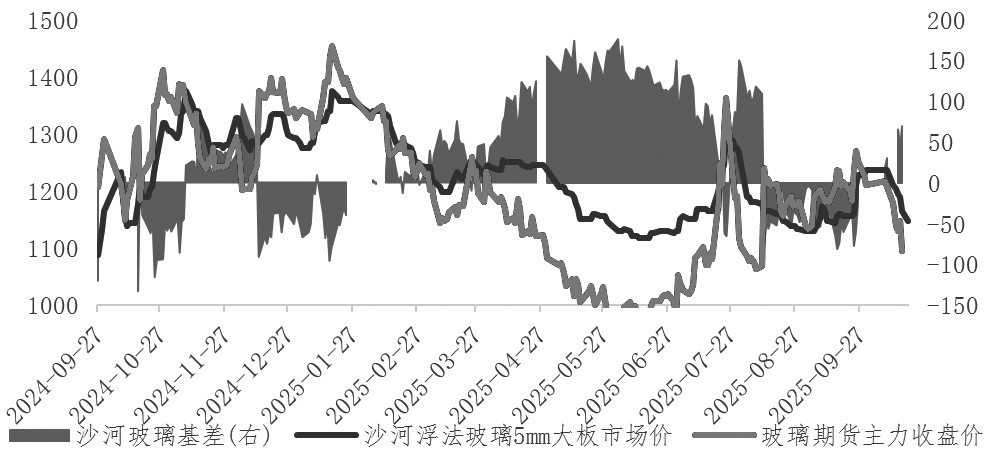
供需矛盾突出 今年"金九银十",玻璃市场并未呈现旺季特征,核心因素在于需求偏弱。一方面,终端房地产市场复苏缓慢,长期压制玻璃需求。1—9月, 我国新建商品房销售面积、房屋新开工面积、房屋施工面积、房屋竣工面积累计同比增幅分别为-5.5%、-18.9%、-9.4%、-15.3%,较去年同 期降幅明显收窄,从侧面反映房地产行业持续复苏。但以上指标仍处于同比负增长状态,按照新开工至竣工的传导周期为18~24个月计算, 未来房地产行业对玻璃的需求仍处于同比下降趋势。另一方面,终端复苏缓慢抑制玻璃深加工订单量和开工水平。截至10月中旬,玻璃深加 工企业订单天数均值约10.4天,同比下降21.2%;下游Low-E玻璃开工率仅为43.7%,已连续4周下滑。 事实上,近几年玻璃市场常出现"旺季不旺"特征,今年9—10月需求也表现平淡。除季节性规律失调外,北方自9月下旬进入持续降雨周期, 天气因素限制了玻璃企业的出货效率,削弱玻璃采购需求的同时,也导致玻璃企业持续累库。截至10月中旬,玻璃企业库存为6427.56万重 箱,较9月末增长8.29%。 国庆节假期后,玻璃期现货价格双双下跌。10月20日,玻璃期货主力2601合约收盘 ...
2025年9月宏观数据解读:9月经济:增速放缓但目标无忧
ZHESHANG SECURITIES· 2025-10-20 11:46
Economic Growth - Q3 GDP growth rate was 4.8%, down from 5.2% in the previous quarter, with nominal GDP growth at 3.7% compared to 3.9%[1] - The contribution of final consumption, gross capital formation, and net exports to GDP growth was 56.6%, 18.9%, and 24.5% respectively[14] - Q4 economic growth is expected to slightly decline to 4.7%, but achieving the annual growth target of around 5% is considered feasible[15] Industrial Production - In September, industrial added value increased by 6.5% year-on-year, exceeding market expectations, with a month-on-month growth of 0.64%[3] - The capacity utilization rate for industrial enterprises was 74.6% in Q3, up 0.6 percentage points from Q2[21] - High-tech manufacturing added value grew by 9.6% year-on-year, contributing 24.7% to overall industrial growth[20] Consumer Spending - Retail sales of consumer goods in September grew by 3%, down from 3.4% in the previous month, marking the fourth consecutive month of decline[4] - The "trade-in" policy supported certain categories, but overall consumer spending is expected to remain under pressure in Q4 due to reduced fiscal support[32] - The restaurant sector saw a weak performance, with dining revenue growing only 0.9% year-on-year[33] Investment Trends - From January to September, fixed asset investment (excluding rural households) decreased by 0.5%, marking the first negative cumulative data since August 2020[7] - Real estate development investment fell by 13.9%, while manufacturing investment grew by 4.0%[43] - Infrastructure investment in the electricity, heat, and water production and supply sector increased by 15.3% year-on-year, contributing 1.1 percentage points to overall investment growth[42] Employment and Policy - The urban surveyed unemployment rate in September was 5.2%, showing a slight decline, aided by policies supporting employment for college graduates[8] - The government is gradually prioritizing expanding domestic demand and consumption, indicating a shift towards counter-cyclical measures[34]