
Qi Huo Ri Bao

Search documents
特朗普下令:扣押俄罗斯油轮!美国“将无限期控制委内瑞拉石油销售”!银价 暴跌
Qi Huo Ri Bao· 2026-01-08 00:23
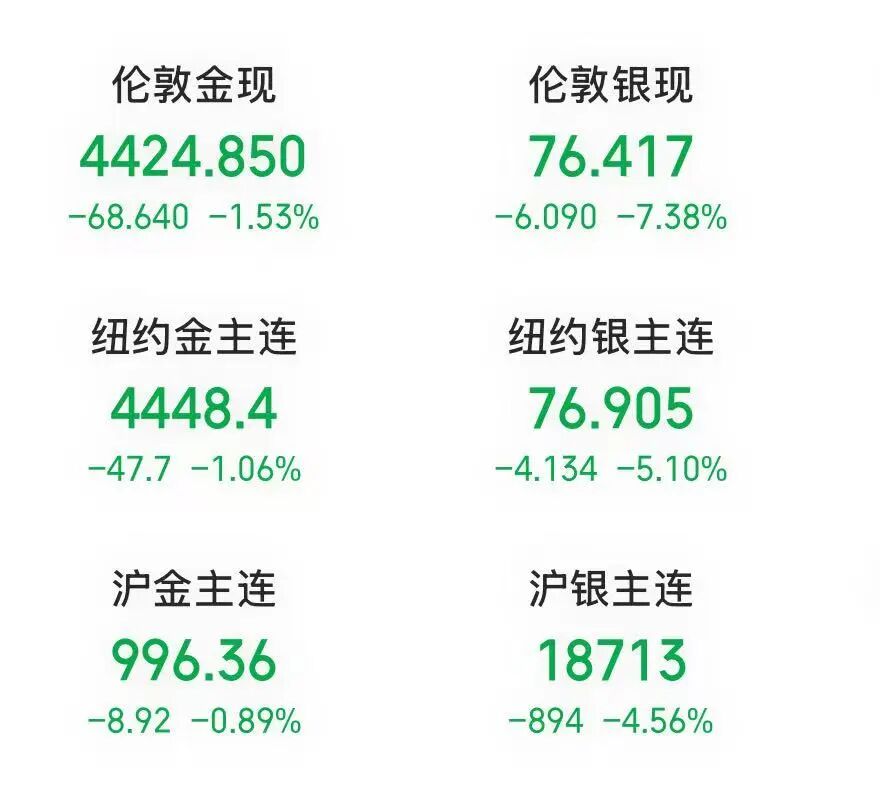
Group 1: Market Overview - On January 7, both domestic and international silver prices experienced significant declines, with London silver spot prices dropping over 7%, New York silver futures falling over 5%, and Shanghai silver futures decreasing over 4% [1][3] - Gold prices also saw a pullback during this period [1] Group 2: Employment Data - The ADP National Employment Report for December 2025 indicated an increase of 41,000 jobs in the U.S. private sector, slightly below the market expectation of 48,000, but reversing the previous month's decline of 29,000 jobs [2] - The upcoming non-farm payroll data is anticipated to show an increase of 73,000 jobs for December 2025, with the unemployment rate expected to slightly decrease to 4.5% [2] Group 3: U.S. Oil Control - U.S. military announced the seizure of two oil tankers, including a Russian vessel, under a presidential order [3] - U.S. Energy Secretary Chris Wright stated that the U.S. will indefinitely control the sale of Venezuelan oil, with revenues directed to benefit the Venezuelan people [4] Group 4: Market Regulation Measures - The Shanghai Futures Exchange announced several risk control measures for silver futures and tin futures, including adjustments to trading fees and limits on daily opening positions for non-futures company members [5][7] - The margin requirements and price fluctuation limits for silver futures contracts will be adjusted, with the price fluctuation limit set at 16% and margin ratios for hedging and general positions adjusted to 17% and 18% respectively [9][10] - Analysts noted that the recent volatility in precious and non-ferrous metals markets poses increased risks, and the measures taken by the exchange aim to curb excessive speculation and stabilize market operations [10]

有色金属板块延续强势 沪镍涨停
Qi Huo Ri Bao· 2026-01-08 00:23
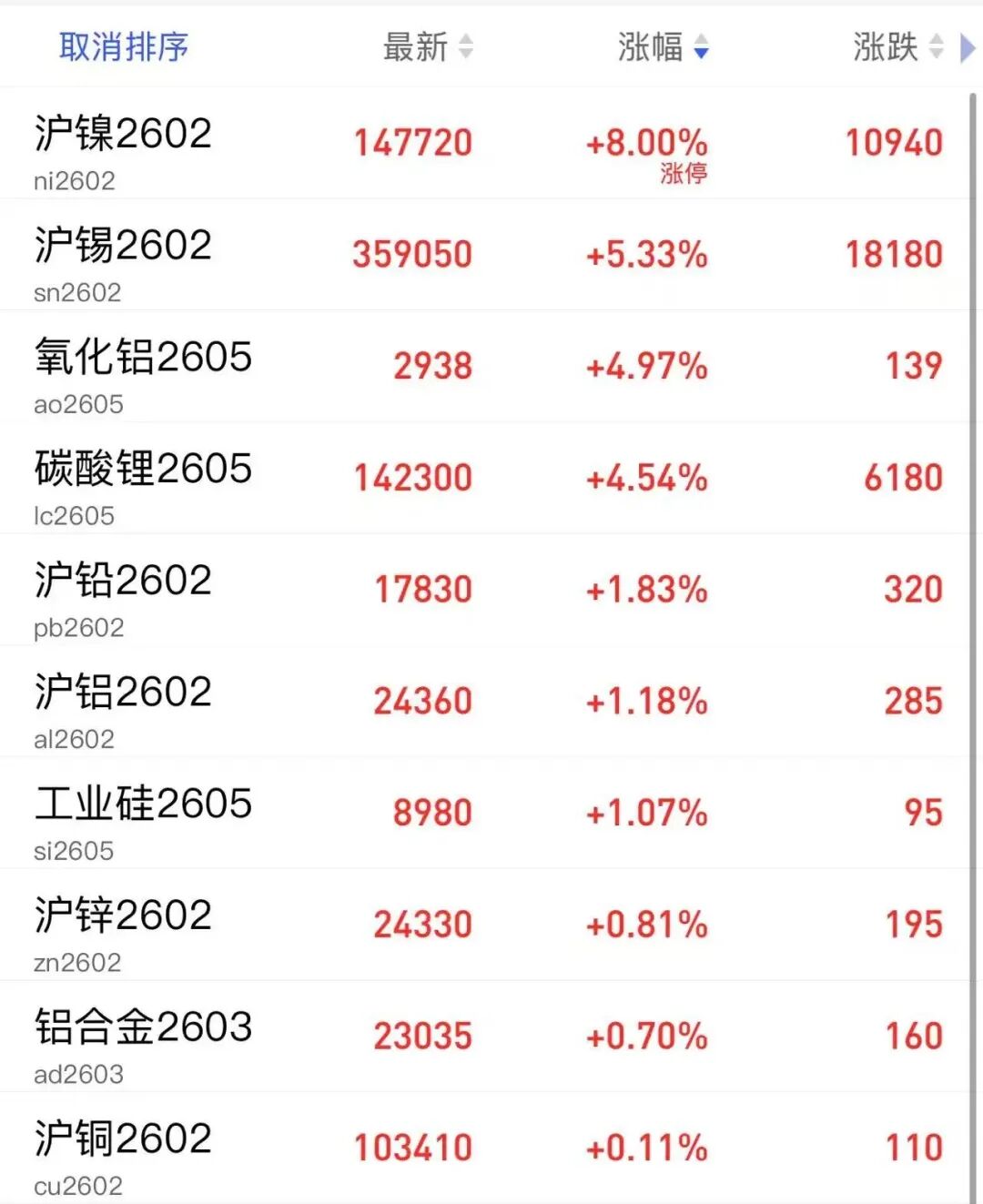
Core Viewpoint - The non-ferrous metal sector continues to show strength, with significant price increases in nickel, tin, and alumina contracts, driven by low valuations and supply disruptions [1][2]. Price Movements - Nickel (沪镍2602) rose by 8.00% to 147,720, while tin (沪锡2602) increased by 5.33% to 359,050, and alumina (氧化铝2605) saw a rise of 4.97% to 2,938 [2]. - Other notable increases include lithium carbonate (碳酸锂2605) at +4.54%, lead (沪铅2602) at +1.83%, and aluminum (沪铝2602) at +1.18% [2]. Market Drivers - The price surge in nickel is attributed to cost support and policy disruptions, particularly from Indonesia, which has reduced nickel ore production quotas and plans to revise the pricing formula for nickel [3][4]. - Tin prices are driven by supply constraints and increasing demand, with production recovery in Myanmar falling short of expectations [4]. - Alumina prices are supported by low valuations and the impact of differential electricity pricing policies, which are expected to increase operational costs [4]. Market Outlook - The current non-ferrous metal bull market is primarily driven by the depreciation of the US dollar and rising geopolitical risks, which enhance investment demand [4]. - However, there is a concern regarding insufficient downstream demand in the domestic market, leading to limited transaction volumes and deep discounts in the spot market [4]. - The long-term outlook suggests potential risks of significant corrections in the non-ferrous sector, particularly for aluminum and lead, while nickel's price increase heavily relies on overseas policy factors [4][5].
有色金属板块延续强势,沪镍涨停
Qi Huo Ri Bao· 2026-01-07 23:57
Core Viewpoint - The non-ferrous metal sector continues to show strength, with significant price increases in nickel, tin, and alumina driven by low valuations, supply disruptions, and rising demand [1][2]. Group 1: Nickel Market - Nickel prices are surging due to tightening supply expectations from Indonesia and increased market sentiment, with nickel being relatively undervalued compared to other metals [2]. - Recent policy changes in Indonesia, including a reduction in nickel ore production quotas and a revision of the pricing formula for nickel, are expected to increase production costs [1][2]. - The solid-state battery industry's rapid development is anticipated to boost long-term demand for nickel, despite the current market fundamentals remaining weak [2]. Group 2: Tin Market - Tin prices are rising due to supply constraints and continuous demand growth, with recent production issues in Myanmar impacting supply significantly [2]. - The decline in ore quality from overseas sources is also contributing to the supply challenges in the tin market [2]. Group 3: Alumina Market - The increase in alumina prices is primarily driven by low valuations and the impact of differential electricity pricing policies, which are expected to lead to industry upgrades and higher operational costs [2]. - Electricity costs account for 13% to 15% of alumina production costs, making the differential pricing policy a significant factor in market sentiment [2]. Group 4: Market Outlook - The current lack of downstream demand for non-ferrous metals and limited acceptance of high-priced goods in the spot market may lead to a gradual adjustment in pricing through the futures market [3]. - The non-ferrous metal sector may face significant correction risks in the medium to long term, particularly for alumina and lead, while the performance of nickel is heavily reliant on overseas policy factors [3]. - The market is expected to continue trading based on macroeconomic policies and supply security, with stronger performance anticipated for tin, copper, and aluminum, while nickel, zinc, and lead may perform relatively weaker [3].
焦煤、焦炭期价双双涨停!一则消息引爆?
Qi Huo Ri Bao· 2026-01-07 23:39
Group 1 - The core viewpoint of the news is that coking coal and coke futures have experienced significant price increases, with multiple contracts reaching their daily limit, indicating strong market demand and bullish sentiment in the coal sector [1][3][6] - The A-share coal sector saw substantial gains, with companies like Dayou Energy and Shanxi Coking Coal hitting their daily price limits, reflecting investor confidence in the coal market [1] - Coking coal futures main contracts surged by 8%, reaching a new high since November of the previous year, while coke futures also saw notable increases, with main contracts rising by 3.52% [3] Group 2 - A report indicated that the Yulin city government in Shaanxi province announced a reduction in coal production capacity by 1.9 million tons due to insufficient supply guarantees for electricity coal, affecting 26 out of 52 coal mines [4] - Despite the reduction in production capacity, industry insiders believe the actual market impact will be limited, as the reduced capacity represents only 3% of Yulin's projected coal output for 2025 [5] - The market is currently sensitive to positive news, which has overshadowed negative fundamental factors, leading to increased speculation about coal production and supply [5][6] Group 3 - Analysts noted that the recent price increases in black commodities, including coking coal, are driven by improved macroeconomic expectations and a recovery in steel mill profits, leading to increased raw material inventory replenishment [6][7] - The current inventory levels for steel mills and coking plants indicate that there is still room for replenishment, with iron ore and coking coal inventory days at 31.88 and 12.75 days, respectively [7] - The first quarter is typically a supply off-season, which may lead to a temporary supply-demand mismatch, potentially supporting prices in the short to medium term [7][8]



玻璃、纯碱期价大幅上涨!涨势能否持续?
Qi Huo Ri Bao· 2026-01-07 23:39
Core Viewpoint - The significant rise in glass and soda ash futures prices is primarily driven by improved policy expectations and a recovery in market sentiment, with main contracts seeing increases of nearly 8% [1][2]. Macro Factors - The recent Central Bank meeting indicated a commitment to maintaining a moderately loose monetary policy, which is expected to support economic stability and boost market sentiment for commodities [3]. - The emphasis on counter-cyclical and cross-cyclical adjustments, along with maintaining ample liquidity, is seen as a foundation for improving macro expectations [3]. Industry Factors - The ongoing "anti-involution" policies are leading to structural adjustments in the glass and soda ash industries, with initiatives like differentiated electricity pricing aimed at phasing out outdated capacities [3]. - Specific regional efforts, such as the transition to cleaner energy in glass production, are expected to further support price rebounds [3]. Supply and Demand Dynamics - Recent improvements in production and sales in key regions are contributing to a favorable supply-demand balance for glass, with expectations of entering a destocking phase [4]. - However, the soda ash industry still faces significant supply pressure, with ongoing capacity expansions projected to add 410 million tons in 2025 and 430 million tons in 2026, while demand remains weak [5]. - The float glass market is experiencing a dual weakness in supply and demand, with recent production declines and a slow recovery in the real estate market expected to lead to continued demand decreases [5][6]. Market Outlook - Industry experts suggest that both glass and soda ash sectors are at the bottom of their cycles, with limited rebound potential and increased short-term market volatility anticipated [7]. - Policy expectations are expected to dominate price trends, with fundamental factors unlikely to support sustained price increases [8]. - The long-term oversupply situation in soda ash is not expected to change quickly, while glass prices may see upward movement later in the year if supply-side adjustments are realized [8].
印尼政策变化加剧镍市供应担忧
Qi Huo Ri Bao· 2026-01-07 16:18
Core Viewpoint - Nickel prices have been experiencing a significant rebound since mid-December 2025, driven primarily by uncertainties surrounding Indonesia's nickel mining policies, with a notable acceleration in price increases in 2026 [1] Group 1: Nickel Price Dynamics - The main catalyst for the recent rise in nickel prices is the uncertainty regarding Indonesia's mining policies, which has tightened supply and raised cost expectations in the industry [1] - Analysts indicate that Indonesia's nickel production target for 2026 is set at approximately 250 million tons, a 34% decrease from the 379 million tons quota in 2025, aimed at preventing further price declines [1][2] - The market sentiment in the non-ferrous sector is improving, with nickel being viewed as a relatively undervalued metal, leading to strong potential for price recovery [1] Group 2: Supply and Demand Outlook - If Indonesia's nickel mining approval quota drops to 250 million tons, combined with imports from the Philippines and a projected consumption of 340 to 350 million tons, there will be a significant supply gap in local smelting materials [2] - Despite the tightening supply, the overall nickel market remains weak, with an expected surplus of approximately 190,900 tons in 2026, similar to 2025 levels, indicating limited demand growth [2] - Current high inventory levels, with LME nickel stocks exceeding 250,000 tons, suggest that the nickel market is still in a state of oversupply, despite some positive expectations [2] Group 3: Macro Factors and Market Sentiment - A moderately loose monetary policy is contributing to the upward pressure on non-ferrous metal prices, including nickel, with increased market liquidity expected to amplify price volatility [3] - The short-term market trajectory will depend on the interplay between Indonesia's mining policies and the existing oversupply and high inventory levels, while long-term focus should be on the implementation of Indonesia's mining approval policies [3]
【信兴农】中信期货走进紫云 多元帮扶促振兴
Qi Huo Ri Bao· 2026-01-07 08:47
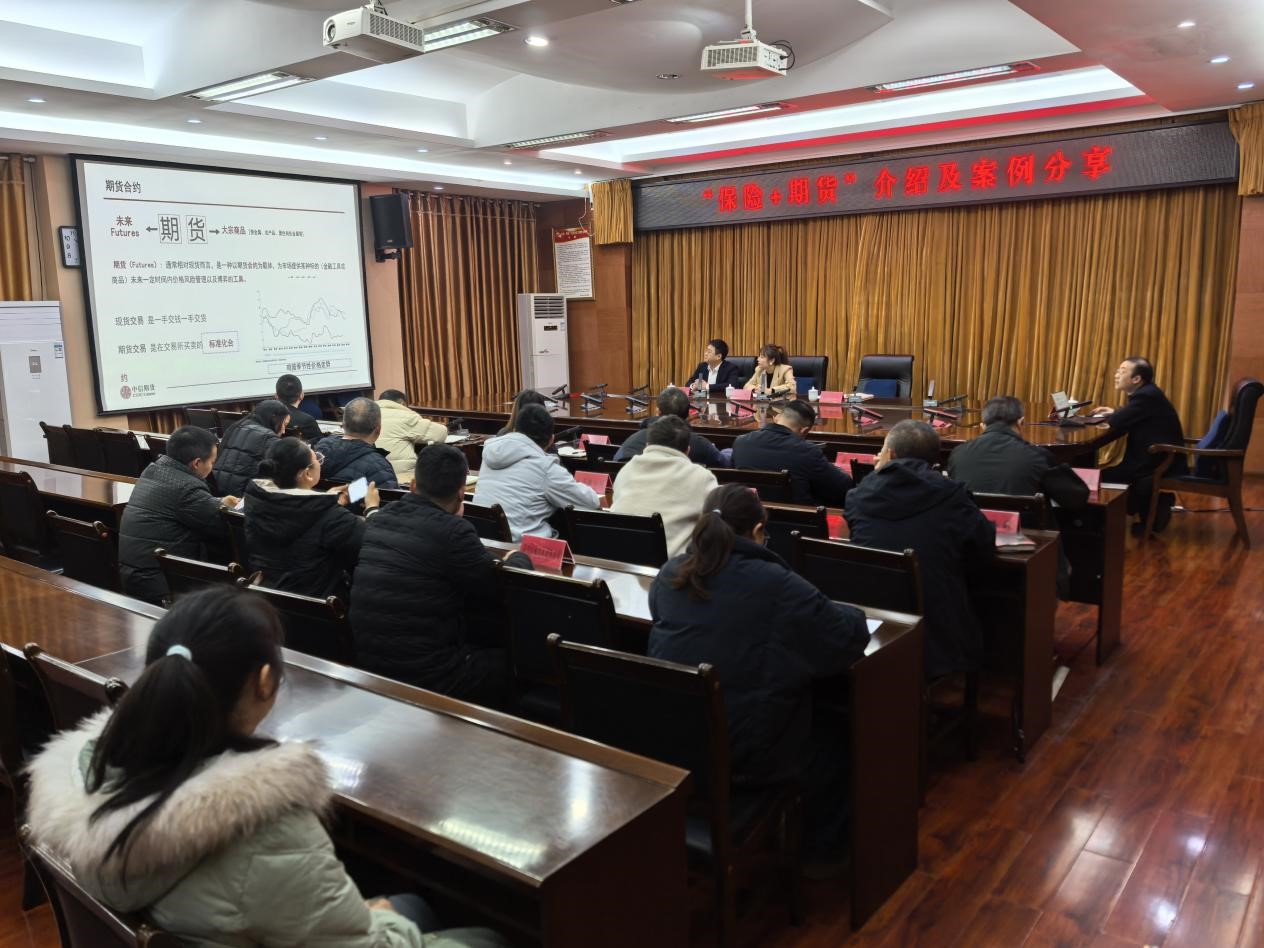
Core Points - The event on December 16, 2025, marked a donation ceremony by CITIC Futures Co., Ltd. to support the Daying Town project in Ziyun Autonomous County, emphasizing the company's commitment to social responsibility and rural revitalization [1][3][5] Group 1: Donation and Support Initiatives - CITIC Futures provided two forms of assistance: a donation of 10,000 yuan to Daying Hope Primary School under the "Xinxing Nongtong Qisheng" educational support program, and an investment of 100,000 yuan into an automated egg-laying chicken breeding project to enhance local agricultural productivity [3] - The donation aims to empower rural education and support the local特色养殖产业, contributing to poverty alleviation and rural industrial revitalization [3] Group 2: Training and Collaboration - The event included a training session on "Insurance + Futures," where CITIC Futures shared knowledge on using financial tools to mitigate agricultural price risks, receiving positive feedback from attendees [1][3] - The collaboration between CITIC Futures and Ziyun County dates back to 2021, highlighting a deepening partnership focused on financial support for agricultural development and education [3][5]
新高之下,铜价能否更上一层楼?
Qi Huo Ri Bao· 2026-01-07 00:58
1 行情回顾 2025年铜价重心再度攀升,在多重因素共振下突破2024年高点,刷新历史最高纪录。 2025年1月至3月下旬,美国总统特朗普对中国、加拿大、墨西哥等国加征关税,并宣布对铜进口展开232调查。受关税政策预期影响,COMEX市场和LME 市场的套利交易频繁,COMEX铜价大幅上涨,对LME和国内铜价亦有带动。 3月底至4月上旬,美国实施"对等关税",全球经济衰退预期升温,股市和期市大幅下挫,铜价也大幅下跌,录得年内最低点。 4月中下旬,美国宣布对其他国家关税暂停90天,市场风险情绪回升,铜价自低位反弹。5月至8月期间,铜价波动幅度较小,美国与中国等国家达成协议, 关税忧虑消退,但在通胀隐忧下,美联储对降息持谨慎态度。7月底,特朗普宣布对几类进口铜产品征收关税,但将铜原材料排除在外,精铜套利交易有所 减弱。 9月至12月,美国非农数据不及预期,美联储重启降息周期。与此同时,印尼Grasberg铜矿因泥石流引发矿泄事故大幅减产。在宏观和基本面共振下,铜价 迎来大幅上涨行情。此外,2026年国内精铜存在减产预期, COMEX铜库存持续创新高,非美货源偏紧,对铜价形成有力支撑。 截至2025年12月31日, ...
原油供应过剩 价格重心恐降
Qi Huo Ri Bao· 2026-01-07 00:57
2025年原油价格整体呈现前高后低、重心下移态势,下半年在弱基本面定价下,维持低波运行。 OPEC+与非OPEC+产量共增 OPEC+产量存在增长预期。2025年,OPEC+一季度延续220万桶/天的自愿减产措施,从4月开始逐步 解除减产措施,产量不断增长。2026年一季度考虑到需求疲软,OPEC+暂停增产,预计其提产步伐跟 随淡旺季调整。 地缘风险或间歇扰动油价。2025年11月,沙特、阿联酋、伊拉克和科威特每天原油产量分别为220万 桶、70万桶、40万桶、30万桶。OPEC+闲置产能充裕,在面对意外断供情况时,可以在较短时间内补 足。主要的地缘不确定性在伊朗、俄乌以及委内瑞拉。 回顾2018年美国退出"伊核协议"、2025年年中以伊冲突,对应油价的上涨空间均在13美元/桶左右。 2025年11月,伊朗每天原油产量为322.1万桶。 俄乌方面,2025年1月拜登对俄罗斯的制裁,以及2025年10月美国对俄罗斯两大石油巨头的制裁,对应 油价的上涨空间均在5美元/桶左右。但消息面对油价的影响多为短暂性的。目前,俄乌和平协议的推 进仍需各方磋商,其间原油价格受相关消息扰动。 委内瑞拉在经历长期制裁和经营不善后, ...
宝城期货:铁矿石后市高位震荡
Qi Huo Ri Bao· 2026-01-07 00:43
Core Viewpoint - Iron ore prices have shown a fluctuating upward trend since mid-December last year, with the main contract price breaking through a five-month resistance level and reaching a new high [1] Group 1: Price Trends - As of December 2025, iron ore prices are significantly outperforming other black commodities, with the iron ore price index reported at $105.80 per ton [1][2] - The current market structure shows a strong performance in spot prices, with port transactions increasing [2] Group 2: Supply and Demand Dynamics - Despite the supportive factors for iron ore prices, the overall supply-demand balance remains weak, limiting upward price momentum [3] - Steel mills have gradually resumed production since 2026, with average daily pig iron output from 247 sample steel mills at 2.2743 million tons, and daily consumption of imported ore at 2.8067 million tons, both showing slight increases [3] - However, the profitability of steel mills remains low, with only 38.10% of the surveyed mills reporting profits, indicating ongoing financial pressure [3] Group 3: Inventory and Supply Pressure - Domestic port arrivals have increased, with the latest data showing 28.247 million tons at 47 ports, a weekly increase of 0.969 million tons, remaining at a high level for the year [4] - Global iron ore shipments have decreased to 32.137 million tons, down 4.6342 million tons week-on-week, but still higher than the same period last year [4] - Port inventories have reached a historical high of 167.2179 million tons, with significant pressure on inventory reduction [4] Group 4: Future Outlook - In summary, while iron ore prices are supported by short-term factors, the overall fundamentals remain weak due to supply pressures and limited demand improvement, leading to expectations of a high-level oscillation in prices [5]