华尔街见闻

Search documents
全球第二大铜矿“重大事故”停产,华尔街:黑天鹅!“交易员们先买入,然后再问问题”
华尔街见闻· 2025-09-25 04:09
一场重大矿难事故正让全球第二大铜矿陷入停产,并由此引发了全球金属市场的强烈震动。 9月24日,美国矿业巨头矿业巨头Freeport-McMoRan(FCX)发表声明宣布,其供应合同进入"不可抗力"状态。而这一突发事件被华尔街迅速定性为"黑天鹅 事件",点燃了市场对铜供应长期短缺的忧虑,并推动铜价大幅飙升。 华尔街见闻写道,事件的核心是Freeport位于印尼的Grasberg矿山。该公司确认,9月8日发生的一场大规模泥石流事故已造成两名工人死亡,另有五人失踪。 作为应对,公司已全面暂停该矿区的生产活动,并启动了不可抗力条款,该条款允许生产商在遭遇不可预见的灾难时暂停履行供应合同。 市场的反应立竿见影。消息传出后,纽约商品交易所(COMEX)的铜期货价格上涨近4%,报4.825美元/磅。Freeport的股价在盘前交易中重挫,而其竞争对 手如嘉能可和Boliden等铜业公司的股价则应声上涨。 丹麦盛宝银行商品策略主管Ole Hansen对此评论道: "交易员们先买入,然后再问问题" ,精准地描绘了市场在供应恐慌下的本能反应。 高盛: "黑天鹅"来袭,供应缺口或达数十万吨 高盛的大宗商品团队将此次Grasberg ...



高端市场,中国品牌也能讲“成功学”了!
华尔街见闻· 2025-09-24 04:27
Core Viewpoint - The AITO M9 has significantly impacted the high-end electric vehicle market in China, capturing 70% of the sales in the segment of vehicles priced over 500,000 yuan, while traditional luxury brands like BMW, Mercedes-Benz, and Audi (BBA) are experiencing a decline in both sales and profit margins [1][4][5]. Market Dynamics - In 2022, major luxury brands held a 93.5% market share in the high-end vehicle segment, but the launch of the AITO M9 has begun to shift this dominance [4]. - The AITO M9's advanced features in assisted driving and smart cockpit technology are reshaping consumer perceptions of luxury vehicles, leading to a decline in the appeal of traditional luxury brands [4][5]. Sales Performance - The AITO M9 has achieved over 240,000 deliveries and has maintained its position as the sales champion in the market for vehicles priced above 500,000 yuan for 18 consecutive months [13]. - The vehicle's strong sales performance is attributed to a positive feedback loop of strong demand, continuous evolution, and enhanced appeal [13]. Consumer Perception - The AITO M9 has become the default choice for consumers in the high-end electric vehicle market, with its sales dominance influencing potential buyers' decisions [5][6]. - The vehicle's high resale value and user recommendation ratings further solidify its position as a desirable product in the market [6][16]. Technological Advancements - The AITO M9 is positioned as a technology flagship, featuring the HarmonyOS cockpit and advanced driving assistance systems (ADS 4), which are continuously being optimized to enhance user experience [11][14]. - New features introduced in recent updates include over 50 enhancements, such as remote parking and voice interaction, reinforcing its status as a leader in technological innovation [14]. Brand Strategy - The introduction of new color options, such as the "Silver Purple" exterior, aims to attract younger consumers and enhance the vehicle's appeal as a status symbol [10]. - The AITO M9's success is not only about sales figures but also about building brand equity, which benefits the entire AITO brand and sets the stage for future models like the AITO M8 [16].

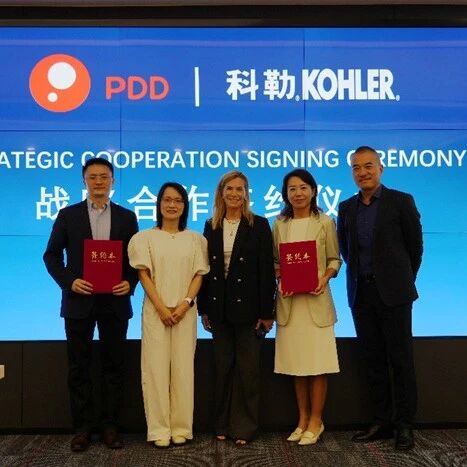
科勒集团可持续发展首席执行官首次到访中国电商平台,与拼多多开展新一轮战略合作
华尔街见闻· 2025-09-24 04:27
Core Insights - Kohler Group, led by Laura Kohler, has initiated a strategic partnership with Pinduoduo to explore new e-commerce and sustainable development opportunities in China [1][2][4] Group 1: Strategic Partnership - This marks the first collaboration between Kohler Group and a Chinese e-commerce platform, emphasizing Kohler's commitment to the Chinese market [1][2] - The partnership aims to leverage Pinduoduo's understanding of young consumers to promote healthier and more sustainable lifestyles [4][8] Group 2: Market Presence and Growth - Kohler has been operating in China for 30 years, with 11 manufacturing bases and a strong focus on sustainable development integrated into its brand philosophy [2] - Since the partnership began in May 2024, Kohler has seen rapid growth on Pinduoduo, with over 3 million new users reached and a threefold increase in monthly revenue during promotional events [6][8] Group 3: Future Plans - Kohler aims to reach 100 million consumers with a compound annual growth rate of 100%, focusing on young and rural consumers [8] - The company plans to introduce personalized products tailored to the needs of younger generations, such as pet care solutions [8]

芯片涨价潮来了!台积电被曝2nm价格至少上调50%,三星、SK海力士已先行涨价
华尔街见闻· 2025-09-24 04:27
Group 1 - TSMC's 2nm process pricing has increased by at least 50% compared to the 3nm process, with the last generation 3nm CPU prices rising by approximately 20% [1][2] - TSMC's latest 2nm process is set to begin mass production this quarter, but due to high capital expenditures, the company is not offering discounts or negotiation strategies [1][2] - The flagship chips using the 2nm process are expected to have a unit price of around $280 [1] Group 2 - Samsung has significantly raised prices for memory and flash products, with DRAM prices increasing by up to 30%, and NAND flash prices rising by 5-10% due to supply constraints and surging demand from cloud enterprises [5][6] - Micron and SanDisk have also announced similar price increases, with Micron's prices rising by 20-30% and halting new orders [5] - The current price surge reflects the deep impact of AI applications on the semiconductor supply chain, with data center construction driving up storage procurement [6] Group 3 - Apple has increased its reservation share for TSMC's 2nm capacity from nearly 50% to over 50%, contributing 22% of TSMC's revenue in 2024, amounting to $19.4 billion [2] - Qualcomm and MediaTek plan to launch their first 2nm chip products by the end of 2026, but Apple's capacity monopolization may create supply constraints for these competitors [3]


“崩盘专家”黑天鹅基金:美股将大幅上涨,随后是“1929式崩盘”
华尔街见闻· 2025-09-24 04:27
Core Viewpoint - Mark Spitznagel, manager of Universa Investments, predicts a significant rise in the U.S. stock market, potentially reaching 8000 points on the S&P 500, which represents about a 20% increase from current levels, but warns of an impending severe market correction akin to the 1929 crash [1][4][6]. Group 1: Market Conditions - Spitznagel compares the current market environment to the "roaring twenties" before its end, suggesting that the market is experiencing a euphoric phase [1]. - He attributes the favorable conditions for market growth to factors such as potential interest rate cuts by the Federal Reserve [1]. - Historical data indicates that significant price increases often signal market tops, with the S&P 500 averaging a 26% annual return in the year leading up to bear markets since 1980 [4]. Group 2: Warning Signals - Institutional investors' stock exposure has reached its highest level since November 2007, just before the financial crisis [5]. - The proportion of U.S. households invested in stocks has surpassed the peak levels seen during the tech bubble [5]. - Other indicators of market exuberance include the risk premium on investment-grade bonds dropping to its lowest since 1998 and trading volumes on U.S. exchanges nearing historical highs [5]. Group 3: Systemic Risks - Spitznagel likens the current market situation to a "powder keg" due to prolonged government and central bank interventions, which have inflated market valuations to near-record levels [6][7]. - He warns that these interventions, while temporarily mitigating losses, have allowed systemic risks to accumulate, setting the stage for a potential catastrophic market event [6][7]. - Spitznagel's previous predictions have shown that despite warnings, markets can continue to rise significantly before any downturn occurs [7][8]. Group 4: Investment Strategy - Universa Investments employs a unique tail risk hedging strategy, focusing on buying protection during optimistic market conditions rather than timing the market [2][8]. - Spitznagel emphasizes that the greatest risk for investors is not the market itself but their own behavior, advocating for long-term holding strategies [9].

“星际之门”在美国“新开5个数据中心”,投资额高达4000亿美元,目标“三年建成,7GW”
华尔街见闻· 2025-09-24 04:27
Core Insights - OpenAI and Oracle are advancing the $500 billion "Gateway" project, with the first site in Texas now operational [1][2] - The project aims to invest $400 billion over the next three years, ultimately reaching 7GW capacity [2] - OpenAI's CFO highlighted that the Texas Abilene site could expand to over 1GW, enough to power approximately 750,000 American homes [2] Project Expansion - The expansion includes five new sites in Texas, New Mexico, Ohio, and an undisclosed Midwest location [1][2] - Oracle is leading the construction of three large data centers as part of this initiative [4][5] - OpenAI and Oracle's agreement involves developing up to 4.5GW of new capacity over five years, valued at over $300 billion [5] Infrastructure Demand - The unprecedented scale of the Gateway project is a response to the significant demand for computing power for AI training and inference [6][8] - OpenAI's CFO emphasized the current shortage of computing power, stating that there is not enough capacity to fulfill all AI capabilities [8] - The construction aims to ensure that computing power is available by 2026, utilizing NVIDIA's next-generation Vera Rubin chips [9] Financing Structure - The project is supported by a complex financing structure, with OpenAI paying for computing power through operational expenses [12] - OpenAI's projected revenue for the year is expected to reach $13 billion, with plans to use cash flow and debt financing for construction costs [13] - NVIDIA is also involved through equity investment, receiving compensation for the chips provided [15] Political and Economic Implications - The Gateway project carries significant political and economic implications, having been announced in collaboration with former President Trump [19][20] - The project is expected to employ over 6,000 construction workers daily and provide nearly 1,700 long-term jobs [21] - OpenAI's infrastructure development aims to reshape the U.S. power grid and enhance the country's global influence [22][23]

“质价比”之王来了!万辰集团递表港交所,领跑万亿零食赛道
华尔街见闻· 2025-09-24 00:14
Core Viewpoint - The article highlights the strong growth potential and unique business model of Fujian Wancheng Biotechnology Group Co., Ltd. (Wancheng Group), which has submitted its listing application to the Hong Kong Stock Exchange, aiming to capitalize on its leading position in China's snack and beverage retail market [1][3]. Financial Performance - Wancheng Group's total revenue is projected to grow from RMB 9.3 billion in 2023 to RMB 32.33 billion in 2024, representing a year-on-year increase of 247.9% [3]. - The group's GMV is expected to reach RMB 42.6 billion in 2024, a 282% increase compared to 2023, leading the industry in growth rate [3]. - For the first half of 2025, the group's revenue reached RMB 22.58 billion, a year-on-year growth of 106.9%, with adjusted net profit reaching RMB 920 million [3]. Sustainable Growth Mechanism - Wancheng Group's growth is driven by a "growth flywheel" consisting of five key elements that create a win-win situation for consumers, franchisees, suppliers, and the company [5]. - The expansion of the store network enhances purchasing power and strengthens bargaining capabilities with suppliers, allowing the company to offer high-quality products at competitive prices [7]. - The company has built a loyal customer base through value-driven products and enjoyable shopping experiences, which in turn attracts more franchisees and further expands the store network [7]. Franchise Model and Support - Wancheng Group adopts a franchise model that emphasizes long-term partnerships with franchisees, providing comprehensive support and a one-stop solution throughout the store lifecycle [9]. - The company charges no franchise fees for its core brand "Haoxianglai," only requiring a security deposit, significantly reducing the initial financial burden on franchisees [9]. - Advanced digital tools and an AI-driven site selection system enhance the success rate and return on investment for new stores, while a robust logistics network ensures timely supply and low operational costs [10]. Management and Quality Control - Wancheng Group implements a strict management and supervision system to maintain brand image and operational quality across all stores [12]. - The company combines online smart inspection systems with offline supervision to ensure consistent high-quality experiences for consumers, resulting in a low franchise store closure rate of only 1.9% [12]. Competitive Advantages - The company's success is attributed to its relentless pursuit of scale and efficiency, creating significant competitive barriers [14]. - As of June 30, 2025, Wancheng Group operates over 15,000 stores across 29 provinces, establishing a strong presence in high-potential markets [16]. - The company achieves approximately 95% direct sourcing from brand manufacturers, allowing it to offer products at prices 20%-30% lower than traditional supermarkets [16]. Future Outlook - Wancheng Group plans to use the funds raised from its IPO to further expand and upgrade its store network, enhance product offerings, and improve logistics efficiency [16]. - With the support of capital, the company aims to solidify its leadership in China's snack and beverage retail sector and expand its successful "hard discount" model into broader fast-moving consumer goods markets [16].

鲍威尔警告股市估值“相当高”,美股三连涨终结(附演讲全文)
华尔街见闻· 2025-09-23 23:57
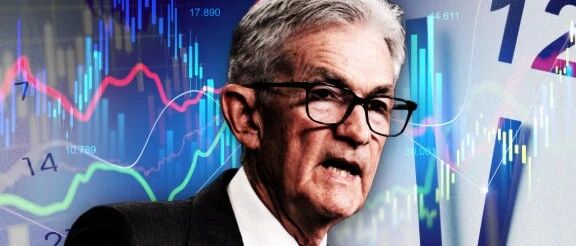
Core Viewpoint - Federal Reserve Chairman Jerome Powell indicates a cautious approach to further interest rate cuts, emphasizing the challenges posed by the current risk environment [2][4][5] Economic Outlook - Recent data shows a slowdown in economic growth, with GDP growth rate around 1.5% in the first half of the year, down from 2.5% last year [19] - Unemployment rate has slightly increased to 4.3%, with job growth slowing significantly, averaging only 29,000 new jobs per month over the past three months [18][19] - Inflation remains above the Fed's 2% target, with the Personal Consumption Expenditures (PCE) price index rising by 2.7% over the past year [20][21] Monetary Policy - Powell warns of the dual risks of rising inflation and declining employment, stating that there is no risk-free policy path [4][22] - The Federal Reserve lowered the federal funds rate target range by 25 basis points to 4% to 4.25% in response to the changing risk balance [23][24] - Powell believes the current policy stance is still moderately restrictive but allows for better adaptation to economic changes [24] Market Reactions - Powell's comments about high stock valuations led to a decline in major stock indices, with the Nasdaq dropping nearly 1% [3][14] - The Fed's focus on the potential impact of tariffs on inflation is seen as a way to navigate political pressures while maintaining a cautious stance [5][9] Labor Market Insights - The labor market is described as showing signs of substantial weakness, with Powell noting that it can no longer be considered robust [10][12] - Job vacancies remain stable, but the overall employment growth is insufficient to maintain the current unemployment rate [18][19]
罕见!黄金今年36次、美股28次,同创新高,什么信号?如何交易?
华尔街见闻· 2025-09-23 10:12
Core Viewpoint - The article discusses the current bullish market conditions driven by the Federal Reserve's interest rate cuts, significant investments in AI, and rising asset prices, particularly in gold, indicating a potential for further market growth despite concerns about bubbles and risks [2][3][6][8]. Group 1: Market Conditions - The S&P 500 index has reached a new high for the 28th time this year, while COMEX gold prices closed at $3,775.10, marking the 36th record high of the year, with a year-to-date increase of approximately 43% [3]. - Risk assets and safe-haven assets are both at historical highs, raising questions about whether the market has fully priced in all positive factors and if future growth is sustainable [6][9]. - Analysts believe the market is not yet in a "perfect pricing" state, suggesting that there is still room for further increases despite existing concerns about risks [9][11]. Group 2: Economic and Policy Factors - U.S. Bank strategist Michael Hartnett highlights that tax cuts, tariff reductions, and interest rate cuts create a "run-it-hot" policy environment, providing implicit guarantees for the economy and stock market [8]. - Deutsche Bank's report indicates that the market is filled with concerns about future risks, which could actually provide space for potential market growth [9][10]. Group 3: Investment Strategies - Hartnett proposes a five-point trading strategy to navigate the current market, including investing directly in bubble assets, creating a "barbell" portfolio with both bubble and undervalued stocks, shorting corporate bonds of bubble companies, shorting U.S. bonds, and trading volatility in bonds and stocks [18][19][20]. - Historical data shows that past market bubbles have had significant average increases, suggesting that the current market may still have upward potential [15][17]. Group 4: Gold Market Analysis - The article describes the current gold market as being driven by geopolitical uncertainty, inflation concerns, and expectations of interest rate cuts, creating a "perfect storm" for gold prices [23]. - Despite rising gold prices, analysts argue that the market has not yet entered a bubble phase, as key indicators do not show irrational exuberance [25][26]. - There are some signs that could indicate a potential bubble in gold, such as increased media presence and activity in gold ETFs, but overall, the market is viewed as being in a strong bull phase rather than a bubble [28].

大摩:美元已进入“熊市机制”!
华尔街见闻· 2025-09-23 10:12
Core Viewpoint - Morgan Stanley predicts a sustained and widespread sell-off of the US dollar, citing potential negative impacts from government shutdown risks [1][3]. Group 1: Dollar Bear Market Mechanism - Morgan Stanley's latest report indicates that the US dollar has entered a "bear market mechanism," which is expected to persist for a longer duration, leading to significant selling pressure on the dollar [2]. - The shift in the Federal Reserve's policy, prioritizing job market protection even at the cost of tolerating higher-than-target inflation, is seen as a driving force behind the dollar's bear market [2][8]. - Market pricing suggests that the dollar's interest rate advantage will decrease by nearly 100 basis points over the next 12 months, significantly lowering the cost of shorting the dollar [3][16]. Group 2: Government Shutdown Risks - The rising risk of a government shutdown is viewed as a potential negative factor for the dollar, with market data indicating an increased probability of such an event [3][19]. - Historical data shows that government shutdowns typically lead to economic slowdowns, negatively impacting the dollar, with the current negative risk premium for the dollar at approximately -4% [20]. - A prolonged government shutdown could further elevate the dollar's risk premium and hinder the release of economic data, complicating the Federal Reserve's policy decisions [20][21]. Group 3: Shorting the Dollar - Morgan Stanley has expanded its "short list" for the dollar to include the Australian dollar and Canadian dollar, based on their respective economic conditions and risk profiles [12]. - The anticipated reduction in the cost of shorting the dollar is expected to alleviate the punitive interest rate differentials that have challenged investors [13][16]. - Forward rates indicate that the cost of shorting the dollar could decrease by 50-75 basis points for most currencies, with a potential reduction of nearly 150 basis points for the dollar/yen pair [14][16].