申万宏源研究

Search documents
热点思考 | 反内卷,破局的“妙招”有哪些?(申万宏观·赵伟团队)
申万宏源研究· 2025-07-30 07:46
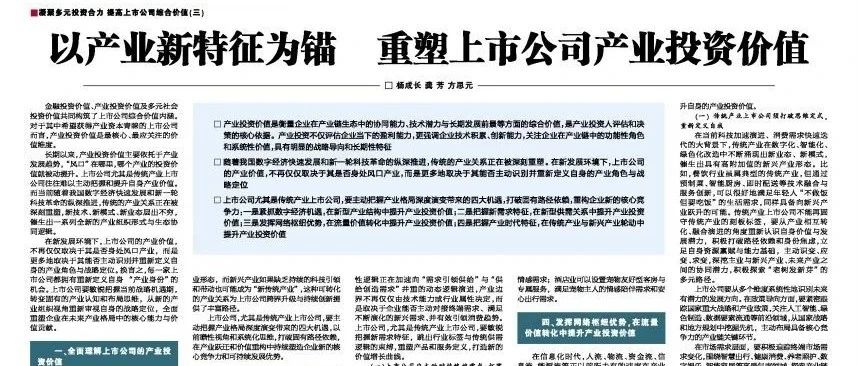
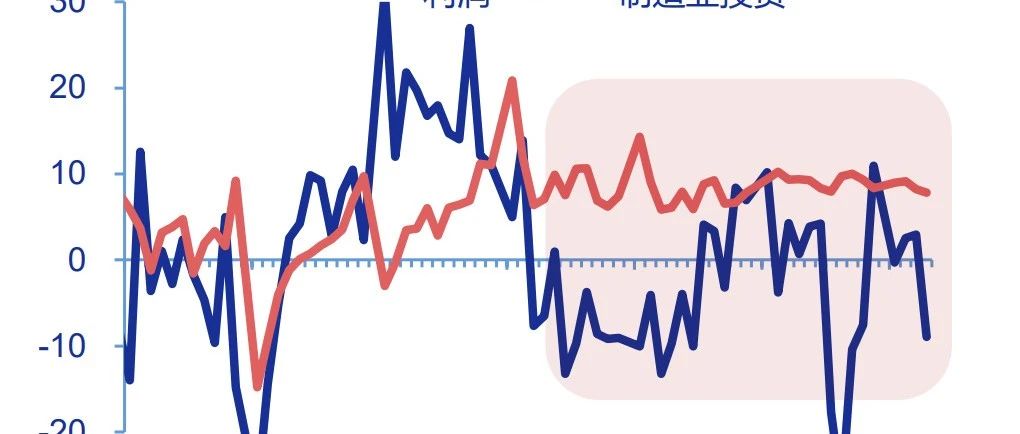
Group 1 - The core issue of "involution" is the imbalance between manufacturing and service industries, with manufacturing employment exceeding actual demand while service employment remains insufficient [2][9] - In 2023, manufacturing employment was significantly above potential levels, with a 0.2 billion increase, while service employment showed a shortfall of 0.4 billion compared to potential levels [9][106] - Manufacturing investment remains high despite declining revenues, indicating an "involution" phenomenon, while service investment is notably below demand, with a potential investment gap of approximately 1.5 trillion [18][106] Group 2 - There is a significant gap in consumer spending, with a shortfall of about 6,400 billion yuan in goods consumption and nearly 30,000 billion yuan in service consumption [3][27] - In 2024, the per capita service consumption gap is projected to be 2,093 yuan, indicating a substantial unmet demand in the service sector [27][106] Group 3 - The long-term direction to address "involution" involves shifting focus from manufacturing supply to service supply, as global experiences suggest a transition in consumer demand from goods to services [4][107] - As GDP per capita reaches 10,000 to 30,000 USD and urbanization increases, service consumption typically rises, with a historical annual increase of about 0.6% [4][35] Group 4 - Policies are being implemented to enhance service consumption, investment, and exports, marking a shift in economic growth drivers from manufacturing to services [6][80] - Recent policy measures include extending legal holidays and encouraging more leisure time for residents, which is expected to boost service demand [6][108] - Service investment is seeing improvements due to regulatory relaxations and increased government support, with a notable growth rate of 15.3% in May, nearing the highest level since 2017 [91][109]

以产业新特征为锚 重塑上市公司产业投资价值
申万宏源研究· 2025-07-29 07:08
Core Viewpoint - The article emphasizes the importance of industry investment value as a comprehensive measure of a company's collaborative ability, technological potential, and long-term development prospects within the industrial chain ecosystem, especially in the context of rapid digital economic growth and technological revolution in China [1][2]. Group 1: Understanding Industry Investment Value - Industry investment value is a core basis for evaluating and making decisions by industry investors, focusing on sustainable technological evolution and the ability to integrate into the industrial ecosystem [3][4]. - Many traditional industry-listed companies have not received reasonable industry investment valuations due to static categorization and labeling by investors, which often overlooks their innovative capabilities [4][5]. - The evaluation logic of industry investment value is evolving dynamically due to profound changes in the industrial landscape driven by technological innovation and the digital economy [4][5]. Group 2: Seizing Opportunities in the Digital Economy - The digital economy is reshaping industrial organization and competition, creating opportunities for companies to enhance their investment value by embedding themselves into the new industrial structure [6][7]. - Traditional companies should actively identify their roles within the new "three-stage" digital economy ecosystem, focusing on application scenarios to redefine their industry identity and expand their value boundaries [6][7]. Group 3: Adapting to New Demand Characteristics - The shift from a linear "demand leads supply" model to a dynamic interplay of "demand leads supply" and "supply creates demand" necessitates that companies actively engage with evolving consumer needs [8][9]. - Companies should align with terminal-driven industry chains, enhancing their value creation by embedding themselves within these chains and responding to market changes [9][10]. Group 4: Leveraging Network Hub Advantages - In the information age, companies must transform their flow resources into core competitive advantages, enhancing their investment value through effective flow management [12][13]. - Network hub companies should capitalize on their existing infrastructure and resource aggregation capabilities to transition towards digital value high grounds [12][13][14]. Group 5: Navigating the Transition Between Traditional and Emerging Industries - Traditional industry companies must redefine their identities and break free from outdated perceptions to adapt to the evolving landscape of new business models and high-value emerging industries [15][16]. - Emerging industry companies need to maintain their innovation momentum to avoid falling into the trap of becoming "new traditional industries" as they mature [18][19].
【脱水研报】把握“反内卷”政策下的跨行业投资机遇
申万宏源研究· 2025-07-28 06:31
Core Viewpoint - The "anti-involution" policy has evolved from initial industry self-discipline to a comprehensive policy system that includes supply-side reforms, a unified national market, and factor market reforms, benefiting industries such as photovoltaics, automobiles, agriculture, and cyclical goods [1] Group 1: Photovoltaics - The photovoltaic industry is experiencing supply-side reforms under strict policy constraints, leading to a shift from crude expansion to technology-driven high-quality competition [8][9] - Price stabilization reflects the positive impact of anti-involution measures on alleviating supply excess and enhancing profitability [8] - The industry is undergoing a technological iteration that accelerates market reshuffling, with BC technology leading the transition [8] Group 2: Automobiles - The automotive sector's anti-involution requires higher-level solutions, with companies leveraging technological differentiation to break through market saturation [9] - Consumer diversification is crucial, with brands and products serving as key factors to escape the cycle of internal competition [9][11] Group 3: Agriculture - The agricultural sector, particularly the pig farming industry, is optimizing supply through anti-involution policies, reducing disorderly expansion, and enhancing profitability stability [15][18] - The second quarter saw a slight increase in the breeding stock, indicating a rationalization of production capacity under policy constraints [15][18] Group 4: Cyclical Goods and Materials - The anti-involution policy is driving supply-side contraction and supply-demand rebalancing in the energy and materials sectors, creating opportunities for price elasticity and profitability recovery [19][21] - The cement industry exemplifies the implementation of anti-involution through capacity disposal policies, addressing overproduction issues and aligning with macro policies [22][24][27] Group 5: Macro and Strategy - The current anti-involution policy focuses on "reducing capital expenditure" to achieve capacity clearance, with effects expected to be delayed but lasting [28] - The investment focus for the second half of the year should be on supply-side optimization areas, such as new photovoltaic technologies, emotional premium in automobiles, high-quality pig farming enterprises, and cyclical goods with price elasticity [29]
三类投资人视角下的上市公司综合价值管理
申万宏源研究· 2025-07-22 06:08
Core Viewpoint - The comprehensive value of listed companies is determined by a multi-dimensional evaluation from diverse investment entities, including financial investors, industrial investors, and other social investors [1][6][7]. Group 1: Challenges Faced by Listed Companies - After going public, companies often experience a decline in attention from investors, with over 70% of listed companies receiving fewer than five institutional research visits annually [2][3]. - There is a growing disparity in valuation between different types of listed companies, with traditional industries like banking and oil seeing lower price-to-earnings ratios compared to emerging sectors like technology [4][5]. - The gap between self-evaluation by companies and market valuation is widening, with many profitable companies trading below their book value [5][6]. Group 2: Three Types of Value in Listed Companies - The comprehensive value of listed companies includes financial investment value, industrial investment value, and multi-dimensional social value [7][8]. - Financial investment value reflects the company's performance in financial markets, while industrial investment value indicates its position within the industry and its technological capabilities [8][9]. - Multi-dimensional social value encompasses the company's reputation, social responsibility, and environmental impact, influencing its overall valuation indirectly [9][10]. Group 3: Investment Entities and Their Focus - Financial investors prioritize financial metrics such as profitability and growth potential, while industrial investors focus on technological innovation and market position [10][11]. - Other social investors emphasize corporate social responsibility and environmental sustainability, assessing the company's long-term viability based on these factors [11][12]. - The evaluation criteria of these investment entities can shift based on the company's development stage, affecting their focus on growth versus efficiency [12][13]. Group 4: Comprehensive Value Management - Effective comprehensive value management should be integrated into all levels of corporate governance, including strategic, institutional, and operational management [13][14]. - Companies need to enhance their value creation through innovation and efficient resource management, while also ensuring that their market valuation reflects their intrinsic value [14][15]. - The goal of comprehensive value management is to align the interests of diverse investment entities to collectively enhance the company's overall value [16][17].
【申万宏源策略 | 一周回顾展望】经济预期谨慎,A股缘何延续强势
申万宏源研究· 2025-07-21 01:15
Core Viewpoint - The article emphasizes that the economic growth rate in the second half of 2025 may decline compared to the first half, with a policy focus shifting towards structural adjustments. Despite this, the A-share market remains strong due to stable capital market expectations, anti-involution policies, and the positive impact of technology and trade negotiations [1][2][3]. Group 1: Economic Growth and Market Stability - The consensus is that achieving the annual economic growth target is feasible, with a shift in policy focus towards structural adjustments. This suggests that the economic growth rate in the second half of 2025 may be weaker than in the first half, and expectations for growth-stabilizing policies should be moderated [1]. - Stable capital market policies have created a "buffer" against macroeconomic disturbances, leading to a perception that the downside risks for the A-share market are manageable. Even in adverse economic conditions, timely policy responses can mitigate risks [1][2]. - The anti-involution policies have connected short-term economic highlights with mid-term supply-demand improvements, allowing for smoother transitions in the market dynamics between upstream cycles and midstream manufacturing [2]. Group 2: Market Conditions and Future Outlook - By the fourth quarter of 2025, the conditions for a market breakout are expected to be more favorable, with fundamental expectations shifting towards 2026. This could accelerate the market's reflection of improved supply-demand dynamics and profitability [3]. - The year 2025 is projected to be a peak for the repricing of household deposits, creating a critical window for reallocating assets, which may lead to natural increments in certain investment products that have limited dependence on stock market performance [3]. Group 3: Industry Trends and Recommendations - The focus of investment is shifting towards undervalued cyclical stocks in the short term, while mid-term opportunities lie in midstream manufacturing that benefits from supply clearing and anti-involution policies [4]. - The AI computing power industry is showing significant improvement, with domestic profit effects expanding, indicating continued investment opportunities in this sector [4]. - The Hong Kong stock market is viewed as a potential leader in the next bull market, with ongoing interest in innovative pharmaceuticals and new consumer trends, alongside high dividend stocks as attractive investment options [4][5].

书单 | 货币与权力:读懂国际货币体系(20本经典著作) (申万宏观·赵伟团队)
申万宏源研究· 2025-07-21 01:15
Core Viewpoint - The article discusses the ongoing challenges and potential shifts in the international monetary system, particularly focusing on the decline of the US dollar and the implications of stablecoins in this context [3][4][5]. Group 1: Current Monetary System Challenges - Since early 2025, the narrative of "American exceptionalism" has been challenged, leading to a 12.5% decline in the US dollar index [3]. - Following the "reciprocal tariffs" impact in April, the US financial markets experienced simultaneous declines in stocks, bonds, and currency [3]. - The "Triffin Dilemma," which predicts a crisis of confidence in the dollar due to excessive credit expansion, is highlighted as a recurring theme in the history of monetary systems [3][4]. Group 2: Historical Context and Theoretical Framework - The article references historical instances, such as the collapse of the Bretton Woods system and the UK's experience with the pound, to illustrate the inherent instability in unipolar monetary systems [4]. - The discussion emphasizes that the "Triffin Dilemma" is not limited to the Bretton Woods system but is a common issue across all unipolar international monetary systems [4]. Group 3: Role of Stablecoins and Future Considerations - There are ongoing debates regarding the role of stablecoins in the monetary system, including their potential to complement or replace the dollar [5]. - The article suggests that understanding the essence and functions of money is crucial for evaluating the impact of stablecoins on the current monetary landscape [5]. - It calls for a grounded discussion based on facts, history, and theory to avoid falling into the trap of grand narratives in the study of international monetary systems [5][6].

热点思考 | 出口视角:“战略资源”新线索(申万宏观·赵伟团队)
申万宏源研究· 2025-07-17 01:17
Group 1 - Rare earths are a crucial strategic resource for China due to their key roles in military and high-tech fields, with China holding a complete industrial chain [1][7] - China's rare earth production accounts for 70% of global output, with projections for 2024 indicating a production of 270,000 tons, representing 68.5% of global total [1][8] - Despite ongoing trade tensions, the U.S. maintains a high dependency on Chinese rare earths, with reliance stabilizing around 75% in recent years [1][8] Group 2 - China possesses a complete industrial chain in the rare earth sector, from mining to application, making it difficult for other countries to establish alternative supply chains [2][16] - The rare earth industry is segmented into upstream mining, midstream processing, and downstream manufacturing, with only China achieving full coverage across all segments [2][16] Group 3 - Other products with "extremely high dependency" on China include chemicals and mineral metals, particularly in the U.S. market [3][19] - In 2024, 98 products imported by the U.S. from China will have an import dependency greater than 90%, accounting for 3.5% of total U.S. imports from China, valued at $16.25 billion [3][19] - Among these, 20 products will have a 100% dependency on China, primarily in textiles, chemicals, and mineral metals [3][19] Group 4 - Chemical products and certain metals are identified as having strategic value similar to rare earths, with a total import scale of $1.5 billion [4][39] - The U.S. has seen a significant increase in dependency on mineral metals, which rose from 0% in 2022 to 100% in 2024 [3][25] - Chemical imports from China have also surged, with dependency increasing from 28.9% in 2010 to 93.8% in 2024 [3][25][49] Group 5 - Specific chemicals and metals critical for sectors like new energy vehicles, semiconductor manufacturing, and military applications are highlighted as potential trade leverage [4][39] - Key materials such as lithium hexafluorophosphate and nickel-lanthanum are essential for battery production, with China leading in global production [4][39] - The strategic importance of these products may position them as key bargaining chips in future trade negotiations [4][39]
美国通胀“发令枪”——美国6月CPI点评
申万宏源研究· 2025-07-17 01:17
Overview - The core CPI data for June in the US was slightly weaker than expected, but the inflation effects of tariffs are becoming more evident [3][7][38] - The June CPI year-on-year was 2.7%, slightly above the market expectation of 2.6%, while the core CPI was 2.9%, matching expectations [3][38] - The market reacted to the data with a temporary decline in the 10Y Treasury yield and the US dollar index, which later recovered, indicating a focus on future inflation expectations [11][38] Structure - The main drivers of the CPI rebound include rising oil prices, core goods (excluding new and used cars), and non-rent services [4][39] - The energy CPI for June increased by 0.9% month-on-month, recovering from a previous decline of -1.0%, reflecting global oil price increases [4][39] - Core goods inflation showed signs of warming, with a month-on-month increase of 0.2%, driven by clothing, toys, and audio-visual equipment, indicating the impact of tariffs [20][39] - Rent inflation slightly slowed to 0.2% month-on-month, while core non-rent service inflation rebounded, particularly in medical, transportation, and entertainment services [4][39] Outlook - The second half of the year may see continued upward pressure on inflation, with the third quarter being a critical verification period for tariff inflation effects [5][28][40] - The Federal Reserve is expected to initiate rate cuts in September, with two cuts anticipated within the year, despite potential inflation increases [5][34][40] - The combination of moderate inflation increases and weakening employment may influence the Fed's decision-making [34][40]

国内高频 | 基建开工连续回升(申万宏观·赵伟团队)
申万宏源研究· 2025-07-17 01:17
Group 1: Industrial Production - Industrial production remains relatively stable, with a blast furnace operating rate year-on-year at 0.7% [2][5][8] - Chemical production shows a slight decline, with soda ash and PTA operating rates down by 2.6 percentage points to 6% and 0.9 percentage points to 1.3%, respectively [2][15] - The automotive sector's semi-steel tire operating rate is still below last year's level, up by 2.7 percentage points to -6.3% [2][15] Group 2: Construction Industry - The construction industry shows a mixed performance, with the national grinding operating rate down by 2.4 percentage points to 3.7% [2][27] - Cement shipment rates remain low, with a year-on-year increase of 1.2% to -3% [2][27] - Asphalt operating rates have seen a recovery, up by 0.6 percentage points to 7.4% [2][35] Group 3: Real Estate Transactions - Real estate transactions are at a low point, with the average daily transaction area for new homes down by 19.1% year-on-year, despite a 13.1% increase [2][44] - First-tier cities continue to see a decline in transactions, down by 18.6% to 39.9% [2][44] - Third-tier cities show significant improvement, with a year-on-year increase of 72.4% to 17% [2][44] Group 4: Transportation and Shipping - National railway and highway freight volumes have decreased, with year-on-year declines of 1.3% to 1.2% and 0.9% to 0.8%, respectively [2][54] - Port cargo throughput and container throughput have also shown a decline, down by 9.3% to 6.8% and 4.7% to 0.9%, respectively [2][54] - The overall intensity of human mobility remains high, with a migration scale index down by 2% to 12.6% [2][63] Group 5: Price Trends - Agricultural product prices are mixed, with pork and vegetable prices rising by 0.1% and 0.8%, while egg and fruit prices fell by 2.2% and 0.1% [3][85] - Industrial product prices have generally increased, with the South China industrial price index rising by 1.1% [3][93] - The energy and chemical price index increased by 1.3%, while the metal price index rose by 0.7% [3][93]

【脱水研报】与优秀区域性银行同行—变革深化与长期资金双轮驱动
申万宏源研究· 2025-07-11 07:25
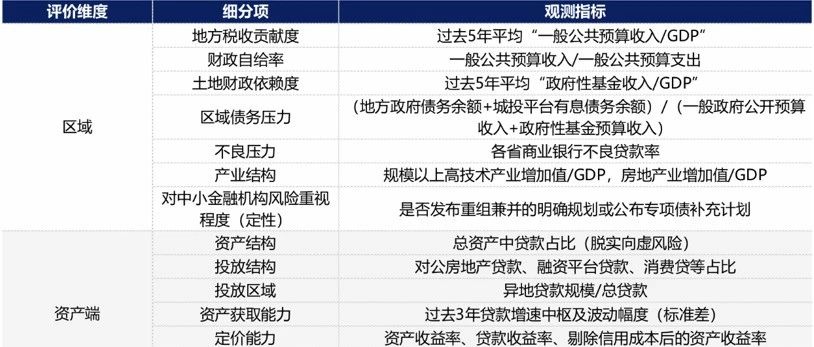
Core Viewpoint - The article discusses the supply-side reform of small and medium-sized banks, highlighting the coexistence of risks and opportunities, and emphasizes the importance of regional banks that leverage local advantages to compete with national banks in the evolving financial landscape [1][5]. Summary by Relevant Sections Supply-Side Reform of Small and Medium-Sized Banks - The operational characteristics of small and medium-sized banks are a result of the resonance between regional environments and business strategies. Identifying the survivors and outstanding performers among these banks requires a focus on regional clientele and the strategic arrangement of their assets and liabilities [1][5]. Investment Strategy for the Banking Sector - The banking sector is expected to undergo a long-term revaluation driven by several factors: 1) Continuous allocation of long-term funds by insurance and state-owned entities 2) Dissipation of systemic risk concerns 3) Underestimation of the stability of Return on Equity (ROE) [6][7]. - Current A-share listed banks maintain a dividend yield of over 4%, with a premium of more than 2 percentage points over the ten-year government bond yield, indicating a historical high. As the valuation of the banking sector recovers, although dividend yields may decline, the stability of profit growth ensures predictable and sustainable dividends, making bank stocks a scarce high-dividend asset in a low-interest-rate environment [7][11]. Valuation Metrics - The banking sector's ROE has remained stable at around 10%, significantly higher than the 6.7% of non-financial enterprises in the A-share market. Regulatory perspectives emphasize the necessity of reasonable profit growth to maintain financial system stability, suggesting that ROE is likely to remain in the 9%-10% range [11][12]. Investment Focus - Investment should concentrate on: 1) High-quality regional banks with no burdens and high provisions, which are expected to demonstrate growth and should not trade below book value [13]. 2) Banks with stable profit expectations, strong potential funding drivers, and relatively high index weightings, which are mispriced in terms of valuation and ROE expectations [13]. Historical Performance and Recommendations - The company has been a pioneer in researching and tracking regional banks since 2021, successfully recommending stocks like Suzhou Bank and Chongqing Bank, which have shown significant appreciation in value [14].