Qi Huo Ri Bao

Search documents
基本面持续压制 铁矿石承压运行
Qi Huo Ri Bao· 2025-10-24 03:30
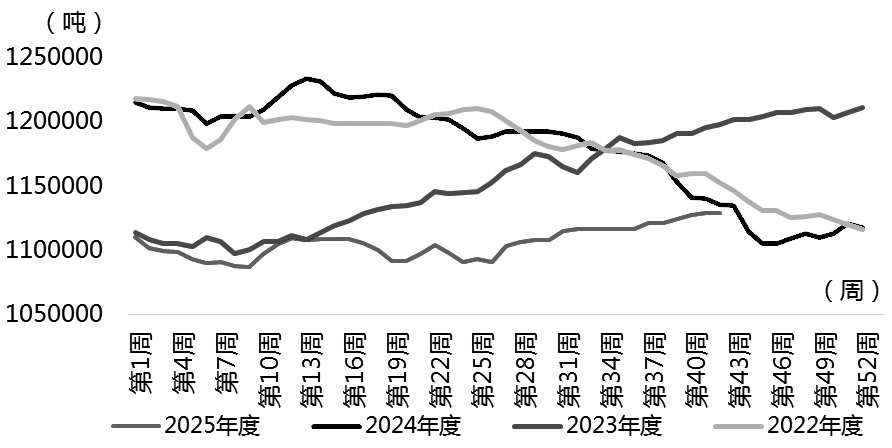
Core Viewpoint - After the National Day holiday, iron ore prices have declined, with the main contract dropping from 809.5 yuan/ton to 760 yuan/ton, a cumulative decrease of 6.11%, indicating a return to the lower end of the fluctuation range [1] Supply Situation - The decline in iron ore prices is primarily due to several factors: weakened market sentiment due to tariff disturbances, reduced steel production leading to lower iron ore demand, and a weakening supply-demand balance reflected in increased port inventories [2] - Domestic port arrivals for iron ore were reported at 26.763 million tons, remaining high despite a week-on-week decrease of 4.678 million tons, with a significant year-on-year increase of 17.711 million tons [2] - Global iron ore shipments reached 33.335 million tons, with a week-on-week increase of 1.2598 million tons, continuing to be at a high level for the year, and a year-on-year increase of 15.45% [2] Price Trends - The Platts iron ore price index averaged $105/ton in October, maintaining a relatively high level, while high prices have led to increased overseas shipments and high levels of floating inventory at sea [3] - Domestic mining production has also rebounded, further suppressing iron ore price trends [3] Demand Dynamics - Demand for iron ore has weakened, with poor performance in steel demand during the peak season, leading to reduced production by steel mills and a decline in iron ore consumption [4] - The average daily iron output from 247 steel mills was 2.4095 million tons, with a slight week-on-week decrease, indicating that while demand has decreased, it remains at a relatively high level compared to the year [4] - The profitability of steel mills has deteriorated, with only 55.41% of mills reporting profits, a decline of 12.99 percentage points over ten weeks, indicating ongoing challenges in the steel market [4][5] Overall Market Outlook - The iron ore market continues to face downward pressure due to high supply levels and unresolved industry conflicts in the steel market, leading to a weak demand outlook [6]


消费有望改善 玻璃不宜过度看空
Qi Huo Ri Bao· 2025-10-24 02:17
Core Viewpoint - The float glass market is experiencing a decline in prices, reaching a new low in over three months, but the short-term downside is considered limited despite a weak fundamental outlook [1][6]. Group 1: Market Dynamics - The float glass main contract prices have been continuously declining since late October, indicating a weak market sentiment [1]. - The production lines in the Shahe region are transitioning from self-produced coal gas to clean energy, which may lead to temporary supply contractions and affect market sentiment [2]. - The overall daily melting capacity of float glass in China has slightly increased, reaching 161,300 tons with an operating rate of 76.35% as of October 23, 2023 [2]. Group 2: Demand and Supply Analysis - The demand from downstream processing enterprises is weak, with order volumes significantly down over 20% compared to the same period last year [4]. - The average order days for sample enterprises have decreased to 10.4 days, marking the lowest level since 2019 [4]. - Despite the current weak demand, there is potential for seasonal improvement in demand towards the end of Q4, driven by an increase in housing completion rates [5]. Group 3: Inventory and Pricing Trends - The float glass industry is facing a supply surplus with inventory levels at a three-year high, leading to continued accumulation of stock [5]. - As of October 23, total inventory reached 66.613 million heavy boxes, up 3.64% from the previous period [5]. - The market is currently characterized by strong supply and weak demand, but the continued decline in prices may limit further downside risks [6].
持续累库 氧化铝短期价格仍承压
Qi Huo Ri Bao· 2025-10-24 01:27
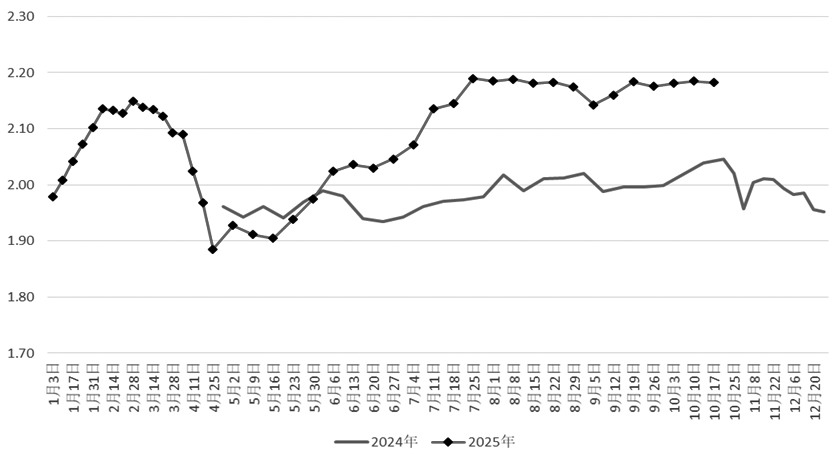
Core Viewpoint - The alumina market is facing multiple bearish factors, leading to a weak price trend, with a focus on smelting cost support and the willingness of the smelting industry to reduce operating capacity in the future [1] Group 1: Alumina Supply and Demand - In September, China's bauxite imports reached 15.88 million tons, a year-on-year increase of 38.14%, but a month-on-month decrease of approximately 2.41 million tons, indicating a seasonal decline [1] - Cumulatively, 157 million tons of bauxite were imported in the first nine months of the year, a year-on-year increase of 32%, with Guinea accounting for 118 million tons (40.3% increase) and Australia 27.71 million tons (5.4% decrease) [1] - As of October 17, domestic bauxite port inventory was 28.69 million tons, a week-on-week increase of 653,000 tons, indicating a high supply level [1] Group 2: Alumina Production and Inventory - Domestic alumina production capacity was 112.55 million tons, with an operating capacity of 96.8 million tons, a week-on-week decrease of 1.4 million tons [1] - The weekly alumina production as of October 17 was 1.861 million tons, significantly higher than the same period last year, while electrolytic aluminum production was 852,900 tons, maintaining a supply surplus [1][3] - As of October 17, domestic alumina inventory was 4.639 million tons, with a week-on-week increase of 63,000 tons, indicating ongoing accumulation since late May [3] Group 3: Pricing and Profitability - The FOB price for Australian alumina was $323 per ton as of October 17, unchanged from late September but down $45 from late August, reflecting a weaker overseas price trend [3] - The production cost of alumina was 2,854.3 yuan per ton, with an average profit of 135.4 yuan per ton, indicating a continuous contraction in smelting profits since early August [3][6] - The expectation of further declines in alumina prices may lead to losses in high-cost regions, increasing the likelihood of voluntary production cuts in the smelting industry [3][8]
供需两旺 碳酸锂尝试向上突破
Qi Huo Ri Bao· 2025-10-24 01:21
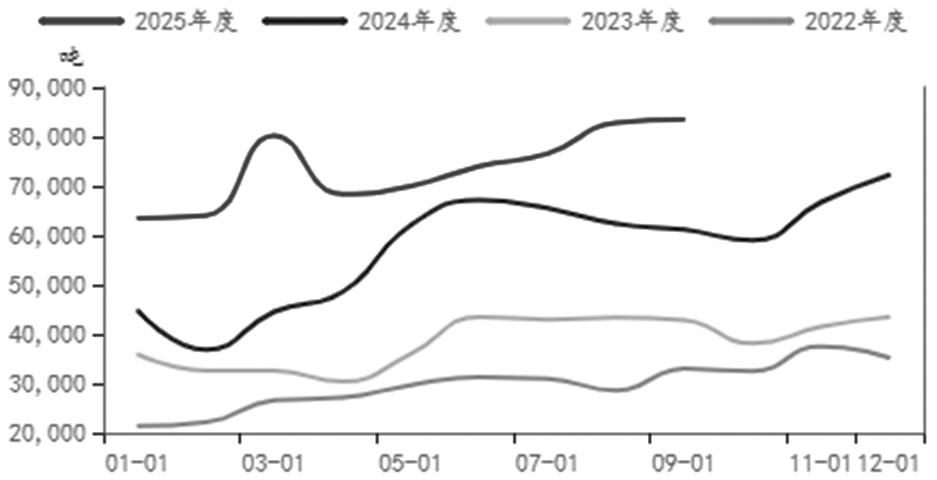
Core Insights - Lithium carbonate futures prices reached the lowest point since July 2023 in late June 2025, with fluctuations influenced by "anti-involution" policies and production halts in Ningde Times [1] - Supply of lithium carbonate is growing rapidly, with domestic production in September reaching 87,260 tons, a 2% month-on-month increase and a 52% year-on-year increase [1] - Demand for lithium carbonate remains strong, driven by the production of battery materials, with significant increases in both lithium iron phosphate and ternary materials [3] Supply Analysis - The production of lithium carbonate from various raw materials showed mixed results: spodumene production increased by 5%, while lithium mica decreased by 15%, and salt lake production rose by 10% [1] - Cumulative lithium carbonate production from January to September reached 643,700 tons, a 42% year-on-year increase [1] - Despite potential disruptions in the Jiangxi Yichun mining area, new capacities from spodumene and salt lakes are expected to push October production close to 90,000 tons [1] Demand Analysis - The production of lithium iron phosphate in September was 356,800 tons, reflecting a 12.8% month-on-month and a 42% year-on-year increase, with expectations for continued growth in October [3] - Ternary material production in September was 75,000 tons, showing a 2.6% month-on-month and a 31.5% year-on-year increase [3] - The overall production of power batteries and other batteries in September increased by 50% year-on-year, with a cumulative increase of 44% from January to September [3] Inventory and Market Trends - As of last week, lithium carbonate weekly inventory stood at 132,700 tons, a decrease of 2,143 tons, indicating an accelerated destocking process [4] - The number of registered futures warehouse receipts for lithium carbonate has decreased significantly, suggesting improved demand from downstream and traders [4] - The futures market shows signs of a potential rebound, with the main contract price breaking through the upper range of 75,000 yuan/ton, indicating a possibility of continued upward movement [4]
缺乏向上驱动 PVC短期偏弱运行
Qi Huo Ri Bao· 2025-10-24 01:13
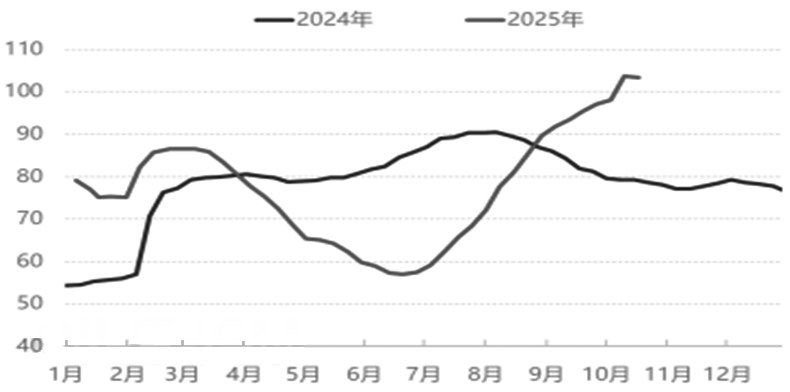
Core Viewpoint - The domestic PVC futures market continues to show a weak downward trend post-National Day holiday, with the 2601 contract breaking through key support levels of 4800 yuan/ton and 4700 yuan/ton, reaching a low of 4644 yuan/ton [1] Cost Support Weakening - PVC prices lack effective support from the cost side, as the price of calcium carbide, a key raw material for calcium carbide method PVC, remains low due to the impact of staggered production in Inner Mongolia [2] - International crude oil prices have also been weak, with WTI crude oil futures dropping to a low of $56.63 per barrel and Brent crude oil futures falling to $60.11 per barrel, both hitting new lows since the second quarter of this year [2] - The expectation of oversupply in the global oil market continues to weigh on the outlook for oil prices, which in turn weakens the cost support for ethylene-based PVC [2] - Despite some companies facing losses, integrated chlor-alkali enterprises maintain production through a "sodium carbonate compensating for chlorine" model, resulting in stable PVC operating rates above 76% [2] Significant Supply Pressure - In 2025, new domestic PVC production capacity is characterized by large scale, technology switching, and concentrated commissioning, with an expected annual increase of 2.5 to 3.5 million tons [3] - As of now, 1.45 million tons of new PVC capacity has been added this year, with major plants like Wanhua Chemical and Tianjin Bohua already in stable operation [3] - The overall operating rate of PVC enterprises remains high despite some planned maintenance, indicating persistent supply pressure [3] - New capacity primarily utilizes the ethylene method, which is more sensitive to crude oil and ethylene price trends, intensifying competition within the industry [3] Weak Demand Situation - PVC demand is closely tied to the real estate market, which has been weak since 2025, with real estate development investment down by 13.9% and new housing sales area declining by 5.5% year-on-year [4] - The weak construction and sales data directly suppresses the procurement demand for hard products like pipes and profiles [4] - Despite a slight recovery in downstream operating rates, overall orders remain insufficient, leading to pressure on profitability and a focus on low-price essential stock replenishment [6] - High inventory levels continue to accumulate, with PVC social inventory reaching 1.0338 million tons, a significant year-on-year increase of 33.52% [6] - The current PVC market is characterized by strong supply and weak demand, with multiple negative factors contributing to a lack of upward momentum [6]
氧化铝 短期价格仍承压
Qi Huo Ri Bao· 2025-10-24 00:54
Core Viewpoint - The alumina market is facing multiple bearish factors, leading to a weak price trend, with a focus on smelting cost support and the willingness of the smelting industry to reduce operating capacity in the future [1] Group 1: Alumina Supply and Demand - In September, China's bauxite imports reached 15.88 million tons, a year-on-year increase of 38.14%, but a month-on-month decrease of approximately 2.41 million tons, indicating a seasonal decline [1] - Cumulatively, 157 million tons of bauxite were imported in the first nine months of the year, a year-on-year increase of 32%, with Guinea accounting for 75% of total imports [1] - As of October 17, domestic bauxite port inventory was 28.69 million tons, a week-on-week increase of 653,000 tons, indicating ample supply [1] Group 2: Alumina Production and Inventory - As of October 17, domestic alumina production capacity was 112.55 million tons, with an operating capacity of 96.8 million tons, a week-on-week decrease of 1.4 million tons [1] - The weekly alumina production was 1.861 million tons, significantly higher than the same period last year, while the electrolytic aluminum weekly production was 852,900 tons, maintaining a supply surplus [1][3] - Domestic alumina inventory reached 4.639 million tons as of October 17, with a week-on-week increase of 63,000 tons, indicating ongoing accumulation since late May [3] Group 3: Pricing and Profitability - The FOB price for Australian alumina was $323 per ton as of October 17, unchanged from the end of September but down $45 from the end of August, reflecting weaker overseas pricing [3] - The production cost of alumina was 2,854.3 yuan per ton as of October 3, with an average profit of 135.4 yuan per ton, indicating a contraction in smelting profits since early August [3][6] - The expectation is that as alumina prices continue to decline, smelting losses may occur, particularly in high-cost regions, potentially leading to voluntary production cuts [3][6] Group 4: Market Outlook - The alumina market is expected to remain under pressure due to ample supply, high operating capacity, and increasing registered warehouse receipts, which are significantly higher than the same period last year [8] - Short-term alumina prices are unlikely to recover, with a focus on smelting cost support and the potential for production cuts if smelting profits enter a loss zone [8]
南美突发!B-1B轰炸机出动 特朗普:将很快看到地面军事行动!油价大涨 普京发声
Qi Huo Ri Bao· 2025-10-24 00:27
早上好,先来关注下原油市场。 周四晚间,国际油价再度大涨。WTI原油期货一度涨近6%,报61.93美元/桶。布伦特原油涨5.37%,报 65.95美元/桶。 截至收盘,WTI原油期货涨5.62%,报61.79美元/桶。布伦特原油期货涨5.43%,报65.99美元/桶。 消息面上,据央视新闻报道,当地时间10月23日,俄罗斯总统普京接受媒体采访时表示,美国对俄罗斯 实施新制裁旨在对俄施压,但不会对俄罗斯经济产生重大影响。 普京说,美国新制裁显然是不友好举动,无助于加强刚开始恢复的俄美关系。他强调,俄罗斯始终支持 继续对话。同时他认为,如果俄美能"就包括经济领域在内的长远未来展开严肃探讨,双方将在诸多领 域拥有合作空间"。 就美国总统特朗普关于美俄领导人会晤的最新言论,普京说,他与特朗普16日通话时,是特朗普本人提 议举行会晤,地点选在匈牙利首都布达佩斯也是特朗普提议。普京表示,如果在没有充分准备的情况下 草率对待此次会晤、致使会晤无法取得预期成果,将是一个错误。 普京表示,鉴于当前情况,美国总统决定取消或推迟会晤,更准确地说,特朗普表示的是推迟会晤。普 京重申,对话永远优于任何形式的对抗,更远胜于战争。因此俄方 ...
豆粕期货价格显著反弹 预期有变?
Qi Huo Ri Bao· 2025-10-24 00:22
Core Viewpoint - Recent fluctuations in soybean meal futures prices indicate a complex interplay of supply and demand dynamics, influenced by international trade negotiations and domestic inventory levels [1][2][3]. Group 1: Market Trends - Soybean meal futures prices have recently declined, with the main 2601 contract dropping to 2852 CNY/ton, a 10% decrease from mid-August highs, but rebounded by 2.3% in the latest session [1]. - The Chinese soybean import volume for the first three quarters reached 86.19 million tons, a 5% year-on-year increase, with a significant 15% surge from May to September [2]. - Domestic soybean meal inventories remain high despite a 9% increase in apparent consumption, leading to downward pressure on prices [2]. Group 2: Supply and Demand Dynamics - The fourth quarter is expected to see a gradual decline in imported soybean volumes, with total arrivals projected at 24.6 million tons, below the estimated crushing capacity of 27 million tons [3]. - The current high inventory levels, with soybean stocks at 7.687 million tons (up 27.49% year-on-year) and soybean meal stocks at 976,200 tons (up 4.16% year-on-year), are suppressing spot prices [2][3]. - Market expectations regarding supply shortages in Q1 of the following year have diminished, partly due to Argentina's temporary tax exemption policy allowing for the purchase of approximately 3 million tons of soybeans [3]. Group 3: Future Outlook - Analysts suggest that while the short-term outlook for soybean meal prices remains weak, potential tightening of supply in early next year could support prices [3]. - Key variables to monitor include the progress of US-China trade negotiations, the resumption of USDA reports which may adjust yield estimates, and the ongoing La Niña phenomenon that could impact South American soybean production [4].
甜蜜事业添保障,稳企安农促发展——广西兴宾区“糖业无忧”项目启动正当时
Qi Huo Ri Bao· 2025-10-24 00:16
Group 1 - The "Sugar Industry Worry-Free" project initiated by Zhengzhou Commodity Exchange in Guangxi Xingbin District aims to provide income security for nearly 50,000 acres of sugarcane planting, supported by various government levels and financial institutions [1][2] - The project is the first county-level initiative approved by Zhengzhou Commodity Exchange in Guangxi, highlighting the region's significance as a major sugarcane production area in China [1][2] - The project addresses the long-standing issue of price volatility in the sugar market, which has affected the income stability of sugarcane farmers and the operational stability of sugar enterprises [1][2] Group 2 - The "Sugar Industry Worry-Free" project employs an "insurance + futures + sugar enterprises" model, providing risk protection for farmers while encouraging sugar companies to manage risks through the futures market [2][3] - This project upgrades traditional price insurance to income insurance, combining the advantages of both types of insurance to better meet the comprehensive protection needs of sugarcane farmers [2][3] - The implementation of the project is expected to establish a long-term cooperation mechanism among government, sugar enterprises, banks, insurance, and futures markets, enhancing agricultural risk management and supporting rural financial development [3]
焦煤一周涨逾10%!原因是
Qi Huo Ri Bao· 2025-10-23 23:55
Core Viewpoint - Recent surge in coking coal futures prices, with the main contract rising over 10% since October 15, driven by supply concerns and reduced production from key regions [1][3]. Supply and Demand Dynamics - Significant reduction in Mongolian coal production and customs clearance has raised supply concerns, with domestic coal mine operating rates declining [3]. - A recent report indicated that some coal mines in the Uihai region have ceased operations, affecting approximately 28.3 million tons of capacity, further tightening supply expectations for Q4 [3]. - The overall supply-demand balance has shifted to a tight equilibrium, with prices remaining strong despite recent increases in futures prices [3][4]. Production Statistics - As of October 22, coal mine capacity utilization was reported at 85.1%, down 2.3 percentage points week-on-week, with daily raw coal production at 1.91 million tons, a decrease of 51,000 tons week-on-week [4]. - Raw coal inventories decreased by 183,000 tons to 4.431 million tons, while premium coal production also saw a decline [4]. Market Sentiment and Future Outlook - The trading logic in the coking coal market is shifting from production recovery and weak steel demand to improved macro expectations and policy support [5]. - Anticipation of price increases in coking coal and coke, with potential for further price hikes as downstream steel mills prepare for winter stockpiling [5]. - Analysts expect the upward trend in coking coal prices to continue, driven by macroeconomic factors and supply constraints [5].